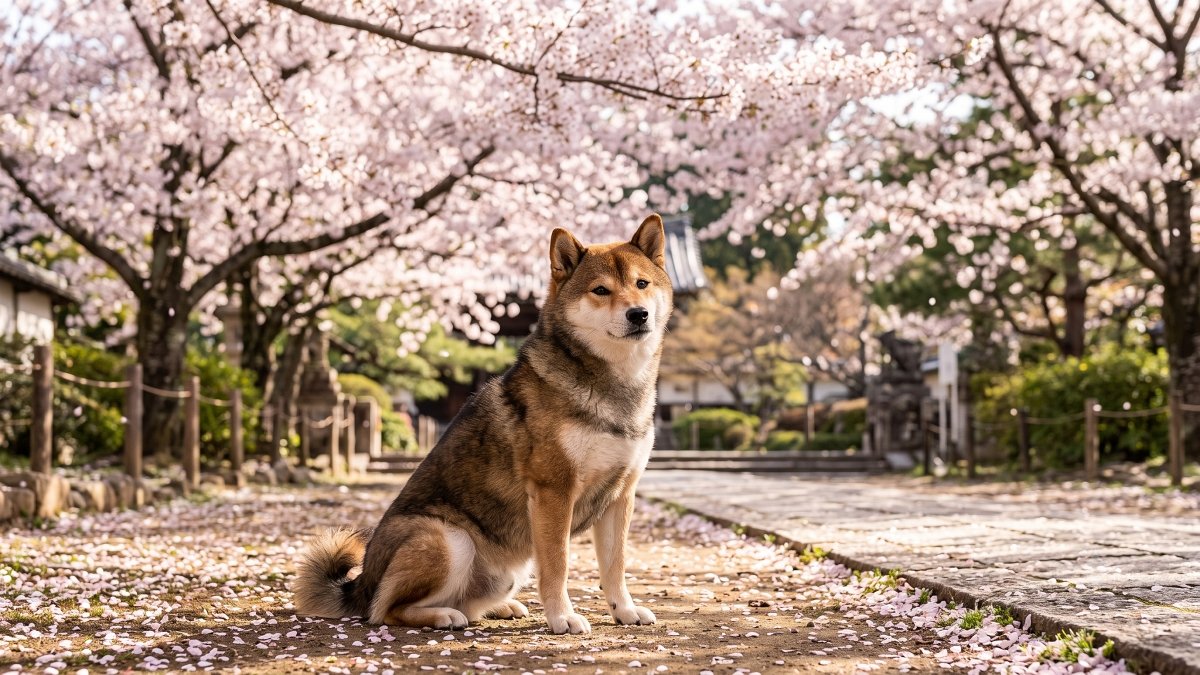
A lot of Japanese dog name lists online share the same problem. Somebody once wrote that a name means “brave warrior” or “beautiful moon,” and hundreds of sites copied it without checking. Then you name your Shiba “Tora,” a Japanese friend laughs, and you find out the word also means a drunk.
This guide fixes that. Every name below has been checked against a real Japanese dictionary, with the kanji (Japanese characters), the kana (phonetic spelling), and a plain-English meaning. You’ll also find what dogs in Japan are actually being named right now, which names carry a second meaning you’d want to know about, and how spelling and vowel length can quietly change a word.
How We Verified Every Meaning in This List
Each name was checked against JMdict, the open Japanese-English dictionary maintained by the Electronic Dictionary Research and Development Group. It’s the same data that powers many of the Japanese dictionary apps learners use every day. We used the release dated October 5, 2026.
The check had three rules:
- The kanji and the reading had to match. A meaning only counts if the dictionary lists that exact kanji with that exact pronunciation. That’s why a few names that are popular in English-language lists (more on “Kai” below) get an honest note instead of a tidy one-word meaning.
- Secondary meanings were recorded, not hidden. If a word has a slang or less flattering second sense, you’ll see it flagged in the section on hidden meanings.
- Personal names were mostly left out. Human given names like Kenji or Haruto can mean a dozen different things depending on which kanji parents choose, so they can’t be “verified” in any honest way. This list sticks to real words with fixed meanings, plus a handful of classic dog names with documented history.
What Are the Most Popular Dog Names in Japan Right Now?
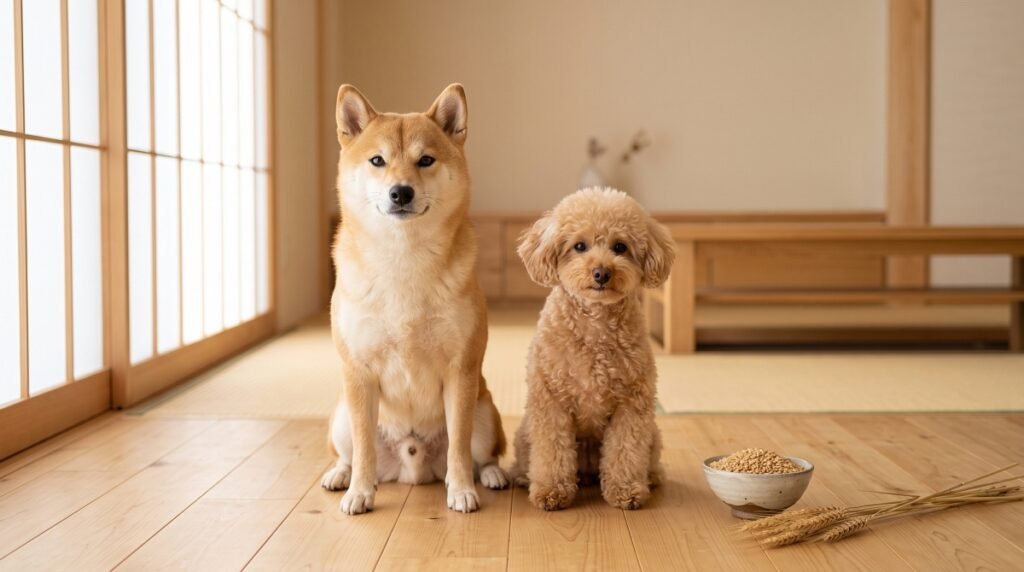
Mugi (むぎ) is the top dog name in Japan, and it has been for years. Pet insurer Dai-ichi iPet ranked it No. 1 for the sixth year in a row in its May 2026 name ranking, based on puppies newly insured between April 2025 and March 2026. Mugi means wheat, barley, or oats, and many owners pick it because the word suggests the warm tan coat of a Shiba Inu or a Toy Poodle.
A separate ranking from breeder site operator Animalife, covering 8,843 puppies sold through its platforms between October 2024 and September 2025, also put Mugi first. Its top 10 for dogs looked like this:
| Rank | Name | Japanese |
|---|---|---|
| 1 | Mugi | ムギ |
| 2 | Coco | ココ |
| 3 | Moko | モコ |
| 4 | Moka | モカ |
| 5 (tie) | Cocoa | ココア |
| 5 (tie) | Choco | チョコ |
| 7 | Momo | モモ |
| 8 (tie) | Niko | ニコ |
| 8 (tie) | Latte | ラテ |
| 8 (tie) | Lala | ララ |
Here’s the part most English-language name lists miss: many of Japan’s favorite dog names aren’t Japanese words at all. Coco, Moka, Latte, and Choco are borrowed foreign words written in katakana. Japanese owners lean toward short, soft, two-syllable sounds, and food names that match a coat color. If you want a name that a dog owner in Tokyo would actually use, Mugi or Momo (peach) are the safest bets.
Why Do Japanese Words Make Such Good Dog Names?
Japanese syllables almost always end in a vowel. The one common exception is the “n” sound, as in Gin or Rin. That gives Japanese words a naturally open, carrying sound, which is exactly what you want when you’re calling a dog across a park.
Our own guide explains why dogs learn a name by linking the sound to good things happening, and why a name that ends on a vowel sound is easier to call out clearly. Most two-syllable Japanese words, like Hana, Yuki, Momo, and Kuma, already fit that pattern without any tweaking.
A quick pronunciation tip: Japanese vowels are short and even. “Sora” is SO-rah, not SOAR-uh, and there’s no strong stress on any syllable. Your dog won’t care if you anglicize it, but if you want to say it the Japanese way, keep every vowel crisp.
Japanese Dog Names Inspired by Nature and Sky
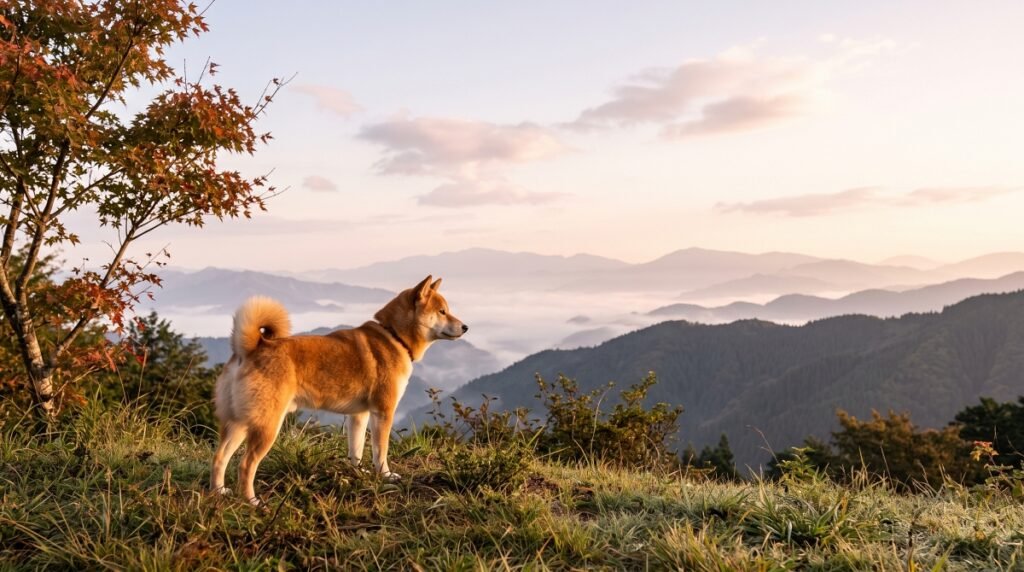
Good for calm dogs, big outdoorsy dogs, and anyone who wants a name that sounds peaceful.
| Name | Japanese | Verified meaning |
|---|---|---|
| Sora | 空 (そら) | Sky; the heavens |
| Umi | 海 (うみ) | Sea; ocean |
| Hoshi | 星 (ほし) | Star |
| Tsuki | 月 (つき) | Moon |
| Taiyou | 太陽 (たいよう) | The sun |
| Hikari | 光 (ひかり) | Light; also hope |
| Kumo | 雲 (くも) | Cloud |
| Kaze | 風 (かぜ) | Wind; breeze |
| Nami | 波 (なみ) | Wave |
| Kawa | 川 (かわ) | River; stream |
| Yama | 山 (やま) | Mountain |
| Mori | 森 (もり) | Forest |
| Daichi | 大地 (だいち) | The earth; the land |
| Iwa | 岩 (いわ) | Rock; boulder |
| Kiri | 霧 (きり) | Fog; mist |
| Niji | 虹 (にじ) | Rainbow |
| Asahi | 朝日 (あさひ) | Morning sun |
| Yoru | 夜 (よる) | Night |
| Kage | 影 (かげ) | Shadow; silhouette |
| Hotaru | 蛍 (ほたる) | Firefly |
Sora works especially well for a dog with a light gray or blue-tinged coat, and Kage is a fun pick for a black dog that follows you from room to room.
Japanese Flower and Tree Names for Dogs
Flower names are traditional in Japan and suit gentle dogs of either sex.
| Name | Japanese | Verified meaning |
|---|---|---|
| Hana | 花 (はな) | Flower; blossom |
| Sakura | 桜 (さくら) | Cherry blossom; also light pink |
| Ume | 梅 (うめ) | Japanese apricot (often called Japanese plum) |
| Momo | 桃 (もも) | Peach |
| Fuji | 藤 (ふじ) | Wisteria |
| Kiku | 菊 (きく) | Chrysanthemum |
| Sumire | 菫 (すみれ) | Violet |
| Tsubaki | 椿 (つばき) | Camellia |
| Kikyou | 桔梗 (ききょう) | Chinese bellflower |
| Hasu | 蓮 (はす) | Lotus |
| Kaede | 楓 (かえで) | Maple tree |
| Momiji | 紅葉 (もみじ) | Maple; red autumn leaves |
| Matsu | 松 (まつ) | Pine tree |
| Take | 竹 (たけ) | Bamboo |
| Bonsai | 盆栽 (ぼんさい) | Miniature potted tree |
Momiji is a lovely, less common choice for a red Shiba or a Vizsla, since the word literally points to the color of maple leaves in autumn. If you’d like more ideas built around soft, pretty sounds, browse our names for your girl across every style.
Japanese Season and Weather Names
| Name | Japanese | Verified meaning |
|---|---|---|
| Haru | 春 (はる) | Spring |
| Natsu | 夏 (なつ) | Summer |
| Aki | 秋 (あき) | Autumn; fall |
| Fuyu | 冬 (ふゆ) | Winter |
| Koharu | 小春 (こはる) | Late autumn; the tenth month of the old lunar calendar |
| Yuki | 雪 (ゆき) | Snow |
| Ame | 雨 (あめ) | Rain |
| Hare | 晴れ (はれ) | Clear, sunny weather |
| Arashi | 嵐 (あらし) | Storm |
| Kaminari | 雷 (かみなり) | Thunder; lightning |
| Hayate | 疾風 (はやて) | Gale; swift wind |
| Fuurin | 風鈴 (ふうりん) | Wind chime |
Seasonal names are a sweet way to mark when your puppy came home. A dog adopted in December could be Fuyu or Yuki, while a spring puppy might be Haru.
Japanese Food Names for Dogs
Food names are hugely popular in Japan, often chosen to match a coat. They’re also playful and easy to say.
| Name | Japanese | Verified meaning | Coat it suits |
|---|---|---|---|
| Mugi | 麦 (むぎ) | Wheat; barley; oats | Tan, wheaten |
| Komugi | 小麦 (こむぎ) | Wheat | Tan, wheaten |
| Mochi | 餅 (もち) | Rice cake made from glutinous rice | White, cream |
| Kinako | 黄粉 (きなこ) | Roasted soybean flour | Pale gold, cream |
| Azuki | 小豆 (あずき) | Adzuki (red) bean | Deep red, brown |
| Goma | 胡麻 (ごま) | Sesame | Sesame, black and tan |
| Daizu | 大豆 (だいず) | Soybean | Light tan |
| Kuri | 栗 (くり) | Japanese chestnut | Brown, chestnut |
| Momo | 桃 (もも) | Peach | Apricot, peach |
| Mikan | 蜜柑 (みかん) | Mandarin orange | Orange, red |
| Yuzu | 柚子 (ゆず) | Yuzu citrus | Golden, yellow |
| Kaki | 柿 (かき) | Japanese persimmon | Orange, rust |
| Ichigo | 苺 (いちご) | Strawberry | Any |
| Dango | 団子 (だんご) | Sweet dumpling; also a round object | Chubby puppies |
| Daifuku | 大福 (だいふく) | Rice cake stuffed with bean jam; also great fortune | White, round |
| Manjuu | 饅頭 (まんじゅう) | Steamed bun with filling | Fluffy, round |
| Youkan | 羊羹 (ようかん) | Jellied red bean dessert | Dark red, brown |
| Senbei | 煎餅 (せんべい) | Japanese rice cracker | Golden brown |
| Matcha | 抹茶 (まっちゃ) | Powdered green tea | Any |
| Nori | 海苔 (のり) | Dried edible seaweed | Black |
| Konbu | 昆布 (こんぶ) | Kelp | Dark brown, black |
| Miso | 味噌 (みそ) | Fermented soybean paste | Tan, brown |
| Shouyu | 醤油 (しょうゆ) | Soy sauce | Dark brown |
| Tofu | 豆腐 (とうふ) | Tofu; bean curd | White |
| Wasabi | 山葵 (わさび) | Japanese horseradish | Feisty dogs of any color |
| Sushi | 寿司 (すし) | Sushi | Any |
| Ame | 飴 (あめ) | Hard candy; also amber, yellowish brown | Amber, honey |
Goma is a particularly clever pick for a Shiba Inu. “Sesame” is one of the three coat colors recognized in the National Shiba Club of America’s breed standard, where it’s described as black-tipped hairs over a rich red base.
Japanese Names Based on Color and Coat
| Name | Japanese | Verified meaning |
|---|---|---|
| Shiro | 白 (しろ) | White |
| Kuro | 黒 (くろ) | Black |
| Sumi | 墨 (すみ) | Ink; India ink |
| Kin | 金 (きん) | Gold |
| Gin | 銀 (ぎん) | Silver |
| Kohaku | 琥珀 (こはく) | Amber |
| Sango | 珊瑚 (さんご) | Coral |
| Akane | 茜 (あかね) | Madder red (a deep red dye) |
| Ai | 藍 (あい) | Indigo |
| Wata | 綿 (わた) | Cotton; cotton padding |
Shiro and Kuro are the Japanese equivalents of naming a dog “Snowy” or “Blackie,” and they’ve been used for generations. Kohaku and Sumi feel a little more refined if you want the same idea with more polish.
Strong and Brave Japanese Dog Names
These work well for large breeds, working dogs, and confident personalities. If you want to compare them with English options, see our list of more boy dog name ideas, from classic to tough.
| Name | Japanese | Verified meaning |
|---|---|---|
| Yuuki | 勇気 (ゆうき) | Courage; bravery |
| Chikara | 力 (ちから) | Strength; power |
| Kuma | 熊 (くま) | Bear |
| Tora | 虎 (とら) | Tiger (see hidden meanings below) |
| Ryuu | 竜 (りゅう) | Dragon |
| Shishi | 獅子 (しし) | Lion; also the guardian lion-dogs at Shinto shrines |
| Rai | 雷 (らい) | Thunder; lightning |
| Homura | 炎 (ほむら) | Flame; blaze |
| Ishi | 石 (いし) | Stone; rock |
| Bushi | 武士 (ぶし) | Samurai; warrior |
| Samurai | 侍 (さむらい) | Samurai; warrior |
| Shougun | 将軍 (しょうぐん) | General; shogun |
| Ninja | 忍者 (にんじゃ) | Ninja |
| Ou | 王 (おう) | King; ruler |
| Ichiban | 一番 (いちばん) | Number one; the best |
| Yamato | 大和 (やまと) | Ancient Japan; the Yamato kingdom |
Shishi has a lovely double fit for dogs. The stone guardian statues at Japanese shrines, often called lion-dogs in English, are known by this same word.
Sweet and Meaningful Japanese Dog Names
| Name | Japanese | Verified meaning |
|---|---|---|
| Ai | 愛 (あい) | Love; affection |
| Kokoro | 心 (こころ) | Heart; mind; spirit |
| Yume | 夢 (ゆめ) | Dream; hope |
| Kibou | 希望 (きぼう) | Hope; wish |
| Fuku | 福 (ふく) | Good fortune; happiness |
| Shiawase | 幸せ (しあわせ) | Happiness; good luck |
| Genki | 元気 (げんき) | Lively; energetic; healthy |
| Tomo | 友 (とも) | Friend; companion |
| Aibou | 相棒 (あいぼう) | Partner; pal |
| Nakama | 仲間 (なかま) | Companion; comrade |
| Takara | 宝 (たから) | Treasure |
| Suzu | 鈴 (すず) | Bell |
| Hime | 姫 (ひめ) | Princess |
| Ouji | 王子 (おうじ) | Prince |
| Miyabi | 雅 (みやび) | Elegance; refinement |
| Rin | 凛 (りん) | Dignified; also bracing cold |
| Makoto | 誠 (まこと) | Sincerity; truth |
| Wa | 和 (わ) | Harmony; peace; also Japanese-style |
| Zen | 禅 (ぜん) | Zen; deep meditation |
| Kawaii | 可愛い (かわいい) | Cute; adorable |
Genki is a great match for a high-energy puppy, and Aibou is a fun one for a hiking or running buddy. It’s the word Japanese speakers use for a trusted sidekick.
Japanese Animal Names for Dogs
| Name | Japanese | Verified meaning |
|---|---|---|
| Kitsune | 狐 (きつね) | Fox |
| Tanuki | 狸 (たぬき) | Raccoon dog |
| Koi | 鯉 (こい) | Carp; koi |
| Chou | 蝶 (ちょう) | Butterfly |
| Hina | 雛 (ひな) | Baby bird; chick |
| Kirin | 麒麟 (きりん) | Giraffe; also the mythical qilin |
Kitsune suits a red, fox-faced Shiba perfectly, and Tanuki fits a round, fluffy dog with a dark mask. Both also have a second meaning, covered next.
Classic Japanese Dog Names With Real History
Hachi (八, はち)
Hachi simply means eight. It’s forever tied to Hachiko, the Akita who waited for his late owner at Shibuya Station for more than nine years after Professor Hidesaburo Ueno died in 1925. In Japan he’s remembered as a “chuuken” (忠犬), which the dictionary defines simply as a faithful dog.
Pochi (ポチ)
Pochi is Japan’s classic, cartoon-style dog name, the local version of “Fido” or “Spot.” Its origin isn’t settled. Common theories point to the French “petit,” the English “spotty,” or the Japanese “pochi” for a small dot, but no source we checked confirms one answer, so treat any confident origin story with suspicion.
Taro (太郎, たろう)
The dictionary defines Taro as “first son,” and it’s a traditional human name in Japan. It makes a warm choice for the first dog in a family.
Shiba (柴, しば)
Shiba means brushwood. The AKC explains that Shiba Inus hunted small game through brushy mountain terrain, and their coat blended in with the autumn shrubs. “Inu” (犬) simply means dog.
Kai (貝 or 甲斐, かい)
Kai is one of the most searched “Japanese” dog names, and it’s also one of the most misreported. Many lists say it means “ocean,” but the dictionary doesn’t support that as a standalone word. The ocean is “umi.” As a word on its own, kai (貝) means a shell or shellfish. Kai (甲斐) is also the name of a former province in today’s Yamanashi Prefecture, the mountain region where, according to the Nihon Ken Hozonkai, the Kai Ken breed survived. It’s a great name, just not for the reason most sites give.
Maru (丸, まる)
Maru means circle, or something whole and complete. It’s a perennial favorite in Japan for round, chubby dogs.
Which Japanese Dog Names Have Hidden Second Meanings?
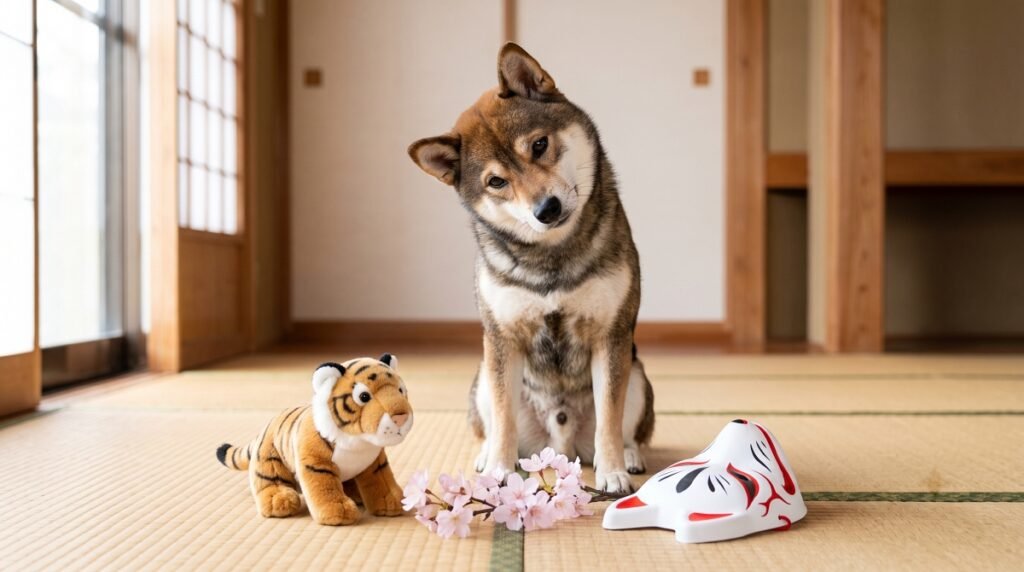
This is where most name lists fall short. Plenty of Japanese words carry a slang or secondary sense listed right in the dictionary. None of these are offensive enough to rule out, but it’s worth knowing before you introduce your dog to a Japanese-speaking friend.
- Tora (tiger): also means a drunk. A Japanese speaker will probably just grin.
- Sakura (cherry blossom): also slang for a shill, someone planted in a crowd or line to make a business look popular.
- Pochi: in katakana slang, also a lackey or errand boy.
- Inu (dog): naming a dog “Dog” is cute in English, but in Japanese “inu” can also mean a snitch or a spy, and it’s used as an insult.
- Kitsune (fox) and Tanuki (raccoon dog): both also describe a sly, cunning person. That’s mostly playful, and it matches the folklore, where both animals are tricksters.
- Kuro (black): also used for “guilty,” the opposite of shiro (white, innocent).
- Ume (Japanese apricot): also the lowest grade in Japan’s three-tier “matsu, take, ume” ranking. Matsu (pine) is the top tier, which makes it a cheeky name for a dog who thinks he’s the best.
- Kaze (wind): the same sound, written 風邪, means a cold or the flu. Context makes it obvious, but it’s a pun some owners enjoy.
Do Kanji and Vowel Length Change a Name’s Meaning?
Yes, and this matters more in Japanese than in English. Japanese has many words that sound alike but use different kanji, and stretching a vowel can create a totally different word.
- Yuki vs. Yuuki: Yuki (雪) is snow. Yuuki (勇気), with a long “u,” is courage. In English spelling they often both appear as “Yuki,” so decide which one you mean.
- Ame: written 雨 it’s rain, written 飴 it’s hard candy.
- Hana: written 花 it’s flower, written 鼻 it’s nose. For a dog that’s always sniffing, either one works.
- Ai: written 愛 it’s love, written 藍 it’s indigo.
- Koi: written 鯉 it’s the carp fish, written 恋 it’s romantic love.
- Kami: written 神 it’s a god, 紙 is paper, and 髪 is hair.
If you’d like a Japanese friend to see the meaning you intend, write the name in kanji on your dog’s tag, crate card, or vet file. In speech, nobody will mind; the meaning is something you get to choose.
Which Japanese Names Suit Japanese Dog Breeds?
Japan has six native breeds, all designated Natural Monuments of Japan and preserved by the Nihon Ken Hozonkai: the Akita, Shiba Inu, Kishu Ken, Shikoku Ken, Kai Ken, and Hokkaido Ken. The Ministry of Foreign Affairs’ Web Japan notes the Shiba makes up about 80% of the native-breed dogs kept in Japan.
- Shiba Inu: Mugi, Kinako, Goma, Azuki, Momiji, Kitsune, Kuri
- Akita: Hachi, Kuma, Yuuki, Yamato, Shiro (for white Akitas), Takara
- Kai Ken: Kai, Sumi, Kage, Tora (every Kai Ken is brindle, a coat Japanese breeders call “tora”)
- Hokkaido Ken: Yuki, Fuyu, Kuma, Yama
- Japanese Chin or other toy breeds: Mochi, Hime, Ouji, Daifuku, Momo, Suzu
You don’t need a Japanese breed to use a Japanese name, of course. A Golden Retriever named Kinako or a black Lab named Nori works beautifully.
How Do You Choose and Teach a Japanese Dog Name?
A few practical tips make the switch easier:
- Say it out loud for a few days first. A name that looks lovely written, like Kikyou, can feel clumsy to call at the dog park. Two-syllable names like Momo or Kuma are the easiest.
- Check it against your cues. Avoid names that sound like the commands you use. “Kuma” can blur with “come” if you shout it across a yard.
- Pick a spelling for your family. Decide whether you’ll write Yuuki, Yūki, or Yuki, so the vet, groomer, and everyone at home stay consistent.
- Pair the name with rewards. Say the name once in a happy tone, then reward the moment your dog looks at you. Our simple routine for teaching a new name walks through it step by step, including what to do if your dog starts ignoring it.
Picking a Japanese Name You Can Stand Behind
A Japanese dog name feels special because it carries an image: snow, a cherry blossom, a bowl of roasted soybean flour the exact color of your puppy. That image only works if the meaning is real. Every name in this guide comes with a meaning you can trust, so you can explain it with confidence the first time someone asks.
If you’re still deciding, start with the coat. Mugi, Kinako, Goma, Shiro, and Kuro are what Japanese owners reach for first. If personality matters more, try Genki, Yuuki, or Kokoro. Whichever Japanese dog name you choose, say it with a smile, reward every head turn, and it’ll be your dog’s name for life.
FAQs
Mugi is the most popular dog name in Japan, and it suits the Shiba’s classic red-tan coat. Goma (sesame) is a clever choice for a sesame-coated Shiba, and Kinako fits a cream one.
Inu (犬) means dog. It’s in breed names like Shiba Inu, but on its own it can also be slang for a snitch, so it’s better as part of a name than as the whole name.
The closest real word is chuuken (忠犬), which means “faithful dog,” the title Hachiko is known by. For a shorter everyday name, Hachi carries the same story.
Generally, no. Japanese words are used as pet names all over the world, and Japanese owners themselves borrow English and French words for their dogs. Showing respect mostly comes down to knowing what the word actually means, which is why checking a dictionary beats trusting a copied list.
 Add as a preferred source on Google