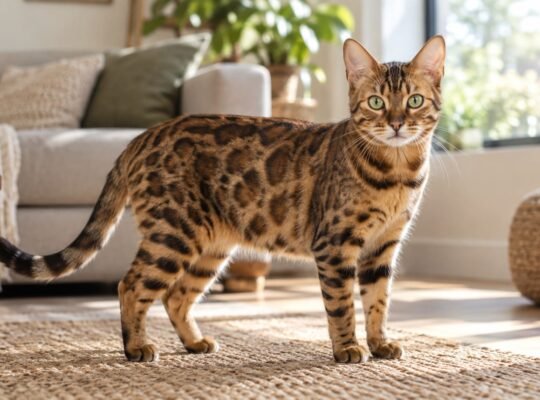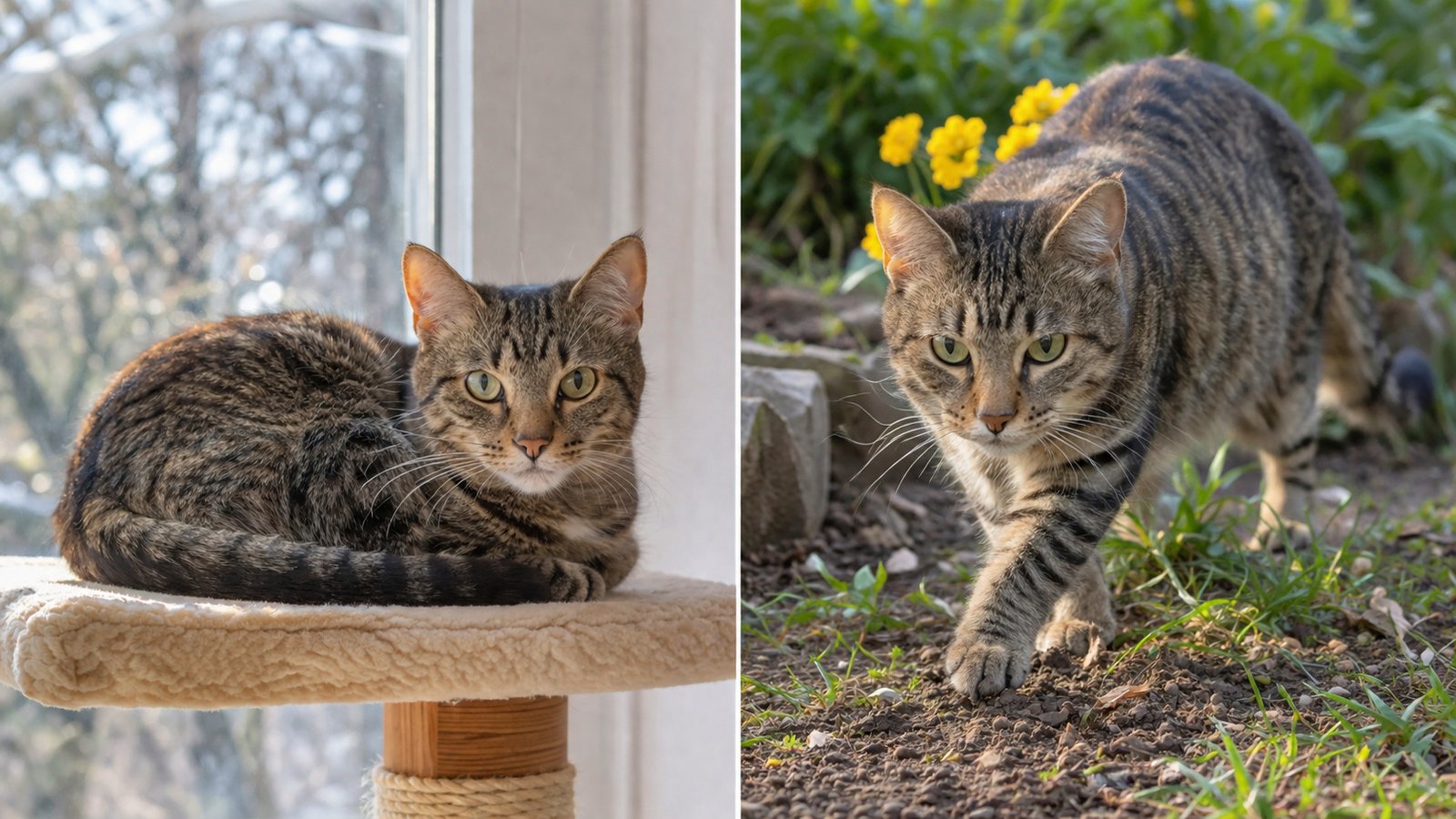
Indoor cats tend to live longer and face fewer risks from traffic, predators, and disease. Outdoor cats get more natural exercise but more exposure to danger. This guide compares both lifestyles so first-time owners can pick a setup that keeps their cat safe and happy.
If you’re bringing home your first cat, someone has probably already told you cats need to go outside to be happy. Someone else has probably told you the opposite: that letting a cat outside is basically asking for trouble.
Both of them think they’re right. That’s the problem.
The honest answer: both lifestyles come with real, documented tradeoffs. The right choice depends on where you live, your cat’s temperament, and how much time you can put into keeping them entertained.
This guide walks through the actual differences in safety, health, lifespan, and cost. It also covers the middle-ground options most new owners don’t know exist.
By the end, you’ll have a way to think this through, instead of just picking a side because it sounded convincing at a dinner party.
What “Indoor vs Outdoor Cat” Actually Means
An indoor cat lives entirely inside your home, with no unsupervised access to the outdoors. An outdoor cat has regular unsupervised outdoor access, whether that’s a few hours a day or a cat door left open around the clock.
There’s a third category most articles skip: the indoor-outdoor cat with supervised access. Think harness walks, catios, leashed time on a porch.
It’s not “outdoor” in the free-roaming sense, but it’s not purely indoor either. For a lot of first-time owners, it ends up being the best fit. More on that later.
Why This Decision Matters More for First-Time Owners
Experienced owners have usually already been through a vet bill from a cat fight, a missing-cat scare, or a hairball-covered couch. They’ve adjusted their expectations accordingly. First-time owners haven’t, which means the decision tends to get made on instinct rather than information.
That instinct is often shaped by how someone grew up. A childhood cat that roamed freely and lived to seventeen makes outdoor access feel normal and safe.
Growing up in a city, or near a busy road, tends to do the opposite. The idea of a cat wandering off alone sounds reckless.
Neither instinct is wrong, exactly. They’re both based on real experiences that don’t generalize well to a different cat in a different environment. The goal here is to replace instinct with a clearer picture of the actual risks and benefits, so your decision fits your specific situation.
Indoor Cats: Benefits
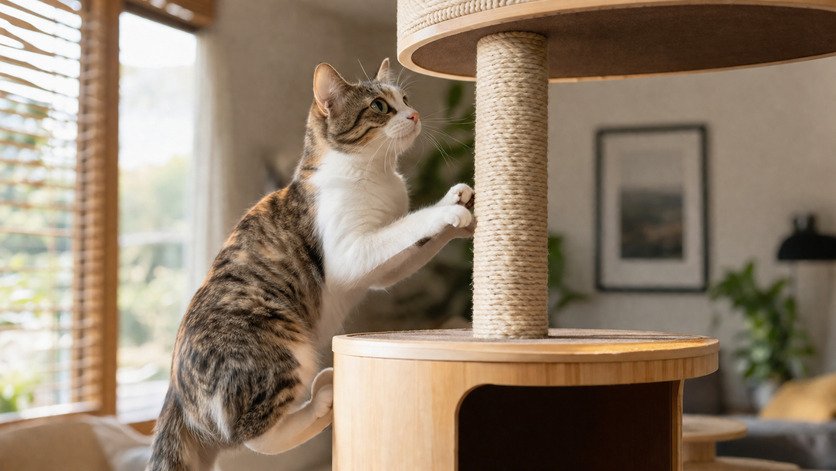
- Longer average lifespan. Cats kept indoors are less exposed to the leading causes of early death in cats: vehicle strikes, predators, and infectious disease.
- Lower disease exposure. Feline leukemia virus (FeLV) and feline immunodeficiency virus (FIV) spread mainly through contact with infected cats, which is far more likely outdoors.
- No traffic risk. Cars are one of the most common causes of death for outdoor cats in populated areas.
- Fewer parasites. Fleas, ticks, and intestinal worms are easier to prevent and treat when a cat isn’t picking them up outside.
- No contribution to local wildlife decline. Free-roaming cats are a documented threat to birds and small mammals; indoor cats aren’t part of that problem.
- Easier to monitor health. You’ll notice a change in appetite, litter box habits, or behavior much faster when your cat is always nearby.
Indoor Cats: Challenges
Indoor life isn’t automatically a good life. A cat with no outlet for hunting, climbing, and exploring instincts can become bored, overweight, or destructive.
Common problems in under-stimulated indoor cats include:
- Scratching furniture instead of designated posts
- Overeating from boredom
- Excessive vocalizing, especially at night
- Aggression toward other pets or people
- Obsessive grooming or other stress behaviors
None of these are inevitable. They’re what happens when “indoor” gets treated as “low-maintenance” instead of “differently maintained.” We’ll cover how to build a genuinely enriching indoor setup later in this guide.
Outdoor Cats: Benefits
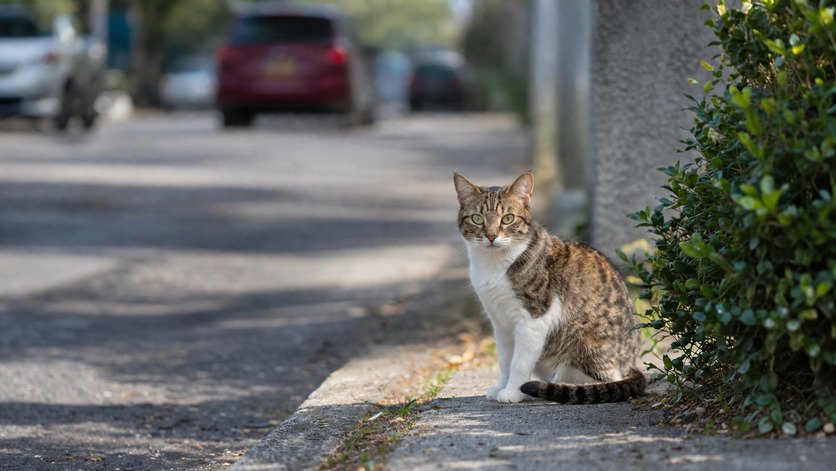
- Natural exercise. Roaming, climbing, and hunting burn energy in a way that’s hard to fully replicate indoors.
- Built-in mental stimulation. New smells, sounds, and terrain give an outdoor cat constant sensory input.
- Natural pest control. Some owners specifically want a cat that will hunt mice or rats around a barn or rural property.
- Independence some cats seem to prefer. A handful of cats, particularly those that spent early life as strays, seem noticeably more relaxed with outdoor access.
Outdoor Cats: Risks
- Vehicle strikes. This is consistently cited by veterinary and animal welfare organizations as a leading cause of death for outdoor cats.
- Predators. Coyotes, larger dogs, and in some regions birds of prey pose a real threat, especially to smaller or younger cats.
- Disease and parasites. Contact with other cats increases exposure to FeLV, FIV, rabies, fleas, ticks, and intestinal parasites.
- Poisoning. Antifreeze, rodenticides, and certain garden plants are hazards an indoor cat never encounters.
- Fights and injuries. Territorial disputes with other cats are a common source of abscesses and vet visits.
- Theft or getting lost. Outdoor cats can wander further than owners expect, especially unneutered males.
- Cruelty from people. Rare, but it happens, and it’s a risk that only exists outside the home.
- Impact on local wildlife. Even well-fed cats hunt. This is a genuine ecological concern, not just an owner-safety issue.
Indoor vs Outdoor Cats: Comparison Table
| Factor | Indoor Cats | Outdoor Cats |
| Safety | High | Lower, more variable |
| Lifespan | Generally longer | Generally shorter |
| Health | Easier to monitor and protect | Higher exposure to disease and injury |
| Exercise | Requires deliberate effort | Naturally built in |
| Mental stimulation | Depends on enrichment provided | High, but unpredictable |
| Cost | Lower long-term vet costs | Higher risk of emergency vet bills |
| Veterinary care | Easier to keep on schedule | Harder to monitor between visits |
| Wildlife impact | None | Documented negative impact |
| Supervision needed | Low once routines are set | High if allowed to free-roam |
| Disease exposure | Low | Higher (FeLV, FIV, rabies) |
| Parasites | Easier to prevent | Common and recurring |
| Traffic risk | None | Significant in populated areas |
| Predator risk | None | Present in many regions |
| Convenience | Higher day-to-day | Lower; requires cat doors, tracking, or supervision |
Indoor vs Outdoor Cat Lifespan
This is the statistic that comes up most in this debate, so it’s worth being precise. Indoor cats are widely reported by veterinary and welfare organizations to live longer, on average, than cats with regular outdoor access.
The exact gap varies by source and region. Treat any single number you see quoted online with some skepticism.
What’s consistent across sources is the reasoning, not just the number. Indoor cats avoid the leading causes of early death in outdoor cats: vehicle strikes, predators, and infectious disease. Fewer causes of death generally means more years lived.
This doesn’t mean every outdoor cat dies young or every indoor cat reaches old age. Genetics, breed, weight, and overall care matter just as much. But if lifespan is your top priority, the evidence points clearly toward indoor or supervised-outdoor living.
Health Differences
Beyond lifespan, day-to-day health tends to look different between the two groups.
Indoor cats are more prone to obesity and related conditions like diabetes, simply because they burn fewer calories by default. Dental disease and urinary issues show up in both groups, but they’re easier to catch early in an indoor cat you see every day.
Outdoor cats face more infectious disease, more parasites, and more traumatic injuries from fights, falls, or vehicles. Wound infections and abscesses from cat fights are one of the most common outdoor-related vet visits.
Neither group is automatically healthier. Indoor cats need help staying active. Outdoor cats need more frequent parasite prevention and a vet who can address emergencies fast.
Mental Stimulation Differences
Outdoor access provides stimulation without any effort from you. That’s the honest appeal of it, and it’s why some experienced owners default to it without a second thought.
Indoor cats can get equivalent stimulation, but it has to be built, not assumed. That means rotating toys, vertical space, window access, food puzzles, and regular play sessions. Skip this step and you’ll likely see the boredom behaviors listed earlier in this guide.
If you’re not willing to actively enrich an indoor environment, an outdoor or supervised-outdoor setup may genuinely suit your cat better. This is a real tradeoff, not a case where one option wins on every axis.
Cost Comparison
Indoor cats tend to cost less over time, mainly because they need fewer emergency vet visits. Preventive care (vaccinations, dental cleanings, routine checkups) stays fairly similar between the two groups.
Where outdoor cats get expensive is the unpredictable stuff: abscess treatment after a fight, emergency surgery after being hit by a car, or extended treatment for a parasite infestation. These costs are hard to budget for because they happen without warning.
Indoor cats can still run up a bill through boredom-related issues, like a torn-up couch or a vet visit for a swallowed toy part. It’s a different kind of cost, not zero cost.
Safety Comparison
If safety is your main concern, indoor living wins by a wide margin. There’s no ambiguity in the risk data here: traffic, predators, disease, and human cruelty are all outdoor-specific hazards.
Supervised outdoor access (catio, harness, secured yard) captures some of the outdoor benefits while removing most of these risks. Free-roaming outdoor access removes the most risk-reduction and should be a deliberate, informed choice, not a default.
Wildlife Impact
This part of the conversation gets left out of a lot of “indoor vs outdoor” articles, but it matters. Free-roaming domestic cats are recognized by wildlife and conservation organizations as a significant threat to birds and small mammals, even well-fed cats with no need to hunt for food.
If you care about local wildlife, keeping your cat indoors or limiting outdoor time to supervised, contained settings (catio, harness) is the most direct way to reduce that impact.
Apartment Living vs House Living
Apartment living usually settles this decision for you: most leases don’t allow free-roaming outdoor cats, and there’s rarely a yard to speak of. Indoor life, done well, works fine in an apartment. Cats don’t need square footage as much as they need vertical space, window access, and consistent play.
In a house with a yard, the temptation to let a cat outside is stronger, and the option is more physically available. That doesn’t automatically make it the right call. A securely fenced yard or a catio can offer a lot of the same benefit without the traffic and predator risk.
Should You Let Your Cat Outside?
There’s no universal answer, but here’s a reasonable way to think through it:
Lean indoor or supervised-outdoor if:
- You live near a busy road
- Coyotes, large birds of prey, or off-leash dogs are common in your area
- Your cat isn’t neutered or spayed yet
- You live in an apartment or dense urban area
- You care about local bird and small-mammal populations
Outdoor access may be reasonable if:
- You live somewhere rural with low traffic
- Your property is secured against major predators
- Your cat is neutered/spayed, vaccinated, and microchipped
- You’ve talked through the risks with your vet and accept them
If you’re unsure, start indoor and consider supervised outdoor options later. It’s much easier to expand a cat’s world gradually than to walk back outdoor freedom once a cat expects it.
Alternatives to Free Roaming
You don’t have to choose between “locked inside all the time” and “wandering the neighborhood alone.” A few middle-ground options give most of the benefit with a fraction of the risk:
- Catios, enclosed outdoor spaces attached to a window, door, or porch
- Harness and leash walks, supervised time outside on your terms
- Secured yard time, direct supervision in a fenced, cat-proofed area
- Window perches and screened porches, outdoor sensory input with no roaming risk at all
Catio Guide
A catio is an enclosed outdoor structure that lets a cat experience fresh air, sunlight, and the outdoors without the risks of free roaming. They range from a simple window box to a full walk-in enclosure connected to the house by a cat door.
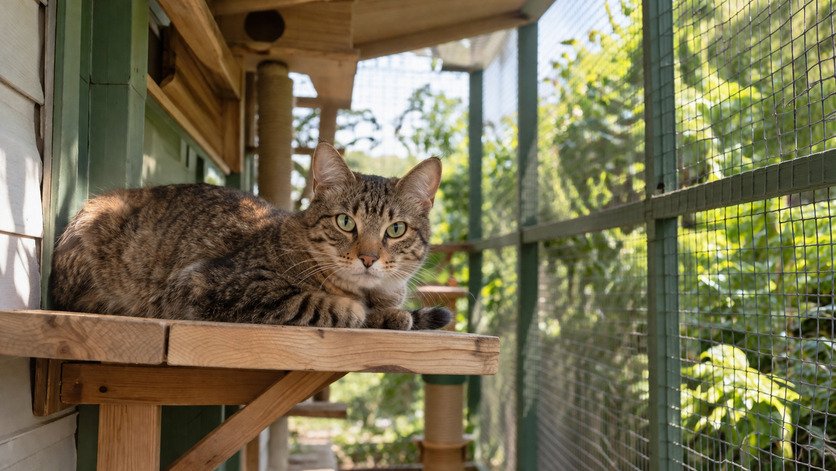
Basic requirements:
- Secure, chew-resistant mesh or wire (not standard window screen)
- Shade and shelter from weather
- A stable, sturdy structure that can’t be pushed open by the cat or other animals
- Enrichment inside: perches, scratching surfaces, a hiding spot
Even a small catio gives a cat real outdoor time. It doesn’t need to be elaborate to work.
Harness Training
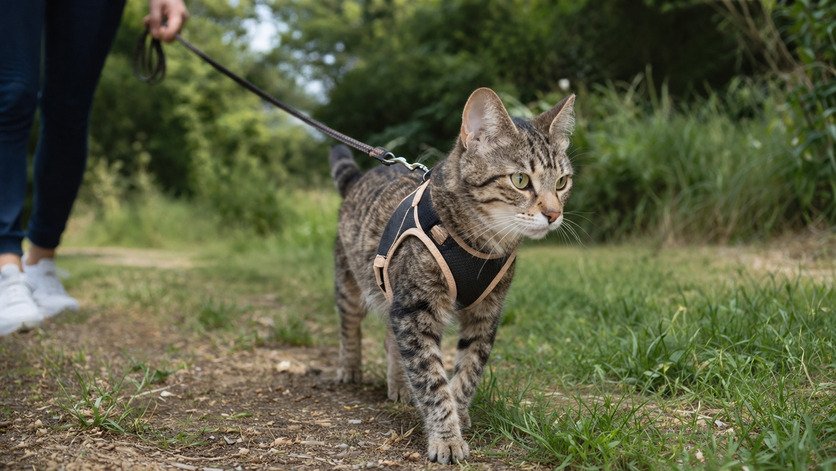
Cats can absolutely learn to walk on a harness, but the process needs patience. Rushing it is the most common reason it fails.
- Let the cat sniff and wear the harness indoors for a few minutes at a time, with treats
- Increase wearing time over several days before attaching a leash
- Practice walking on the leash indoors first
- Choose a quiet, low-traffic outdoor spot for the first real walk
- Keep early outdoor sessions short and end on a good note
Use an H-style or vest harness rather than a collar. Collars aren’t secure enough for leash walking and a startled cat can slip out or get injured trying to.
Creating an Enriching Indoor Environment
This is the section that actually determines whether “indoor cat” means “content cat” or “bored cat.” A few components matter more than the rest:
- Vertical space. Cat trees, shelves, and window perches let a cat survey its territory, which matters more to cats than most owners realize.
- Scratching posts. Multiple posts, in different textures (sisal, cardboard, carpet), placed near where the cat already scratches.
- Play sessions. Two short sessions a day with a wand toy that mimics prey movement does more than a pile of toys left on the floor.
- Food puzzles. Turning mealtime into a small hunting task taps into the same instinct outdoor access would satisfy.
- Window access. A perch near a window with a bird feeder or street view provides passive stimulation for free.
- Rotating toys. Swapping toys every week or two keeps novelty high without buying anything new.
Common Mistakes New Cat Owners Make
- Assuming “indoor” means “no extra effort needed”
- Letting a cat outside unsupervised before it’s spayed/neutered, vaccinated, and microchipped
- Skipping the litter box research and using whatever was cheapest
- Punishing a cat for scratching instead of redirecting to a post
- Introducing a harness and leash for the first time outdoors instead of indoors
- Underestimating how territorial outdoor cats can be with each other
- Assuming one cat “seems fine” outside means the risk doesn’t apply to them
Expert Recommendations
The American Association of Feline Practitioners and the American Veterinary Medical Association generally recommend keeping cats indoors, or allowing outdoor access only in supervised, contained settings like catios or harness walks.
Their reasoning lines up with everything covered in this guide: lower disease exposure, fewer traumatic injuries, and less impact on local wildlife.
That guidance is a strong default, especially for a first cat. It’s not a rule that overrides your specific situation, your region, or your vet’s advice, but it’s a sensible starting point if you’re not sure where to land.
Whatever you choose, three things matter regardless of lifestyle: spay or neuter, vaccinate on schedule, and microchip. These three steps reduce risk and improve outcomes no matter how much outdoor time your cat ends up getting.
Final Decision Checklist
Before deciding, check the following
- Is my home an apartment or a house with a yard?
- How busy is traffic near my home?
- Are coyotes, large birds of prey, or off-leash dogs common nearby?
- Is my cat spayed/neutered, vaccinated, and microchipped?
- Do I have time for daily play and enrichment if I go fully indoor?
- Would a catio or harness training fit my space and schedule?
- Have I talked to my vet about the risks specific to my area?
- Am I prepared for either higher upfront enrichment effort (indoor) or higher unpredictable vet costs (outdoor)?
If you answered “not sure” to several of these, start indoor with supervised outdoor time, and revisit the decision once you know your cat and your routine better.
Myth vs Fact
Myth: Cats need to go outside to be happy.
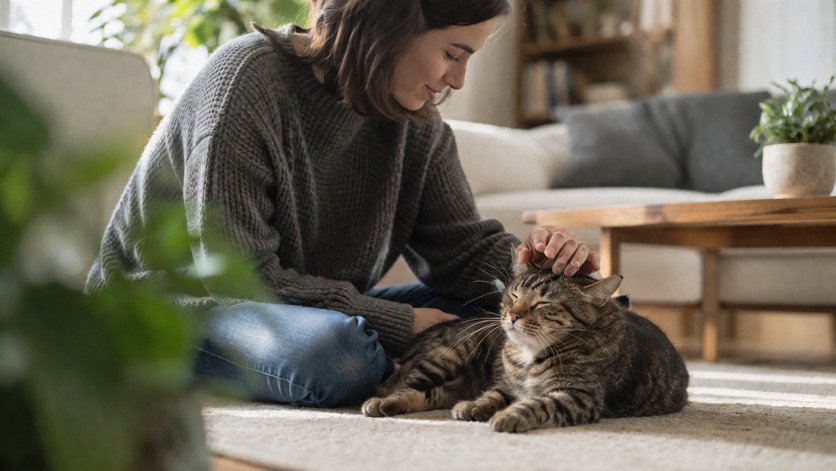
Fact: Cats need stimulation, not necessarily the outdoors specifically. A well-enriched indoor cat can be just as content as one with yard access.
Myth: Indoor cats get fat and lazy no matter what you do.
Fact: Weight gain in indoor cats comes from inactivity and overfeeding, both of which are manageable with play and portion control.
Myth: Outdoor cats are always happier and more “natural.”
Fact: Outdoor access satisfies some instincts, but it also introduces real risks. “Natural” isn’t the same as “safe” or “better.”
Myth: A cat that’s always lived outside can’t adjust to living indoors.
Fact: Many former outdoor and stray cats adjust well to indoor life with a gradual transition and proper enrichment, though some do take longer than others.
Myth: Declawing is a reasonable alternative to dealing with outdoor risk.
Fact: Declawing is a significant surgical procedure with lasting physical and behavioral effects, and it isn’t a substitute for scratching posts, nail trims, or a safe outdoor setup like a catio.
Frequently Asked Questions
Is it cruel to keep a cat indoors?
No, as long as the indoor environment includes enrichment: play, vertical space, scratching outlets, and mental stimulation. An under-stimulated indoor cat can struggle, but that’s a solvable problem, not an argument for free-roaming outdoor access.
Do indoor cats live longer than outdoor cats?
Indoor cats are widely reported to live longer on average, mainly because they avoid traffic, predators, and infectious disease. Individual results vary based on genetics, weight, and overall care.
Can I train an outdoor cat to become an indoor cat?
Yes, though it usually takes a gradual transition. Reduce outdoor time incrementally while increasing indoor enrichment, and expect an adjustment period of several weeks.
Is a catio worth building for a first-time cat owner?
If your budget and space allow it, a catio gives most of the benefit of outdoor access with very little of the risk. It’s one of the highest-value additions you can make for a cat that seems to want outdoor time.
How do I stop my indoor cat from trying to escape?
Provide enough enrichment that the outdoors is less of a novelty, use window perches for passive outdoor access, and be consistent about not letting the cat out when it pushes at the door, since that reinforces the behavior.
Are outdoor cats bad for local bird populations?
Yes. Wildlife and conservation organizations widely recognize free-roaming domestic cats as a significant threat to birds and small mammals, regardless of whether the cat is well-fed.
What vaccinations does an outdoor cat need that an indoor cat doesn’t?
Your vet may recommend additional vaccines, such as feline leukemia (FeLV), for cats with outdoor exposure, since the virus spreads through contact with infected cats. Core vaccines are still recommended for indoor cats.
Is harness training realistic for an adult cat, or only kittens?
Adult cats can learn to walk on a harness. It typically takes longer than with a kitten, but patience and short, low-pressure sessions work at any age.
Do apartment cats need outdoor time at all?
No. A well-enriched apartment can meet a cat’s physical and mental needs entirely indoors. Window perches and supervised harness walks can add variety, but they aren’t required.
What’s the single biggest risk of letting a cat outside unsupervised?
Vehicle strikes are consistently cited as one of the leading causes of death for outdoor cats in populated areas, alongside predators and infectious disease.
Should I microchip my cat even if it’s staying indoors?
Yes. Indoor cats do escape occasionally, through an open door or a torn screen, and a microchip significantly improves the odds of getting them back.
How much daily playtime does an indoor cat actually need?
Two sessions of roughly ten to fifteen minutes with an interactive toy is a reasonable baseline for most adult cats, adjusted for age, health, and individual energy level.
The Bottom Line
There isn’t a universal right answer here, and anyone who tells you otherwise is oversimplifying it. What matters is making an informed choice instead of a default one.
If you’re still unsure, indoor-with-enrichment or supervised outdoor access (catio, harness) is the lower-risk starting point most vets recommend for a first cat. You can always expand from there once you know your cat’s personality and your own routine.
Want more guidance before your cat comes home? SmartPawLife has in-depth guides on choosing a first cat breed, cat-proofing your home, and building a beginner-friendly supply list. Bookmark this guide, and if it helped you think through the decision, consider sharing it with another new cat owner working through the same question.
Click Here to Add SmartPawLife as a Trusted Source Add as a preferred source on Google