British Shorthairs are calm, quiet, and easy to groom, but they are not lap cats, they gain weight quickly, and the breed carries a real risk of hypertrophic cardiomyopathy. This guide covers the screening questions to ask a breeder and who the breed genuinely suits.
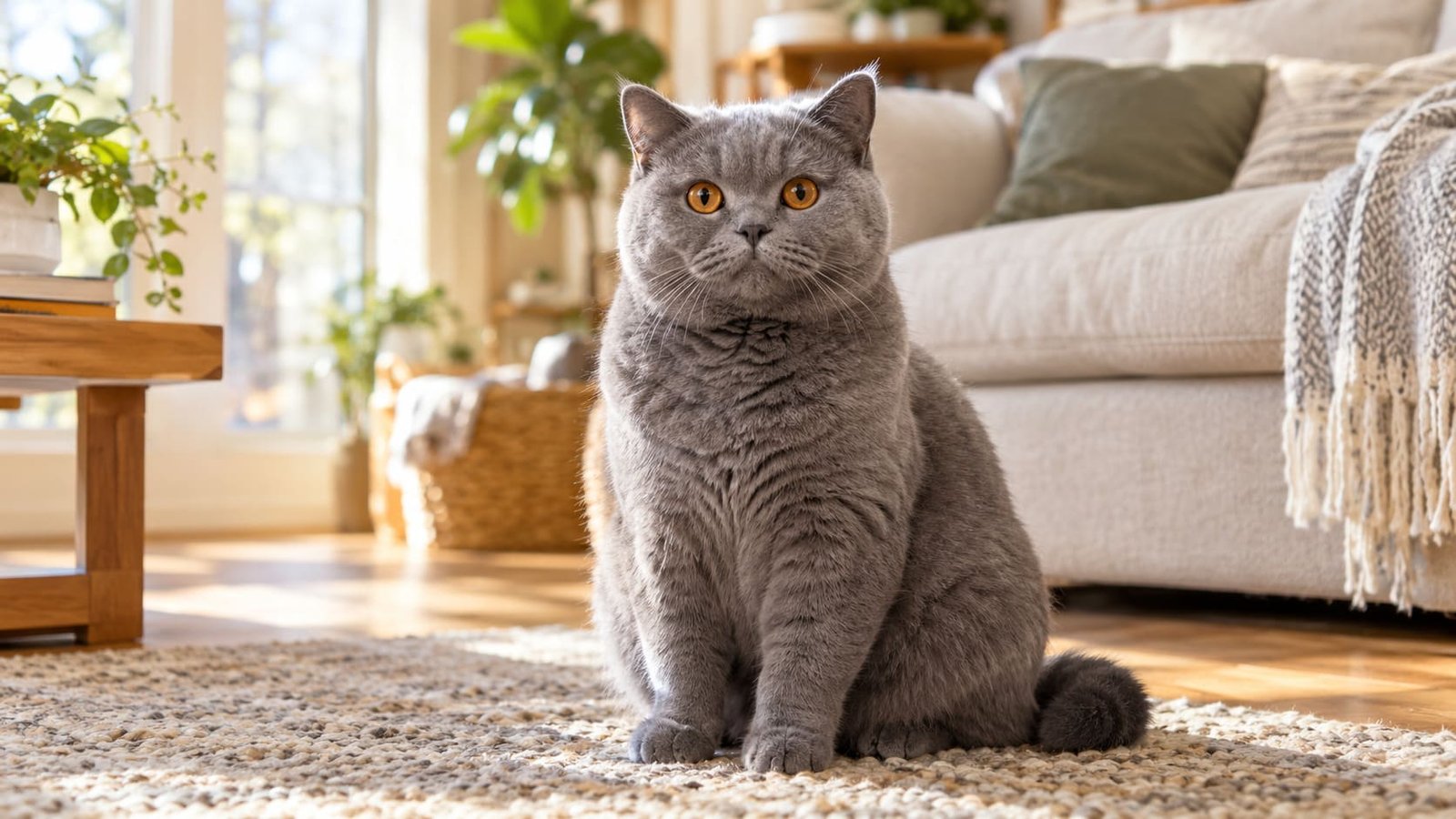
You have probably seen the photos. The round face, the plush grey coat, the copper eyes that look permanently mildly unimpressed. British Shorthairs photograph beautifully, and that is exactly why so many people buy one before finding out what living with the breed is like.
The mismatch usually comes down to one thing. People want a teddy bear. What they get is a cat with strong opinions about being picked up.
This guide covers what the breed is actually like, the health screening that matters before you buy, and the specific household types this cat fits well. I have written breed guides for this site for a while now, and this is the one where I most often disagree with the standard advice, because the most repeated line about British Shorthairs is that they have few health problems. The screening data does not support that.
Key takeaways
- British Shorthairs are calm, quiet, and unusually tolerant of noise, dogs, and children, which makes them a strong fit for busy or first time households.
- They are affectionate but not cuddly. Most prefer sitting beside you to sitting on you, and many actively dislike being carried.
- Hypertrophic cardiomyopathy is a real breed risk. Ask for echocardiogram results on both parents from a board certified veterinary cardiologist, not a general wellness check.
- This breed gains weight easily. Measured meals and daily play are the core care task, not grooming.
- The breed takes three to five years to fully mature, so an adolescent cat is not yet showing you its adult body or temperament.
The short answer: who this breed suits
A British Shorthair is likely right for you if most of these describe your home:
- You want a calm cat, not an entertaining one. This breed is a watcher. If your idea of a good cat involves acrobatics on the bookshelf, look elsewhere.
- You work full time or travel occasionally. They handle being alone better than most breeds and rarely develop the frantic attachment behaviors some cats do.
- You have a dog, young kids, or a noisy household. Their tolerance threshold is genuinely high. They tend to disengage rather than lash out.
- You are willing to weigh food. This is the non negotiable one. A food motivated cat with a low activity drive needs portion control from day one.
- You can budget for cardiac screening. Not once, but periodically through the cat’s life.
It is probably the wrong breed if you want a cat that will be carried around the house, sleep on your chest, follow you room to room, or greet you at the door. Those behaviors happen with British Shorthairs. They are just not the default.
What British Shorthairs are genuinely good at
Temperament that holds steady
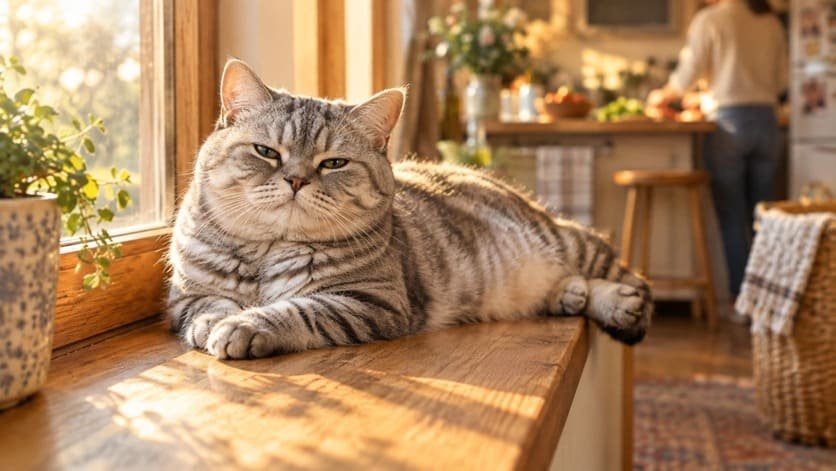
The single most useful trait here is emotional stability. A vacuum cleaner, a doorbell, a visiting toddler, a new dog: most British Shorthairs register these, decide they are not a problem, and go back to what they were doing.
That makes them one of the easier breeds to integrate into an existing multi pet home. The Cat Fanciers’ Association describes the breed as adjusting readily to dogs and other pets, often ending up as the confident one in the household hierarchy.
For families, this matters more than any other trait. A cat that walks away from an overenthusiastic five year old instead of swiping is a safer cat.
Grooming is close to effortless
The coat is short but exceptionally dense, with more hair per square inch than most breeds. That sounds like a grooming burden and mostly is not.
Brushing once or twice a week keeps it in good shape. During spring and fall coat changes, step that up to every other day and you will cut the amount of fur on your furniture substantially. There is no mat prone undercoat to fight, no daily combing ritual, no professional grooming bill.
They tolerate being alone
Independence is an underrated feature in a pet. British Shorthairs are content to spend a workday napping in sunlight and greeting you calmly when you return.
That does not mean they need nothing. It means their baseline need for human proximity is lower, which reduces the guilt tax on owners with long commutes.
They are quiet
Vocalization is minimal in most individuals. Compared to a Siamese or a Bengal, a British Shorthair is close to silent. Apartment dwellers and light sleepers notice this immediately.
The honest downsides
They are not lap cats, and no amount of training changes that
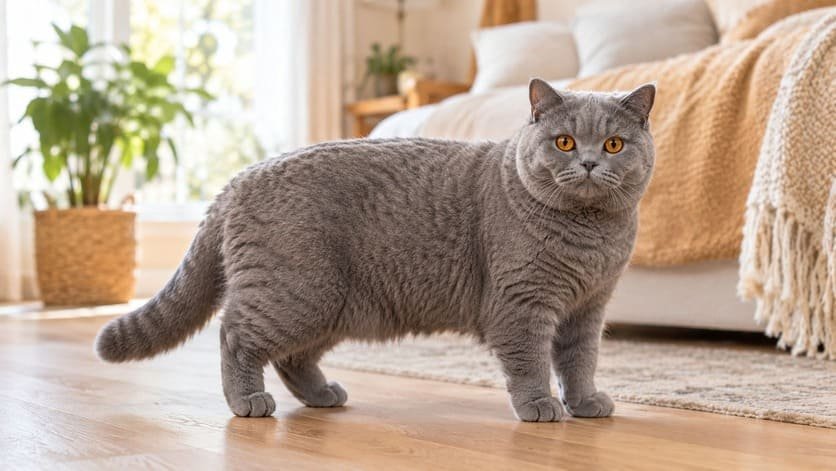
This is the most common source of buyer regret, so it deserves specifics. A typical British Shorthair will follow you into a room, settle three feet away, and stay there for hours. That is the affection. It is real, it is consistent, and it looks nothing like a Ragdoll going limp in your arms.
Picking one up is where owners get frustrated. Many dislike being lifted, and because the breed is heavy and solidly built, an unhappy cat that wants down is a genuine handful. Always support the hindquarters when you do lift one.
If you specifically want a cat that cuddles on demand, a Ragdoll, Birman, or Burmese will disappoint you far less.
Weight gain is the default outcome
A stocky build, a modest play drive, and a strong food motivation add up to a breed that puts on weight quietly. The dense coat makes it worse by hiding the change until it is significant.
Obesity in cats is not cosmetic. It raises the risk of diabetes, joint disease, and hepatic problems, and in a breed already predisposed to heart disease, extra body weight is a burden nobody wants to add. Free feeding a British Shorthair is the single most common care mistake I see.
Slow maturity confuses new owners
The breed takes three to five years to reach full physical development, according to CFA’s breed standard. Male cats in particular develop their broad head and full cheeks well into their third year.
Practically, this means you cannot judge an eight month old kitten’s adult look, size, or settled temperament. It also means adolescent behavior lasts longer than in faster maturing breeds.
Kittens are expensive and waits are long
British Shorthairs from responsible U.S. breeders are not cheap, and the breeders doing full health screening are the ones with waiting lists. Expect months, not weeks. Anyone with kittens immediately available at a suspiciously low price is a reason to ask more questions, not fewer.
The health conversation most breed pages skip
Here is where I part ways with most competitor coverage. Several widely read breed pages describe the British Shorthair as having few health problems. That framing is too comfortable.
Hypertrophic cardiomyopathy
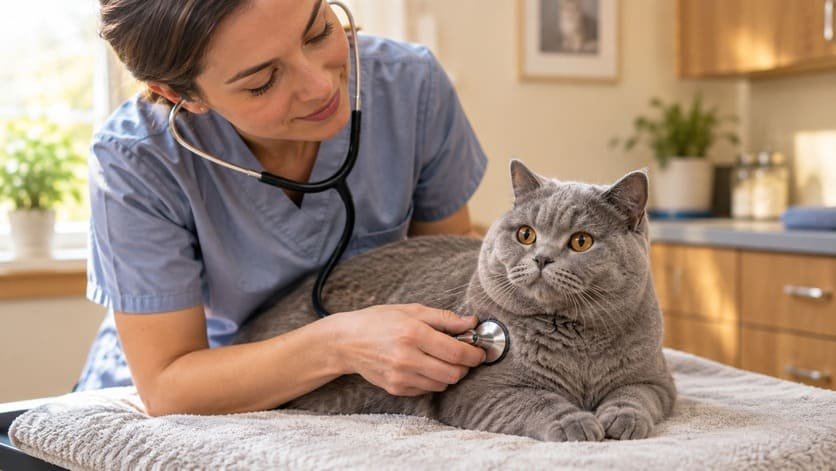
HCM is the most common heart disease in cats, and it causes the walls of the heart’s left ventricle to thicken, which reduces pumping efficiency and raises the risk of congestive heart failure and blood clots. Cornell’s Feline Health Center lists the British Shorthair among the breeds in which it is more prevalent.
A published screening study of British Shorthairs in Denmark examined 329 cats by echocardiography. About 8.5 percent were classified as HCM positive and another 4.3 percent as equivocal, with a significant male predisposition and frequent early onset. The authors recommended echocardiographic screening for the breed, particularly for cats used in breeding.
Two things follow from that. First, no reputable breeder of this breed should be skipping cardiac screening. Second, echocardiography remains the only reliable way to detect it, because no HCM associated mutation has been identified in this breed the way it has in Maine Coons and Ragdolls. A negative DNA panel proves nothing about this cat’s heart.
The early signs are subtle. Rapid or effortful breathing at rest, reduced tolerance for play, sudden hind limb weakness or pain. Any of those warrants a same day veterinary visit.
Polycystic kidney disease
PKD entered the breed through Persian outcrossing after the world wars. Veterinary genetics labs classify the British Shorthair as a moderate risk breed for the PKD1 mutation, alongside Persians, Exotics, and Himalayans.
Unlike HCM, this one has a straightforward DNA test. There is no reason to accept a kitten from untested parents.
Blood type B, the thing nobody mentions
British Shorthairs are among the breeds with a high frequency of type B blood. That has two practical consequences most owners never hear about.
In an emergency requiring transfusion, a type B cat given type A blood can have a severe and potentially fatal reaction. Knowing your cat’s blood type before a crisis is genuinely useful, and a simple test at a routine visit covers it.
For anyone considering breeding, it matters more. A type B queen bred to a type A tom risks neonatal isoerythrolysis, where antibodies in the mother’s first milk destroy the kittens’ red blood cells. International Cat Care lists the British Shorthair among the breeds where this risk is elevated, and blood typing before mating prevents it.
Weight related conditions
Everything in the previous section about obesity belongs here too. The conditions that most often shorten a British Shorthair’s life in practice are the ones that follow years of a few extra pounds.
What to ask before you pay a deposit
Print this. Ask it in this order.
- May I see echocardiogram reports for both parents, performed by a board certified veterinary cardiologist? Ask for the date. A scan from four years ago tells you about a cat’s heart four years ago.
- Have both parents been DNA tested for the PKD1 mutation? Request the lab report, not a verbal assurance.
- What is the blood type of the queen and the stud? A breeder who cannot answer this is not managing the risk.
- At what age do kittens go home? Fourteen weeks or later is the standard for pedigree cats, and earlier placement often correlates with weaker socialization.
- What has this kitten been exposed to? Ask specifically about vacuum cleaners, other adults, dogs, and car travel.
- What is the health guarantee, and what does it cover? Read whether cardiac conditions are included or excluded.
- Can I visit and see where the kittens are raised? A refusal without a good reason is a refusal.
Rescue is a real option too. Purebred cats do end up in shelters and breed specific rescues, and adopting an adult means you are seeing the finished temperament rather than guessing at it.
Daily care that actually matters
Feeding
Measure everything. Use a scale or a marked scoop rather than eyeballing a bowl, and split the daily ration into two or three meals rather than leaving food out.
Puzzle feeders and food dispensing toys are more valuable for this breed than for most, because they add activity to an event the cat is already motivated for. Ask your veterinarian to score your cat’s body condition at every visit and write the number down, so you catch drift early.
Weigh the cat monthly at home if you can. A single pound of gain on a 10 pound cat is a 10 percent change, and it is close to invisible under that coat.
Play
Two short interactive sessions a day, five to ten minutes each, does more than a cat tree the cat ignores. Wand toys that mimic prey movement work best. End each session with a small food reward to complete the hunt sequence.
Do not expect Bengal energy. A British Shorthair will play hard for a few minutes and then be finished, and that is normal rather than a sign of illness.
Grooming and litter
Brush once or twice weekly, more during seasonal sheds. Check ears and trim nails monthly.
Buy larger litter boxes than you think you need. This is a big, solidly built cat, and a standard box that suits a domestic shorthair will feel cramped by the time a British Shorthair male is fully grown.
Veterinary rhythm
Annual wellness visits through adulthood, moving to twice yearly from around age eight. Discuss a baseline echocardiogram with your veterinarian, and repeat screening on the schedule they recommend given your cat’s lines and age.
What the first 30 days look like
This is the part breed pages tend to leave out, and it is the part new owners actually ask about.
Days one to three. Expect almost nothing. A British Shorthair kitten in a new home usually picks one defensible spot, often under a bed or behind a sofa, and stays close to it. Food and water go near that spot, not across the house. Do not pull the kitten out to say hello.
Days four to ten. You will start seeing movement at night first, when the house is quiet. The tell that things are going well is the cat eating a full meal while you are in the room. That single behavior is a better settling indicator than whether the cat approaches you.
Days ten to twenty. This is usually when the personality arrives, and it often surprises people who expected a serene cat from the photos. British Shorthair kittens are clumsy, and the breed has a real streak of undignified play that adults mostly grow out of. Expect skidding, misjudged jumps, and the occasional graceless landing.
Days twenty to thirty. The adult pattern starts to show. Watch where the cat chooses to settle when you sit down. If it is within a few feet of you, on the same piece of furniture but not touching, that is a bonded British Shorthair. That is what the affection looks like, and it does not usually change into lap sitting later.
One behavioral note worth flagging. If your cat is hiding continuously past the two week mark, eating poorly, or refusing the litter box, that is not breed shyness. Call your veterinarian.
How the British Shorthair compares to similar breeds
If you are choosing between plush, calm breeds, the differences are narrower than the marketing suggests.
Against a Ragdoll, the British Shorthair loses badly on cuddling and wins on independence and grooming. Ragdolls generally want to be held. British Shorthairs generally do not.
Against a Persian or Exotic Shorthair, the British Shorthair wins on facial structure and breathing comfort. Flat faced breeds carry brachycephalic risks this breed does not.
Against an American Shorthair, the two are genuinely close in temperament. The British Shorthair is stockier and slower to mature.
Against a Russian Blue, which people often confuse with the British Blue, expect more reserve with strangers from the Russian Blue and a slimmer, more athletic build.
If you are still comparing breeds broadly, our guide to the most popular cat names in the USA covers naming patterns once you have chosen.
The bottom line
Buy this breed if you want a steady, quiet, independent cat that fits into a busy household without drama, and if you are prepared to treat weight management and cardiac screening as ongoing responsibilities rather than one time boxes to tick.
Do not buy it because of the photos. The gap between the teddy bear look and the actual tolerance for being handled is where nearly all the disappointment lives.
If you are close to deciding, do two things this week. Ask any breeder you are speaking with for the parents’ echocardiogram dates and the PKD1 test results. Then check breed specific rescues in your state, because the adult cat you meet there is already showing you exactly who it is.
Have a British Shorthair question this guide did not answer? Tell us in the comments and we will work it into the next update.
This article is for informational purposes only and is not a substitute for veterinary advice. Contact your veterinarian for any health concern, including suspected heart disease, breathing changes, or sudden weakness. For aggression, high prey drive, or other high risk behavioral situations, consult a certified animal behaviorist or a qualified trainer.
Click Here to Add SmartPawLife as a Trusted Source Add as a preferred source on Google