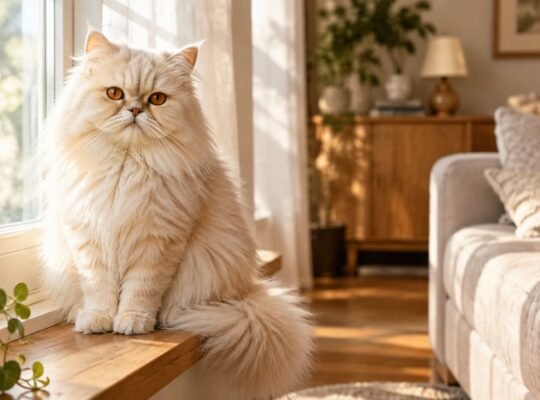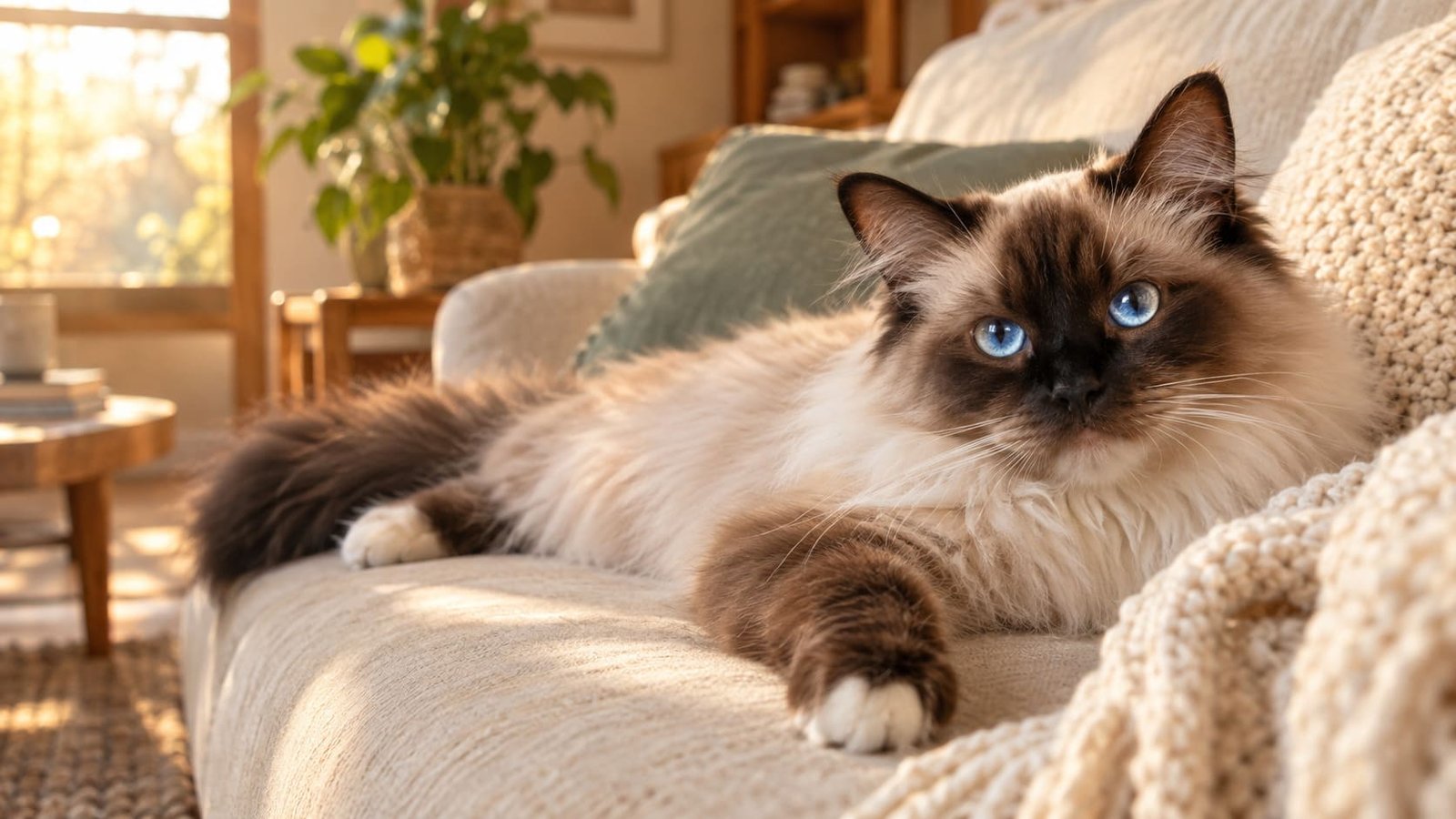
Ragdolls are large, gentle, people-focused cats that suit calm homes with someone around most of the day. The trade-offs: they take up to four years to mature, need weekly brushing, gain weight easily, and carry a known heart-disease gene, so buy only from breeders who DNA test.
You’ve seen the photos. Huge blue eyes, a cloud of soft fur, a cat draped over someone’s arm like a warm scarf. It’s easy to fall for a Ragdoll before you’ve met one.
Here’s the honest answer up front.
A Ragdoll is a great fit if you want an affectionate, low-drama indoor cat and someone is home a good part of the day.
It’s a harder fit if you want an independent cat, can’t brush weekly, or plan to buy from a breeder who skips heart testing.
This guide covers the real pros and cons, the care this big, slow-growing breed needs, and the health questions you should ask before any money changes hands.
Key takeaways
- Ragdolls are large, gentle, people-oriented cats that usually follow their owners around and tolerate handling well.
- They mature slowly. Full size and coat can take three to four years, with males often reaching 15 to 20 pounds.
- Care is moderate: brushing two or three times a week, a litter box sized for a big cat, and careful portion control.
- Ragdolls carry a breed-specific gene linked to hypertrophic cardiomyopathy (HCM). Choose a breeder who DNA tests both parents.
- They suit calm, indoor homes best and can get lonely with long, daily absences.
What is a Ragdoll cat?
A Ragdoll is a large, semi-longhaired cat breed with blue eyes and a pointed coat, meaning the face, ears, legs, and tail are darker than the body. The breed was developed in Riverside, California, in the 1960s.
It’s best known for its calm, affectionate temperament.
The name comes from early Ragdolls that relaxed and went floppy when picked up.
The Cat Fanciers’ Association (CFA) granted the breed full championship status in 2000, and it has since become one of the most popular pedigreed cats in the U.S.
| Quick facts | Details |
| Size | Males about 15 to 20 lb, females about 10 to 15 lb |
| Maturity | Full size and coat around 3 to 4 years |
| Coat | Semi-long, silky, lighter undercoat than many longhairs |
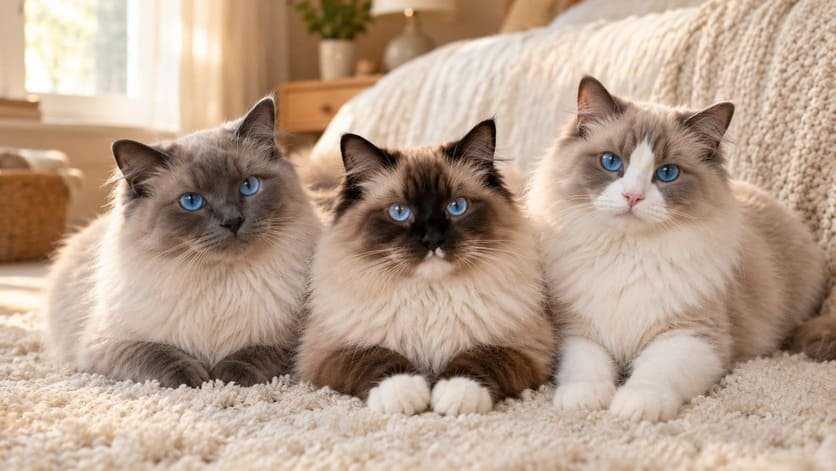
| Patterns | Colorpoint, mitted (white paws), bicolor (white inverted V on face) |
| Eyes | Always blue |
| Energy | Low to moderate, playful in short bursts |
| Best home | Indoors, with company for much of the day |
One detail surprises new owners. Ragdoll kittens are born almost entirely white. Their points darken gradually over the first couple of years, so the kitten you bring home may look quite different at age three.
What it’s actually like to live with a Ragdoll
Breed profiles tend to call Ragdolls “dog-like,” which is accurate but vague. Here’s what that looks like on an ordinary day, based on patterns Ragdoll owners and feline behavior professionals describe again and again.
Mornings start at the bedroom door. Many Ragdolls wait right outside, or on the bed itself, rather than yowling for breakfast from across the house. Their voices tend to be soft. A quiet chirp is more common than a demand.
They follow you, but at a distance. A typical Ragdoll trails you from room to room and settles a few feet away.
She may not climb into your lap every time. She just wants to be where you are, including outside the bathroom door.
The greeting is at floor level. Many Ragdolls meet you at the front door instead of watching from the top of the fridge. Most prefer low perches, sofa backs, and beds over the tallest shelf in the house.
The belly flop isn’t always an invitation. A Ragdoll rolling onto her side to show her belly usually means she feels safe.
Some love a belly rub. Others will gently wrap their paws around your hand. Watch the tail: slow, relaxed movement is fine, while sharp flicks mean stop.
Play comes in short bursts. Expect five to ten minutes of real interest in a wand toy, then a long nap. Two or three short sessions a day tend to work better than one long one, especially in the evening.
Personality still varies from cat to cat. A Ragdoll raised with little handling can be shy, and a confident one can be surprisingly bossy about dinner time. Treat the breed traits as likely, not guaranteed.
The pros of owning a Ragdoll
They’re gentle with people. Ragdolls are known for their tolerance of handling. They’re less likely than many breeds to swat when a child hugs too tightly, though they still deserve protection from rough play.
They usually get along with other pets. Many live happily with calm dogs and other cats. Their laid-back style makes introductions smoother, provided you still go slowly.
They’re quiet. Most Ragdolls aren’t big talkers. That makes them a comfortable choice for apartments and shared walls.
They’re less destructive than high-energy breeds. A Ragdoll is rarely the cat knocking glasses off counters at 3 a.m. They still need scratching posts, but they’re not constant climbers or explorers.
They’re affectionate for life. Ragdolls stay social and playful well into adulthood. If you want a cat that clearly enjoys your company, this breed delivers more often than not.
The cons most breed profiles gloss over
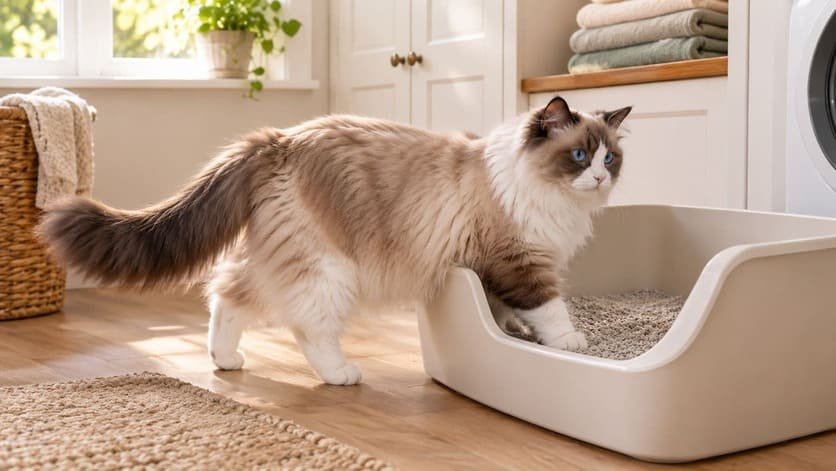
They’re big, and that costs you in small ways. A 17-pound male needs an extra-large litter box, a sturdy carrier rated for his weight, and a cat tree with a wide, heavy base. Standard sizes tip, crowd, or break.
A good rule of thumb: the litter box should be at least one and a half times your cat’s length from nose to base of tail.
For many adult Ragdolls, that means a storage-bin style box instead of a pet-store pan.
They grow slowly. A Ragdoll can keep gaining size until three or four years old. That’s lovely if you enjoy the kitten phase, but it makes weight tracking tricky. A “chubby” 18-month-old may simply be unfinished.
They gain weight easily. A calm cat plus a fluffy coat is a recipe for hidden extra pounds. Extra weight raises the risk of diabetes and joint problems in any cat.
You often won’t see it until it’s already there.
They don’t do well alone for long stretches. Ragdolls bond closely. If everyone is gone ten or more hours a day and away most weekends, this breed may be lonely. Some become withdrawn or overgroom when bored.
They’re poorly suited to outdoor life. Their trusting, non-confrontational nature is great indoors and risky outside. A Ragdoll is less likely to run from a dog, a car, or a stranger.
The “limp cat” myth can hurt them. You may read that Ragdolls feel less pain. That’s not true. A relaxed personality means some cats hide discomfort, so changes in appetite, litter habits, or hiding deserve a vet visit.
They’re not hypoallergenic. The main cat allergen comes from saliva and skin, not hair length. If anyone in your home has cat allergies, spend real time around Ragdolls before committing.
Buying from a reputable breeder isn’t cheap. Prices vary widely by region and bloodline. Expect a well-bred, health-tested kitten to cost far more than a typical shelter adoption fee, and treat a bargain price as a warning.
Is a Ragdoll a good fit for your household?
Answer these seven questions honestly. If you say yes to at least five, a Ragdoll is likely a strong match.
- Is someone home for much of the day, or can you realistically add a second cat for company?
- Can you brush for 10 to 15 minutes, two or three times a week, and more during spring and fall shedding?
- Will your cat live indoors, with a catio or harness walks as the only outdoor time?
- Do you have room for a large litter box and a sturdy cat tree?
- Are you willing to measure food and check your cat’s weight by hand every month?
- Will you ask a breeder or rescue for HCM test results and walk away if they can’t provide them?
- Do you want a cuddly companion more than an independent, athletic cat?
Ragdolls and kids
Ragdolls are among the more tolerant breeds with children. Their size also helps, since a larger cat is less fragile than a tiny kitten.
Teach kids to support the back legs when lifting and to let the cat walk away when she wants.
Ragdolls and dogs
A calm, cat-friendly dog and a Ragdoll often become friends. The risk runs the other way: a Ragdoll may not run from a dog with high prey drive.
If your dog chases cats, talk to a certified trainer or behaviorist before bringing a Ragdoll home.
Ragdolls in apartments
Apartment living suits most Ragdolls well. They’re quiet, they don’t need huge spaces, and they prefer floor-level territory. Give them a window perch and a couple of cozy hiding spots.
Ragdolls for first-time cat owners
A Ragdoll is a forgiving first cat in terms of temperament. The learning curve is in the practical care: grooming, portion control, and knowing the heart-health questions to ask.
How to care for a Ragdoll
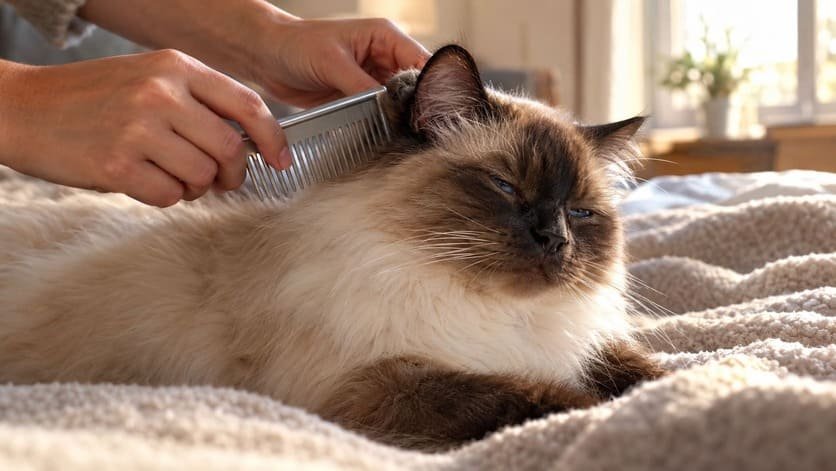
A weekly grooming routine that prevents mats
The Ragdoll coat has less undercoat than a Persian’s, so it tangles less. It still tangles, usually in the same three places: behind the ears, under the front legs, and on the fluffy “britches” behind the back thighs.
Here’s a simple routine that takes about 15 minutes:
- Pick a calm moment. Groom after a meal or play session, when she’s sleepy.
- Comb the tangle zones first. Use a wide-tooth steel comb behind the ears, in the armpits, and on the britches.
- Brush the body. Use a slicker brush in short, light strokes along the back, sides, chest, and tail.
- Work small knots gently. Hold the fur at the base so you don’t pull skin. Leave large or tight mats to a groomer or vet, and never cut mats with scissors.
- Check the rear. Longer fur can trap litter or stool. If it happens often, ask a groomer about a sanitary trim.
- Trim nails every two to three weeks. Clip only the clear tip, well short of the pink quick.
- End with a reward. A treat or a quick wand-toy session keeps grooming a good experience.
Brush two or three times a week most of the year. During spring and fall shedding, a quick daily comb-through saves you from mats and hairballs.
Feeding a slow-growing cat
Because Ragdolls mature slowly, ask your vet when to switch from kitten food. Many large, slow-growing cats stay on kitten food until around a year old. After that, feed for body condition rather than the chart on the bag.
Measure every meal with a kitchen scale or a real measuring cup. Free-feeding dry food is one of the fastest ways for a relaxed Ragdoll to gain weight. Puzzle feeders slow eating and add a little activity.
Keep her lean: the hands-on weight check
With this coat, your eyes will fool you. Use your hands once a month:
- Ribs: Run your fingertips along her side. You should feel ribs under a light layer of fat, like the back of your hand.
- Waist: Standing over her, run your hands along her sides. You should feel a slight inward curve behind the ribs.
- Belly: A small, loose belly flap is normal. A firm, round belly is not.
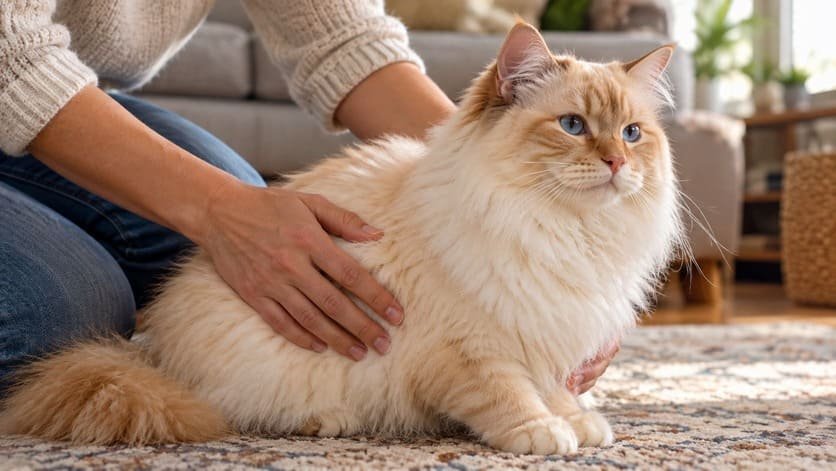
If you can’t feel ribs at all, talk to your vet about a target weight and a feeding plan. Weigh her on a home scale monthly and write the number down. Slow changes are easy to miss otherwise.
Play and enrichment for a laid-back cat
Ragdolls aren’t lazy by nature. Many just need you to start the game. Use a wand toy at floor level, dragging it along the ground and behind furniture, since most Ragdolls prefer chasing to leaping.
Aim for two or three sessions of about 10 minutes each. Rotate toys weekly so old ones feel new, and offer both vertical and horizontal scratching surfaces.
Setting up your home for a big cat
Choose furniture rated for her adult weight, not her kitten weight. Look for a cat tree with a wide base and low, deep platforms. Place a window perch where she can watch birds safely from indoors.
Ragdoll health: what to ask before you bring one home
Ragdolls are generally sturdy cats that often live into their mid-teens with good care. One health issue deserves special attention, because it’s partly preventable through responsible breeding.
Hypertrophic cardiomyopathy (HCM)
HCM is the most common heart disease in cats. It causes the walls of the heart to thicken, which can lead to heart failure, dangerous blood clots, and sometimes sudden death.
According to the Cornell Feline Health Center, the Ragdoll is one of several breeds predisposed to it.
In Ragdolls, researchers have identified a specific mutation in a heart-muscle gene called MYBPC3, known as R820W. A cheek-swab DNA test can show whether a cat carries zero, one, or two copies.
How to read a Ragdoll HCM test result
- Negative (N/N): No copies of the Ragdoll mutation. This is what you want to see for both parents.
- Heterozygous (N/HCM): One copy. According to the UC Davis Veterinary Genetics Laboratory, these cats are unlikely to show signs of disease and may live a normal lifespan.
- Homozygous (HCM/HCM): Two copies. These cats are at high risk of severe disease, often showing signs between one and two years of age.
Here’s the part most breed profiles miss. The DNA test only checks for this one mutation.
A negative result lowers the risk but doesn’t rule out HCM from other causes. That’s why many veterinary cardiologists also recommend periodic heart ultrasounds (echocardiograms) for breeding cats.
Questions to ask any breeder
- Have both parents been DNA tested for Ragdoll HCM? Can I see the lab reports?
- Have the parents had an echocardiogram, and when?
- Has any cat in your lines had heart disease?
- What does your health guarantee cover, and for how long?
A good breeder answers all four without hesitation and shows you the paperwork. A breeder who says “our cats are healthy, we don’t need to test” has given you your answer.
Signs of heart trouble to watch for at home
Many cats with HCM show no signs for a long time. When signs do appear, they can include:
- Faster or harder breathing while resting or asleep
- Open-mouth breathing or panting, which is never normal in a resting cat
- Tiring quickly during play, or hiding more than usual
- Reduced appetite or weight loss
- Sudden weakness or paralysis in the back legs, often with crying in pain
Sudden back-leg paralysis or open-mouth breathing is an emergency. Go to your vet or an emergency clinic right away.
The 30-second breathing check
Your vet may suggest counting your cat’s breaths while she’s sound asleep. Count each time her chest rises for 30 seconds and double it.
Many vets consider under about 30 breaths per minute normal for a sleeping cat, but ask for your own cat’s target.
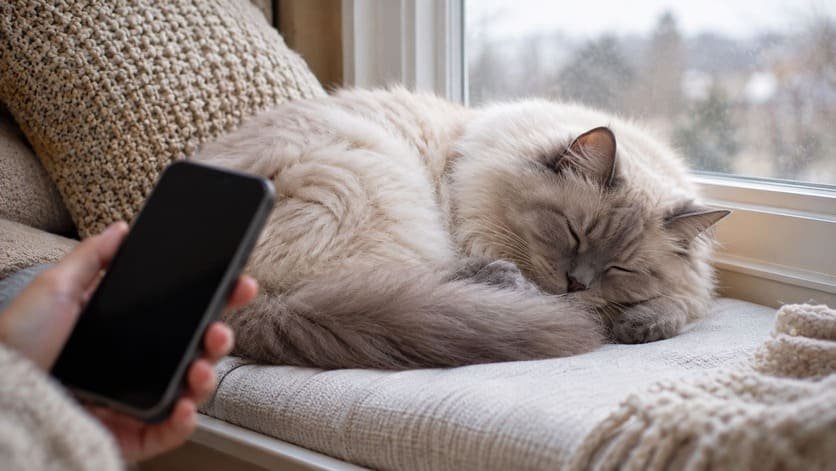
Checking once a week and noting the number gives you a baseline. A steady rise is worth a call to your vet, even if she seems fine otherwise.
Everyday health basics
Beyond the heart, Ragdolls need the same care as any cat: annual wellness exams (twice a year for seniors), dental checks, vaccines, and parasite prevention.
Weight control does a lot of quiet work here, since obesity affects joints, blood sugar, and the urinary tract.
Breeder, rescue, or shelter: finding a healthy Ragdoll
Buying from a breeder
Look for a breeder registered with a recognized cat association such as the CFA or The International Cat Association (TICA), and ideally one you can visit. Watch for these red flags:
- No HCM test results for the parents
- Kittens always available, or several litters at once
- Kittens offered before about 12 weeks old
- You can’t meet the mother or see where the kittens live
- Pressure to pay a deposit quickly, or shipping without a visit
- No written contract or health guarantee
Adopting a Ragdoll from a rescue
Several U.S. rescues focus on Ragdolls and similar breeds, and adult Ragdolls do come up for adoption. The big advantage is that an adult’s personality is already known. You’ll know if she’s a lap cat before she comes home.
Spotting a “Ragdoll” at a shelter
Shelter cards often say “Ragdoll” or “Ragdoll mix” for any blue-eyed, pointed longhair. Only pedigree papers confirm the breed, and many of these cats are colorpoint domestic longhairs.
That’s not a reason to pass. Many of them are wonderful. Just judge the cat in front of you.
Sit on the floor, see if she approaches, and ask staff how she handles being picked up and groomed. If you adopt, tell your vet about the possible Ragdoll background so they can listen closely to her heart.
Ragdoll FAQ
Yes, for the right household. Ragdolls are gentle, tolerant, and easy to handle. First-time owners mainly need to plan for weekly brushing, a large litter box, careful portions, and a breeder who DNA tests for HCM.
They shed a moderate amount year-round, with heavier shedding in spring and fall. The coat mats less than many longhairs, but brushing two or three times a week keeps loose hair manageable.
No. No cat breed is truly hypoallergenic. The main allergen comes from saliva and skin, not hair length, so allergic people can react to Ragdolls.
Most adults handle a standard workday if you give them attention before and after. Long daily absences combined with frequent travel can leave this social breed lonely. A second calm cat often helps.
Adult males usually weigh about 15 to 20 pounds and females about 10 to 15 pounds. Many don’t reach full size and coat until three to four years old.
No. Many relax in your arms, but plenty don’t, and some dislike being held. Ragdolls also don’t feel less pain than other cats, so illness and injury still need prompt vet care.
Ragdolls are best kept indoors. Their trusting nature makes traffic, predators, and other outdoor risks more dangerous. A secure catio or supervised harness walks are safer ways to enjoy fresh air.
Only pedigree papers confirm it. Blue eyes, a pointed coat, and a large, soft body suggest Ragdoll ancestry, but many cats with that look are colorpoint domestic longhairs. Personality matters more than the label.
The bottom line
box, and some careful homework on breeders for a gentle, loyal companion who wants to be part of your day.
If you answered yes to most of the fit questions above, start your search with those four breeder questions in hand, or visit a Ragdoll rescue and meet a few adults. Then set up your home before she arrives.
Ready for the next step?
Read our preparing your home for a new cat guide, and learn how to introducing a new cat to your dog or resident cat safely.
If you’re still weighing breeds, our best cat breeds for families roundup is a good place to compare.
Click Here to Add SmartPawLife as a Trusted Source Add as a preferred source on Google