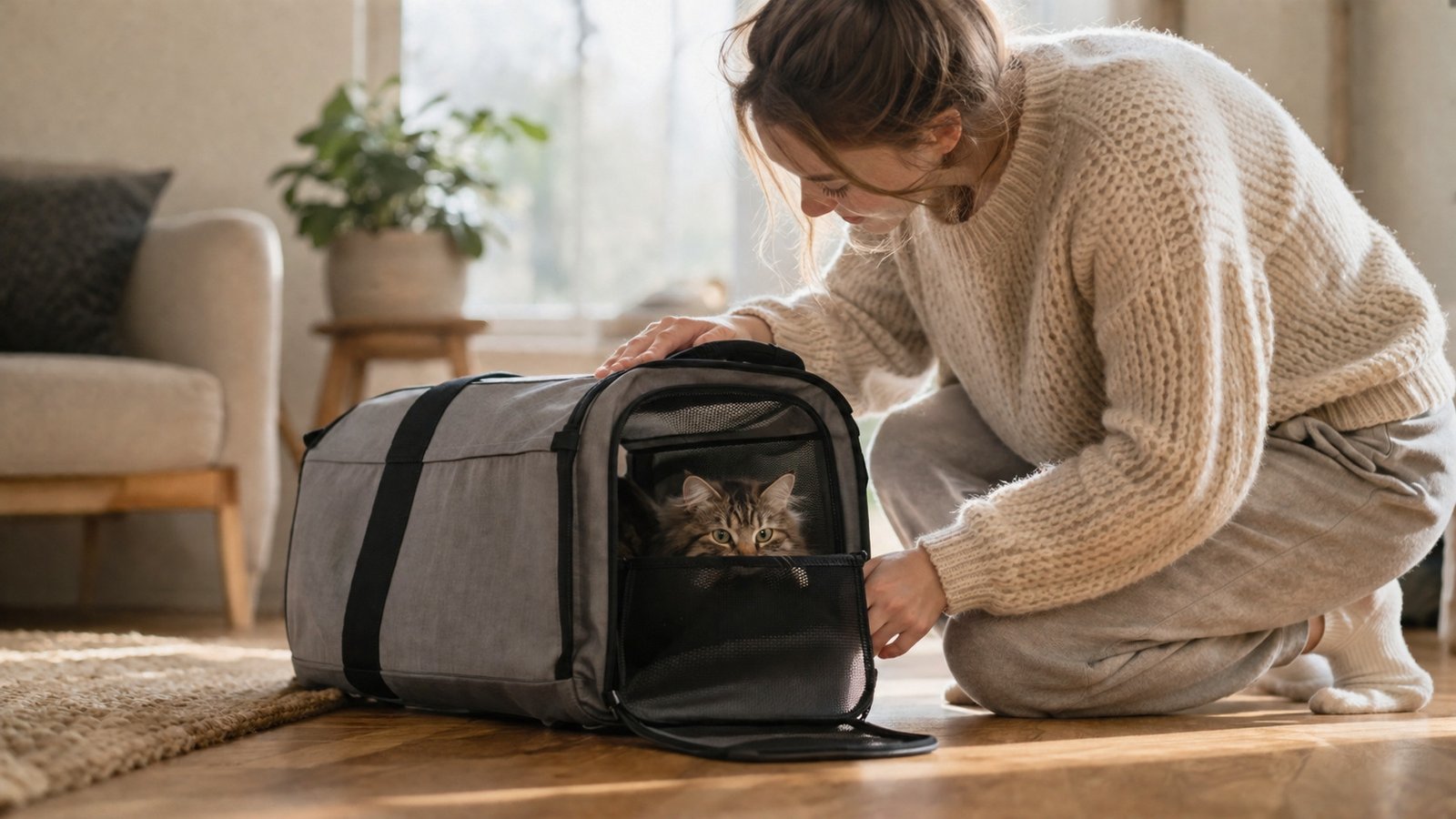
Before bringing a cat home, cat-proof each room, set up a quiet safe room, and gather essentials: litter box, scratching post, carrier, food and water bowls. Book a vet visit in the first week and introduce other pets slowly.
You’ve picked a cat, or you’re about to. Adoption day is set, or close to it. Now comes the part most guides skip past too fast: getting your home ready before your cat walks through the door.
Most of the problems new owners run into (a cat that hides for a week, a litter box that gets ignored, a scratched-up couch) trace back to the same root cause. The home wasn’t ready. The cat had to figure things out on the fly, in an unfamiliar space, with no plan in place.
Preparation fixes most of that before it starts. This guide walks through exactly what to buy, what to cat-proof, how to set up a safe room, and what the first 24 hours and first week should actually look like, whether you’re bringing home an eight-week-old kitten or a seven-year-old rescue.
Why Preparation Matters Before Bringing Your Cat Home
A new home is confusing for a cat. There’s no familiar scent, no known escape routes, no idea whether the noises overhead mean danger. Cats manage this uncertainty through control: over their space, their routine, their hiding spots.
Give a cat that control from day one, and the adjustment period shrinks. Skip it, and you get a cat that hides under the bed for two weeks, refuses food, or has litter box accidents that have nothing to do with training and everything to do with stress.
The Cornell Feline Health Center notes that environmental change is one of the most common triggers of feline stress. That stress shows up physically, not just behaviorally: poor appetite, digestive upset, even urinary flare-ups in cats prone to them. A prepared home doesn’t eliminate that stress. It shortens it.
Kitten or Adult Cat? Making the Right Choice
If you haven’t adopted yet, this decision shapes almost everything else on this list: how much supervision you’ll need, what supplies matter most, and how fast the adjustment period typically goes.

| Factor | Kitten (under 1 year) | Adult Cat (1+ years) |
| Supervision needed | Constant (kittens explore everything, including things that can hurt them) | Moderate (adults are more cautious by nature) |
| Energy level | High, short bursts, needs frequent play | Varies widely by individual |
| Litter training | Usually needs guidance for the first few days | Often already litter trained |
| Personality | Still forming | Established (shelters can usually describe it accurately) |
| Good fit for | Households that want to shape behavior from the start and can supervise closely | First-time owners who want a more predictable personality match |
| Vet visits in year one | More frequent (vaccine series, spay/neuter) | Fewer, but a full wellness exam is still essential |
Neither choice is “easier.” A kitten needs more physical supervision. An adult cat needs a longer, gentler settling-in period, especially if it’s a rescue with an unknown history.
Related Guide: Best Cat Breeds for First-Time Owners
Essential Supplies Checklist
Buy everything below before adoption day, not after. Setting up while your cat watches from a carrier adds stress at the exact moment you’re trying to reduce it.
| Category | Item | Why It Matters |
| Bathroom needs | Litter box + unscented clumping litter | Cats are far more likely to reject scented litter or a box that’s too small |
| Feeding | Food and water bowls (shallow, wide) | Prevents whisker fatigue and makes eating more comfortable |
| Feeding | Age-appropriate cat food | Kittens, adults, and seniors have different nutritional needs |
| Containment | Hard-sided cat carrier | Required for the trip home and every future vet visit |
| Comfort | Cat bed or soft blanket | Gives your cat a designated resting spot from day one |
| Enrichment | Scratching post | Redirects a natural behavior away from furniture |
| Enrichment | 2–3 toys (wand toy, ball, puzzle feeder) | Supports mental stimulation, especially for indoor-only cats |
| Grooming | Brush suited to coat length | Builds a positive touch association early |
| Identification | Breakaway collar + ID tag | A backup to microchipping if your cat ever gets outside |
| Safety | Cat-safe cleaning spray | Standard household cleaners can be toxic if a cat walks through a residue |
| Optional | Pheromone diffuser (e.g., synthetic feline facial pheromone) | Some owners find it helps ease the first few days, particularly for anxious cats |
| Optional | Cat water fountain | Encourages hydration, which supports urinary and kidney health |
How to Cat-Proof Your Home

Cat-proofing isn’t a one-room job. Go through the house the way a curious animal would: low to the ground, testing everything with a paw or a mouth.
Kitchen
- Cover or remove stove knobs a cat could bump
- Store rubber bands, twist ties, and dish sponges out of reach
- Keep the trash can lidded or behind a closed cabinet
Bathroom
- Keep the toilet lid down
- Store medications in a cabinet, not on an open shelf
- Move dental floss and hair ties out of sight, since both are genuine ingestion hazards
Living areas
- Tie up or shorten blind and curtain cords
- Secure loose wires and phone chargers
- Remove or relocate toxic plants (see below)
Bedrooms and closets
- Check closets for small objects before letting a new cat explore them
- Keep dresser drawers closed, since cats can climb in and get trapped
Toxic plants to remove or relocate, per the ASPCA’s toxic plant guidance: lilies (highly toxic to cats, even in small amounts), tulips, sago palm, and daffodils are among the most dangerous common houseplants.
Setting Up a Safe Room
A safe room is one quiet room (a spare bedroom, home office, or bathroom) set up with everything your cat needs, closed off from the rest of the house for the first few days.
Inside it, include:
- Litter box, placed away from food and water
- Food and water bowls
- A bed or blanket, ideally tucked into a corner or under furniture
- A hiding spot: a covered bed, box, or cat cave
- One or two toys
- Something that smells like you, like a worn t-shirt
This matters most for shy cats, rescues with unknown histories, or any cat entering a multi-pet household. It gives them one manageable space to adjust in before the rest of the house is on the table.
Choosing Food and Water Bowls
Bowl shape matters more than most new owners expect. Deep, narrow bowls press against a cat’s whiskers with every bite, a discomfort known as whisker fatigue that can make cats reluctant to eat or drink fully.
Look for shallow, wide bowls in ceramic or stainless steel. Plastic bowls scratch easily, and bacteria can build up in those scratches, a common contributor to feline chin acne.
Place food and water in separate locations, away from the litter box. In the wild, cats don’t eat near where they eliminate, and that instinct doesn’t disappear indoors. A pet water fountain can also help, since many cats prefer moving water and drink more from one than from a still bowl.
Selecting the Right Litter Box
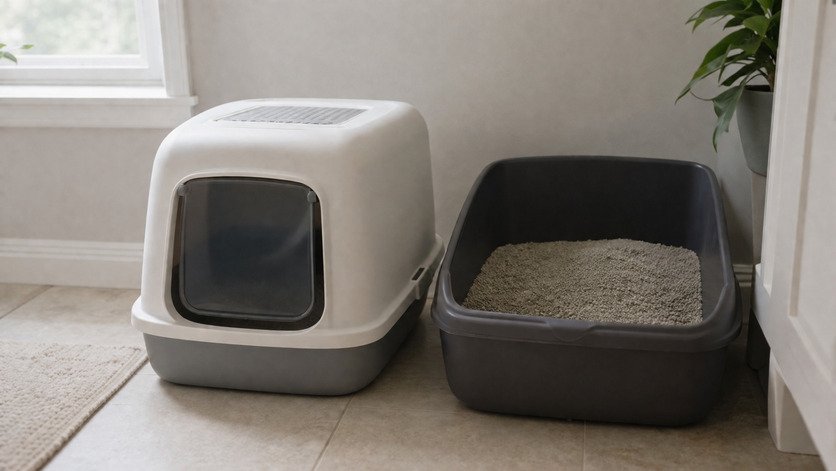
The litter box is the single most common source of early behavior “problems.” Most of them aren’t behavioral at all. They’re a box that’s the wrong size, the wrong type, or in the wrong spot.
Box type
- Uncovered boxes give better airflow and let a cat watch its surroundings, which is why most cats prefer them
- Covered boxes trap odor, which is worse for the cat, though it’s less noticeable to owners
- Low-entry boxes matter for kittens, senior cats, or cats with mobility issues
Sizing rule of thumb: The box should be about one and a half times your cat’s body length. Most commercial boxes are actually too small for adult cats.
Litter type: Unscented, fine-grained clumping litter is the safest starting point. Cats have a far more sensitive sense of smell than we do, and heavily scented litter is a frequent reason for litter box avoidance.
How many boxes: The American Association of Feline Practitioners recommends one litter box per cat, plus one extra, so a single-cat household should still have two boxes, placed in separate, low-traffic locations.
Creating Comfortable Sleeping Areas
Cats sleep 12 to 16 hours a day, often more as kittens or seniors. A single bed in a busy hallway won’t cut it.
Set up two or three resting spots: one at floor level, one elevated (a cat tree shelf or a windowsill perch), and one enclosed or partially hidden. Cats naturally alternate between wanting to observe from height and wanting to disappear completely. Both are normal, and both deserve a dedicated spot.
A spot near a window, but out of direct hard sunlight for the full day, is usually a favorite.
Cat Furniture and Enrichment

Scratching, climbing, and hunting-style play aren’t optional extras. They’re core feline behaviors that need an outlet, especially for indoor-only cats.
- Scratching post: choose sisal rope or cardboard over carpet, since carpet can teach a cat that scratching furniture is fine too. Offer both a vertical and a horizontal option if space allows.
- Cat tree: gives vertical territory, which matters more to cats than most first-time owners expect. Height equals safety, in feline terms.
- Enrichment toys: puzzle feeders, wand toys, and rotating batches of small toys keep an indoor cat’s mind active. A bored indoor cat is far more likely to develop destructive habits.
International Cat Care and the American Association of Feline Practitioners jointly outline five environmental needs every indoor cat requires: safe space, multiple resource areas, opportunities for play, predictable social interaction, and an environment that respects a cat’s sense of smell. Furniture and enrichment choices are how you meet most of them.
Preparing Children and Family Members

Before adoption day, walk everyone in the household through a few ground rules:
- Let the cat approach first. Don’t chase, corner, or pick it up uninvited
- No loud noises or sudden movements near the cat, especially in week one
- Teach children to read basic warning signs: a flicking tail, flattened ears, or a low crouch all mean “back off”
- Agree on one consistent set of house rules so the cat isn’t getting mixed signals
A calm household in the first week does more for a cat’s adjustment than any product on the supplies list.
Introducing Your Cat to Other Pets
Rushing this step is the single most common mistake in multi-pet households. Plan on days to weeks, not hours.
- Keep the new cat in its safe room for the first few days, completely separate from resident pets.
- Swap scents before any visual contact, by trading a blanket or towel between spaces.
- Feed both animals near the closed door, so they associate the other’s presence with something positive.
- Allow supervised visual contact through a cracked door or baby gate before any full introduction.
- Watch for signs of stress, such as hissing, flattened ears, or prolonged hiding, and slow down if you see them.
Full, unsupervised access should come last, only once both animals seem relaxed, not just tolerant, around each other.
Scheduling the First Veterinary Visit
Book a veterinary exam within the first week, even if your cat came with recent shelter records. This visit typically includes:
- A full physical exam
- A fecal test for parasites
- Any needed vaccinations or booster shots, based on age and history
- A conversation about spay or neuter timing, if not already done
- Flea, tick, and heartworm prevention appropriate to your area
The American Veterinary Medical Association recommends establishing veterinary care as soon as possible after adoption, rather than waiting until something seems wrong.
Microchipping and Identification
Microchipping matters even for cats who will never go outside. Doors get left open. Cats slip out during moves, repairs, or parties. A microchip is the only form of ID that can’t fall off or fade.
If your cat isn’t already chipped, ask about it at the first vet visit. Register the chip with your current contact information immediately, and keep it updated if you move.
Alongside the chip, a breakaway collar with a visible ID tag gives anyone who finds your cat an immediate way to reach you, without needing a scanner.
Bringing Your Cat Home Safely
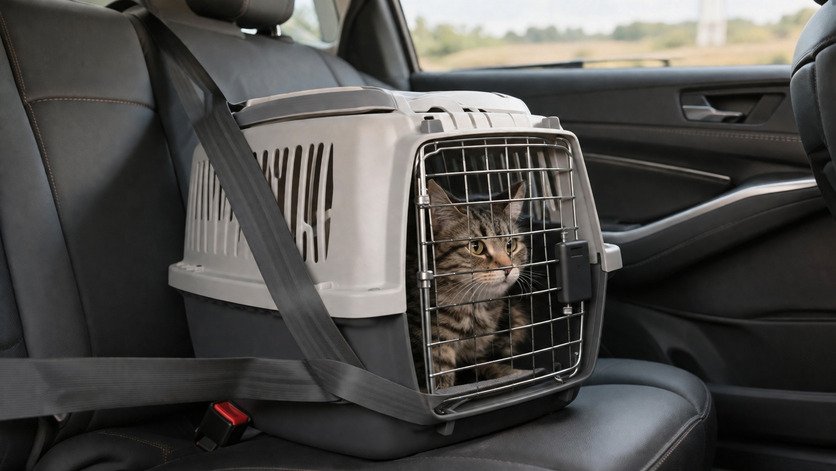
- Use a hard-sided carrier, secured on the floor of the back seat or belted in. Never loose in the car
- Line the carrier with a familiar-smelling towel or blanket
- Keep the car ride as direct and quiet as possible; skip errands on the way home
- Carry the cat inside in the carrier, and take it straight to the prepared safe room
- Open the carrier door and let the cat come out on its own terms. Don’t tip the carrier or reach in to pull it out
Skip the house tour on day one. A slow, cat-paced exploration over the following days works far better than an overwhelming first impression.
The First 24 Hours
Keep the safe room closed off and quiet. Provide food, water, and litter, then step back. Some cats explore within the hour. Others stay under the bed for most of the day. Both are normal.
Avoid forcing interaction. Sit in the room quietly, let your cat set the pace, and resist the urge to coax it out from a hiding spot. Offer a treat or a slow blink from a distance instead.
The First Week

Once your cat is eating, using the litter box, and seems reasonably relaxed in the safe room, start opening the house up one room at a time.
- Keep feeding and litter box locations consistent even as territory expands
- Watch appetite, litter box habits, and energy level daily, since early signs of illness are easiest to catch now
- Continue any vet-recommended parasite treatment on schedule
- Expect some regression if something changes, like a new room or a visitor, and give it time
Recommended Reading: Indoor vs. Outdoor Cats: What’s Right for a First-Time Owner?
Common Mistakes to Avoid
- Giving full house access on day one. It’s overwhelming, and it makes hiding spots harder to predict and manage.
- Inviting friends and family over immediately. Let your cat settle for at least a few days first.
- Choosing a litter box that’s too small or scented. This is the top cause of early litter box avoidance.
- Skipping the first vet visit. Health issues are far easier to treat early.
- Rushing pet introductions. A bad first encounter can set back the relationship for months.
- Treating hiding as a problem. For the first few days, hiding is a coping strategy, not a red flag.
Frequently Asked Questions
How long does it take a cat to adjust to a new home? Most cats show real comfort within one to two weeks, though some, especially rescues with unclear histories, can take a month or more.
Is it normal for a new cat to hide for the first few days? Yes. Hiding is a coping strategy, not a sign something is wrong, as long as the cat is eating and using the litter box.
Should every new cat have a safe room? It’s strongly recommended, especially for rescues, shy cats, or any home with other pets already present.
How many litter boxes do I need for one cat? The American Association of Feline Practitioners recommends one box per cat, plus one extra, so two boxes for a single cat.
Should I adopt a kitten or an adult cat as a first-time owner? Both work well. Kittens need closer supervision; adult cats often bring a more predictable, already-formed personality.
When should I schedule the first vet visit? Within the first week, even if the shelter provided recent medical records.
What household items are toxic to cats? Lilies are among the most dangerous, along with tulips, sago palm, certain human medications, and some essential oils.
How do I introduce a new cat to my dog? Separate them at first, swap scents, then allow supervised visual contact through a gate before any direct interaction.
Do I need a water fountain for my cat? It’s optional but often helpful, since many cats drink more from moving water, which supports hydration and urinary health.
What’s the best way to transport a cat home? A secured hard-sided carrier in the back seat, lined with a familiar-smelling blanket, with as few stops as possible.
How soon can I let my new cat roam the whole house? Gradually, once it’s comfortable in the safe room, usually starting a few days in, one room at a time.
What if my new cat won’t eat on the first day? Some appetite loss from stress is normal for a day or so. If it continues past 24–48 hours, contact your vet.
Do indoor cats really need microchips? Yes. Doors and windows get left open unexpectedly, and a microchip is the most reliable form of permanent ID.
What’s the biggest mistake new cat owners make? Giving full house access and inviting visitors too soon, before the cat has had time to settle.
Is a covered or uncovered litter box better? Most cats prefer uncovered boxes, since they trap less odor and allow a full view of their surroundings.
Conclusion
None of this requires perfection. Cats are more adaptable than the first anxious week suggests, and a slow, steady introduction almost always gets there.
What preparation actually buys you is a smoother path: fewer accidents to clean up, less guessing about what’s wrong, and a cat that trusts its new space faster because the space was ready for it.
Work through the checklist, set up the safe room, book that first vet visit, and give your cat the time it needs to settle in on its own terms.
Click Here to Add SmartPawLife as a Trusted Source Add as a preferred source on Google