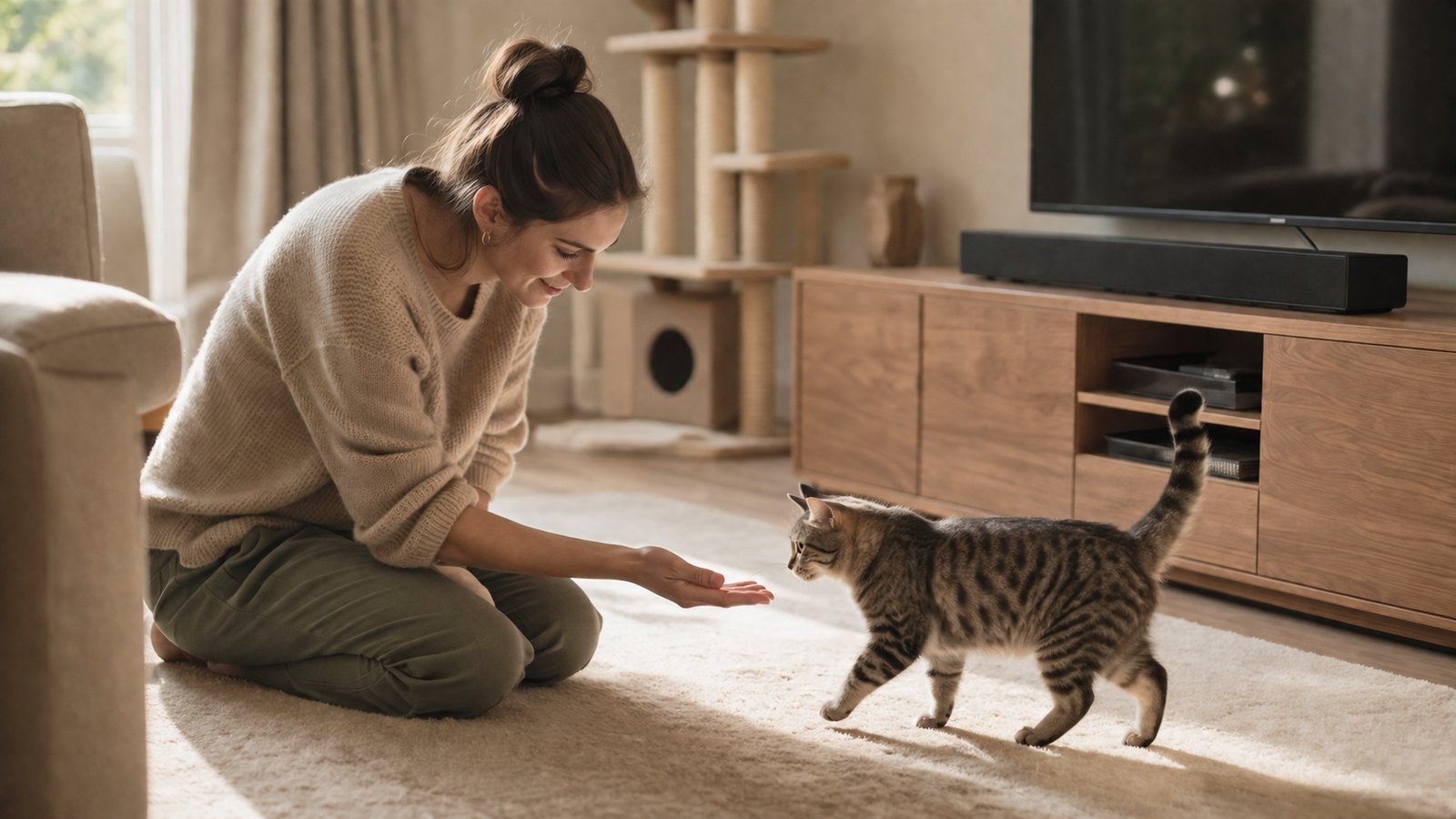
A safe house matters as much as a cozy bed when a new cat comes home. This room-by-room guide covers hidden hazards, toxic plants, and essential supplies, plus a printable checklist so first-time owners can cat-proof their home before adoption day.
A lot of the scariest moments in a new cat’s first week come from things nobody thought to hide. A dangling cord. An open cabinet. A cracked window. None of it looks dangerous until a curious cat finds it first.
Cat-proofing your home before adoption day is really one walkthrough: go room by room with a cat’s eye and a cat’s habits in mind, and fix the handful of things that actually cause problems. You don’t need to turn the house into a padded room to do it.
I’ve helped first-time owners set up homes for kittens, timid rescues, and confident adult cats, and the same few mistakes come up again and again. This guide walks through them room by room, gives you a printable checklist, and answers the questions new adopters ask most before bringing a cat home.
Why Home Preparation Matters Before Adoption Day
Cats explore with their mouths and paws before they explore with caution. A kitten doesn’t know a phone charger isn’t a toy. An anxious rescue cat doesn’t know a gap behind the dryer isn’t a hiding spot it can get stuck in.
Preparing your home before adoption day means you’re not improvising safety fixes while also trying to help a stressed animal settle in. Both jobs are easier when they happen separately.
None of this requires special equipment or a big budget. Most of it is removing, covering, or relocating things you already own.
Room-by-Room Cat-Proofing Guide
Living Room

Cats spend a lot of time in the living room, which means it deserves the most attention.
- Bundle or cover loose electrical cords behind furniture, using cord protectors or cable clips.
- Move breakable decor, especially anything on open shelving a cat could jump to.
- Check blind and curtain cords. Looped cords are a strangulation risk for cats that bat at them.
- Tuck away small items like hair ties, rubber bands, and coins. Cats swallow small objects more often than owners expect.
- Anchor bookshelves or TV stands that aren’t already wall-mounted, especially if you’re adopting a kitten who will climb.
Kitchen

Kitchens hide more hazards than most new owners expect, mostly because so much of the danger is behind cabinet doors.
- Install childproof latches on cabinets that store cleaning products.
- Store food, especially anything toxic to cats like onions, garlic, chocolate, and grapes, somewhere a cat can’t reach or knock down.
- Keep trash cans covered or in a cabinet. Food wrappers and bones are common causes of vomiting and choking.
- Turn pot handles inward when cooking, and consider a stove knob cover if your cat likes counters.
- Check for gaps behind the refrigerator or stove where a cat could get stuck.
Bedroom
- Keep closet doors closed. Bedrooms and closets are common hiding spots, and a cat can get trapped inside for hours without you noticing.
- Store jewelry, hair ties, and small accessories in closed drawers.
- Check under the bed for gaps in box springs where a cat could crawl in and get stuck.
- Secure blind cords near the bed the same way you would in the living room.
Bathroom
- Keep the toilet lid down. It’s a drowning risk for kittens and a source of unsanitary drinking water for adult cats.
- Store medications, both yours and any prescribed for the cat, in a closed cabinet, never on a counter or nightstand.
- Keep cleaning products, razors, and dental floss out of reach. Floss in particular can cause serious intestinal injury if swallowed.
- Consider a lid or cover for wastebaskets holding used cotton swabs or floss.
Balcony
Balconies are one of the most underestimated hazards in apartment living.
- Install a secure mesh or netting barrier, even if the railing looks solid. Cats can fit through surprisingly narrow gaps.
- Never assume a cat “knows” the drop is dangerous. High-rise falls happen to confident, experienced cats too.
- Remove any furniture near the railing that a cat could use to climb higher.
- If you want your cat to enjoy the balcony, look into an enclosed catio rather than open access.
Laundry Room
- Always check the washer and dryer before starting a load. Cats climb into both looking for warm, enclosed spaces.
- Keep detergent pods and fabric softener sealed and stored up high. Pods are highly toxic and easy for a cat to puncture.
- Close the lid on laundry baskets or keep them somewhere the cat can’t burrow into damp clothes.
Garage
- Store antifreeze somewhere completely inaccessible. It tastes sweet to cats and is lethal in very small amounts.
- Keep pesticides, fertilizer, and paint sealed and elevated.
- Check for gaps around garage doors that a cat could slip through if let into the space.
- If your garage connects to the house, treat the door like any exterior door: cats bolt through open doors fast.
Outdoor Areas
Even for a fully indoor cat, yards and patios matter if doors and windows open onto them.
- Check garden beds for toxic plants before letting a cat anywhere near them.
- Remove or fence off standing water sources like ponds or uncovered pools.
- If you use a catio or secured outdoor space, check it for gaps at ground level.
Toxic Plants and Common Household Hazards

Toxic houseplants are one of the most common reasons for emergency vet visits in new cat households, largely because so many popular plants are dangerous and not obviously so.
Lilies deserve a special mention. True lilies, including Easter and tiger lilies, are severely toxic to cats. Even pollen brushed onto fur can cause fatal kidney failure if licked off. If you keep any lilies in the house, they need to go before adoption day, not after.
| Toxic Plants | Cat-Safe Alternatives |
| Lilies (all true lily species) | Spider plant |
| Sago palm | Boston fern |
| Aloe vera | Areca palm |
| Pothos | Calathea |
| Dieffenbachia | Cat grass |
| Tulip and daffodil bulbs | Christmas cactus |
When in doubt about a specific plant, the ASPCA’s poison control resources maintain a searchable list, and it’s worth checking before you buy anything new for the house.
Electrical Cords, Cleaning Products, and Medications
Three categories cause a disproportionate number of emergency vet visits: electrical cords, cleaning products, and medications.
| Safe to Leave Out | Should Be Secured |
| Sealed food storage containers | Loose electrical cords |
| Cat-safe toys | Cleaning sprays and detergent pods |
| Covered water bowls | Human and pet medications |
| Scratching posts | Rubber bands, hair ties, string |
| Enrichment toys | Essential oil diffusers |
Essential oils are worth a specific warning. Diffusers and certain oils, including tea tree, citrus, and eucalyptus, can cause respiratory distress and liver damage in cats. If you use a diffuser, keep it in a room the cat can’t access, or skip it while you have a cat in the house.
Essential Supplies for a New Cat
Before adoption day, gather the basics rather than shopping for them after your cat is already home and stressed.
| Essential | Optional But Helpful |
| Litter box and litter | Second litter box on another floor |
| Food and water bowls | Pet water fountain |
| Scratching post | Multiple scratching surfaces (vertical and horizontal) |
| Cat carrier | Soft-sided travel carrier for vet visits |
| Cat tree or perch | Wall-mounted shelves |
| Basic enrichment toys | Puzzle feeders |
| Microchip (usually done at the shelter) | GPS or Bluetooth collar tag |
A water fountain isn’t strictly necessary, but many cats drink more from moving water, which supports urinary health. It’s a reasonable early investment if your cat seems disinterested in a still bowl.
Kitten-Proofing vs. Adult Cat-Proofing
Kittens and adult cats create different kinds of risk, and it’s worth adjusting your prep based on which one you’re adopting.
| Kitten-Proofing Priorities | Adult Cat-Proofing Priorities |
| Small object hazards (choking risk) | Established hiding spot access |
| Climbing and jumping supervision | Furniture and counter jumping habits |
| Reinforced cord protection | Territory and multi-cat introductions |
| Frequent gap and crevice checks | Litter box placement for mobility or age |
| Extra playtime to redirect energy | Quiet, low-stimulation settling-in space |
Kittens get into more trouble simply because they’re more physically capable of squeezing into places and more likely to chew on things. Adult cats, especially rescues, often need more attention paid to stress and hiding behavior than physical hazards.
Setting Up a Safe Room and Hiding Spots
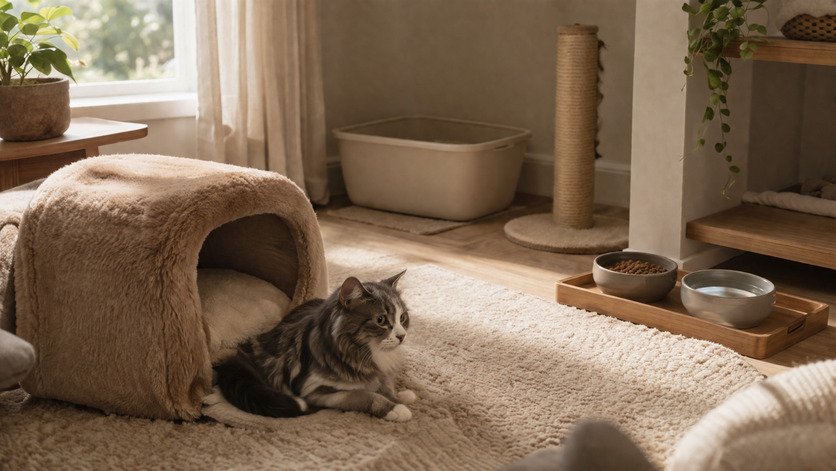
Every new cat, kitten or adult, does better with one small room set up before they arrive, rather than the full run of the house on day one.
A safe room needs a litter box, food and water at a distance from the litter box, a scratching post, a hiding spot like a covered bed or box, and a few toys. Keep the door closed for the first several days, and let the cat set the pace for exploring further.
Hiding spots aren’t a problem to fix. A nervous cat that hides under the bed for two days is behaving normally, not badly. Give the room some hiding options rather than an open, exposed space, and resist the urge to pull the cat out to socialize before it’s ready.
Window Screens and Balcony Safety

“High-rise syndrome,” the term vets use for falls from windows and balconies, isn’t limited to open windows. It also happens through torn or poorly fitted screens that give way under a cat’s weight.
Check every screen in the house for tears, gaps at the edges, and how securely it’s fitted into the frame. A screen that looks fine from a few feet away can still fail if a cat leans into it.
If you like keeping windows open for airflow, look into secured cat window screens designed to hold a cat’s weight, rather than relying on standard insect screens.
Comprehensive Cat-Proofing Checklist
Print this list and work through it room by room before adoption day.
Living Room
- [ ] Cords bundled or covered
- [ ] Blind and curtain cords secured or shortened
- [ ] Breakables removed from open shelving
- [ ] Bookshelves and TV stands anchored
- [ ] Small objects (hair ties, coins, rubber bands) put away
Kitchen
- [ ] Cabinet locks installed on cleaning product storage
- [ ] Toxic foods stored out of reach
- [ ] Trash can covered or enclosed
- [ ] Stove knob cover in place, if needed
- [ ] Gaps behind appliances checked
Bedroom
- [ ] Closet doors kept closed
- [ ] Jewelry and small items in closed drawers
- [ ] Box spring gaps checked
- [ ] Blind cords secured
Bathroom
- [ ] Toilet lid down
- [ ] Medications in a closed cabinet
- [ ] Floss and razors out of reach
- [ ] Cleaning products stored away
Balcony
- [ ] Mesh or netting barrier installed
- [ ] Climbing furniture moved away from railing
- [ ] Catio option considered
Laundry Room
- [ ] Washer and dryer checked before every load
- [ ] Detergent pods sealed and elevated
- [ ] Laundry baskets covered or inaccessible
Garage
- [ ] Antifreeze and chemicals sealed and elevated
- [ ] Gaps around garage door checked
- [ ] Garage-to-house door treated as an exterior door
Outdoor Areas
- [ ] Garden checked for toxic plants
- [ ] Standing water sources removed or fenced
- [ ] Catio or secured area checked for ground-level gaps
Supplies Ready
- [ ] Litter box and litter
- [ ] Food and water bowls
- [ ] Scratching post
- [ ] Cat carrier
- [ ] Cat tree or perch
- [ ] Enrichment toys
- [ ] Safe room set up
Common Mistakes New Cat Owners Make
- Giving the cat full run of the house on day one. A cat overwhelmed by an entire unfamiliar home tends to hide in the least accessible, hardest-to-reach spot it can find. Starting in one safe room and expanding gradually leads to a faster, calmer adjustment.
- Assuming a plant is safe because it’s common. Lilies, in particular, are sold in ordinary grocery store bouquets. Plenty of new owners don’t realize a bouquet in the kitchen is dangerous until it’s too late.
- Forgetting the litter box location matters as much as having one. A litter box placed next to a loud appliance or in a high-traffic hallway often gets avoided, which owners then mistake for a behavior problem.
- Skipping cord protection because “cats aren’t dogs.” Cats chew cords less often than dogs, but they still bat at, chew, and occasionally get tangled in cords, especially as kittens.
- Waiting until after adoption day to buy supplies. Setting up the safe room, litter box, and supplies in advance means the first day is about the cat settling in, not you running to the store.
- Not securing screens and balconies until after a scare. Screen failures and balcony falls are largely preventable, but they usually get fixed only after a close call.
Expert Tips
Move slowly on introductions, even with other pets you’re confident will get along. A few calm days of separation, followed by scent swapping before face-to-face meetings, prevents a lot of the tension that turns into long-term conflict.
Keep a small stash of the same food your cat was eating at the shelter or previous home. Sudden food changes on top of a new environment often cause stomach upset that owners mistake for illness.
Placement matters more than quantity for litter boxes. One well-placed box in a quiet, accessible spot usually works better than two boxes shoved into inconvenient corners.
Don’t rearrange furniture right after adoption. A stable, unchanging layout gives a new cat a sense of control while everything else is unfamiliar.
If you’re adopting a kitten, kitten-proof for the size your cat will eventually be, not just its current size. A gap a young kitten can’t reach today might be reachable in a few weeks.
Frequently Asked Questions
How long does it take to fully cat-proof a home? Most homes take two to four hours for a first pass, longer if you’re also plant-swapping or installing balcony netting.
Do I need to cat-proof if my cat will be indoor-only? Yes. Indoor cats still interact with cords, cabinets, plants, and open doors. Indoor-only status reduces some outdoor risks, not household ones.
Are essential oil diffusers safe around cats? Many common oils, including tea tree, citrus, and eucalyptus, are unsafe for cats. Keep diffusers out of any room your cat can access.
What’s the single most dangerous common item for cats? Lilies are consistently one of the most dangerous common household items, given how easily they cause fatal kidney damage.
Do I need a second litter box for one cat? Not necessarily for one cat in a single-level home. A second box helps in multi-level homes or multi-cat households.
Should I block off rooms before adoption day? Yes, especially for the first several days. One safe room, expanded gradually, works better than full house access immediately.
Is it safe to leave a cat alone with a scratching post but no cat tree? Yes, a scratching post covers the basic need. A cat tree adds vertical space and enrichment, but it’s not strictly required on day one.
How do I know if a plant is toxic without looking it up individually? When in doubt, treat any unfamiliar plant as unsafe until you’ve checked it against a reliable poison control list.
What should I do if my cat eats something toxic? Contact your veterinarian or an animal poison control line immediately rather than waiting to see if symptoms appear.
Do window screens really need special reinforcement? Standard insect screens aren’t built to hold a cat’s weight. Reinforced cat screens or secured windows are safer if you keep windows open.
Is a microchip necessary if my cat stays indoors? Yes. Indoor cats escape through open doors and windows more often than owners expect, and a microchip is often the only way they’re identified and returned.
What’s the biggest difference between kitten-proofing and adult cat-proofing? Kittens create more physical hazards through climbing and chewing. Adult cats, especially rescues, need more attention paid to stress and hiding behavior.
Should cords be covered even in rooms my cat rarely enters? It’s worth doing in any room the cat can access at all, since curiosity tends to override “rarely.”
How soon after adoption should I introduce other pets? Give it several days of separation and scent swapping first. Rushing introductions is one of the more common causes of lasting conflict between pets.
Can I cat-proof gradually after adoption instead of before? You can, but doing the bulk of it beforehand means you’re not managing two things, a new cat and new hazards, at the same time.
Conclusion
None of this preparation needs to be perfect. Cats are more adaptable than the checklists make them sound, and most homes just need a handful of specific fixes rather than a full renovation.
Do the walkthrough before your cat arrives rather than after something goes wrong. An afternoon spent covering cords, checking cabinets, and setting up a safe room buys you a much calmer first week, for both of you.
Click Here to Add SmartPawLife as a Trusted Source Add as a preferred source on Google