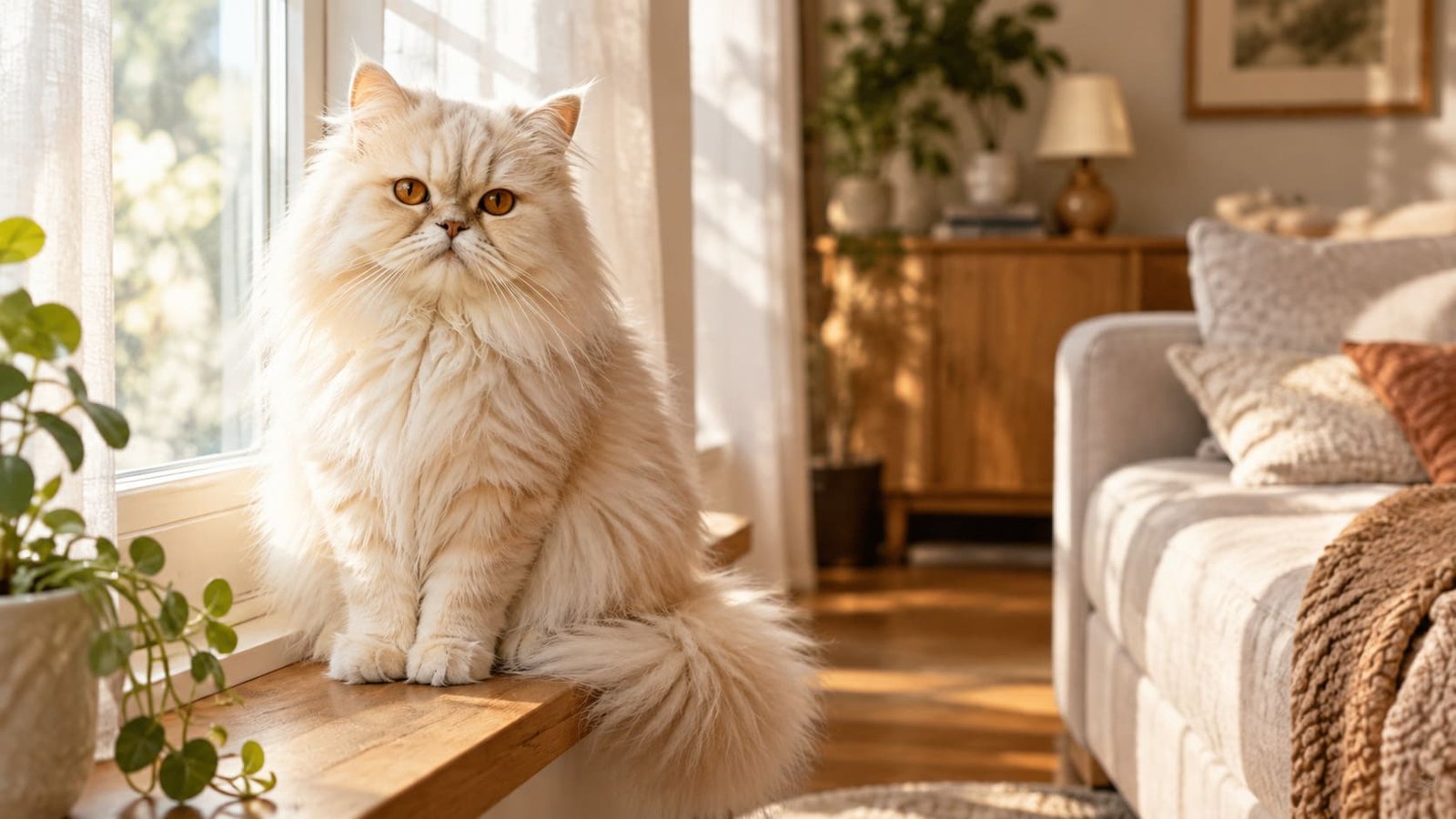
A Persian cat suits calm, indoor homes where someone can commit to daily coat and face care. The breed is affectionate and low energy, but flat-faced anatomy brings breathing, eye, and dental risks, and inherited kidney disease is common enough that breeder screening records matter.
A Persian is right for you if you want a calm, affectionate, indoor cat and you are willing to spend ten to fifteen minutes a day on grooming for the next fifteen years. That is the whole test.
Everything else about the breed follows from those two facts. The temperament is genuinely lovely. The maintenance is genuinely daily, and it does not get easier as the cat ages.
If the grooming commitment makes you hesitate, that hesitation is useful information. A Persian whose coat gets neglected ends up shaved down at a vet clinic, which is uncomfortable for the cat and expensive for you.
Key takeaways
- Persians need daily combing plus a daily face wipe, not weekly brushing. Mats form in the undercoat, out of sight, within about three days.
- The breed is predisposed to polycystic kidney disease, and reputable breeders test for it. Ask for the PKD1 genetic test result in writing.
- A less extreme facial structure, often sold as doll face or traditional, generally means fewer breathing and tear duct problems.
- Budget well beyond the purchase price. Grooming, dental work, and breed-linked health monitoring are the recurring costs.
- Persians suit quiet homes. Households with toddlers, boisterous dogs, or constant activity tend to stress them.
What Persians are actually like to live with
The first thing that surprises new Persian owners is how little the cat moves. Persians are not aloof, they are horizontal. They pick a spot with a view of the room and stay there, which is a different kind of company than a cat that patrols the house.
They also stay low. Where a Maine Coon or Bengal treats the top of the fridge as a destination, most Persians prefer floor level and furniture they can step onto rather than leap to. Cat trees with tall vertical jumps often go unused.
Watch the eyes rather than listening for the voice. Persians are quiet cats, and a lot of communication happens through a slow blink, a head tilt, or a long stare from the corner of the sofa. If you want a cat that announces itself, this is the wrong breed.
There is a specific behavior worth knowing about. A well socialized Persian will often follow you into a room, settle four or five feet away, and go to sleep. That distance is affection in Persian. It is not the cat keeping its options open.
Kitten energy still shows up, usually in short bursts around dusk. A Persian kitten will tear across a room, roll around with a toy for ninety seconds, and then flop and sleep for three hours. That rhythm holds into adulthood, just with shorter bursts.
They are also creatures of routine in a way that shows up practically. Move the food bowl, change the litter brand, or have a house full of guests, and many Persians respond by withdrawing to a back bedroom for the evening rather than adapting on the spot.
The pros of owning a Persian
The temperament is reliably gentle. Persians rarely play rough and tend not to scratch during handling, which is part of why the daily grooming routine is even possible. A cat that objected physically to being combed would make this breed unworkable.
They are genuinely good apartment cats. Low activity, low vocalization, no interest in escaping outdoors, and no need for vertical territory. Persians adapt to small spaces better than most pedigreed breeds.
They are predictable. Coat length, size, temperature, and energy level come out roughly as expected, which is the practical argument for any purebred. If you want to know what you are getting, this is a strength. Our guide on mixed-breed cats vs. purebred cats walks through that tradeoff in more detail.
They handle alone time well. A Persian left for a normal workday typically sleeps through most of it. Separation stress is less common in this breed than in Siamese or Abyssinian lines.
The grooming becomes a bond. This one surprised me when I started researching the breed seriously. Owners who stick with the routine consistently describe the daily comb as the best ten minutes of their day, not a chore they resent.
The cons nobody mentions until you own one
Grooming is not optional and not weekly. The Persian undercoat mats from the skin outward. The surface can look perfectly smooth while a mat is forming underneath, and by the time you can see it, combing it out hurts.
Tear staining is permanent maintenance, not a phase. The flat face compresses the tear ducts, so tears overflow onto the fur instead of draining. Daily wiping manages it. Nothing eliminates it.
Hair goes everywhere. Persians shed year round, and the fine undercoat works into upholstery in a way short coat hair does not. Plan on a lint roller in every room.
Litter sticks to them. The coat on the hind legs and belly picks up litter and sometimes stool. Most Persian owners end up trimming a sanitary area every few weeks or paying a groomer to do it.
Heat is a real risk. A flat faced cat cannot cool itself efficiently, and the dense coat compounds it. Air conditioning is not a luxury for this breed in a U.S. summer.
Vet costs run above average. Between dental crowding, breathing assessments, and kidney monitoring in middle age, a Persian generates more clinic visits than a domestic shorthair of the same age.
The daily grooming routine, step by step
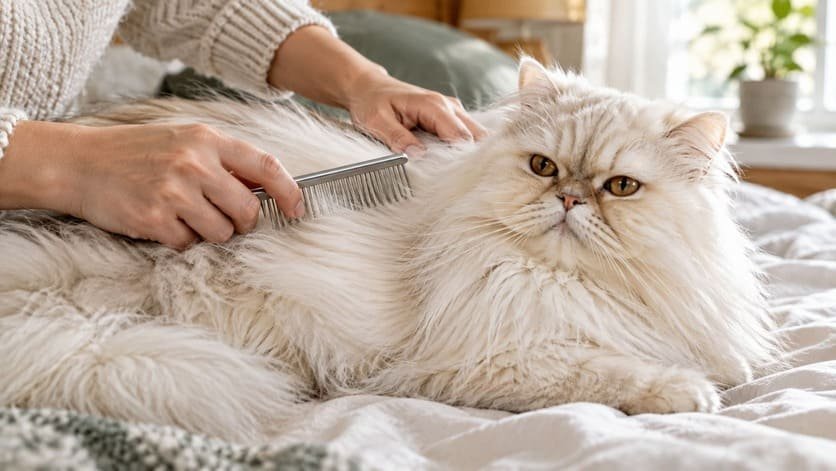
This is the routine that keeps a Persian coat healthy without a full grooming session every day. It takes about twelve minutes once you are practiced.
- Comb the trouble spots first, about four minutes. Use a stainless steel comb, not a slicker brush. Work the armpits, behind the ears, the ruff under the chin, the britches on the back legs, and the base of the tail. These five spots mat before anywhere else.
- Comb the body coat, about four minutes. Work in sections, combing down to the skin rather than skimming the surface. If the comb catches, stop pulling. Hold the fur at the base with your other hand and work the tangle from the outer edge inward.
- Wipe the face, about two minutes. Use a soft damp cloth or a cat-safe eye wipe. Use a separate section for each eye. Clean inside the nose folds and dry them properly, because damp folds grow yeast.
- Check the rear, about one minute. Look at the fur under the tail and on the back of the legs. Trim or wipe anything that has caught litter or stool before it dries.
- Brush the teeth, about one minute. Use cat toothpaste, never human. Persians have crowded jaws and develop dental disease early, so this is not optional care.
If you miss several days: do not try to catch up in one long session. Split it across two or three shorter sessions, and use a detangling spray on any mat rather than scissors. Cutting a mat out is how cats end up with lacerations, because skin lifts into the mat.
Beyond the daily routine, plan a full bath and blow dry every four to six weeks. A Persian coat holds oil, and a cat that goes unbathed for months develops a greasy undercoat that mats faster.
Health conditions worth understanding before you commit
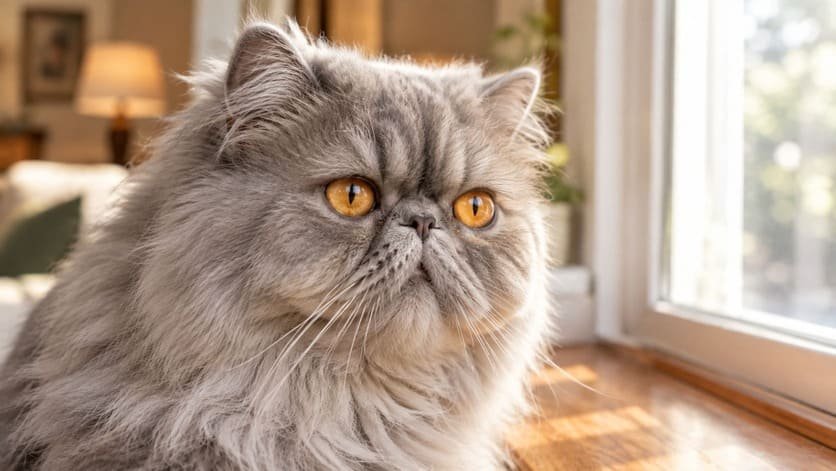
The Persian is a healthy breed in many individual cats and a high risk breed statistically. Both things are true, and the difference usually comes down to breeding decisions made before you ever meet the kitten.
Polycystic kidney disease
PKD is the condition most associated with the breed. Fluid filled cysts develop in the kidneys and grow slowly over years, eventually reducing kidney function. Cornell’s Feline Health Center notes that it occurs most frequently in Persians.
Screening changed this picture substantially. A genetic test for the responsible gene exists, and responsible breeders test their breeding cats and can show you the results. Historically, a large share of Persians carried the gene, which is why the paperwork matters so much.
Signs usually appear after about age seven: increased thirst and urination, weight loss, reduced appetite, vomiting, and a coat that looks dull or unkempt. Ask your vet about baseline bloodwork and urine testing from middle age onward.
Brachycephalic airway problems
The shortened skull narrows the nostrils and can leave the soft palate too long for the airway. VCA Animal Hospitals lists Persians among the most recognized brachycephalic cat breeds.
Here is the part owners get wrong. Snoring, snorting, and noisy breathing get filed under breed charm. They are signs of restricted airflow, and they are worth a vet conversation rather than a shrug.
Open mouth breathing is different and more urgent. A cat breathing with its mouth open, outside of a moment of extreme heat or stress, needs to be seen the same day.
Eye conditions
Large, prominent eyes sit more exposed than a typical cat’s. That raises the risk of corneal ulcers from minor scratches, and Persians are among the breeds most affected by corneal sequestrum, a painful dark patch of damaged corneal tissue.
Squinting, pawing at the face, a visibly cloudy area, or sudden discharge that differs from the usual tearing all warrant a same week appointment. Do not treat a cat eye at home with anything not prescribed for it.
Dental disease
Persian jaws are shortened but the teeth are not, so crowding and misalignment are common. Crowded teeth trap plaque. Expect dental cleanings under anesthesia earlier and more often than you would with a shorthaired cat.
Heart disease
Hypertrophic cardiomyopathy occurs across many breeds and is worth asking a breeder about. Some screen their breeding cats by echocardiogram. A breeder who has never heard of it is telling you something.
Doll face vs peke face: the decision that matters most
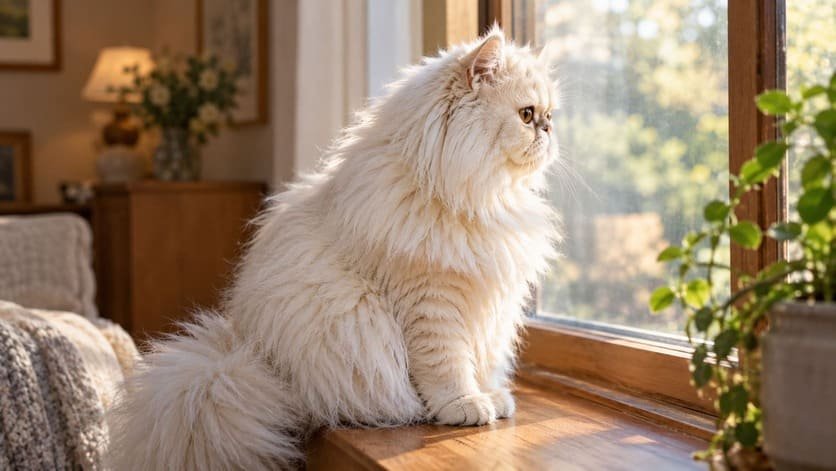
This distinction gets treated as a style preference in most breed guides. It is closer to a health decision, and it is the one variable you control completely at purchase.
A traditional or doll face Persian keeps a visible nose bridge, with the nose set below the level of the eyes. It looks like the Persian of older photographs. A peke face or extreme Persian has a flat profile with the nose set up between the eyes.
The flatter the profile, the more compressed the airway and tear ducts become. Breathing difficulty, chronic overflow tearing, and skin irritation in the nose folds all track with facial extremity.
Show standards in the U.S. have favored the flatter look for decades, which is why extreme kittens often carry a price premium. If you are buying a companion rather than a show cat, that premium buys you higher risk.
My own view, for whatever a writer’s opinion is worth against a breeder’s: if two kittens from the same litter differ in facial structure and you have no show ambitions, take the one with the visible nose. You will both have an easier fifteen years.
What a Persian actually costs over five years
Purchase price is the number everyone quotes and the smallest number in the equation. Here is the fuller picture using typical U.S. figures.
Acquisition. Pet quality kittens from screening breeders commonly run $1,200 to $3,000, with extreme flat face kittens often priced higher than doll face littermates. Breed rescue adoption typically runs $75 to $500, and adult Persians in rescue are genuinely underrated. Their coats and temperaments are already known quantities.
Grooming. A professional groom every six to eight weeks, mostly for bathing, blow drying, and sanitary trims. Budget the local rate for a longhaired cat, and expect a surcharge if your cat arrives matted.
Dental. Assume at least one anesthetic dental cleaning in the first five years, often more. This is usually the single largest predictable vet expense for the breed.
Health monitoring. Annual exams through the early years, then bloodwork and urine screening added from middle age for kidney function.
Supplies. A steel comb, a slicker for finishing, detangling spray, eye wipes, cat toothpaste and brush, hairball support food or paste, and a wide shallow food bowl so a flat face is not pressing into the sides.
Pet insurance is worth pricing out before you buy rather than after. Conditions that appear before coverage starts are generally excluded, and with a breed this predisposed, that timing matters.
Who a Persian is not right for
I would rather talk someone out of this breed than have a Persian end up rehomed at three years old with a matted coat. Consider a different breed if:
You travel frequently. Boarding facilities can handle a Persian, but few will do a proper daily comb. A two week trip can undo months of coat maintenance.
Your household is loud and busy. Toddlers, frequent guests, and high energy dogs stress this breed. Persians do not fight back, they withdraw, and a cat that lives under a bed is not a cat you get to enjoy.
You want an interactive, trainable cat. Persians play, but they are not the breed that learns tricks, walks on a harness, or engages in long play sessions. If that is your picture of cat ownership, look at Abyssinians or Bengals.
Your budget has no slack. Breed-linked health issues arrive unannounced. If an unexpected $2,000 vet bill would be a crisis, a higher risk breed is a difficult choice.
Nobody in the house enjoys grooming. This is the one that matters most. Not tolerates. Enjoys. It is a daily commitment for the cat’s whole life.
For a broader look at matching a breed to your household, our guide on what makes a cat breed beginner-friendly covers the traits that actually predict an easy first year.
How to find a healthy Persian
Start with rescue. Breed specific Persian rescues exist across the U.S., and general shelters take in Persians more often than people expect, frequently surrendered because of the grooming. An adult Persian from rescue removes most of the guesswork about temperament.
If you go to a breeder, these questions separate the good ones from the rest:
- May I see the PKD1 genetic test results for both parents? You want a document, not a verbal assurance. “Our lines are clear” without paperwork is not an answer.
- Have the parents been screened for HCM, and when? Echocardiogram screening is not universal, but a breeder who knows what you are asking is a good sign.
- Can I see the kittens with the mother, in the home? How a Persian kitten is socialized between weeks three and twelve predicts how it handles handling, including grooming.
- What does your health guarantee cover, and for how long? A breeder who claims the breed has no health problems either does not know the breed or is not being straight with you.
- Do you place kittens before twelve weeks? Reputable Persian breeders generally hold kittens longer than the shorthaired breeds, often to fourteen or sixteen weeks.
Walk away from anyone who will meet you in a parking lot, will not let you see the cattery, has multiple breeds available at all times, or pushes a deposit before you have seen paperwork.
Once you have chosen a cat, set the home up before it arrives. Our guide to cat-proofing your home before adoption day covers the room by room basics, and Persians specifically need a cool, quiet retreat space from day one.
Frequently asked questions
Persians are gentle and low energy, which suits a beginner. The daily grooming and face cleaning are not beginner level tasks. A first-time owner who enjoys hands-on care will do well, while someone hoping for a low maintenance cat will not.
Plan on roughly ten to fifteen minutes daily for combing plus a face wipe, and a full bath every four to six weeks. Most owners also book a professional groom every six to eight weeks, mainly for bathing and sanitary trims.
Persians are predisposed to polycystic kidney disease, brachycephalic airway problems, eye conditions including corneal ulcers, dental crowding, and hypertrophic cardiomyopathy. Genetic screening by the breeder and a less extreme facial structure both lower the risk.
Persians commonly live twelve to seventeen years. Kidney health, breathing comfort, weight, and dental care usually decide where a given cat falls in that range.
A doll face Persian has a visible nose bridge set below eye level. A peke face Persian has an extremely flat profile with the nose set between the eyes. The flatter the face, the higher the risk of breathing difficulty and tear duct problems.
Yes. The dense undercoat sheds year round, with heavier periods in spring and fall. Daily combing removes most of the loose hair before it reaches your furniture and also reduces hairballs.
Persians are affectionate in a quiet, proximity based way. They settle near you or on you rather than following you around vocalizing. Most are reserved with strangers and warm up slowly over weeks.
The bottom line
A Persian asks for more of your time than almost any other cat breed, and gives back a specific kind of quiet companionship you will not get from a more independent cat. Whether that trade works depends entirely on your honest answer to the grooming question.
If you are still weighing breeds, read our roundup of the 10 most popular cat breeds in the USA to see how the Persian compares on care load and temperament. Then talk to a breed rescue before you talk to a breeder. There are adult Persians waiting right now whose only problem was landing in a home that did not have twelve minutes a day.
Disclaimer: This article is for informational purposes only and does not replace veterinary advice. Contact your veterinarian about any health concern, including breathing changes, eye problems, or changes in thirst and appetite. For aggression, high prey drive, or other high-risk behavioral issues, work with a certified animal behaviorist or a qualified trainer.
Click Here to Add SmartPawLife as a Trusted Source Add as a preferred source on Google