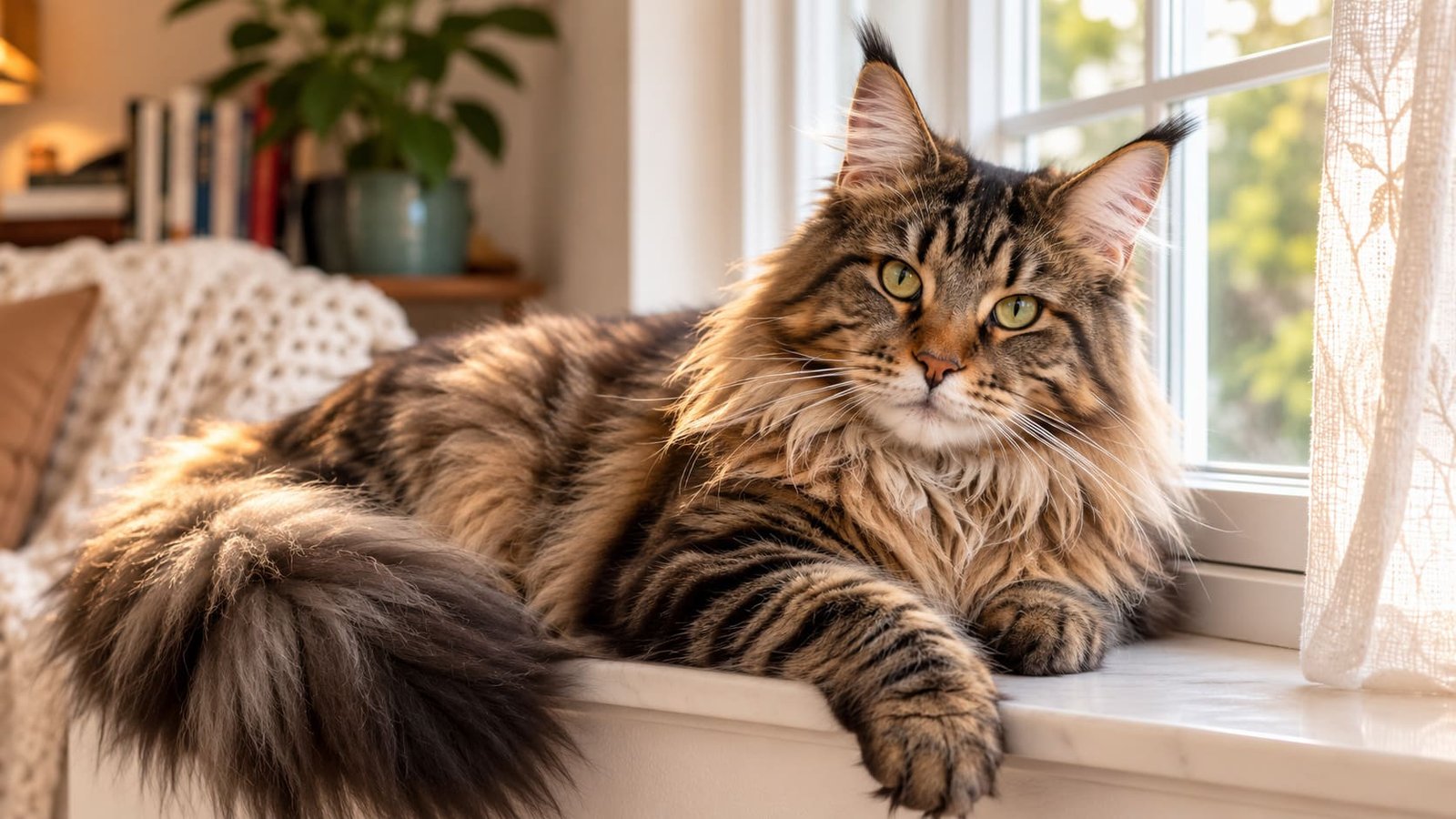
The Cat Fanciers’ Association’s 2026 rankings put the Maine Coon at number one for a second year, followed by the Ragdoll and Persian. This guide covers all ten breeds with grooming time, temperament, breed-specific health screening to request, and how to find each one through rescue.
A ranked list is easy to find. What is harder to find is a straight answer about what each of these breeds actually asks of you once the kitten photos stop being the point. This guide gives you both.
Every March the Cat Fanciers’ Association publishes the list that most American breed articles quietly copy for the rest of the year. The 2026 edition came out in April, and the Maine Coon held first place for a second year running. The American Shorthair climbed back onto the list after an absence.
Most roundups stop there. They give you ten breeds, three personality adjectives each, and a photo. That is fine if you are browsing. It is not much help if you are about to make a fifteen-year commitment to a specific animal.
So this one goes further. For each breed you get the temperament, the honest grooming load in minutes, the health conditions that breed is known for, and the specific question to ask a breeder or rescue before you say yes.
Key Takeaways
- The Maine Coon ranks first among US pedigreed cat breeds for 2026, followed by the Ragdoll and the Persian, according to the Cat Fanciers’ Association.
- These rankings count pedigree registrations. The most common cat in American homes is still the mixed-breed domestic shorthair.
- Grooming load varies enormously across the top ten. A Persian needs daily brushing. A Russian Blue is fine with a weekly pass.
- Six of the ten breeds on this list appear on Cornell’s list of breeds with a higher prevalence of hypertrophic cardiomyopathy, the most common feline heart disease.
- Breed rescues place adult purebred cats year-round, usually for a fraction of a breeder’s price.
How These Rankings Actually Work
The Cat Fanciers’ Association is the oldest and largest pedigreed cat registry, and its annual list is built from the previous calendar year’s registrations. The 2026 list reflects cats registered during 2025.
Worth knowing before you read on: this measures registered pedigreed cats. It does not measure what is sitting on couches across America. The great majority of US pet cats are domestic shorthairs and longhairs with no breed at all, and a shelter’s adoption floor looks nothing like this top ten.
That does not make the list useless. It tells you which breeds Americans are actively seeking out, which is exactly what you want to know if you are weighing one against another. Just do not read it as a census.
The 10 Most Popular Cat Breeds in the USA
Ranked from most to least popular, per the CFA’s 2026 list.
1. Maine Coon
Big, shaggy, and far softer in temperament than the size suggests. Males commonly reach 13 to 18 pounds, and they keep filling out until three or four years old, which surprises people who thought their cat was done growing at one.
They are chatty, but not in a Siamese way. Maine Coons chirp and trill more than they yowl. Most tolerate handling well and adapt to children and dogs without much drama.
Grooming: Two or three brushings a week, roughly ten minutes each. The coat lacks the dense undercoat of some longhairs, so mats are less punishing than with a Persian. Health to ask about: Hypertrophic cardiomyopathy (a specific gene mutation is testable), hip dysplasia, spinal muscular atrophy. Best for: Families who want a large, sociable cat and have room for one.
2. Ragdoll
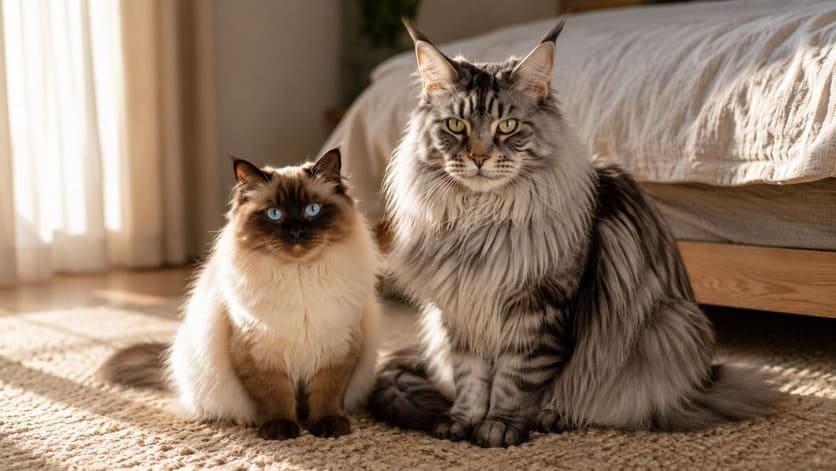
Named for the way many of them go limp when picked up. Blue eyes, four coat patterns, silky semi-long fur, and an unusually placid disposition even among calm breeds.
Ragdolls are people-followers. They will meet you at the door and sit outside the bathroom. If you are away ten hours a day, this is not the breed for you unless there is a second cat.
Grooming: Twice weekly, about ten minutes. Less undercoat means less matting than the coat length implies. Health to ask about: Hypertrophic cardiomyopathy. A Ragdoll-specific mutation has been identified and there is a DNA test for it. Best for: Households with someone home most of the day.
3. Persian
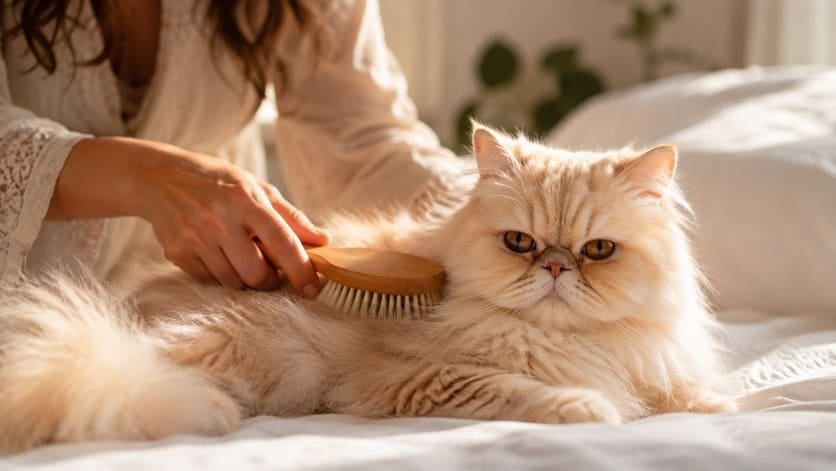
The flat face is the whole trade-off. Persians are quiet, gentle, low-energy lap cats, and they are also the highest-maintenance breed on this list by a wide margin.
Grooming: Daily. Ten to fifteen minutes with a comb, plus wiping the eye area, because the shortened tear ducts of a flat-faced cat mean tear staining is routine. Skip three days and you are dealing with mats against the skin. Health to ask about: Polycystic kidney disease (there is a DNA test, and any responsible Persian breeder will have run it), breathing difficulty related to the flat face, dental crowding. Best for: Calm, quiet homes where someone genuinely enjoys grooming.
4. Exotic
A Persian in a shorthair coat, bred by crossing Persians with shorthaired breeds. Same round face, same sweet placid temperament, a fraction of the brushing.
The catch is that the shorter coat changes nothing about the flat face. Exotics carry the same breathing and tear-duct concerns as Persians, and the same polycystic kidney disease risk. I think this gets glossed over too often in breed guides, because the Exotic is usually presented as the easy Persian. It is easier to groom. It is not a healthier cat.
Grooming: Weekly, about five minutes, plus regular eye wiping. Health to ask about: Polycystic kidney disease, brachycephalic airway issues. Best for: Anyone who loves the Persian look but is honest about not wanting daily grooming.
5. Devon Rex
Wavy sparse coat, oversized ears, and an expression somewhere between elf and gremlin. Owners call them Velcro cats, and they mean it literally. A Devon Rex will be on your shoulder while you cook.
The thin coat means they get cold. Expect yours to live under blankets and on top of laptops.
Grooming: Minimal brushing, but the sparse coat means skin oils build up. Plan on a gentle wipe-down and ear cleaning every week or two. Health to ask about: Patellar luxation, Devon Rex myopathy (a congenital muscle condition). Best for: People who want a cat that behaves a bit like a small dog.
6. Abyssinian
Ticked coat, each hair banded with multiple colors, which gives it a glow in the light. Athletic, endlessly curious, and one of the most active breeds you can bring home.
An Abyssinian without a job will invent one, and you may not like the job it picks. Vertical space and daily interactive play are not optional here.
Grooming: Weekly, five minutes. Health to ask about: Pyruvate kinase deficiency and progressive retinal atrophy (both have DNA tests), renal amyloidosis. Best for: Active households that want a cat genuinely involved in the day.
7. British Shorthair
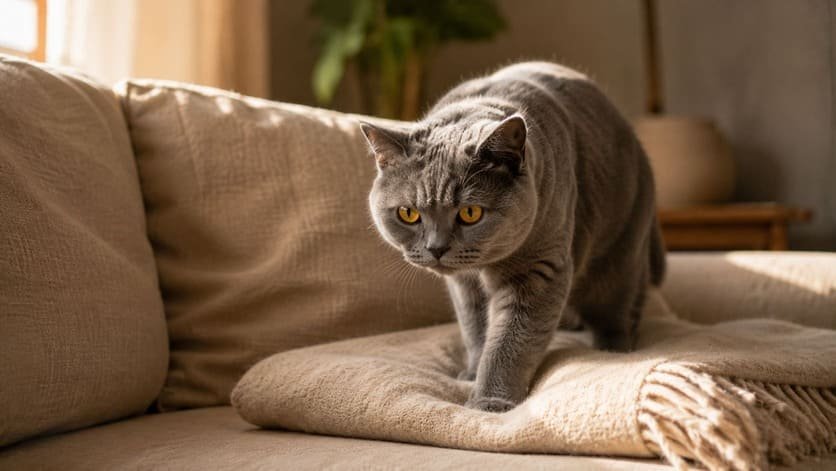
Dense plush coat, round face, and a personality that is affectionate on its own schedule. British Shorthairs are famous for disliking being carried. They will happily sit next to you for hours and object strongly to being picked up.
Grooming: Weekly, about ten minutes. The coat is exceptionally dense, so shedding season needs more attention. Health to ask about: Hypertrophic cardiomyopathy, polycystic kidney disease. Weight gain is a real risk with this breed, so ask about the parents’ body condition too. Best for: First-time owners, and anyone whose household is quiet and predictable.
8. Siberian
A triple-layered coat built for Russian winters, paired with a genuinely mellow disposition. Siberians are sturdy, playful in bursts, and typically steady around children.
You will see them marketed as hypoallergenic. Treat that claim carefully. No cat breed is reliably hypoallergenic, and anyone allergic should spend real time with an individual cat before committing.
Grooming: Two or three times a week, more during seasonal coat blows. Health to ask about: Hypertrophic cardiomyopathy. Best for: Families wanting a large, tolerant cat with a slightly lower grooming burden than a Persian.
9. American Shorthair
Back on the list this year after dropping off. Descended from working cats brought over by early settlers, and it shows: hardy, even-tempered, low-drama, and content to be part of the household without demanding to be the center of it.
If you want a cat that will be fine when your routine changes, this is a strong candidate.
Grooming: Weekly, five minutes. Health to ask about: Hypertrophic cardiomyopathy. Obesity is the more likely day-to-day problem, so measure portions from the start. Best for: Busy households and first-time owners.
10. Russian Blue
Silver-tipped blue-grey double coat, vivid green eyes, and a reserved streak. Russian Blues bond hard with their own people and vanish when strangers arrive. That is normal, not a fault.
They are also notoriously good at problem-solving. Cabinet latches and treat containers are not the obstacle you think they are.
Grooming: Weekly, five minutes. The double coat needs very little help. Health to ask about: Fewer breed-specific conditions than most on this list. Watch weight and urinary health. Best for: Quieter homes, apartments, and owners who do not need a cat to greet guests.
Which Breed Fits Your Home? A Quick Comparison
| Breed | Grooming | Energy | Alone-time tolerance | Main health question to ask |
| Maine Coon | 2 to 3x weekly | Moderate | Good | Cardiac screening, hips |
| Ragdoll | 2x weekly | Low | Poor | Cardiac screening, DNA test |
| Persian | Daily | Low | Moderate | PKD DNA test, breathing |
| Exotic | Weekly | Low | Moderate | PKD DNA test, breathing |
| Devon Rex | Minimal brush, weekly wipe | High | Poor | Patella, myopathy |
| Abyssinian | Weekly | Very high | Moderate | PK deficiency, PRA, kidneys |
| British Shorthair | Weekly | Low | Good | Cardiac screening, PKD |
| Siberian | 2 to 3x weekly | Moderate | Good | Cardiac screening |
| American Shorthair | Weekly | Moderate | Very good | Cardiac screening, weight |
| Russian Blue | Weekly | Moderate | Good | Weight, urinary health |
If you are still narrowing the field, our guide to what makes a cat breed beginner-friendly breaks down the five traits that matter most, and factors to consider before choosing a cat covers the household side of the decision.
Breed-Specific Health Screening: 5 Questions to Ask
This is the part most breed roundups leave out, and it is the part that costs money later. Popularity has a downside: high demand attracts sellers who skip testing.
Cornell’s Feline Health Center notes that hypertrophic cardiomyopathy, the most common heart disease in cats, is more prevalent in several breeds on this list, including Maine Coon, Ragdoll, British Shorthair, American Shorthair, Siberian and Persian. That alone makes cardiac screening worth asking about for six of the ten.
Ask any breeder these five questions, in this order:
- What genetic tests have you run on both parents, and can I see the results? Not a verbal summary. The actual lab report, with the cat’s registered name on it.
- Has either parent had a cardiac ultrasound, and when? A veterinary cardiologist’s echocardiogram is the meaningful test. A general vet listening for a murmur is not a substitute. Screening is repeated periodically, so a five-year-old result tells you little.
- At what age do your kittens go home? Twelve weeks is the widely accepted minimum. Earlier than that and you are more likely to see litter box problems and poor bite inhibition later.
- What is your policy if a genetic condition shows up at age three? The answer tells you more about the breeder than the paperwork does.
- Can I see where the kittens are raised? Kittens raised in a household room handle noise, vacuum cleaners and visitors far better than kittens raised in isolation.
A breeder who is glad to answer all five is the one you want. Hesitation on question one is enough reason to walk away.
What to Watch in the First Ten Minutes With a Cat
Breed tells you tendencies. The individual cat in front of you tells you the truth, and ten minutes of careful watching will teach you more than any breed profile.
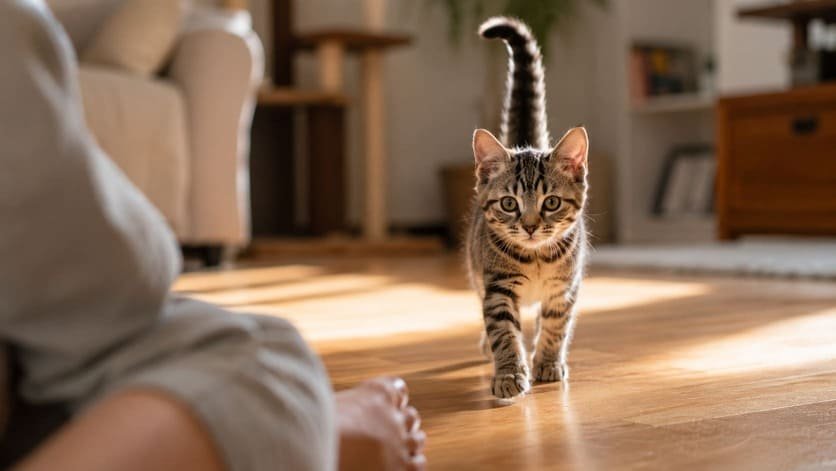
Sit on the floor and do not reach for the cat. Let it decide. What you are watching for:
The approach. A well-socialized cat comes toward a seated stranger within a couple of minutes, tail upright with a soft hook at the tip. A cat that stays flattened under furniture the entire visit is not necessarily a bad cat, but it will need more patience than a first-time owner usually expects.
The recovery time. Drop a set of keys on the floor, gently. Every cat startles. The useful information is what happens next. A steady cat is back to normal within thirty seconds or so. One that stays hidden for several minutes is telling you something about its baseline anxiety.
The handling response. Pick the cat up briefly. Some breeds, British Shorthairs especially, will object and that is normal for them. What matters is whether the objection is a squirm and a hop down, or a swat with claws out.
The other cats in the room. In a breeder’s home or a rescue’s foster setup, look past your kitten at its littermates and the adult cats. Confident adults usually mean a household that socializes well.
One caveat worth being honest about: a single visit is a snapshot. Shelter and rescue staff who have watched a cat for weeks will know things you cannot see in ten minutes, and it is worth asking them directly what the cat is like on a bad day.
Finding These Breeds Through Rescue
Almost every breed on this list has a dedicated rescue network in the US. Maine Coon, Ragdoll, Persian and Siberian rescues place cats year-round.
The cats they place are usually adults, and usually surrendered for reasons that have nothing to do with the cat: a move, a new baby, an owner’s illness, a divorce. That is a genuine advantage. An adult cat’s temperament is already formed, so what you meet is what you get.
Where to start:
- Search “[breed name] rescue” plus your state. Most of these groups are small and run on volunteer foster homes.
- Ask your local shelter to flag purebred intakes for you. Many will.
- Check breed club referral pages, which sometimes list rescue contacts alongside breeders.
- Petfinder and Adopt-a-Pet both let you filter by breed, though shelter breed labels are educated guesses more often than not.
Adoption fees are typically a small fraction of a breeder’s price, and most rescue cats come already neutered and vaccinated. If you are adopting, our room-by-room guide to cat-proofing your home is worth reading before the cat arrives rather than after.
Frequently Asked Questions
What is the number one most popular cat breed in the USA? The Maine Coon, which took the top spot in the CFA’s 2026 rankings for the second year running.
What is the most common cat in America? The domestic shorthair, a mixed-breed cat rather than a recognized breed. Breed rankings only count pedigree registrations, so they do not describe the overall cat population.
Which cat breed is best for first-time owners? British Shorthairs, American Shorthairs and Ragdolls are the easiest starting points on this list. All three combine steady temperaments with weekly rather than daily grooming.
Are Maine Coons good with children and dogs? Generally yes. They are known for patience and steady nerves, and their size means rough handling is less risky than with a small breed. Supervise young children regardless.
Are any cat breeds hypoallergenic? No. Every cat produces Fel d 1, the protein responsible for most cat allergies. Siberians and Devon Rexes are frequently marketed as allergy-friendly, but no breed is reliably hypoallergenic. Spend extended time with the individual cat before deciding.
What is the friendliest cat breed? Ragdolls have the strongest reputation for it, closely followed by Maine Coons. Individual personality still varies widely within any breed.
Which of these breeds is best for an apartment? Russian Blue, British Shorthair, Exotic and Persian all do well in smaller spaces. Abyssinians and Devon Rexes need vertical space and daily play regardless of square footage. Indoor versus outdoor living is worth thinking through separately.
How much does a purebred kitten cost in the US? It varies widely by breed, region and bloodline, and health-tested kittens from established breeders sit well above the bargain listings you will find on classified sites. Ask what the price includes: testing, vaccinations, neutering and registration all affect the real number. Rescue adoption fees run far lower.
Do purebred cats end up in shelters? Regularly. Breed-specific rescues exist precisely because they do.
Before You Decide
The ranking is a starting point, not an answer. A Maine Coon and a Devon Rex both make excellent companions, and they will make completely different demands on your evenings.
Pick the two or three breeds whose grooming load and energy level fit the life you actually live, not the one you plan to start living. Then go meet cats. The specific animal will do the rest.
Ready to narrow it down? Start with our guide to what makes a cat breed beginner-friendly, then work through the factors worth considering before you choose.
Disclaimer: This article is for informational purposes only and is not a substitute for veterinary care. If your cat shows signs of illness, or if you have questions about a breed-specific health condition, consult a licensed veterinarian. For aggression, high prey drive, severe fear responses, or any behavior that puts a person or another animal at risk, work with a certified animal behaviorist or a qualified professional trainer rather than attempting to manage it alone.