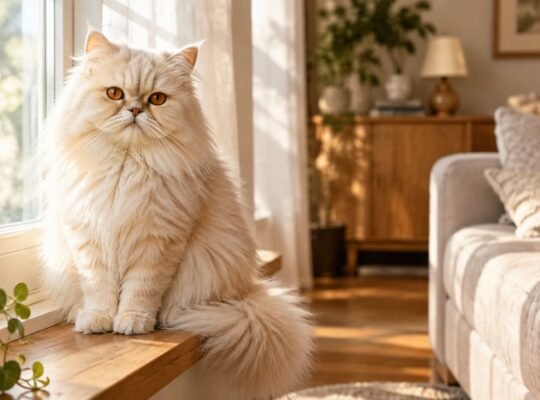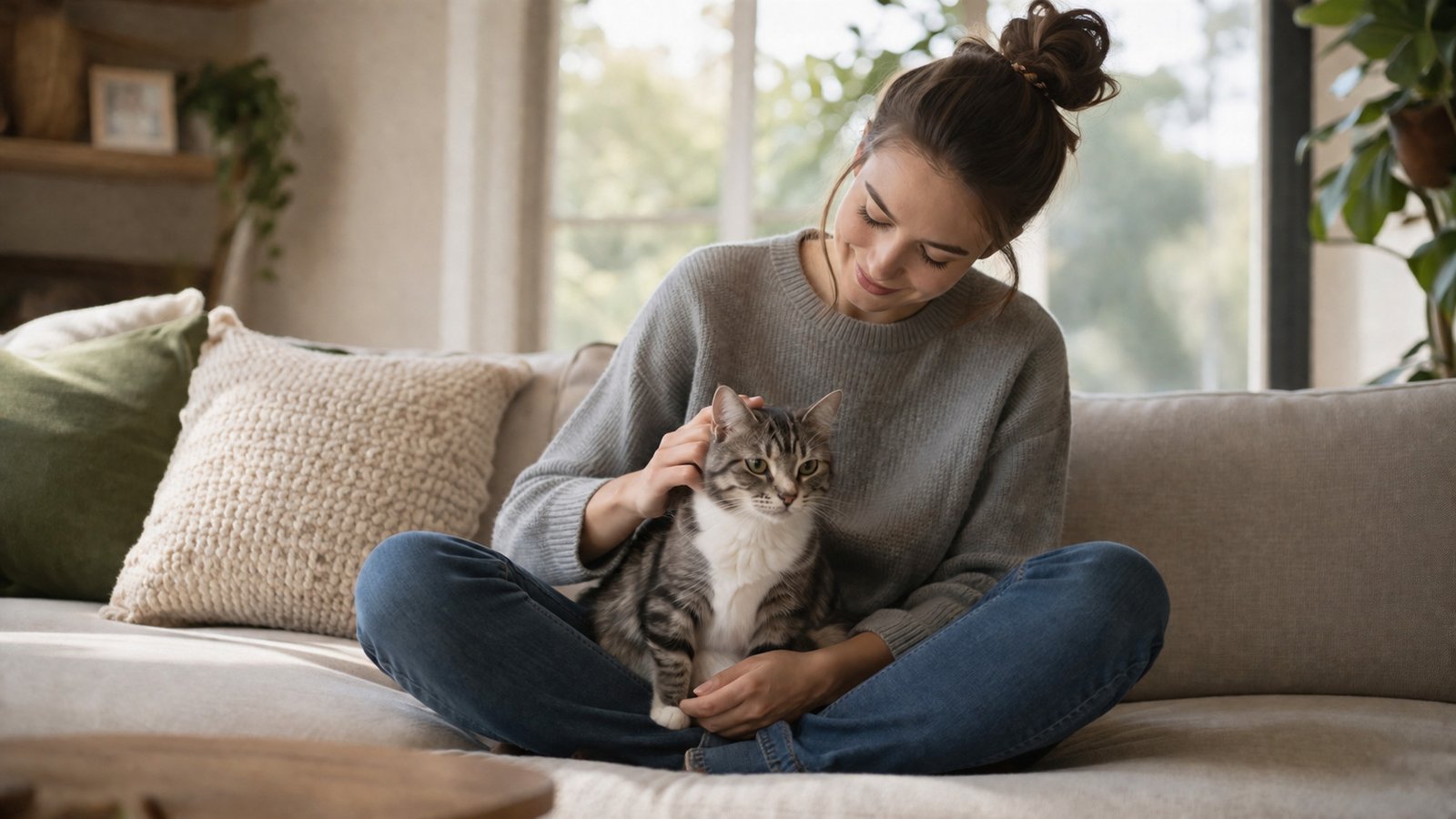
Picking the right breed matters more than most new owners realize. Here are the 11 best cat breeds for first-time owners, ranked from low-maintenance Domestic Shorthairs to gentle Ragdolls, with honest pros, cons, and a decision framework based on your actual home life.
Your first cat will shape how you feel about cats for years to come. Get a good match, and you’ll wonder why you waited so long. Get a mismatch, say an independent, high-energy breed dropped into a quiet apartment with a first-timer who wanted a lap cat, and you’ll spend a year confused about why nothing clicks.
That mismatch is more common than people expect. Cats aren’t interchangeable. A Siamese and a British Shorthair can live in the same house and behave like they belong to different species entirely.
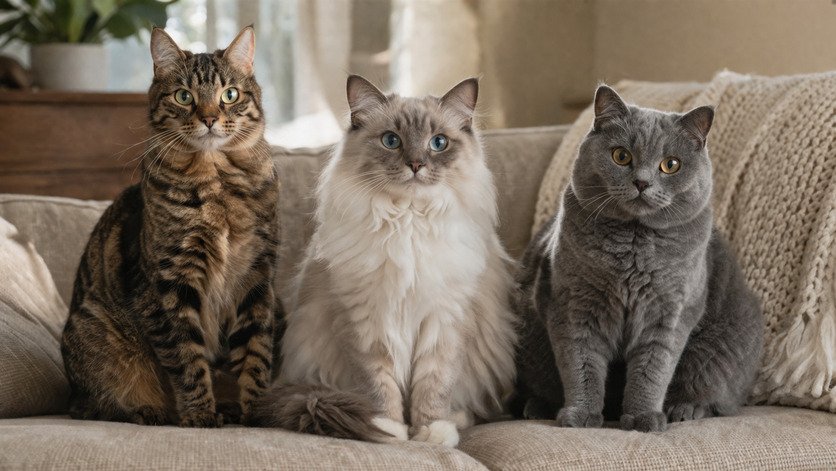
This guide ranks the 11 best cat breeds for first-time owners based on real, practical factors: grooming demands, energy level, how they do with kids and other pets, and how much attention they actually need from you. You’ll also get a comparison table, a decision framework, and answers to the questions new owners ask most.
One thing up front: breed tells you tendencies, not guarantees. A cat’s individual personality, shaped by genetics, early socialization, and plain luck, matters as much as its breed label. Keep that in mind as you read, and lean on meeting the actual animal whenever you can.
The 11 Best Cat Breeds for First-Time Owners, Ranked
Ranked roughly from lowest to highest hands-on commitment, here are the 11 breeds that consistently work well for people bringing home their first cat. Each one includes what you’re actually signing up for, good and bad.
1. Domestic Shorthair
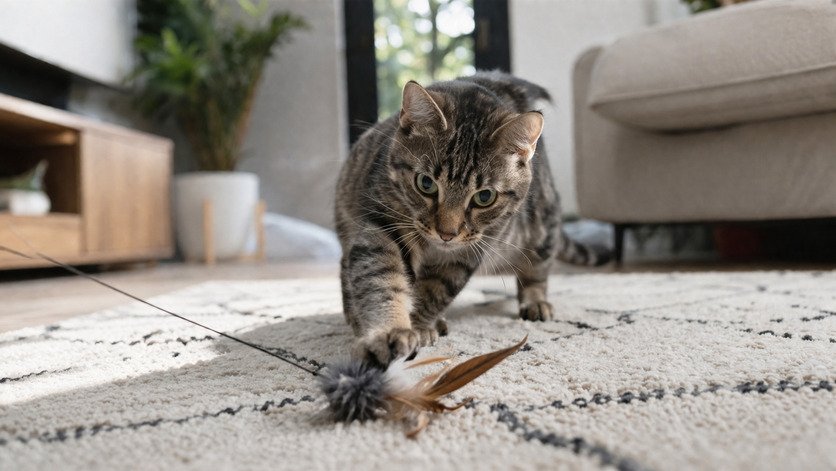
Not a formal breed but a category, the most common cat in North America, found in every shelter. Domestic Shorthairs come in every color and pattern imaginable.
Quick facts:
- Personality: Highly variable, generally easygoing
- Grooming: Weekly brushing
- Exercise: Low to moderate
- Lifespan: 12–18 years
Why it works for beginners: You get to meet the actual cat before adopting, rather than betting on breed tendencies. Shelter staff can tell you a lot about temperament from direct observation. Health issues tend to be fewer since there’s no narrow gene pool.
Pros: Affordable, widely available, generally healthy, low grooming demands.
Cons: Less predictability in adult size and temperament if adopted as a kitten.
Ideal owner: Anyone who wants a low-cost, low-fuss first cat and is comfortable with some unpredictability.
2. Ragdoll
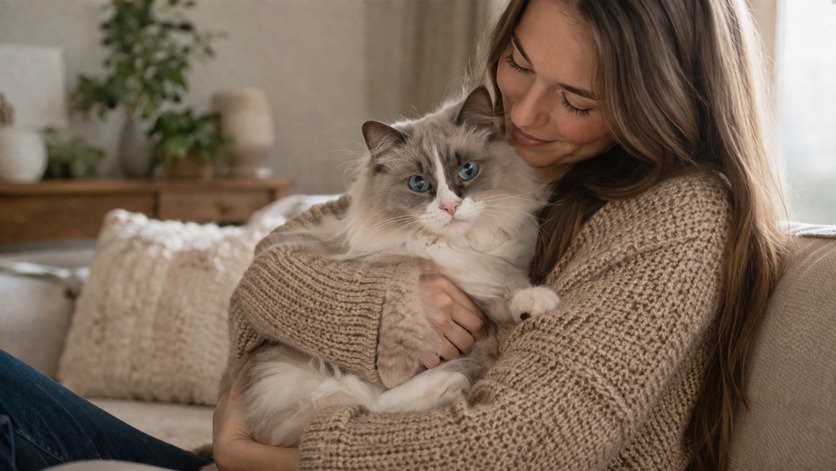
Large, semi-longhaired cats bred specifically for a docile, affectionate temperament. Ragdolls are famous for going limp when picked up, which is exactly where the name comes from.
Quick facts:
- Personality: Gentle, people-oriented, calm
- Grooming: Twice-weekly brushing
- Exercise: Low
- Lifespan: 12–17 years
Why it works for beginners: Ragdolls are about as close to a “lap cat” as breeds get. They tolerate handling well, including from children, and don’t demand constant stimulation.
Pros: Extremely affectionate, patient with kids, calm household presence.
Cons: Prone to heart disease (hypertrophic cardiomyopathy); regular grooming still needed despite the coat’s soft texture.
Ideal owner: Families, seniors, or anyone who wants a cuddly, low-drama companion.
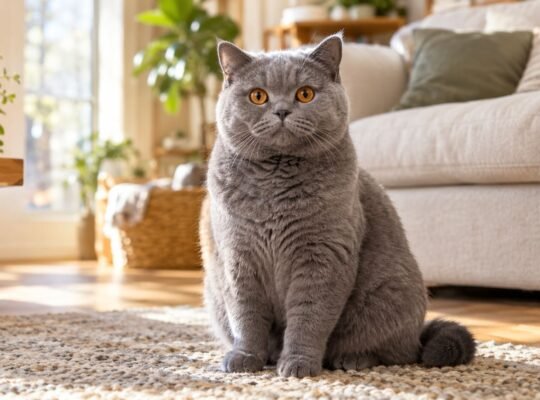
3. British Shorthair
Stocky, round-faced cats known for a dense, plush coat and a famously reserved but affectionate temperament.
Quick facts:
- Personality: Independent, calm, undemanding
- Grooming: Weekly brushing
- Exercise: Low
- Lifespan: 12–17 years
Why it works for beginners: British Shorthairs are happy to keep you company without needing constant interaction. They’re tolerant of busy schedules and adjust well to apartment life.
Pros: Low-maintenance temperament, sturdy build, generally healthy.
Cons: Prone to weight gain if activity isn’t monitored; can be aloof with strangers.
Ideal owner: Busy professionals or apartment dwellers who want companionship without hovering.
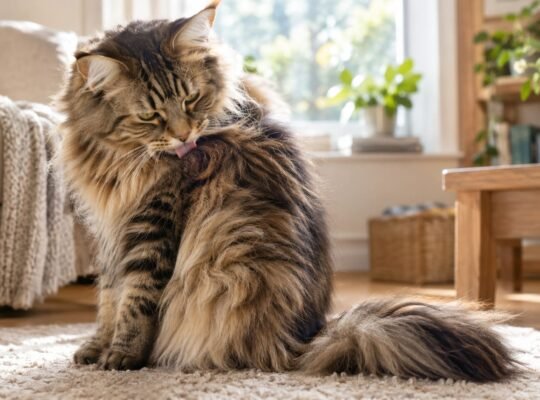
4. Maine Coon

One of the largest domestic cat breeds, with a shaggy coat and a temperament often described as “dog-like”: social, trainable, and food-motivated.
Quick facts:
- Personality: Friendly, playful, sociable
- Grooming: Two to three times weekly
- Exercise: Moderate
- Lifespan: 12–15 years
Why it works for beginners: Maine Coons are unusually tolerant of handling, other pets, and household chaos. They genuinely enjoy being part of the family’s day-to-day.
Pros: Great with kids and dogs, playful without being frantic, striking appearance.
Cons: Larger size means more food cost; predisposed to hypertrophic cardiomyopathy and hip dysplasia.
Ideal owner: Families with kids or other pets who want an interactive, sociable cat.
5. American Shorthair
A sturdy, easygoing breed developed in North America, prized historically for both companionship and practical pest control on farms and ships.
Quick facts:
- Personality: Balanced, adaptable, easygoing
- Grooming: Weekly brushing
- Exercise: Low to moderate
- Lifespan: 15–20 years
Why it works for beginners: This breed was practically built for adaptability. American Shorthairs handle change well: new homes, new routines, new pets.
Pros: Long lifespan, few breed-specific health concerns, low grooming needs.
Cons: Can be prone to obesity without portion control; less overtly affectionate than some breeds.
Ideal owner: First-timers who want a resilient, low-maintenance cat with minimal drama.
6. Burmese
Compact, muscular cats with a glossy short coat and a reputation for being unusually people-focused, even by cat standards.
Quick facts:
- Personality: Affectionate, social, attention-seeking (in a good way)
- Grooming: Minimal, occasional brushing
- Exercise: Moderate
- Lifespan: 10–17 years
Why it works for beginners: Burmese cats want to be wherever you are. For a first-time owner who wants real connection with their cat, this breed delivers it consistently.
Pros: Very low grooming needs, deeply bonded to their people, playful into adulthood.
Cons: Not well suited to owners who are away often; some lines carry a risk of diabetes and cranial facial defects.
Ideal owner: Anyone home often who wants an involved, people-first cat.
7. Birman
A semi-longhaired breed with striking blue eyes and a color pattern similar to Siamese cats, but a noticeably calmer, gentler temperament.
Quick facts:
- Personality: Sweet, quiet, moderately social
- Grooming: Twice-weekly brushing
- Exercise: Low
- Lifespan: 12–16 years
Why it works for beginners: Birmans are gentle without being fragile, and their coat, despite the length, resists matting better than many long-haired breeds.
Pros: Calm and quiet, good with children and other pets, striking appearance.
Cons: Grooming is still a real commitment; can develop separation-related stress if left alone too long.
Ideal owner: Households wanting a quiet, affectionate cat without a demanding personality.
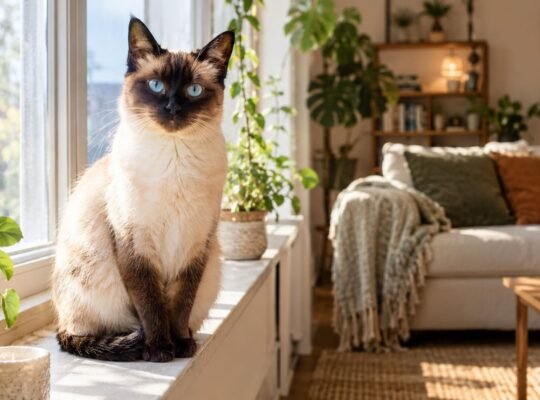
8. Siamese
One of the most recognizable breeds, known for a sleek body, striking blue eyes, and a talkative, highly social personality.
Quick facts:
- Personality: Vocal, intelligent, very social
- Grooming: Minimal
- Exercise: Moderate to high
- Lifespan: 12–15 years
Why it works for beginners: Siamese cats are engaging and interactive in a way that suits owners who want a genuinely present companion, not just a housemate.
Pros: Low-shedding coat, highly intelligent and trainable, strong bond with owners.
Cons: Vocal, sometimes very vocal, and needs mental stimulation or can become destructive out of boredom.
Ideal owner: Engaged owners who want an interactive cat and don’t mind a chatty housemate.
9. Exotic Shorthair
Essentially a Persian with a short coat, the Exotic Shorthair keeps the round face and calm temperament while cutting the grooming workload significantly.
Quick facts:
- Personality: Calm, sweet, low-key
- Grooming: Weekly brushing
- Exercise: Low
- Lifespan: 12–15 years
Why it works for beginners: You get much of the Persian’s gentle charm without the daily grooming marathon.
Pros: Calm temperament, easier coat care than Persians, affectionate lap cat.
Cons: Brachycephalic (flat-faced) breeding can cause breathing and eye issues. Choose breeders who prioritize a moderate face structure and health testing.
Ideal owner: Someone who wants Persian-like calm without the intensive grooming schedule.
10. Persian
A long-haired breed with an unmistakably flat face and a calm, dignified temperament that’s been popular for well over a century.
Quick facts:
- Personality: Quiet, gentle, low-energy
- Grooming: Daily brushing required
- Exercise: Low
- Lifespan: 10–17 years
Why it works for beginners, with caveats: Persians are wonderfully calm companions, but they’re the most grooming-intensive breed on this list by a wide margin. This is a genuine time commitment, not an occasional chore. Our cat grooming guide walks through exactly what daily brushing on a coat like this involves.
Pros: Extremely calm, quiet, affectionate without being demanding.
Cons: Daily grooming is non-negotiable; prone to polycystic kidney disease and breathing difficulties from the flat face; regular eye cleaning needed.
Ideal owner: First-timers who specifically want a low-energy lap cat and are genuinely prepared for daily coat care.
11. Scottish Fold
Instantly recognizable for the forward-folded ears caused by a cartilage mutation, Scottish Folds have a sweet, easygoing temperament.
Quick facts:
- Personality: Calm, affectionate, adaptable
- Grooming: Weekly brushing
- Exercise: Low to moderate
- Lifespan: 11-14 years
A note on ethics before you consider this breed: The same gene that folds the ears also affects cartilage throughout the body, and it can cause a painful joint condition called osteochondrodysplasia. Some veterinary and welfare organizations have raised serious concerns about breeding for this trait at all. If you’re drawn to this breed, work only with a breeder who health-tests thoroughly, and strongly consider adopting a Scottish Fold from a shelter or rescue instead. Our shelter vs. breeder guide walks through how to find one responsibly.
Pros: Gentle temperament, adaptable to apartment life, sociable with family.
Cons: Real risk of painful joint disease tied directly to the breed’s signature trait; ethical sourcing takes extra research.
Ideal owner: Owners who’ve done the research and are committed to sourcing responsibly, or better yet, adopting one that already needs a home.
Which Cat Breed Fits Your Lifestyle?
- Families with young children: Ragdolls, Maine Coons, and Birmans tolerate handling and noise well.
- Seniors: British Shorthairs and Persians offer calm companionship without demanding physical play.
- Singles: Burmese or Siamese cats bond closely with one person and thrive on that focused attention.
- Busy professionals: American Shorthairs and British Shorthairs handle long alone-hours better than most breeds.
- Apartment dwellers: Ragdolls, British Shorthairs, and Birmans are calm enough for smaller spaces.
- Homes with children: Maine Coons and Ragdolls are known for patience with kids’ unpredictable energy.
- Homes with dogs: Maine Coons and Burmese generally adapt well to canine housemates.
- Quiet households: British Shorthairs, Birmans, and Persians suit owners who prefer a peaceful home over a vocal, high-energy one.
Breed Comparison Table
| Breed | Temperament | Grooming | Energy | Shedding | Affection | Vocalization | Child-Friendly | Apartment-Friendly | Lifespan |
| Domestic Shorthair | Variable | Low | Low–Moderate | Moderate | Variable | Low | Yes | Yes | 12-18 yrs |
| Ragdoll | Gentle | Moderate | Low | Moderate | Very High | Low | Yes | Yes | 12-17 yrs |
| British Shorthair | Independent | Low | Low | Moderate | Moderate | Low | Yes | Yes | 12-17 yrs |
| Maine Coon | Friendly | Moderate-High | Moderate | High | High | Moderate | Yes | Moderate | 12-15 yrs |
| American Shorthair | Balanced | Low | Low-Moderate | Moderate | Moderate | Low | Yes | Yes | 15-20 yrs |
| Burmese | Affectionate | Low | Moderate | Low | Very High | Moderate | Yes | Yes | 10-17 yrs |
| Birman | Sweet | Moderate | Low | Moderate | High | Low | Yes | Yes | 12-16 yrs |
| Siamese | Social | Low | Moderate-High | Low | High | High | Yes | Moderate | 12-15 yrs |
| Exotic Shorthair | Calm | Low | Low | Moderate | High | Low | Yes | Yes | 12-15 yrs |
| Persian | Quiet | Very High | Low | High | High | Low | Yes | Yes | 10-17 yrs |
| Scottish Fold | Calm | Low | Low-Moderate | Moderate | High | Low | Yes | Yes | 11-14 yrs |
Decision Guide
Use this simple framework to narrow your options:
- Step 1: How much grooming time can you realistically give each week? Under 30 minutes → Domestic Shorthair, British Shorthair, American Shorthair, Burmese, Siamese Over an hour → Persian, Ragdoll, Maine Coon, Birman
- Step 2: How many hours will your cat spend alone daily? More than 8 hours → British Shorthair, American Shorthair, Exotic Shorthair Fewer than 4 hours → Burmese, Siamese, Ragdoll
- Step 3: Do you have young children or other pets? Yes → Ragdoll, Maine Coon, Birman No strong preference → most breeds on this list will suit you
- Step 4: What’s your space like? Small apartment → British Shorthair, Ragdoll, Birman, Domestic Shorthair Larger home → Maine Coon, Persian, Siamese
If two breeds still fit your answers, let temperament and personal connection break the tie. That’s usually the right call anyway.
Myth vs. Fact
- Myth: Purebred cats are always healthier than mixed-breed cats. Fact: The opposite is often true. Narrower gene pools in purebred lines can increase the risk of specific inherited conditions.
- Myth: Kittens are always the best choice for first-time owners. Fact: Adult cats are frequently easier for beginners. Their personality is already established, and many are already litter-trained.
- Myth: All cats are aloof and low-affection. Fact: Breeds like Ragdolls, Burmese, and Siamese are famously people-oriented and bond deeply with their owners.
- Myth: Long-haired cats always shed more than short-haired cats. Fact: Shedding depends more on coat type and season than simply length. Some short-haired breeds shed heavily.
- Myth: You need a house with a yard to own a cat. Fact: Many calm, low-energy breeds thrive in apartments, provided they get enrichment like scratching posts and toys.
Frequently Asked Questions
What is the easiest cat breed for a first-time owner? Domestic Shorthairs, British Shorthairs, and American Shorthairs are generally considered the easiest, thanks to low grooming needs and adaptable temperaments.
Are Ragdolls good for beginners? Yes. Ragdolls are calm, affectionate, and tolerant of handling, making them one of the most beginner-friendly breeds available.
What’s the most low-maintenance cat breed? British Shorthairs and American Shorthairs require the least grooming and adapt well to varied schedules.
Is it better to adopt a kitten or an adult cat as a first pet? Adult cats are often easier for beginners since their personality and habits are already established.
Do first-time owners need a purebred cat? No. Mixed-breed and shelter cats make excellent first pets and are often healthier and less expensive.
What cat breed is best for apartments? Ragdolls, British Shorthairs, and Birmans generally adjust well to smaller indoor spaces.
Which cat breeds shed the least? Siamese and Burmese cats have short, low-shedding coats that need minimal upkeep.
Are Persian cats hard to take care of? Yes, relative to other breeds. Persians need daily grooming and are prone to certain health issues tied to their flat facial structure.
What breed is best for families with kids? Ragdolls, Maine Coons, and Birmans are known for patience and tolerance around children.
Is a Maine Coon a good first cat? Yes, for owners who want an interactive, sociable cat and don’t mind moderate grooming and a larger size.
How much does it cost to own a cat for the first year? Costs vary widely by location and cat needs, but expect to budget for adoption or purchase fees, food, litter, initial vet visits, vaccinations, and supplies. See our full cost breakdown for realistic numbers.
Should I get pet insurance for my first cat? It’s worth researching, particularly for breeds with known predispositions to certain health conditions. Our guide to cat insurance walks through when it tends to pay off.
Are Scottish Folds ethical to buy? This is genuinely debated. The breed’s signature folded ears come from a mutation linked to painful joint disease, and many welfare organizations discourage breeding for this trait. Adoption is a strong alternative if you’re drawn to the breed; see our shelter vs. breeder guide for how to start that search.
Do all cats need to be brushed regularly? Even short-haired cats benefit from weekly brushing to reduce shedding and hairballs, though long-haired breeds need it far more often.
What’s the biggest mistake new cat owners make? Underestimating the time commitment, particularly around grooming, enrichment, and the settling-in period after adoption.
Conclusion
There’s no single “best” cat breed for every first-time owner. There’s a best match for your specific life. A busy professional in a one-bedroom apartment and a family with three kids and a dog need genuinely different cats, even if both are picking up their very first pet.
Use the breed information here as a starting point, not a rulebook. Visit shelters, talk to breeders, and spend time with cats before deciding. Personality, patience, and genuine commitment to care will matter more over the next fifteen years than which breed name ends up on the adoption paperwork.
Whatever you choose, you’re about to start a relationship that rewards patience with something pretty remarkable: a small, opinionated creature that decides, entirely on its own terms, that you’re worth trusting.
Click Here to Add SmartPawLife as a Trusted Source Add as a preferred source on Google