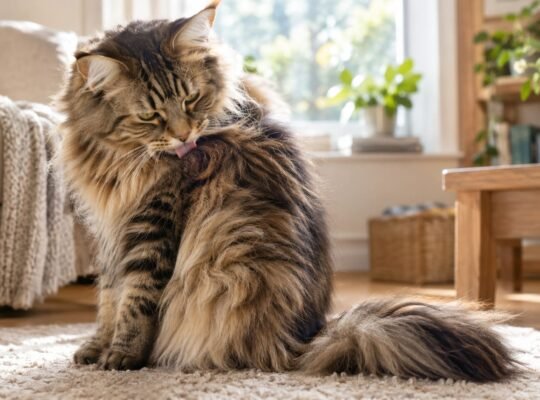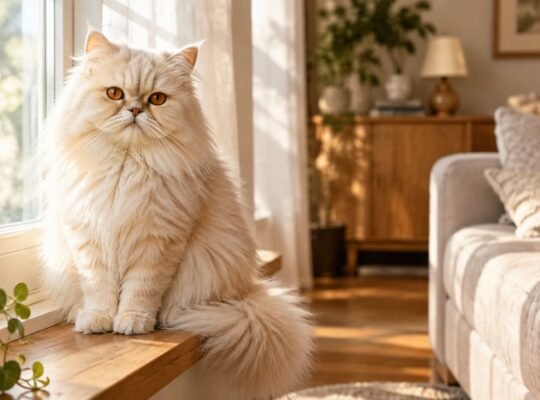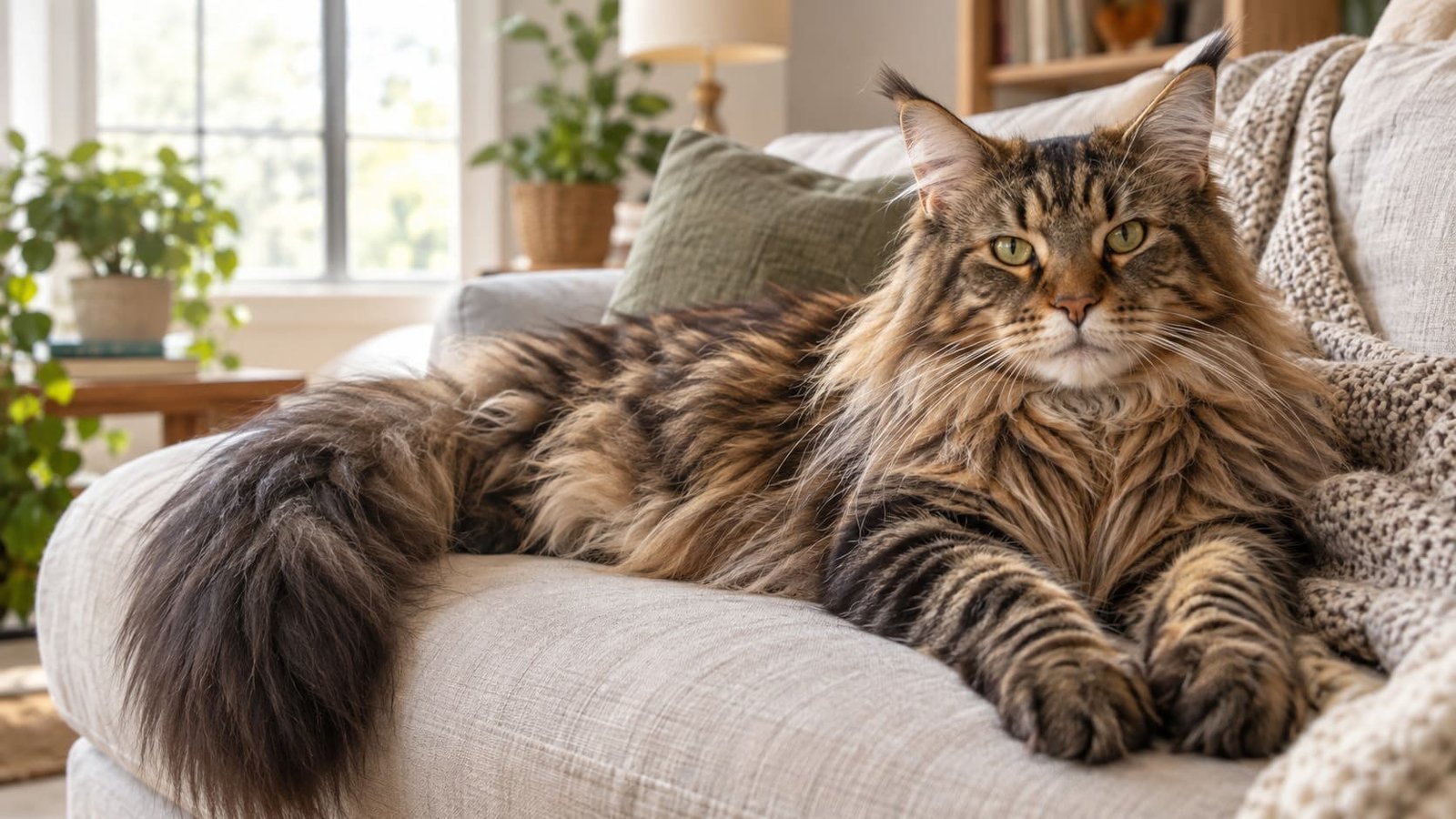
Maine Coons suit homes that want a social, dog-like cat and can handle big-cat costs, weekly grooming, and heart-health screening. They mature slowly, shed heavily, and need oversized gear. Choose a breeder who tests for HCM, SMA, and hip dysplasia.
You’ve seen the photos. A cat the size of a small dog, lion’s ruff, lynx ears, sprawled across someone’s lap like a fur blanket. It’s hard not to want one.
Here’s the honest short answer. A Maine Coon is a great fit if you want a social, playful cat that follows you around and you’re ready for heavy shedding, bigger bills, and heart-health screening.
If you want a low-maintenance, independent cat, or you’re counting on a small budget, a Maine Coon may frustrate you. Neither answer makes you a better or worse cat parent. It just means matching the cat to your real life.
This guide walks you through the pros, the cons that rarely make the adoption flyer, and the care routine that keeps these gentle giants healthy.
Key takeaways
- Maine Coons are friendly, dog-like cats that usually do well with kids and other pets.
- They grow slowly and may not reach full size until 3 to 5 years old.
- Their long coat needs combing two to three times a week to prevent mats.
- Hypertrophic cardiomyopathy (HCM) is the key health risk. Look for breeders who DNA-test and heart-scan the parents.
- Expect higher costs for food, gear, and vet care than with an average-size cat.
Maine Coon at a glance
The Maine Coon is a large, long-haired cat breed that developed naturally in the northeastern United States. It’s the official state cat of Maine and one of the oldest natural breeds in North America.
| Trait | What to expect |
| Adult weight | Males commonly 13 to 18 lb; females commonly 8 to 12 lb (individuals vary) |
| Full size reached | Around 3 to 5 years old |
| Lifespan | Many live into their early teens |
| Coat | Long, shaggy, water-resistant; heavy shedding |
| Temperament | Gentle, social, playful, curious |
| Energy level | Moderate to high, especially in young adults |
| Grooming needs | Combing 2 to 3 times a week |
| Hypoallergenic? | No |
| Main health concern | Hypertrophic cardiomyopathy (HCM) |
The honest pros of owning a Maine Coon
Most people fall for the look. They stay for the personality.
Maine Coons are often described as dog-like. That usually means they greet you at the door, follow you from room to room, and want to be near whatever you’re doing, even if they don’t want to be held.
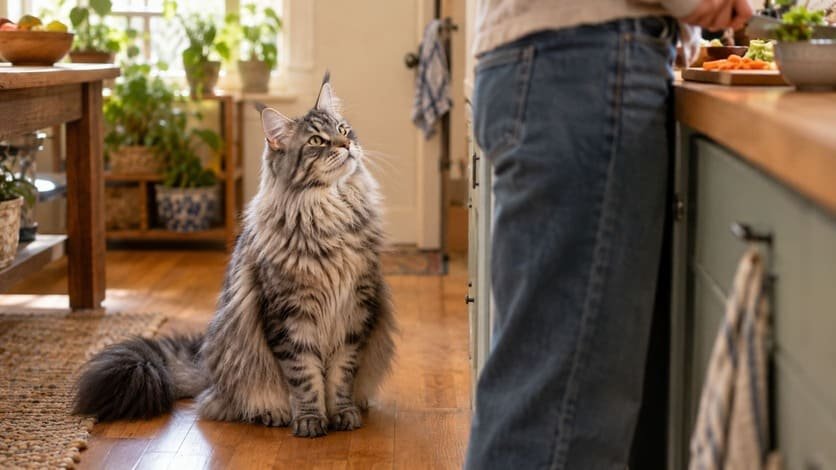
They’re sociable without being needy
Many Maine Coons are “near you” cats rather than “on you” cats. Expect a big cat parked on the chair next to your desk, not necessarily one demanding your lap all day.
They’re easy to train
These cats are curious and food-motivated, which makes them good candidates for clicker training. Many learn to come when called, sit for treats, or walk on a harness with patience.
They’re usually gentle with people
For their size, Maine Coons tend to be soft-mouthed and tolerant. Veterinary teams often describe them as among the easier breeds to handle, though every cat is an individual.
They talk, but softly
Instead of loud meows, many Maine Coons chirp and trill. It’s a small, bird-like sound that seems oddly delicate coming from a 16-pound cat.
The cons nobody puts on the adoption flyer
None of these are dealbreakers on their own. But stacked together, they’re the reasons some Maine Coons end up rehomed.
Everything you buy has to be bigger
Call it the “big cat tax.” It catches first-timers off guard.
A general guideline is a litter box at least one and a half times your cat’s body length, nose to base of tail. Most standard boxes are too small.
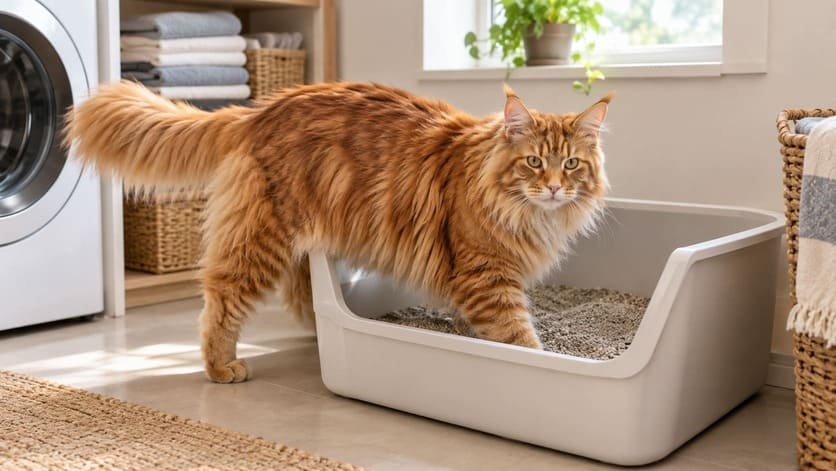
Plan for these upgrades:
- Litter box: extra-large or a storage tote with a cut-out entry. Many adults also dislike covered boxes that make them crouch.
- Cat tree: wide platforms and a heavy, wide base. Lightweight trees can tip when a 15-pound cat launches off the top.
- Carrier: a large-dog-size carrier is often more realistic than a “cat” carrier.
- Scratching post: tall enough for a full stretch, which for an adult Maine Coon is surprisingly high.
The shedding is real
Their coat sheds year-round, with heavier “blowing coat” seasons in spring and fall. If fur on your clothes and couch would stress you out, take that seriously now.
They cost more to keep
A bigger cat eats more food and needs bigger supplies. Some medications and anesthesia are dosed by weight, so vet bills can run a little higher too. Heart screening adds to the tally.
Kittens stay kittens for a long time
A Maine Coon may not settle into adult calm until 2 or 3 years old. That’s a long stretch of zoomies, counter surfing, and knocking things off shelves in a body that keeps getting heavier.
They’re not a good “alone all day” cat
Because they’re so people-oriented, many Maine Coons get bored if left alone for long workdays with nothing to do. Bored cats find their own entertainment, and you may not like it.
What daily life with a Maine Coon really looks like
Breed profiles list traits. Here’s how those traits tend to show up in an ordinary week in a real home.
Mornings are social. Many Maine Coons wait outside the bedroom door and trill the moment they hear you move. Some will sit in the bathroom doorway while you get ready, just to watch.
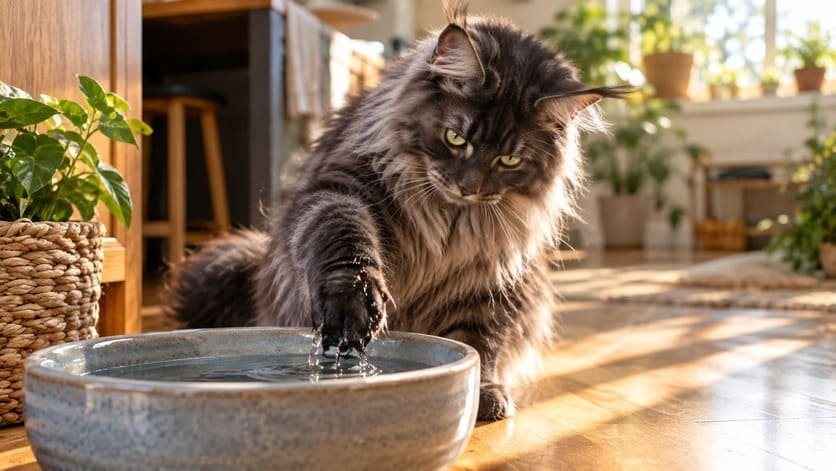
Water becomes a toy. It’s common to find the water bowl tipped or a paw dipped in it before drinking. Some scoop water to their mouth with a paw. A heavy ceramic bowl or a fountain saves your floors.
The 1-to-2-year stretch is the hardest. Owners often notice that a Maine Coon’s rowdiest phase lands between about 12 and 24 months. They have near-adult strength with kitten judgment. This is when cat trees wobble and shelf items disappear.
Evenings bring bursts of play. Expect a sprint around dusk and another late at night. With a cat this size, you’ll hear it. Two short play sessions, one before dinner and one before bed, usually take the edge off.
They “supervise.” If you fold laundry, work at a desk, or cook, a Maine Coon will likely position itself where it can see you. It’s rarely demanding. It’s just there, which many owners find sweet.
Watch for signs of boredom: chewing cords or plants, repeated knocking of objects while making eye contact with you, or overgrooming. These usually mean the cat needs more play or puzzle feeders, not a scolding.
Maine Coon health problems to know about
Maine Coons are generally sturdy cats, but a few inherited conditions show up in the breed. Knowing them helps you choose a kitten wisely and spot problems early.
Hypertrophic cardiomyopathy (HCM)
HCM is a thickening of the heart muscle and the most common heart disease in cats overall. In Maine Coons, a specific mutation in the MYBPC3 gene (called A31P) is linked to higher risk.
Here’s the part most breed guides skip. A DNA test and a heart ultrasound answer different questions.
- The DNA test tells you whether a cat carries that one known mutation. Cats with two copies face a clearly higher risk. But HCM has other causes, so a “clear” DNA result doesn’t guarantee a healthy heart.
- An echocardiogram (heart ultrasound) shows whether the heart is actually thickening right now. HCM often develops in middle age, so one normal scan in a young cat isn’t the final word.
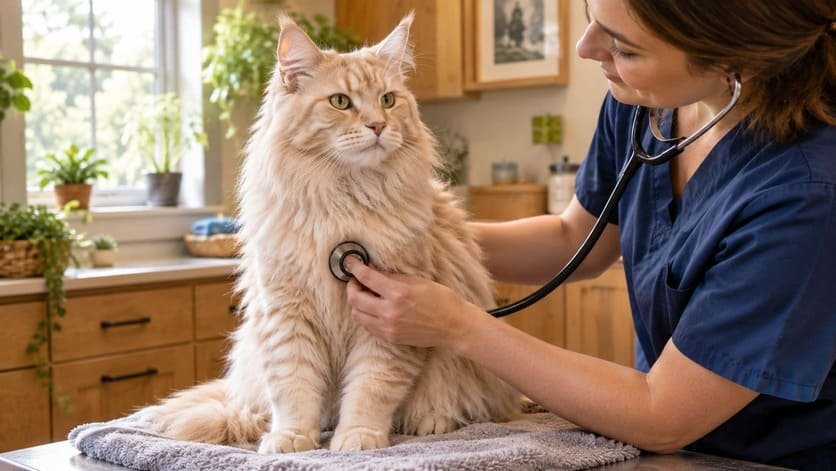
That’s why good breeders use both, and repeat heart scans on their breeding cats over time. For your own cat, ask your vet how often to check the heart.
The Cornell Feline Health Center has a clear overview of feline cardiomyopathy.
Call your vet right away if you notice fast or labored breathing at rest, open-mouth breathing, hiding, or a poor appetite. Sudden back-leg weakness or paralysis with crying is an emergency.
A useful at-home habit: count your cat’s breaths while they sleep. Ask your vet what’s normal for your cat, then check now and then. A resting rate that climbs is often an early clue.
Spinal muscular atrophy (SMA)
SMA is an inherited condition that affects the nerves controlling the back-leg muscles. Signs typically appear as a kitten, around 3 to 4 months old, with a wobbly gait or trouble jumping.
It isn’t painful, and many affected cats live comfortably indoors. A DNA test exists, and responsible breeders use it so they never produce affected kittens.
Hip dysplasia
Hip dysplasia, a loose or malformed hip joint, is more common in large cats than many owners realize. It can lead to arthritis later. Signs include reluctance to jump, a stiff walk after rest, or avoiding high perches.
Breeders can have their cats’ hips X-rayed and evaluated through the Orthopedic Foundation for Animals (OFA). Keeping your cat lean is the best thing you can do at home for joint health.
Weight gain and dental disease
These aren’t breed-specific, but they matter. Extra pounds strain big joints and the heart. Dental disease is common in cats of every breed, so regular dental checks belong in the routine.
Grooming, feeding, and exercise needs
Maine Coon care isn’t hard. It’s just steady. A few minutes most days beats a stressful hour when mats have already formed.
How often to groom a Maine Coon
Comb two to three times a week, and daily during heavy spring and fall shedding. A stainless steel comb with wide and medium teeth works better than a soft brush for reaching the undercoat.
Where mats form first
Mats rarely start on the back. Check these spots first:
- Armpits and behind the front legs
- The belly
- The “britches,” the long fur on the back of the thighs
- Behind the ears and under the collar area
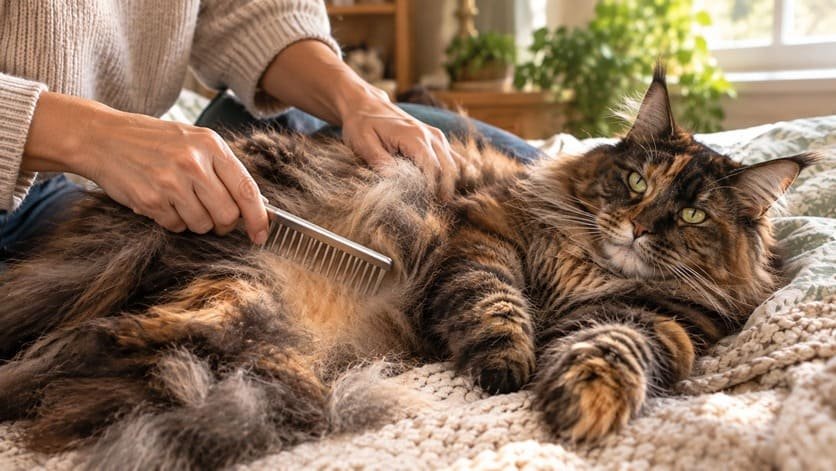
Don’t cut mats out with scissors. Cat skin is thin and easy to nick. A professional groomer or your vet can remove stubborn mats safely.
Some owners ask a groomer for a “sanitary trim” around the back end every few months. It helps keep litter and waste from sticking to long fur. Trim nails every few weeks too.
For a step-by-step grooming routine, see our guide to [INTERNAL LINK: SmartPawLife guide to brushing a long-haired cat].
Feeding a slow-growing giant
Feed a complete and balanced food labeled for your cat’s life stage, and measure every meal. Maine Coons grow for years, so ask your vet when to switch from kitten to adult food rather than switching at a fixed birthday.
Use a kitchen scale at home and weigh your cat monthly. Gradual gain is expected in a young Maine Coon. A thick layer over the ribs that you can’t feel easily is not “big-boned,” it’s extra weight.
Exercise and enrichment
Aim for two or three short play sessions a day, around 10 to 15 minutes each. Wand toys that let your cat leap and pounce suit this breed well.
Other ideas that work well:
- Puzzle feeders for part of the daily food
- Harness walks in a quiet yard, introduced slowly indoors first
- Window perches strong enough to hold a heavy cat
- Rotating toys weekly so old favorites feel new
Maine Coons do best as indoor cats in most U.S. homes, with safe outdoor time such as a catio or harness. Indoor living protects them from traffic, predators, and disease.
How to find a healthy Maine Coon kitten
If you’re buying from a breeder, this is the single most important step for your cat’s long-term health. Online kitten scams are common, especially for popular breeds, so never send a deposit without verifying the breeder.
Follow these seven steps:
- Confirm registration. Ask which registry the cattery uses, such as the Cat Fanciers’ Association (CFA) or The International Cat Association (TICA), and ask for the kitten’s registration papers.
- Ask for HCM DNA results on both parents. Request written MYBPC3 (A31P) results, not just a verbal “they’re tested.”
- Ask for recent heart ultrasounds. Request echocardiogram reports for both parents from a veterinary cardiologist. Repeat scans over several years are a strong sign of a careful program.
- Check SMA and hip screening. Ask for SMA DNA results and hip evaluations such as OFA ratings.
- Meet the parents and see where kittens live. Visit in person or by live video. Kittens should be raised in the home, not in a garage or outbuilding.
- Wait until at least 12 weeks. Good breeders usually keep kittens until around 12 to 16 weeks for vaccinations and social skills.
- Read the contract. Look for a written health guarantee, a window for your own vet check, and a promise the breeder will take the cat back at any age.
Red flags include kittens always available, pressure to pay a deposit fast, no health paperwork, prices far below other breeders, or a refusal to let you see the parents.
Adopting a Maine Coon from a rescue
You can also find Maine Coons through shelters and breed-specific rescue groups. Adult rescues come with a big advantage: their size and personality are already known.
One thing to know: many long-haired shelter cats are listed as “Maine Coon mixes.” Most are domestic longhair cats with a similar look. They can be wonderful pets, but don’t count on breed-typical size or temperament.
If adoption is your path, our guide to [INTERNAL LINK: SmartPawLife guide to adopting a cat from a shelter] walks you through the process.
Are Maine Coons good with kids and other pets?
Usually, yes. Their tolerant, easygoing nature makes Maine Coons a common pick for families. Many also live happily with cat-friendly dogs.
A few ground rules still apply:
- Teach kids to pet gently and to let the cat walk away. A heavy cat can be hard for small children to hold safely.
- Introduce dogs slowly, with separate spaces at first and short supervised meetings over several days to weeks.
- Give your cat escape routes up high, like a sturdy shelf or tall cat tree.
Does your dog have a strong prey drive, or a history of chasing cats? Work with a certified trainer or behaviorist before any introduction.
Is a Maine Coon right for you? A quick self-check
A Maine Coon is likely a great fit if you:
- Want an affectionate, interactive cat that likes being part of the household
- Can comb a long coat a few times a week
- Have room for large litter boxes and a sturdy cat tree
- Can budget for extra food, gear, and heart screening
- Are home often, or have another friendly pet for company
You might want to reconsider if you:
- Want a cat that entertains itself for 10-hour days
- Can’t tolerate fur on furniture and clothes
- Live in a very small space with no vertical room
- Need the lowest possible yearly pet costs
- Have someone in the home with cat allergies
If you land somewhere in the middle, spend time with adult Maine Coons before deciding. A cat show, a breeder visit, or a rescue meet-and-greet will tell you more than any photo.
The bottom line
A Maine Coon can be one of the most rewarding cats you’ll ever share a home with. They’re funny, loyal, and gentle in a way that surprises people meeting one for the first time.
They also need more than an average cat: more combing, more space, more budget, and a careful eye on heart health. If you can give them that, you’ll get years of trills at the bedroom door in return.
Ready to take the next step? Bookmark our breeder checklist above, and browse Smart Paw Life’s cat care guides to get your home ready before your new gentle giant arrives.
Disclaimer: This article is for informational purposes only and isn’t a substitute for professional veterinary advice. Talk to your veterinarian about any health concerns, including heart screening for your Maine Coon. For aggression, high prey drive in a household pet, or other high-risk behavior situations, work with a certified animal behaviorist or certified trainer.
Click Here to Add SmartPawLife as a Trusted Source Add as a preferred source on Google