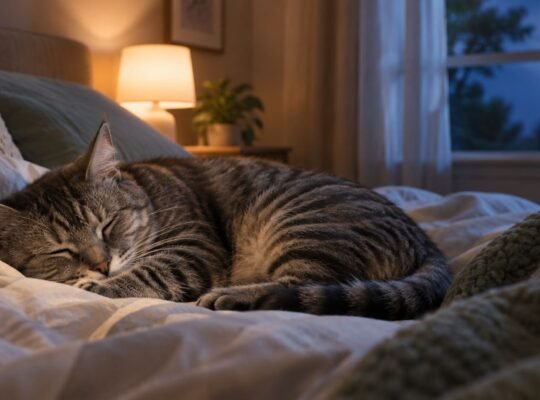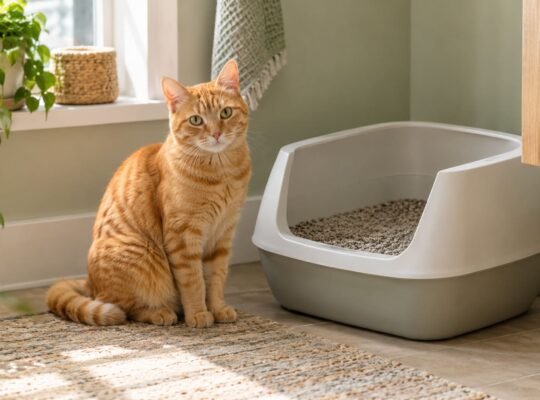
Older cats who yowl at night may have feline cognitive dysfunction, but pain, thyroid disease, high blood pressure, or hearing/vision loss can look identical. Here’s how to tell them apart and manage the nights either way.
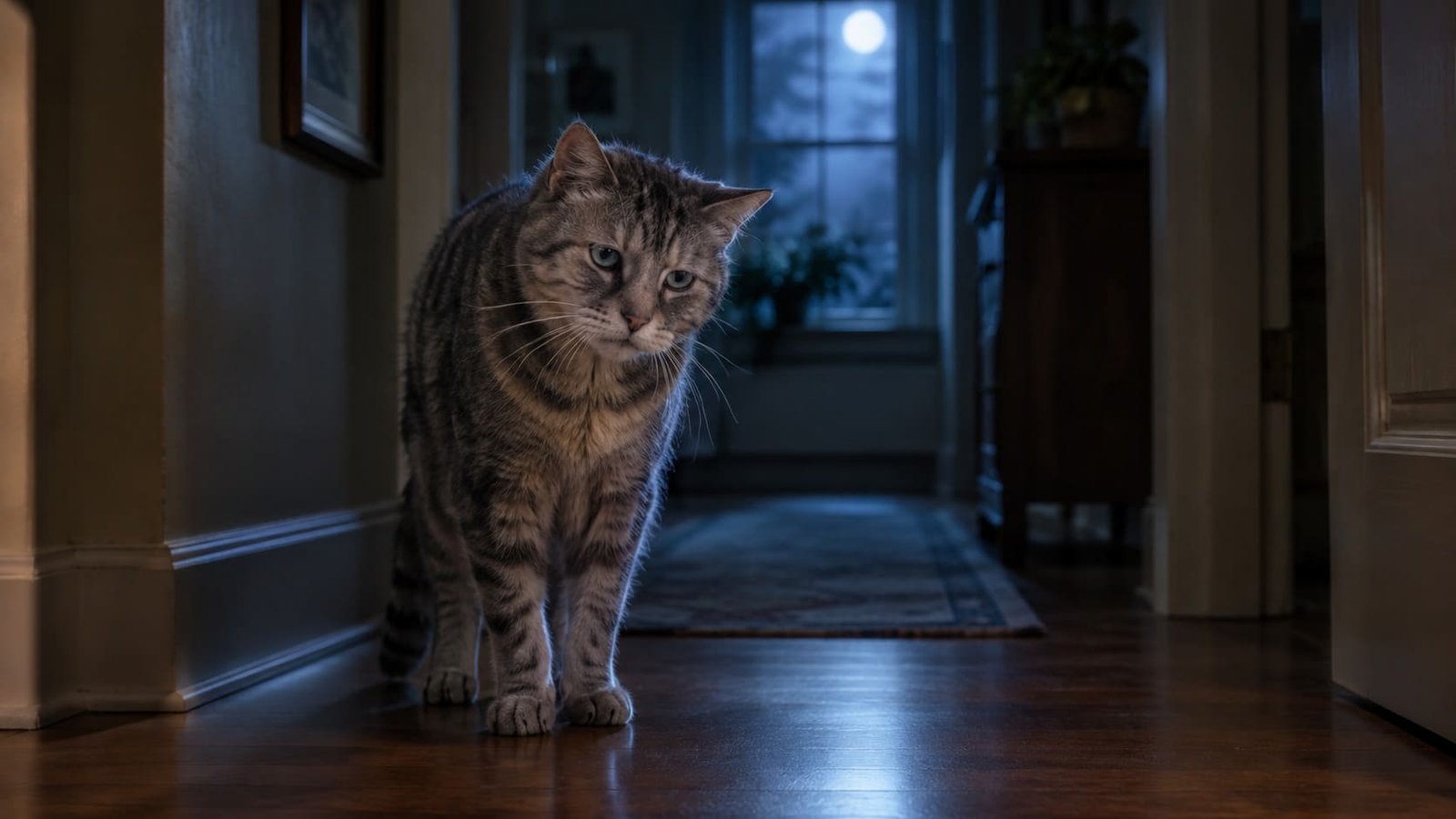
If you’ve been jolted awake at 2 a.m. by a long, hollow-sounding yowl coming from somewhere in your dark house, you already know this isn’t your cat’s normal “feed me” meow. It’s louder, more disoriented, and it doesn’t stop when you show up. You find your senior cat standing in the middle of the hallway or staring into a corner, crying like she’s lost in her own home.
This happens to a lot of older cat owners, and the internet’s first answer is almost always “cognitive dysfunction,” the feline version of dementia. That’s often right. But it’s not the only explanation, and treating every case of night yowling as dementia means you might miss a treatable medical problem that’s actually driving the behavior or making it worse.
Key Takeaways
- Night yowling in senior cats is often blamed entirely on cognitive dysfunction, but hyperthyroidism, high blood pressure, deafness, vision loss, and pain can all cause identical crying.
- Cognitive dysfunction syndrome (CDS) tends to come with a cluster of other changes such as disorientation, altered sleep-wake cycles, house-soiling, and changed social behavior that not vocalization alone.
- A senior cat that starts yowling at night deserves a vet visit with bloodwork and a blood pressure check before you assume it’s “just old age.”
- Night-specific management (lighting, routine, litter box access, and sometimes medication) can meaningfully reduce yowling even when some cognitive decline is present.
- This is rarely a one-and-done fix. Most households manage it in layers over weeks, adjusting as the cat’s needs change.
What Feline Cognitive Dysfunction Actually Looks Like
Feline cognitive dysfunction syndrome, or CDS, is a real and well-documented condition in aging cats, similar in mechanism to Alzheimer’s disease in people. It’s caused by gradual changes in the brain that reduced blood flow, protein deposits, and the slow loss of neurons and it becomes more common as cats move past 10 to 12 years old.
Vets and behaviorists often describe the hallmark signs of CDS using the acronym DISHA:
- Disorientation: Getting “stuck” in corners, staring at walls, forgetting the location of the litter box or food bowl in a home they’ve lived in for years.
- Interactions changed: Becoming clingier, more irritable, or withdrawn from family members or other pets.
- Sleep-wake cycle disruption: Sleeping more during the day and becoming restless, vocal, or active at night.
- House-soiling: Urinating or defecating outside the litter box despite no change in the box itself.
- Activity level changes: Pacing, wandering aimlessly, or a drop in grooming and play.
The night yowling that gets so much attention is really just one piece of the sleep-wake disruption category. On its own, without any of the other four signs present, vocalization alone is a weaker case for CDS specifically which is exactly why it’s worth looking for what else is different, not just accepting the crying as the whole story.
The Medical Conditions That Mimic Dementia
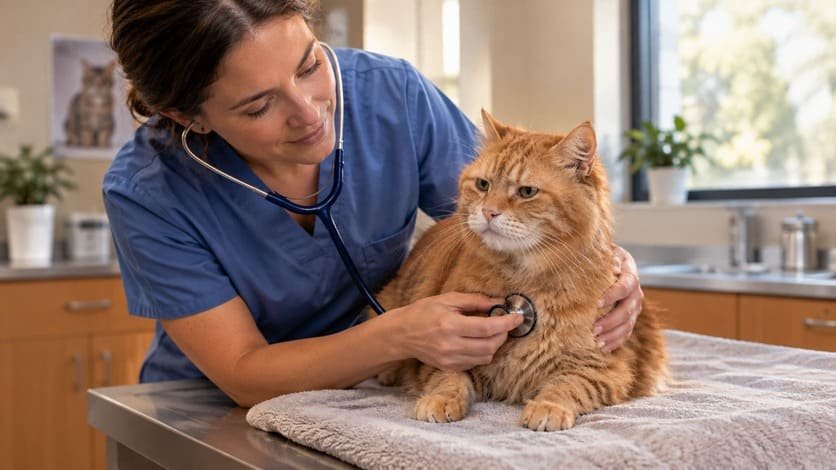
This is the part competitor articles tend to gloss over. A cat crying at night looks the same on the surface whether the cause is cognitive or physical, and several physical conditions are common in the same age range as CDS.
Hyperthyroidism is the big one. It’s common in cats over 10, and an overactive thyroid can cause restlessness, increased vocalization, weight loss despite a hearty appetite, and disrupted sleep. It’s diagnosed with a simple blood test and is very treatable with medication, diet, or radioactive iodine therapy.
High blood pressure (hypertension), often secondary to kidney disease or hyperthyroidism, can cause disorientation and distress that looks a lot like cognitive decline. Left unmanaged, it also risks sudden blindness, which brings its own panic-driven yowling.
Hearing loss is extremely common in senior cats and easy to miss because cats compensate well during the day using other senses and familiar routines. At night, in the dark and quiet, a cat who can’t hear well may feel more isolated and cry out for reassurance or lose track of where family members are.
Vision loss, whether from cataracts, retinal degeneration, or hypertension-related retinal detachment, has a similar effect: a cat who could navigate a dark room from memory a year ago may now bump into furniture that’s been moved, or simply freeze and cry when disoriented.
Chronic pain, especially arthritis, is under-recognized in cats because they hide it well. A cat with sore joints may struggle to settle into a comfortable sleeping position, wake repeatedly through the night, or cry when jumping down from a favorite perch has become difficult or impossible.
Kidney disease can cause increased thirst, more frequent trips to the water bowl and litter box overnight, and general malaise that shows up as nighttime restlessness.
Any one of these can exist alongside CDS, not instead of it. Many senior cats have two or three overlapping conditions at once, which is part of why night yowling is genuinely hard to solve with a single fix.
Why Cats Get Worse Specifically at Night
Even cats with a clear medical or cognitive cause tend to get noticeably worse after dark, and there’s a practical reason for it. During the day, a house full of activity, light, and routine gives an aging cat constant sensory anchors – the sound of the TV, family movement, daylight through the windows. At night, those anchors disappear all at once. A cat already struggling with vision, hearing, or cognition loses the cues that were compensating for the decline, and disorientation spikes.
I’ve seen this pattern show up almost like clockwork in cats with early cognitive changes: calm and normal-seeming through the evening, then a shift that starts around the time the house goes quiet and the lights go off, often an hour or two after everyone’s gone to bed rather than immediately at “lights out.” That delay matters, because it means the trigger isn’t darkness itself so much as the drop in stimulation and reassurance once the household settles which is also why timed lighting and a predictable pre-bed routine tend to help more than people expect.
What the Vet Visit Should Actually Cover
If your senior cat has started yowling at night, the appointment should go beyond “she’s just getting old.” Ask specifically for:
- A full physical exam, including a hands-on joint and mobility assessment, not just a general once-over.
- Bloodwork, including a thyroid panel (T4) and kidney values (BUN, creatinine, SDMA).
- A blood pressure check, which many general wellness exams skip unless you ask.
- A hearing and vision screen, even an informal one many vets can assess basic responsiveness in the exam room.
- A discussion of pain, specifically arthritis, since cats rarely show obvious limping the way dogs do.
If all of that comes back clear, cognitive dysfunction becomes a much more confident diagnosis by process of elimination, and your vet may suggest environmental changes, cognitive-support diets or supplements, or in some cases medication.
Managing the Nights: What Actually Helps
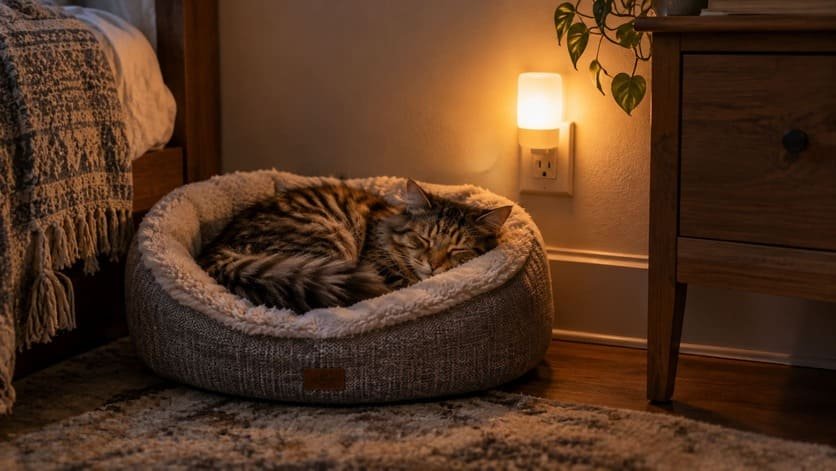
Whatever the underlying cause turns out to be, most households need practical nighttime strategies while medical treatment takes effect or alongside a cognitive diagnosis that has no cure, only management.
- Leave a low night-light on in the areas your cat uses most, especially near the litter box, food, and water. This helps cats with vision loss or disorientation navigate without panic.
- Keep the layout stable. Avoid rearranging furniture, and keep litter boxes, food, and water in the same spots. Add a litter box on the sleeping level if your cat has mobility issues climbing stairs at night.
- Build in a wind-down routine before bed – a feeding, a bit of play, then a calm settle. Cats with cognitive decline often respond well to predictability precisely because it reduces the number of decisions and adjustments their brain has to make.
- Consider a feeding schedule adjustment. A small late-night or early-morning feeding can sometimes shift a cat’s active hours away from the middle of the night.
- Ask about melatonin or prescription options. Some vets recommend melatonin for sleep-wake cycle disruption in senior cats, and in more severe CDS cases, prescription medications can help. Don’t give any supplement without your vet’s specific dosing guidance, since cat dosing is very different from human dosing.
- Reassure without reinforcing panic. Going to your cat calmly when she cries, rather than ignoring her, is usually the right call in genuine disorientation – this isn’t a behavior to “correct,” it’s distress to soothe.
What This Looks Like in a Real Household
None of this tends to resolve in a week. In most cases I’ve come across, families land on a workable routine only after a few rounds of trial and error – a night-light that didn’t seem to help at first turns out to matter once it’s paired with a stable bedtime routine, or a cat keeps crying at the same time each night until a small feeding is added right before that window. Progress is usually partial improvement, not a full stop, and that’s a realistic bar to set going in. Getting a full night of sleep back one week and losing it again after a stressful vet visit or a schedule change the next is normal, not a sign that nothing is working.
A Note If You’re Exhausted
If you’re the one losing sleep over this, that’s worth naming honestly. Caring for a cat through cognitive decline is genuinely tiring, and it’s fair to feel frustrated on a bad night even while you love your cat. Getting the medical workup done and building a routine won’t fix everything overnight, but it usually turns an unpredictable, scary problem into a manageable one — and that’s a reasonable goal to aim for.
If your senior cat has started crying at night, book a vet visit this week rather than waiting to see if it passes. The sooner you rule out a treatable cause, the sooner you both get your sleep back.
Click Here to Add SmartPawLife as a Trusted Source Add as a preferred source on Google