Bringing home your first dog is one of those decisions that feels simple right up until you start researching it. Scroll through enough breed pages and you will find a Chihuahua owner insisting their dog is “so easy” next to a Border Collie owner describing a dog that reorganizes the living room out of boredom.
The truth is that breed matters enormously for a first-time owner, and getting the match wrong is one of the most common reasons new dogs end up back in a shelter within the first year.
This guide breaks down 10 breeds that are genuinely well suited to a first dog, based on temperament, trainability, exercise needs, and realistic care demands, plus 5 breeds that look appealing but tend to overwhelm owners who have never raised a dog before. Whether you are drawn to a calm lap companion or an energetic family dog, this guide offers clear, practical guidance to help you choose a breed you and your household can actually thrive with.
What Makes a Dog Breed Good for First-Time Owners?
Before getting into specific breeds, it helps to know what “easy” actually means in dog terms, because it is not just about size. Four factors matter most:
- Trainability: How quickly and reliably a dog learns commands and house manners, and how motivated it is to work with you rather than around you.
- Energy level: How much daily physical and mental exercise the breed needs to stay calm and well behaved indoors.
- Grooming and health demands: How much time, money, and veterinary attention the breed realistically requires over its lifetime.
- Temperament stability: How predictable the dog is around strangers, children, other pets, and new situations without heavy behavioral management.
A dog can be small and still be a poor first choice. A Jack Russell Terrier, for example, packs a lot of drive into a small body. A dog can also be large and still be genuinely easygoing. A Golden Retriever is proof of that. Size alone is a bad shortcut.
The Research Behind Easy and Difficult Dog Breeds
Most breed roundups lean on stereotype and anecdote, but there is actual behavioral science behind why some breeds are recommended more often for novice owners.
Researchers at the University of Pennsylvania’s School of Veterinary Medicine developed the Canine Behavioral Assessment and Research Questionnaire, or C-BARQ, a standardized survey that has scored roughly 50,000 dogs across more than 300 breeds and crossbreeds on 14 behavioral categories. These include trainability, energy level, excitability, and aggression toward strangers, owners, and other dogs.
It was originally built to study why dogs get surrendered to shelters or fail out of working and service dog programs, since behavior problems, not health issues, are one of the biggest reasons dogs lose their homes.
That is the real reason breed choice matters so much for a first dog. It is not about bragging rights over having a “smart” breed. It is about picking a dog whose baseline trainability and energy profile does not require expert-level management to live happily in your home. The breeds below lean toward the trainable, lower-drama end of that spectrum. The breeds to avoid lean toward the end that usually needs an owner who already has some dog experience.
10 Best Dog Breeds for First-Time Owners
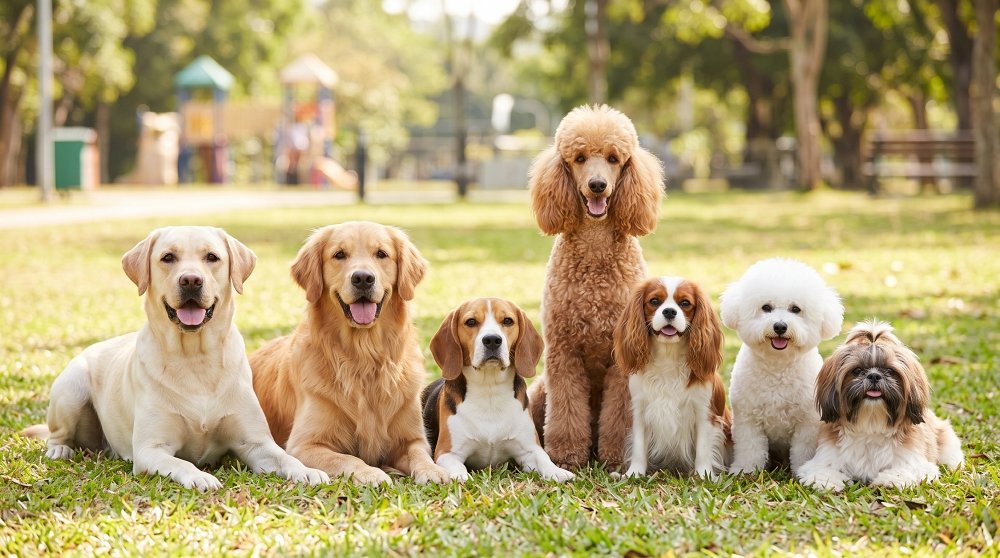
Here is a quick-reference comparison before the full breakdown of each breed.
| Breed | Size | Weight | Lifespan | Energy Level | Grooming |
|---|---|---|---|---|---|
| Labrador Retriever | Large | 55-80 lbs | 12-13 years | High | Low-moderate |
| Golden Retriever | Large | 55-75 lbs | 12-13 years | High | Moderate-high |
| Cavalier King Charles Spaniel | Small | 13-18 lbs | 12-15 years | Moderate | Moderate |
| Poodle | Varies | 6-70 lbs | 10-18 years | High for Standard, lower for Toy | High |
| Bichon Frise | Small | 7-18 lbs | 10-15 years | Moderate | High |
| Havanese | Small | 7-14 lbs | 13-14.5 years | Moderate | High |
| Boston Terrier | Small | 12-25 lbs | 11-13 years | Moderate | Low |
| Cocker Spaniel | Medium | 20-30 lbs | 10-14 years | Moderate | High |
| Beagle | Small-medium | Up to 30 lbs | 10-15 years | High | Low |
| Shih Tzu | Small | 9-16.5 lbs | 12-15 years | Low-moderate | High |
1. Labrador Retriever
Labs are the breed most first-time owners picture when they imagine an “easy” dog, and the reputation holds up. The AKC breed standard describes them as friendly, outgoing, and eager to please, and that eagerness translates directly into trainability. They are people-oriented, rarely aggressive, and generally patient with kids and other dogs.
The tradeoff is exercise. Labs need at least an hour of real activity daily, and an under-exercised Lab can get destructive out of boredom rather than defiance. Watch portion sizes too, since obesity and hip or elbow dysplasia are common concerns in the breed.
If you want the full breakdown of temperament, health risks, and what to expect through puppyhood, our Labrador Retriever breed guide covers it in depth.
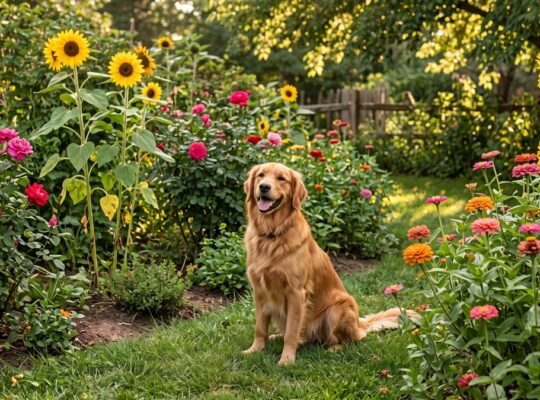
2. Golden Retriever
Goldens share a lot of personality overlap with Labs. They are calm, biddable, and extremely easy to train, which is part of why they are so common as guide dogs and therapy dogs. They are also famously tolerant of children, making them a strong pick for first-time family owners specifically.
The honest downside is grooming and health. That gorgeous double coat sheds heavily and needs regular brushing, and Golden Retrievers carry an unusually high cancer risk compared with many breeds. The Golden Retriever Lifetime Study was created specifically to better understand cancer and other major diseases in the breed, which tells you how seriously researchers take that concern.
That is not a reason to rule the breed out, but it does mean budgeting for pet insurance or a health savings buffer is worth doing early. Our Golden Retriever breed guide goes deeper on care and health screening.
3. Cavalier King Charles Spaniel
Cavaliers were bred to be companions, and it shows. They are affectionate, tolerant of children and other pets, and genuinely easy to train, with a temperament built around wanting to be near you rather than off doing their own thing. Two 20 to 30 minute walks a day usually cover their exercise needs.
Their real vulnerability is health, not behavior. Mitral valve disease is the leading cause of death in the breed, and some lines also carry a risk of syringomyelia, a neurological condition. Buying from a breeder who health-tests for heart conditions matters more with this breed than almost any other on this list.
4. Poodle
Poodles consistently rank among the most trainable breeds in the world, and the low-shedding coat makes them a common pick for owners managing allergies in the household. They come in three official sizes: Standard, Miniature, and Toy.
That size difference matters for a first-time owner. A Standard Poodle needs one to two hours of exercise a day and a fair amount of space, while a Miniature or Toy Poodle is usually better suited to apartment life with lower exercise demands.
Grooming is the real commitment across all three sizes. The curly coat needs brushing every few days plus professional grooming every 6 to 8 weeks, so factor that recurring cost into your budget before committing.
5. Bichon Frise
Bichons are small, cheerful, and were bred purely to be good company, which makes them a genuinely easy first dog for someone in an apartment or without a yard. They are quick learners and respond well to positive reinforcement. Their low-shedding coat is another point in their favor for allergy-sensitive households.
One honest caveat: Bichons can develop real separation anxiety if left alone for long stretches, since they were never bred for independence. If you work long hours away from home, this is worth thinking through before bringing one home.
6. Havanese
Havanese are Cuba’s national dog breed and were built to be lap dogs and family companions. That heritage shows in how readily they bond and train. A large UK life-expectancy study published in 2024 found that small, long-nosed breeds tend to have some of the longest median lifespans, and Havanese are often cited as one of the longer-lived companion breeds.
That is a meaningful plus for a first dog you want in your life for a long time.
The main demand is coat care. Their long, silky double coat mats easily without regular brushing, and most owners either commit to grooming or keep the coat trimmed short.
7. Boston Terrier
Nicknamed “the American Gentleman,” Boston Terriers are outgoing, affectionate, and bright enough to be genuinely easy to train. Their exercise needs are modest. A good walk plus some daily play is usually enough, and their short coat keeps grooming simple.
The one thing to plan around is their flat face. Like other brachycephalic breeds, Bostons can struggle with heat and are prone to breathing-related issues, including BOAS, along with eye conditions like cataracts and glaucoma. Keep exercise light in hot weather and choose a vet familiar with brachycephalic breeds.
8. Cocker Spaniel
Cocker Spaniels are sweet-tempered, food and praise motivated, and genuinely easy to train, which is a big part of why they were America’s most popular dog for years before retrievers took over. Their exercise needs are moderate. They are usually happy with a couple of walks and some playtime rather than a full workout regimen.
The tradeoff is grooming. Their double coat sheds year-round and mats quickly without weekly brushing, and their floppy ears need regular checks to prevent infections. Budget for either learning to groom them yourself or booking recurring professional grooming appointments.
9. Beagle
Beagles are social, affectionate, and genuinely good with kids and other pets, which makes them a popular family choice. Grooming is close to effortless. A weekly brush and occasional bath are usually all their short coat needs.
Where Beagles get harder is training and noise. Bred as scent hounds, they are easily distracted by smells and can have a shorter attention span in training compared with a Lab or Poodle. They also bay loudly when bored or excited, which matters if you live somewhere with close neighbors.
They need a solid hour of exercise a day and do not do well left alone for long periods, since they were bred to work in packs.
10. Shih Tzu
Shih Tzus are calm, affectionate companion dogs with modest exercise needs. Short walks and indoor play are usually enough, which makes them a solid fit for apartment living or owners who cannot commit to hours of daily activity.
Their coat is the tradeoff. The long double coat mats within days without regular brushing, so most first-time owners either learn basic grooming or budget for a groomer every 4 to 6 weeks.
Like other flat-faced breeds, Shih Tzus can also be prone to breathing and eye issues. Lifespan studies show meaningful regional variation too, so ask breeders about the health history behind their specific lines rather than relying only on breed averages.
5 Dog Breeds First-Time Owners Should Usually Avoid
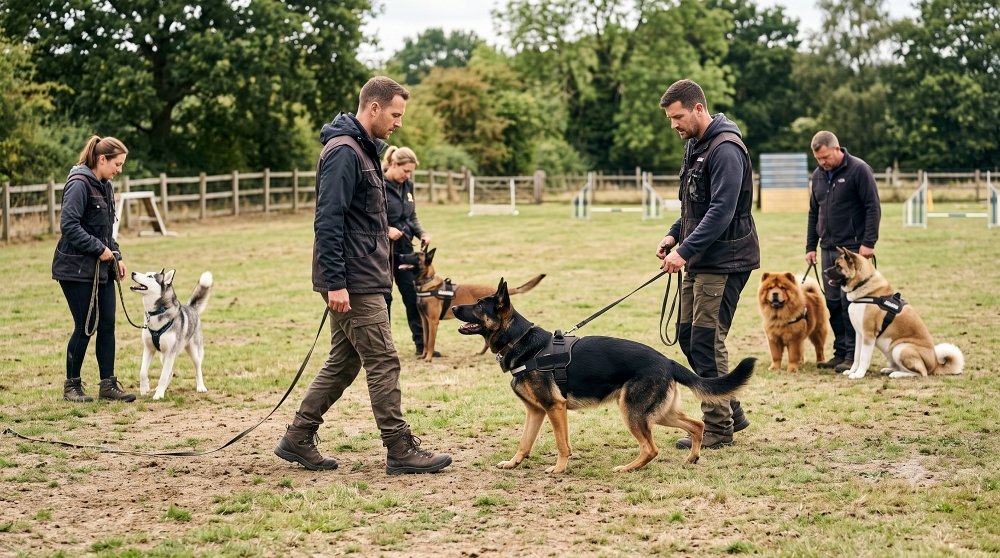
None of the breeds below are “bad dogs.” Every one of them can thrive in the right home. What they have in common is that they usually need an owner who already understands dog behavior, training, or breed-specific management. That is exactly the experience a first-time owner has not built yet.
| Breed | Size | Weight | Lifespan | Why It Is Hard for Beginners |
|---|---|---|---|---|
| Siberian Husky | Large | 35-60 lbs | Around 12 years | Extremely high energy, independent thinker, escape artist |
| Akita | Large | 55-130 lbs | Around 11-13 years | Territorial, strong guarding instincts, dog-aggression risk |
| Chow Chow | Medium-large | 45-70 lbs | Around 8-12 years | Aloof, independent, heavy socialization needs |
| Belgian Malinois | Large | 45-65 lbs | Around 12-14 years | Extreme working drive, needs a real job or serious outlet |
| German Shepherd Dog | Large | 50-90 lbs | Varies | Highly trainable but demands serious time, structure, and socialization |
1. Siberian Husky
Huskies are friendly and rarely aggressive toward people, which is exactly why they catch new owners off guard. They are not unintelligent, but they are independent thinkers who were bred to problem-solve on their own rather than wait for constant direction.
That same instinct makes them notorious escape artists, capable of digging under, jumping over, or chewing through fencing that would stop most other breeds.
They also need serious daily exercise and tend to be vocal, howling rather than barking. Huskies are known for high shelter surrender rates by owners who fell for their looks without researching their needs first.
2. Akita
Akitas are loyal and protective of their families, but they are not beginner dogs. They can be reserved and territorial with strangers, and many Akitas have strong dog-aggression tendencies, especially toward unfamiliar dogs of the same sex.
None of this makes an Akita a bad dog. It makes an Akita a dog that needs an owner who already understands socialization, body language, and structured management. That is a steep first assignment.
3. Chow Chow
The AKC’s own breed standard describes Chow Chows as “dignified, serious-minded, and aloof,” and that is an accurate preview of what living with one is actually like. They are independent, reserved with strangers, and need consistent, early socialization to avoid becoming fearful or reactive as adults.
That is not beginner-friendly territory.
Their dense double coat also requires serious grooming commitment, and the breed carries joint and orthopedic health risks, including elbow dysplasia. A proactive relationship with a vet is a must.
4. Belgian Malinois
Malinois have become popular thanks to their visibility in police and military work, and that same intensity is exactly why they are a poor first dog. They are highly intelligent and highly trainable, but they were bred for serious working drive.
Without a real job or a demanding daily outlet, that drive can turn into anxiety, reactivity, and destructive behavior indoors.
This is not a dog that becomes satisfied with a casual walk and a chew toy. A Malinois usually needs structured training, daily mental work, and an owner who enjoys managing a high-drive working breed.
5. German Shepherd Dog
This one comes with a caveat because German Shepherds are not inherently a bad first dog. They are just a demanding one.
They are consistently ranked among the most trainable breeds, and a well-raised GSD is loyal, affectionate, and genuinely great with families. The catch is what “well-raised” requires: one to two hours of daily physical activity, real mental engagement, and early, deliberate socialization to prevent fear-based reactivity toward strangers.
Health is also a real consideration. Research on the breed has found hip and elbow dysplasia, degenerative myelopathy risk, and bloat risk. One UK VetCompass study found that just over 63 percent of German Shepherds had at least one health disorder recorded in a single study year.
If you already have some dog experience, or you are genuinely ready to invest in training from week one, a German Shepherd can be an extraordinary dog. If you are looking for something lower-effort, it is worth waiting. Our German Shepherd dog breed guide breaks down the training and socialization timeline in detail if you want to weigh the breed seriously.
How to Choose the Right First Dog for Your Lifestyle
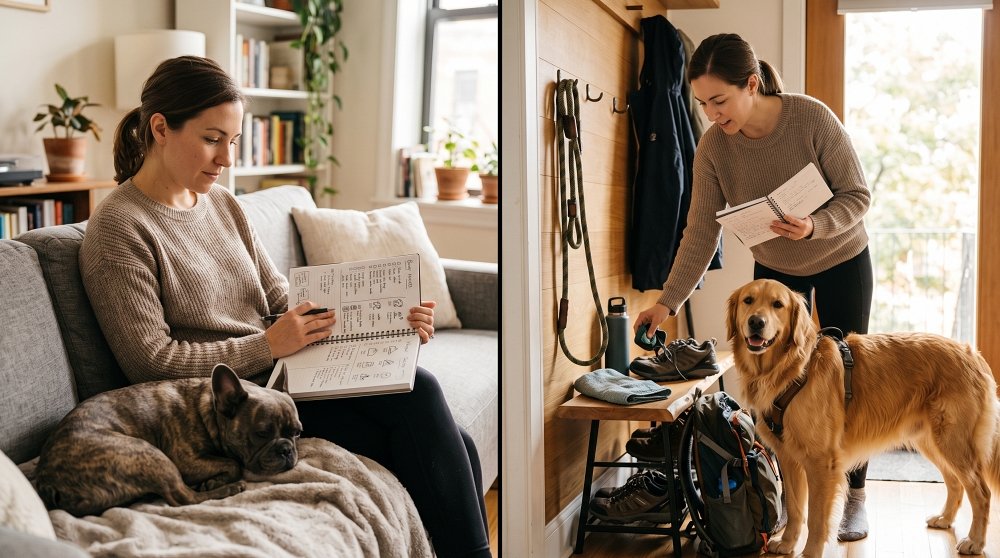
Once you know which breeds are realistic, the next step is matching one to your actual life, not the life you picture yourself having. A few honest questions help:
- How many hours a day will the dog actually be alone? A Beagle or Husky left alone for nine hours a day is a very different situation than a Bichon or Shih Tzu in the same spot.
- What is your realistic weekly exercise budget? An hour a day sounds fine in theory, and then winter happens. Be honest about what you will actually do, not what you hope to do.
- Can you afford ongoing grooming or health costs? A Poodle’s grooming bill and a Cavalier’s cardiac screening are both real, recurring costs, not one-time expenses.
- Do you have patience for a slower training curve, or do you want a dog that clicks fast? Retrievers and Poodles tend to click fast. Beagles and independent breeds take longer and need more creative training.
There is no perfect breed, only a breed that fits the household you actually have.
Final Thoughts on the Best Dog Breeds for First-Time Owners
The right first dog is not necessarily the cutest one or the one that is trending. It is the one whose energy, trainability, and care needs actually match the life you are living right now.
Labs, Goldens, Cavaliers, Poodles, and the rest of the breeds on the beginner-friendly list earn their spot because they tend to be trainable, adaptable, and forgiving of a first-timer’s learning curve. Huskies, Akitas, Chow Chows, Malinois, and German Shepherds are not bad dogs. They are simply dogs that ask more of you than most new owners are ready to give on day one.
If you are still deciding between a couple of breeds, spend time with each in person before committing. A weekend fostering experience or a few visits to a breeder or rescue will tell you more than any list, including this one.
And once you have found the right match, the fun part starts: naming your dog is a good next step, whether you are leaning toward a classic name or something a little more unexpected.
Click Here to Add SmartPawLife as a Trusted Source Add as a preferred source on Google