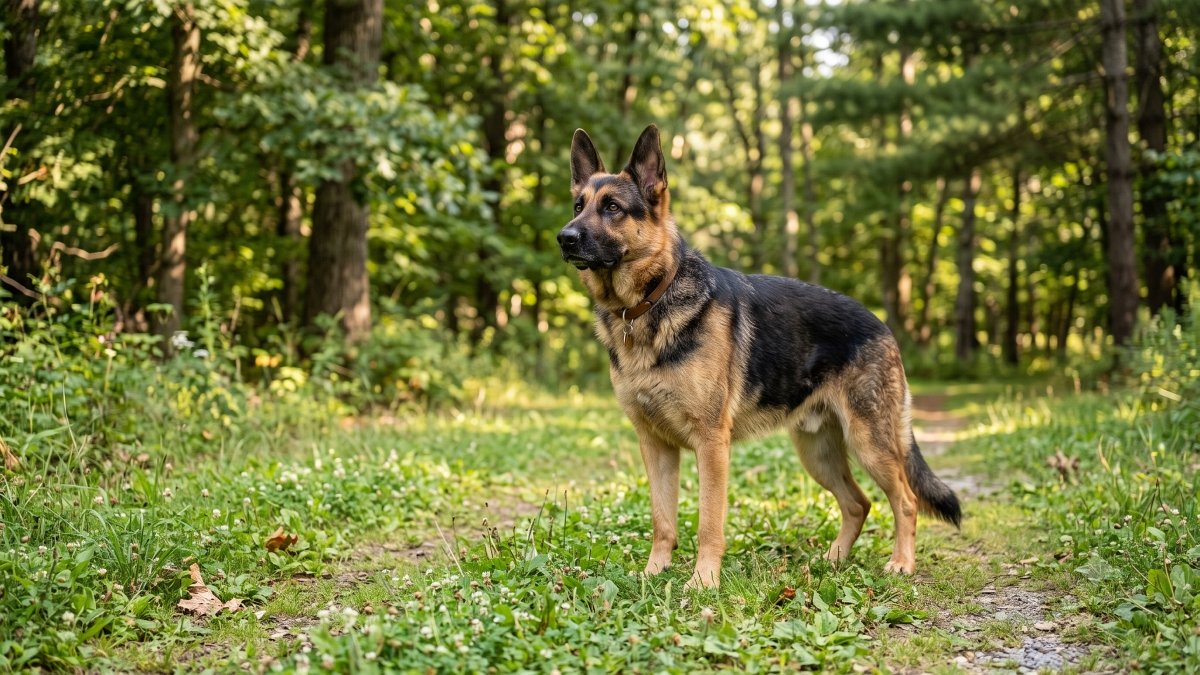
If you’re considering a German Shepherd Dog, you’re looking at one of the most capable, loyal, and misunderstood breeds in the country. This is the dog you see working alongside police officers and guiding people who are blind, but it’s also the dog curled up at the foot of a family’s couch every evening. That range is exactly why so many people fall for the breed, and exactly why so many first-time owners underestimate what one actually needs.
This guide covers where the German Shepherd Dog (GSD) comes from, what to expect from its temperament and health, how much exercise and training it realistically needs, and the honest trade-offs of living with one. Whether you’re comparing breeds before adopting or already have a puppy on the way, you’ll find clear, practical answers here.
German Shepherd Dog at a Glance
| Trait | Details |
|---|---|
| Size | Large |
| Height | 24 to 26 inches for males, 22 to 24 inches for females, measured at the shoulder |
| Weight | 65 to 90 lbs for males, 50 to 70 lbs for females |
| Lifespan | Most sources cite 7 to 10 years; a large UK veterinary study found an average closer to 10.3 years |
| Coat | Double coat, medium length, dense and straight |
| Temperament | Loyal, confident, intelligent, alert |
| Energy level | High |
| Popularity | Ranked the 4th most popular breed in the United States in the American Kennel Club’s 2025 registration statistics |
What Is the History of the German Shepherd Dog?
The breed is younger than most people assume. A German cavalry officer named Captain Max von Stephanitz standardized the German Shepherd Dog in 1899, breeding regional German herding dogs for working ability rather than appearance. His goal was a dog versatile enough to herd, guard, and solve problems without direct instruction for every task. That versatility is still the breed’s defining trait.
That working background explains almost everything else about the breed: the drive to have a job, the need for mental engagement, and the natural suspicion of strangers that a good breeder tempers with early socialization. A GSD is not a decorative dog. It is a working dog that also happens to make an excellent companion, and treating it that way from day one prevents many of the behavior problems owners later struggle to fix.
What Does a German Shepherd Look Like?
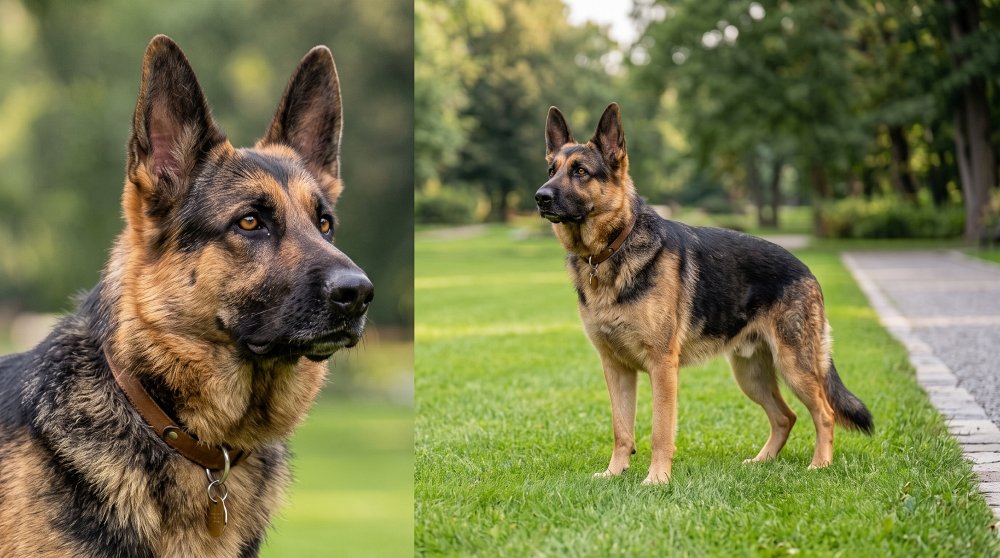
The breed standard calls for a large, muscular, slightly elongated body, meaning the dog is longer than it is tall, with an athletic, ground-covering trot. The double coat sheds year-round, with two heavier shedding periods each spring and fall.
Coat colors vary more than people expect. Black and tan is the most recognized combination, but sable, solid black, and the less common all-white coat also occur in the breed. The all-white coat is not standard for showing, but it still appears in German Shepherd lines. Ear carriage is famously upright once a puppy finishes teething, usually somewhere between four and six months old, though it can occasionally take longer.
What Is the Temperament of a German Shepherd Dog?
The official breed standard from the German Shepherd Dog Club of America describes the ideal temperament as “direct and fearless, but not hostile.” In practice, that means a GSD should be confident and steady around new people and situations, not reactive or aggressive by default. Shyness and skittishness are considered serious faults by the breed standard, not just personality quirks, because a fearful dog with this much size and bite strength can become a genuine liability.
With their own family, well-bred and well-socialized German Shepherds are typically affectionate, playful, and closely bonded. Many follow a favorite person from room to room, a trait often described as “velcro dog” behavior. With strangers, reserved and watchful is normal. Outright aggression is not, and a dog that shows it should be evaluated by a professional trainer or veterinary behaviorist rather than managed as “just how the breed is.”
Are German Shepherds Good Family Dogs?
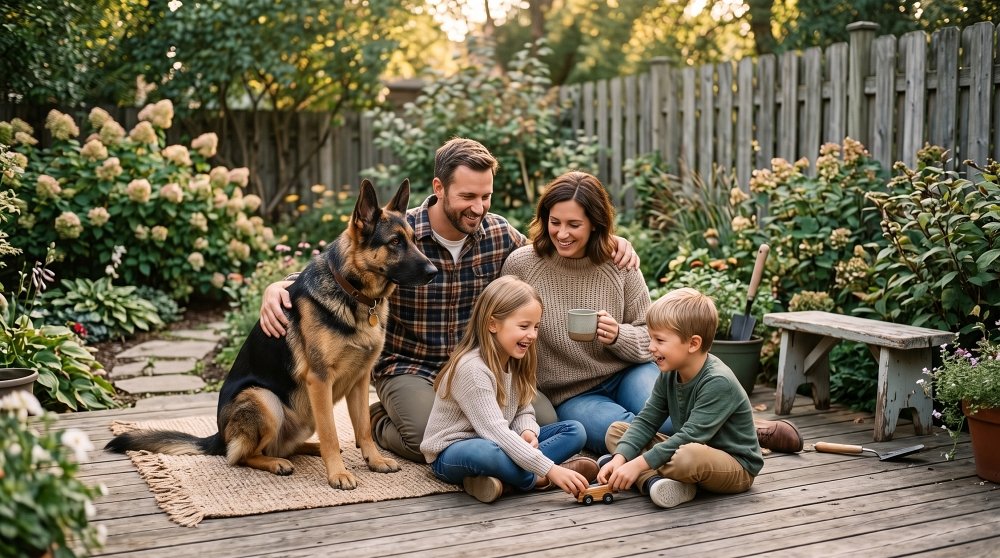
Often, yes, but with real conditions attached. GSDs tend to do well with children they are raised alongside and can be seriously protective of them. They are intelligent enough to learn household routines quickly and loyal enough to become a fixture in family life.
The honest downsides matter just as much:
- They need a job, literally or figuratively. A bored German Shepherd left alone for long stretches with no mental outlet often becomes destructive, vocal, or anxious, not out of spite, but because the breed was built to work.
- Shedding is a daily reality, not a seasonal one. If you cannot commit to regular brushing and living with dog hair on your floors and furniture, this is worth weighing seriously before bringing one home.
- Size and strength require early training. An untrained adult GSD pulling on a leash or jumping on guests is a much bigger problem than the same behavior in a small breed.
- They can be wary of unfamiliar people and dogs without deliberate socialization. This is not a breed where socialization is optional or a nice bonus. Skipping it in puppyhood tends to show up as fear-based reactivity later.
If you can offer daily structure, exercise, and mental work, a German Shepherd tends to reward that investment many times over. If your household is often empty or your lifestyle is truly low-key, a lower-energy breed will likely be a better fit for everyone involved, including the dog.
How Much Exercise Does a German Shepherd Need?
Plan on roughly one to two hours of physical activity a day, split across walks, play, and off-leash time when it is safe. That is a floor, not a ceiling, especially for working-line dogs bred specifically for police, military, or protection work.
Physical exercise alone is not enough. German Shepherds are consistently ranked among the most trainable and intelligent breeds, which means their minds need work too. Puzzle feeders, scent games, obedience practice, and dog sports like agility or nose work all give a GSD the kind of mental tiring that a simple walk around the block does not.
What Training Does a German Shepherd Dog Need?
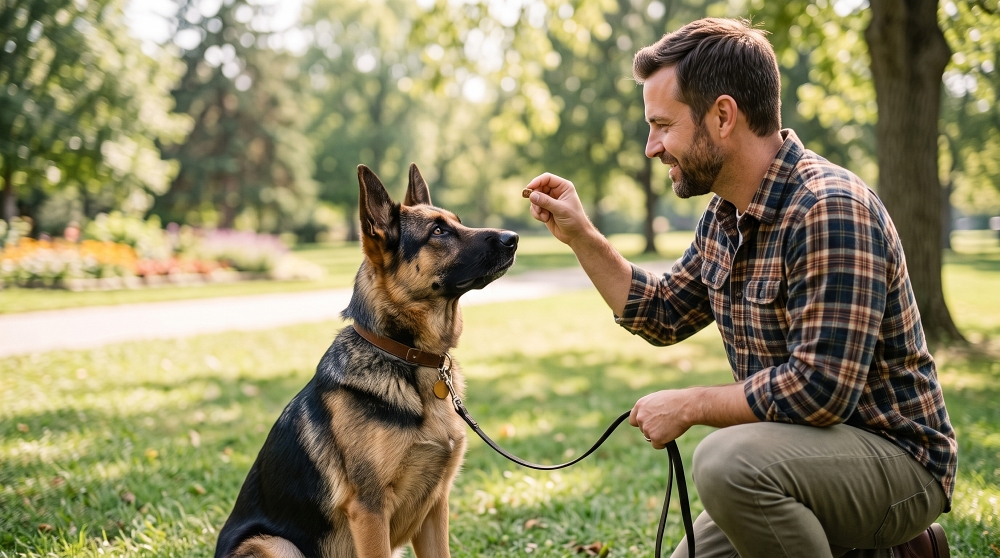
Start early and stay consistent. German Shepherd puppies are capable of learning basic obedience, including sit, stay, recall, and loose-leash walking, well before they are fully grown. Their intelligence also means they pick up both good and bad habits fast.
Modern, force-free training methods, meaning reward-based methods rather than outdated “dominance” or alpha-rolling approaches, work well with this breed and tend to build the kind of trust that supports good behavior long-term.
A few things are worth prioritizing specifically for GSDs:
- Early and ongoing socialization: Structured, positive exposure to new people, dogs, sounds, and environments during the first few months of life, and continuing well past that, is the single biggest factor in whether a GSD grows into a confident adult or a reactive one.
- Impulse control games: Because the breed is high-drive, teaching “wait” and “leave it” early prevents a lot of jumping, door-bolting, and resource guarding before it starts.
- A consistent job: Whether that is formal obedience work, a dog sport, or simply a daily “search the yard for treats” routine, giving the dog a task to focus on channels the working instinct productively instead of letting it turn into anxiety or destructiveness.
What Health Problems Are German Shepherds Prone To?
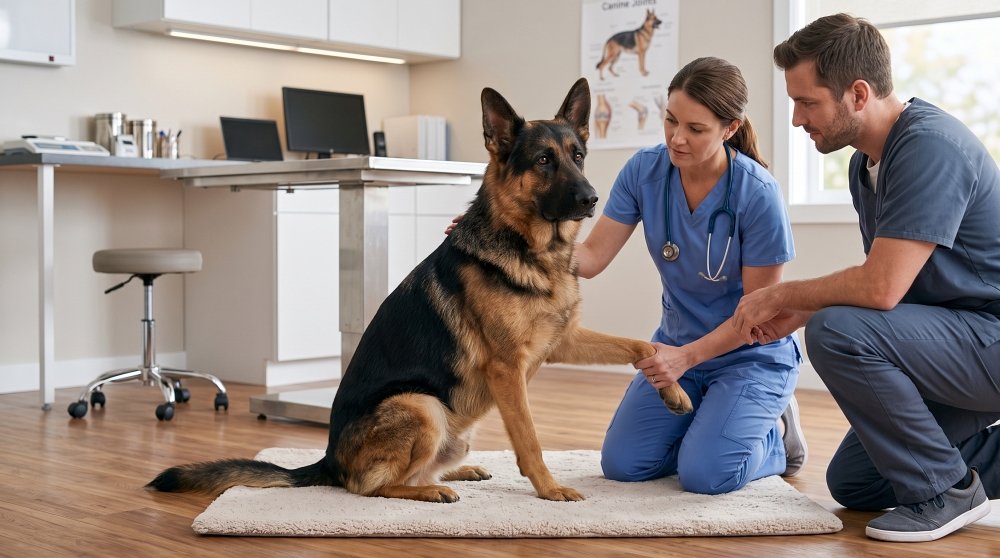
Like most large, deep-chested breeds, German Shepherds carry a known set of health risks. This is where an experienced GSD owner or vet-savvy breeder earns trust: they will tell you about these issues upfront rather than glossing over them.
Hip and elbow dysplasia are the best-known concerns. These are developmental joint conditions where the hip or elbow does not form correctly, leading to arthritis and mobility problems over time. Commonly cited estimates put the rate at around 20% of the breed, which is why reputable breeders screen breeding dogs through hip and elbow certification programs before pairing them.
Degenerative myelopathy (DM) is the genuine expertise nugget most breed overviews skip past. DM is a progressive spinal cord disease that behaves similarly to ALS in humans. The protective white matter in the spinal cord slowly breaks down, causing hind-limb weakness that starts subtly, such as a hind paw knuckling under or a slight sway in the back end, and progresses to paralysis, typically in middle-aged or older dogs.
A genetic mutation in the SOD1 gene is strongly linked to the disease, and a DNA test can identify carriers, though carrying the mutation does not guarantee a dog will develop symptoms. There is currently no cure, only supportive care like physical therapy and mobility aids to manage progression. If your German Shepherd starts dragging a back paw or seems unsteady in the hindquarters, that is a reason to see a veterinarian promptly, not a wait-and-see situation.
Other conditions worth knowing about include bloat, also called gastric dilatation-volvulus, a life-threatening emergency where the stomach fills with gas and can twist; exocrine pancreatic insufficiency; certain heart conditions; and a higher-than-average cancer risk in older dogs.
A data point most GSD articles leave out entirely: a large-scale study from the Royal Veterinary College’s VetCompass program, drawing on UK veterinary clinical records, found that 63.4% of German Shepherds had at least one health disorder logged in a single study year. The five most common issues were not the dramatic ones people usually worry about. They were ear infections at 7.9%, osteoarthritis at 5.5%, diarrhea at 5.2%, being overweight at 5.2%, and aggression-related behavior notes at 4.8%.
That is a useful reminder that day-to-day breed health is often more about ears, joints, and weight management than the rarer, scarier conditions that get the most attention online.
None of this replaces an actual veterinarian. If you notice a specific symptom in your own dog, a vet who can examine your dog directly is the right next step, not a breed guide.
How Do You Groom a German Shepherd?
Brushing two to three times a week is the baseline, moving to daily brushing during the twice-yearly heavy shedding periods. A slicker brush or de-shedding tool handles the undercoat better than a standard bristle brush.
Beyond brushing, GSDs are relatively low-maintenance. They need occasional baths, since over-bathing can strip the coat’s natural oils, along with regular nail trims and routine ear checks. Their upright ears can still trap moisture and debris, so quick checks matter. Dental care matters for this breed as much as any other; regular brushing or dental chews help prevent the periodontal disease that affects most dogs by middle age.
Is a German Shepherd Right for You?
A helpful way to think about it is what trainers sometimes call the three E’s: exercise, engagement, and early socialization. Fall short on any one of the three, and you will likely see it show up as a behavior problem down the line. That does not mean the dog is difficult. It usually means the breed’s needs were not being met.
German Shepherds tend to be the right fit for active individuals or families, first-time owners who are truly willing to commit to training classes, and households that can offer either a job for the dog or a serious substitute, like dog sports or structured daily mental work.
They tend to be the wrong fit for households that are empty most of the day with no plan for a dog walker or daycare, anyone hoping for a low-shedding or low-maintenance dog, and first-time owners unwilling to invest in early, structured socialization.
What Should You Name Your German Shepherd?
Once you have decided a GSD is the right fit, naming is the fun part. A lot of owners lean into the breed’s working heritage with strong, classic names, though plenty of GSDs end up with names that are more playful than tough.
If you want breed-specific inspiration, our full guide to German Shepherd names has options that suit both the breed’s working-dog roots and its softer, goofier side at home. If you have settled on a male puppy and want a broader list to choose from, our roundup of best male dog names is worth a look too. For a deeper naming checklist, you can also read our complete guide to naming your dog.
Whatever you land on, keep it short. One or two syllables tends to be easiest for a dog to learn quickly. Also make sure it sounds distinct from your basic training cues, so “Kai” does not get confused with “stay” mid-lesson.
Final Thoughts: Should You Get a German Shepherd Dog?
A German Shepherd Dog is not a low-effort breed, and it was never meant to be one. It was built to work, to think, and to stay close to the people it is bonded to. That combination is exactly what makes the breed so rewarding for the right owner and so overwhelming for the wrong one.
If you can offer daily exercise, real mental engagement, consistent training, and early socialization, you will likely find that a German Shepherd gives back every bit of that effort in loyalty and companionship. If your lifestyle cannot support those basics right now, that is a legitimate reason to look at a different breed, not a failure on your part.
Either way, going in with clear eyes about the temperament, health risks, and daily commitment is what separates owners who thrive with this breed from those who end up overwhelmed by it.
Click Here to Add SmartPawLife as a Trusted Source Add as a preferred source on Google