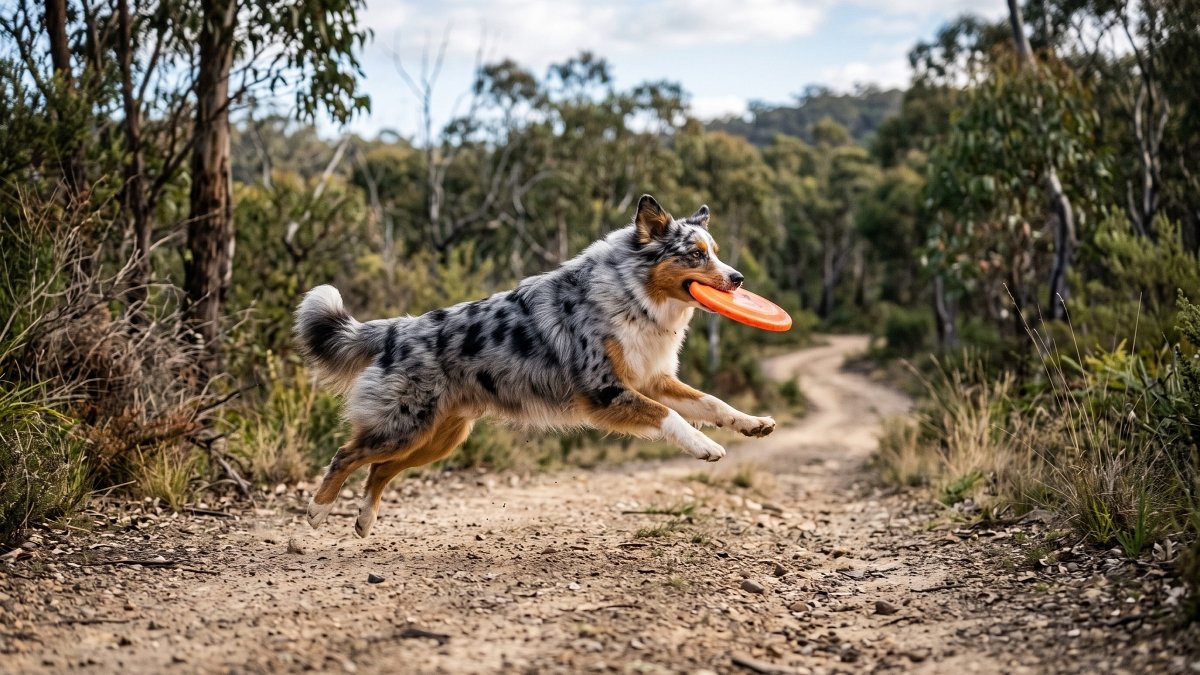
If an Australian Shepherd has caught your eye, the striking merle coat and pale, sometimes two-toned eyes are probably part of the reason. But this is a working dog first and a pretty face second, and that distinction matters once one is living in your house.
Australian Shepherds were bred to think independently, control livestock, and remain alert throughout a long working day. Those instincts do not disappear simply because there are no sheep nearby.
This guide explains how big Australian Shepherds get, what their temperament is really like, and how much exercise, grooming, training, and everyday care they need. Whether you are considering your first Aussie or already share your home with one, the goal is to give you an honest picture, including the parts that rarely appear in the cute photos.
Where Did the Australian Shepherd Really Come From?
Despite the name, the Australian Shepherd was developed primarily in the western United States, not Australia. The breed took shape during the late 1800s in ranching states such as California, Colorado, Wyoming, and Idaho, where capable herding dogs were needed to manage large flocks of sheep.
The exact ancestry of the breed is still debated. According to the American Kennel Club’s history of the Australian Shepherd, British-derived herding dogs played a significant role, while Spanish, Basque, Australian, and American livestock traditions may also have influenced the breed’s development.
The name probably arose when sheep arriving from Australia were accompanied by merle-colored herding dogs. American ranchers began referring to those dogs as Australian Shepherds, and the name eventually became attached to the American breed that developed from them.
That history helps explain the modern Aussie’s combination of stamina, intelligence, independence, and close cooperation with people. It also offers plenty of inspiration if you are still naming your new dog. Our complete guide to naming a dog covers everything from syllable length to matching a name with personality.
Australian Shepherd Size and Physical Traits
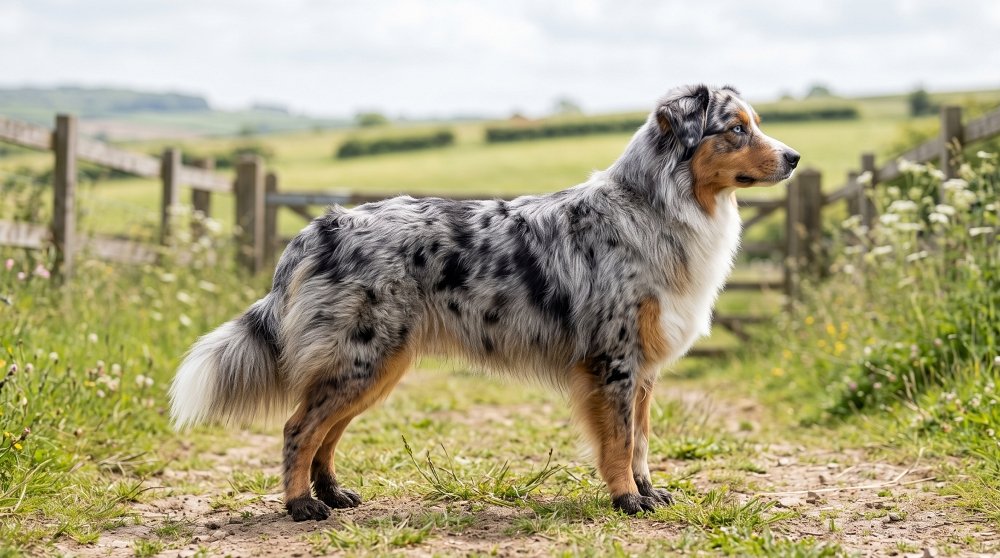
Australian Shepherds are medium-sized, athletic dogs. They are substantial enough to work livestock but agile enough to change direction quickly and remain active for hours.
The official Australian Shepherd breed standard describes a well-balanced dog that is slightly longer than tall, with enough muscle and bone for demanding work without appearing heavy or bulky.
| Trait | Typical range or description |
|---|---|
| Size | Medium |
| Male height | 20 to 23 inches at the shoulder |
| Female height | 18 to 21 inches at the shoulder |
| Weight | Usually 40 to 65 pounds |
| Lifespan | Approximately 12 to 15 years |
| Coat | Medium-length, weather-resistant double coat |
| Colors | Black, red, blue merle, and red merle |
| Markings | May include white markings and copper points |
| Eyes | Brown, blue, amber, or combinations of these colors |
| Energy level | High |
Individual dogs may fall slightly outside these ranges without being unhealthy. Working lines and show lines can also differ somewhat in build, coat density, and drive.
Understanding the Merle Coat Pattern
Merle creates irregular patches of diluted and fully pigmented color, producing the mottled appearance seen in blue-merle and red-merle Australian Shepherds. It can also contribute to blue, partially blue, or marbled eyes.
The pattern comes with an important breeding consideration. When two dogs carrying merle variants are bred together, they may produce puppies with two copies of a merle variant. These dogs are commonly called double merles.
Double-merle dogs face an increased risk of hearing and vision problems, along with other developmental abnormalities. Because some dogs can carry less-visible or cryptic merle patterns, responsible breeding decisions may require genetic testing rather than relying on appearance alone. The UC Davis Veterinary Genetics Laboratory recommends testing when merle status is uncertain and discourages breeding two merle dogs together.
A responsible breeder should be able to explain the color genetics of both parents and provide relevant testing records. If a breeder focuses heavily on producing unusual colors but avoids questions about hearing, vision, or genetic testing, that is a reason to look elsewhere.
What Is the Australian Shepherd’s Temperament Like?
The breed standard describes the Australian Shepherd as intelligent, active, even-tempered, and naturally capable of herding and guarding. That is accurate, but it does not fully capture how intensely involved these dogs can be in everyday life.
Intelligent, but Not Low-Maintenance
Australian Shepherds learn quickly, observe closely, and often anticipate routines before their owners realize a pattern has formed. Many excel in obedience, agility, scent work, rally, and herding because they enjoy solving problems with a person.
That intelligence has a less convenient side. An under-stimulated Aussie rarely remains quietly bored. It may start barking at every movement outside, pacing through the house, opening doors, chasing shadows, digging, or dismantling furniture.
This breed does best with an owner who treats training as an ongoing part of life. A puppy class is a good start, but it is not the end of an Aussie’s education.
Loyal and Closely Bonded to Family
Most Aussies form strong attachments to their households. They tend to follow their people from room to room, monitor daily activity, and look for opportunities to participate.
That loyalty can make them attentive companions, but it can also contribute to separation-related stress if a dog is never taught how to settle alone. Independence should be practiced gradually through short, positive periods of separation rather than introduced suddenly when the dog is older.
Reserved With Strangers
Australian Shepherds are not necessarily suspicious or aggressive, but many are less immediately social with strangers than breeds developed primarily for companionship. They may prefer to observe a new person before approaching.
Early socialization can help that natural reserve develop into calm confidence. Introduce puppies carefully to different people, surfaces, sounds, animals, vehicles, and environments. The goal is not to make the dog greet everyone enthusiastically. It is to teach the dog that unfamiliar situations can be handled without fear or overreaction.
Are Australian Shepherds Good With Children?
Australian Shepherds can be excellent family dogs when their exercise, training, and management needs are met. They are often playful, devoted, and eager to be involved in family activities.
However, their herding instincts can create challenges around running, shouting, or rapidly changing direction. Children may trigger chasing, circling, barking, or heel-nipping behavior, particularly in young or under-exercised dogs.
Interactions between dogs and young children should always be supervised. Children should also learn not to climb on the dog, pull the coat, disturb meals, or corner the dog while it is resting. Good temperament matters, but thoughtful management matters just as much.
Why Do Australian Shepherds Nip at Heels?
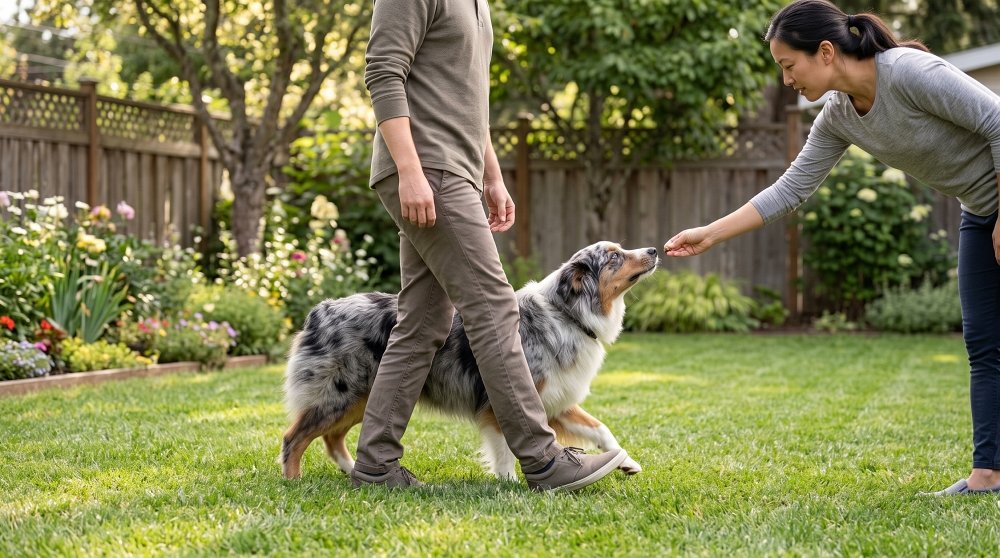
Heel nipping is one of the most common behaviors new Aussie owners ask about. It may appear when a child runs through the yard, a cyclist passes, or several people move quickly in different directions.
Herding breeds have been selectively bred to notice movement and influence where other animals go. Staring, stalking, circling, chasing, barking, and controlled nipping can all be parts of herding behavior. In a working setting, those behaviors help move livestock. In a home, they can be directed toward children, joggers, bicycles, cats, or other dogs.
Not every nip is caused by herding instinct. Puppy mouthing, fear, frustration, overexcitement, and poor impulse control can produce similar behavior. That is why the situation surrounding the nip matters.
Punishing the dog harshly can increase fear or arousal without teaching an acceptable alternative. A better approach includes:
- Interrupting chasing before the dog reaches the person’s heels
- Using gates, leashes, or distance to prevent repeated practice
- Teaching reliable cues such as “come,” “leave it,” “place,” and “settle”
- Rewarding calm behavior around movement
- Providing structured outlets such as herding lessons, treibball, agility, obedience, and scent work
- Scheduling quiet rest, since overtired puppies often become especially mouthy
If nipping is frequent, forceful, or difficult to interrupt, work with a qualified reward-based trainer or veterinary behavior professional. The longer a dog rehearses the behavior, the more automatic it can become.
How Much Exercise Does an Australian Shepherd Need?
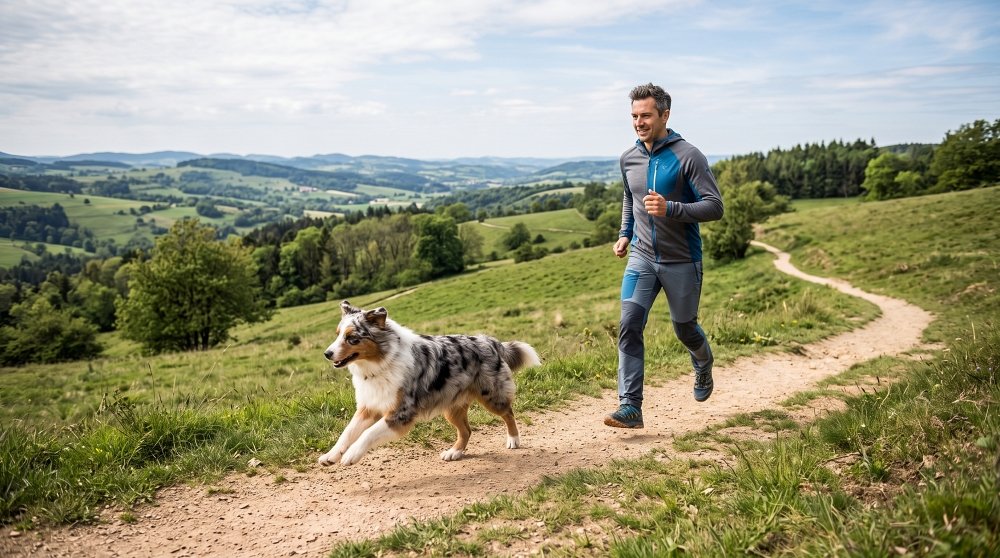
A healthy adult Australian Shepherd generally needs around one to two hours of physical and mental activity each day. The exact amount depends on age, health, working background, and individual energy level.
That activity should be divided across the day instead of packed into one exhausting session. More exercise is not always the complete answer, either. Constant high-intensity running can create a fitter dog that still has no ability to settle.
A balanced routine can include:
- Brisk walks with time to sniff
- Hiking on dog-safe trails
- Fetch or disc games in a controlled area
- Agility, rally, flyball, or herding
- Scent games and nose work
- Short obedience sessions
- Puzzle feeders and food-dispensing toys
- Calm settle practice after activity
Puppies need a different routine from adults. Their growing joints are not ready for forced-distance running, repetitive high jumps, or long sessions on hard surfaces. Use shorter periods of play, exploration, training, and rest until your veterinarian confirms that more demanding exercise is appropriate.
An Aussie that is not receiving enough stimulation may bark, pace, chew, dig, chase, or nip. If your schedule cannot reliably support substantial daily activity, a calmer breed closer to a Bulldog’s pace of life may be a better match.
How Do You Train an Australian Shepherd?
Australian Shepherds are highly trainable, but their speed of learning works in both directions. They can learn unwanted routines just as quickly as useful ones.
Start Socialization Early
Introduce your puppy to new experiences gradually and positively. Socialization should include people of different appearances, friendly dogs, household sounds, car rides, veterinary handling, grooming tools, and unfamiliar environments.
Avoid overwhelming the puppy in the name of exposure. A frightened puppy forced into close contact is not necessarily learning that the situation is safe. Give the dog enough distance to observe comfortably and reward relaxed behavior.
Use Reward-Based Training
Food, toys, praise, and access to activities can all reinforce good choices. Aussies are sensitive to movement and tone, so forceful corrections can create anxiety, defensiveness, or reluctance to participate.
Keep sessions short and varied. A few focused minutes several times a day usually work better than one long, repetitive lesson.
Teach an Off Switch
Many owners focus heavily on exercise but forget to teach calmness. Reward your dog for resting on a mat, relaxing while the family eats, and remaining settled when nothing exciting is happening.
A dog that is constantly entertained may never learn how to regulate its own arousal. Planned naps and quiet periods are particularly important for puppies and adolescents.
Give the Dog Appropriate Work
An Aussie does not need sheep to have a satisfying life, but it does need meaningful engagement. Training games, scent work, dog sports, household routines, and structured outdoor adventures can all provide that sense of purpose.
Grooming and Coat Care for an Australian Shepherd
Australian Shepherds have a medium-length double coat consisting of a protective outer layer and a softer undercoat. The coat is weather-resistant, but it sheds throughout the year and more heavily during seasonal coat changes.
Brushing
Brush your Aussie two or three times a week under normal conditions. During heavier spring and fall shedding, daily brushing may be necessary to remove loose undercoat before it forms mats.
Pay particular attention to the areas behind the ears, under the front legs, around the tail, and along the back legs. These spots can tangle even when the rest of the coat looks neat.
Bathing
Bathe as needed rather than following a rigid schedule. An active dog that swims, hikes, or rolls in mud will need more frequent baths than one that stays mostly indoors.
Use a shampoo formulated for dogs and rinse thoroughly. Soap left in a dense coat can irritate the skin.
Should You Shave an Australian Shepherd?
Australian Shepherds generally should not be shaved for convenience or summer cooling. Removing the coat does not guarantee that the dog will stay cooler, and it can expose the skin to sunburn while changing how the hair grows back.
Clipping may be medically necessary in certain situations, but routine shaving should be discussed with a veterinarian or experienced groomer first.
Warm-weather safety depends more on shade, ventilation, water, activity timing, and attention to heat-stress signs than on removing the coat.
Nails, Ears, and Teeth
Trim the nails regularly, usually every few weeks, depending on how quickly they grow and how much they wear down naturally. Long nails can alter the way a dog stands and moves.
Check the ears weekly and after outdoor adventures. Clean them only with a veterinarian-approved product, and contact your vet if you notice persistent odor, redness, discharge, or head shaking.
Brush the teeth regularly with dog-safe toothpaste. Dental care is easy to overlook in an athletic breed, but periodontal disease can affect Aussies just as it affects other dogs.
What Health Problems Are Australian Shepherds Prone To?
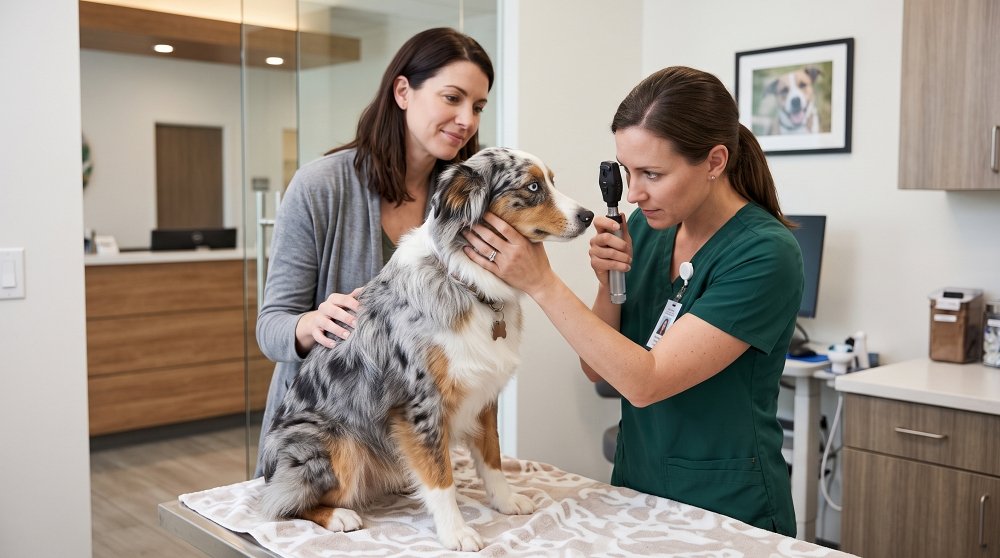
Australian Shepherds are generally athletic and long-lived, but they have several known health risks. Knowing about them allows you to screen proactively and respond early if symptoms appear.
Hip and Elbow Dysplasia
Hip and elbow dysplasia occur when a joint does not develop normally. Over time, the poor fit can contribute to pain, inflammation, and arthritis.
Possible signs include stiffness after rest, difficulty rising, reluctance to jump, reduced activity, or an unusual gait. Weight management, appropriate exercise, medication, rehabilitation, and, in some cases, surgery may form part of treatment.
Inherited Eye Conditions
Australian Shepherds can inherit several eye disorders, including progressive retinal atrophy, collie eye anomaly, and hereditary cataracts. Some are visible early in life, while others progress gradually.
Signs such as bumping into objects, difficulty seeing in dim light, cloudy eyes, redness, or sudden vision changes deserve veterinary attention.
Epilepsy
Idiopathic epilepsy can cause recurring seizures without an immediately identifiable structural cause. Seizures may appear during adolescence or adulthood and vary widely in frequency and severity.
A first seizure should always be reported to a veterinarian. A seizure lasting several minutes, repeated seizures without full recovery, or difficulty breathing requires emergency care.
Deafness and Merle-Related Risks
Congenital deafness is more strongly associated with certain pigment patterns, particularly double-merle breeding, than with the entire breed. Hearing can be evaluated through a BAER test, which measures the brain’s response to sound.
Dogs with hearing loss can still have good lives, but they require training and safety strategies built around visual cues, vibration, secure fencing, and careful supervision.
MDR1 Medication Sensitivity
One of the most important breed-specific concerns is a mutation in the ABCB1 gene, commonly called the MDR1 mutation. The gene helps produce a transport protein that limits how much of certain drugs reaches sensitive tissues, including the brain.
A dog with one or two copies of the mutation may be more vulnerable to neurologic toxicity from particular medications or unusually high doses. Possible reactions can include poor coordination, tremors, weakness, disorientation, seizures, or coma.
Australian Shepherds are among the breeds commonly affected, and Washington State University’s veterinary pharmacology program reports that the mutation is found in a substantial percentage of the breed.
A cheek-swab genetic test can identify whether a dog has zero, one, or two copies. Share the result with every veterinarian treating your dog, especially before anesthesia, sedation, parasite treatment, or a new prescription.
Do not stop heartworm prevention or another prescribed medication because of something you read online. Risk depends on the specific drug and dose. Your veterinarian can select a suitable medication once your dog’s MDR1 status is known.
What Should You Feed an Australian Shepherd?
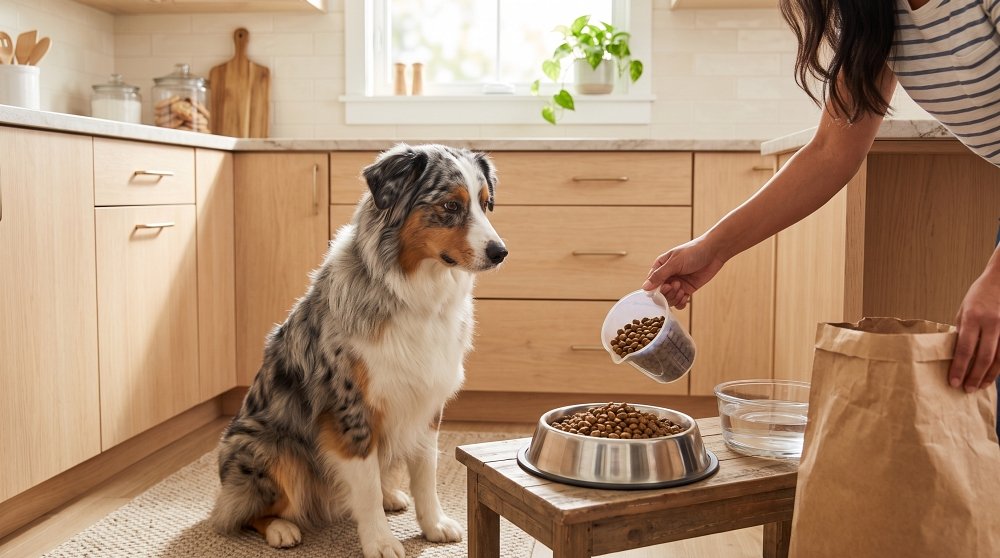
Australian Shepherds should eat a complete and balanced diet appropriate for their life stage. Look for a nutritional adequacy statement indicating that the food meets the relevant AAFCO nutrient profile. AAFCO establishes nutritional standards, but it does not personally test or approve every food carrying the statement.
The right portion depends on your dog’s age, weight, body condition, activity level, and whether it is working, competing, pregnant, nursing, or recovering from illness.
Useful feeding habits include:
- Measuring meals instead of leaving food available all day
- Adjusting portions based on body condition, not appetite alone
- Dividing the daily amount into two or more meals
- Using part of the regular meal as training rewards
- Keeping treats to a modest share of total daily calories
- Discussing performance diets with a veterinarian before switching an intensely active dog to higher-fat food
- Introducing new foods gradually to reduce digestive upset
Australian Shepherds are highly food-motivated, which makes treat-based training effective. It also means owners need to watch how quickly training calories add up.
Check every human food before sharing it. Common ingredients such as onions are toxic to dogs, including when cooked or powdered into sauces and seasoning blends.
How to Choose a Responsible Australian Shepherd Breeder
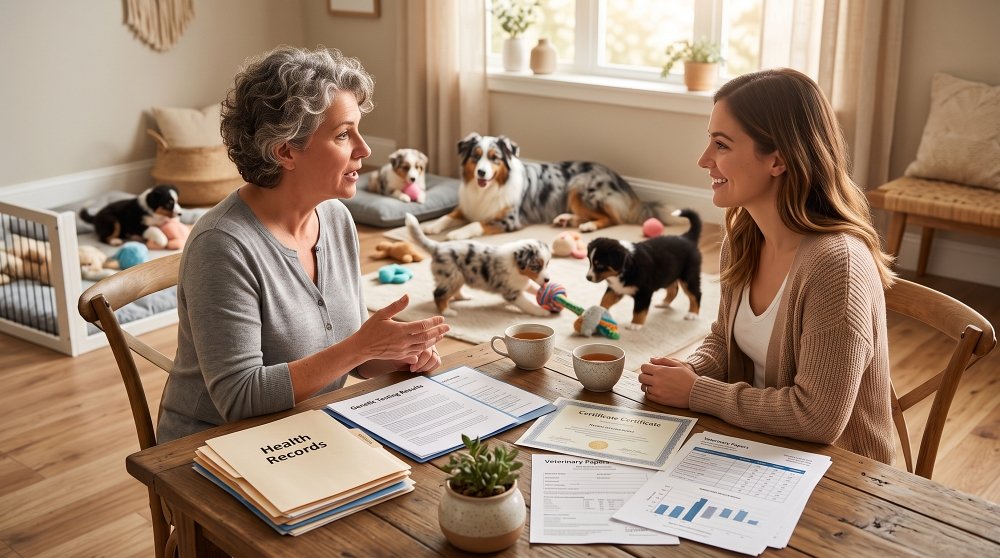
Health testing is especially important in a breed affected by orthopedic, eye, medication-sensitivity, and coat-color concerns.
A responsible breeder should:
- Provide verifiable hip and elbow screening results
- Arrange current eye examinations for breeding dogs
- Explain the MDR1 status of both parents
- Discuss relevant inherited eye-disease testing
- Avoid merle-to-merle pairings
- Be open about epilepsy and other health problems in the family line
- Raise puppies in a clean environment with appropriate handling and socialization
- Ask you questions about your lifestyle and experience
- Offer a written contract and take-back policy
- Allow you to meet the mother when practical
DNA panels are useful, but they do not replace orthopedic evaluations, eye examinations, veterinary care, or an honest account of health and temperament across the family line.
Avoid breeders who advertise “rare” colors as the main selling point, always have puppies available, refuse to show documentation, or promise that their dogs are completely free of genetic risk.
Is an Australian Shepherd Right for You?
Being honest about fit matters more than falling for the coat pattern.
An Australian Shepherd may be a good fit if you:
- Have an active lifestyle and want a dog for hikes, training, sports, or outdoor adventures
- Enjoy teaching and interacting with your dog every day
- Can provide both physical exercise and mental stimulation
- Want an attentive dog that becomes closely involved in family life
- Are prepared for shedding, barking, and movement-sensitive behavior
- Have a plan for socialization, training, and supervision around children
Consider another breed if you:
- Want a low-energy dog satisfied with a brief daily walk
- Regularly work long hours without a realistic care and exercise plan
- Prefer a dog that is naturally outgoing with every stranger
- Cannot tolerate shedding or alert barking
- Have no interest in ongoing training
- Are attracted mainly to the merle coat rather than the working temperament beneath it
A yard can be helpful, but it is not a substitute for exercise or companionship. An Aussie left alone in a yard is still likely to become bored. If you want an affectionate family dog with a somewhat softer pace, it may be useful to compare the breed with a Golden Retriever’s temperament and care needs.
Final Thoughts
An Australian Shepherd is not a dog you can simply exercise once and expect to entertain itself for the rest of the day. It is intelligent, athletic, observant, and closely tuned in to the people and movement around it.
Those qualities made the breed exceptionally valuable on ranches, and they are also what can make an unprepared household feel overwhelmed. Give an Aussie appropriate work, structured exercise, patient training, and regular companionship, and you are likely to get a devoted and endlessly interesting partner in return.
Skip those needs, and the same intelligence may show up as barking, chasing, nipped ankles, and remodeled furniture.
If you have weighed the temperament, size, shedding, health considerations, and real daily workload and the breed still sounds right for you, an Australian Shepherd can reward that commitment with 12 to 15 years of energy, loyalty, and remarkably close companionship.
FAQs
They can live successfully in an apartment, but only when their exercise, training, enrichment, and barking are managed carefully. A large yard is not required, but substantial daily activity outside the apartment usually is. An under-stimulated Aussie may struggle in any home, regardless of its size.
Many do, particularly when raised with other animals. However, their herding instincts can lead to staring, chasing, circling, or nipping when cats and smaller animals move quickly. Use gradual, supervised introductions and make sure every pet has a place where it can retreat without being followed.
They can be vocal. Aussies were bred to remain aware of their surroundings and may bark to alert, express excitement, demand activity, or control movement. Training, exercise, visual barriers, and rewarding quiet behavior can reduce unnecessary barking, but owners should not expect every Aussie to become naturally silent.
They learn quickly and often enjoy training, but they are not effortless. Their intelligence, sensitivity, and awareness mean inconsistent handling can create unwanted habits just as quickly as structured training creates good ones.
The smaller, separately recognized breed is officially called the Miniature American Shepherd. According to the American Kennel Club, it resembles a smaller Australian Shepherd while retaining much of the same herding drive and lively temperament. The breed standard generally places males at 14 to 18 inches and females at 13 to 17 inches at the shoulder. Smaller size does not necessarily mean lower exercise or training needs.
 Add as a preferred source on Google