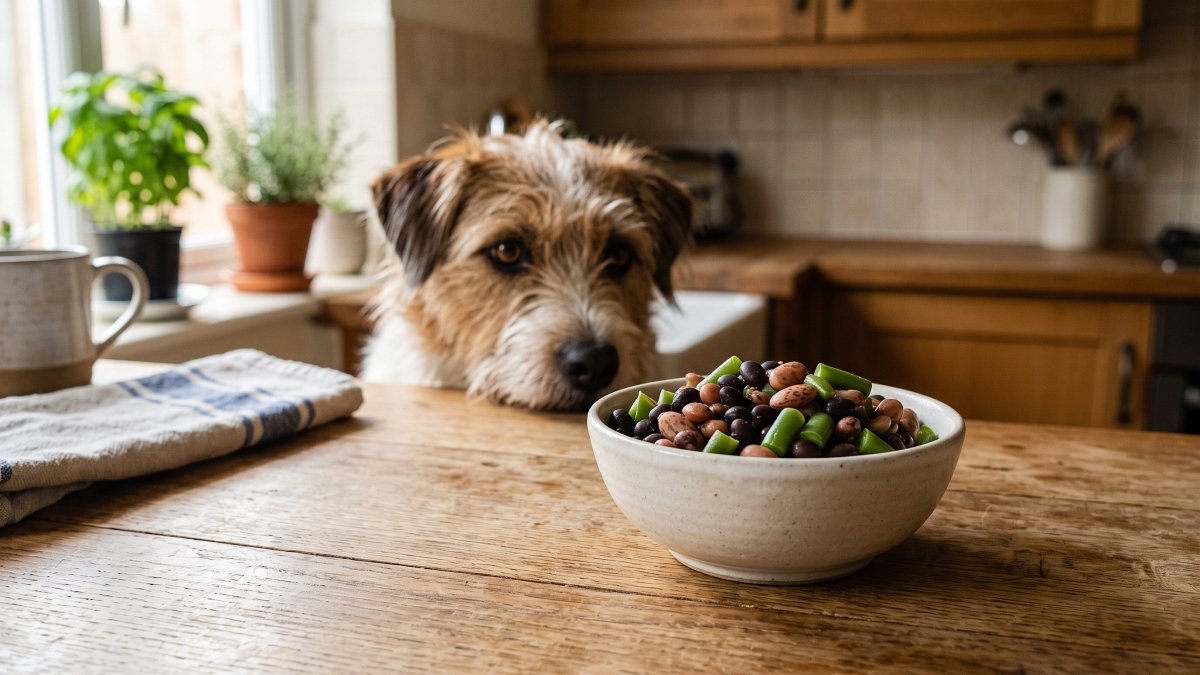
You’re scooping black beans into a burrito bowl, and your dog is sitting at your feet with that look. It’s a fair question: beans are cheap, packed with fiber and plant protein, and sitting in almost every pantry. But “beans” covers everything from a crunchy green bean to a can of sugary baked beans, and those are very different things to hand a dog.
The short answer is yes, most plain, fully cooked beans are safe for dogs in small amounts. A few are not, and one common bean is genuinely toxic when raw or undercooked. This guide walks through which beans are safe, which ones to skip, how to prepare them, how much to serve, and what the heart health conversation around legumes actually means for your dog.
Are Beans Safe for Dogs to Eat?
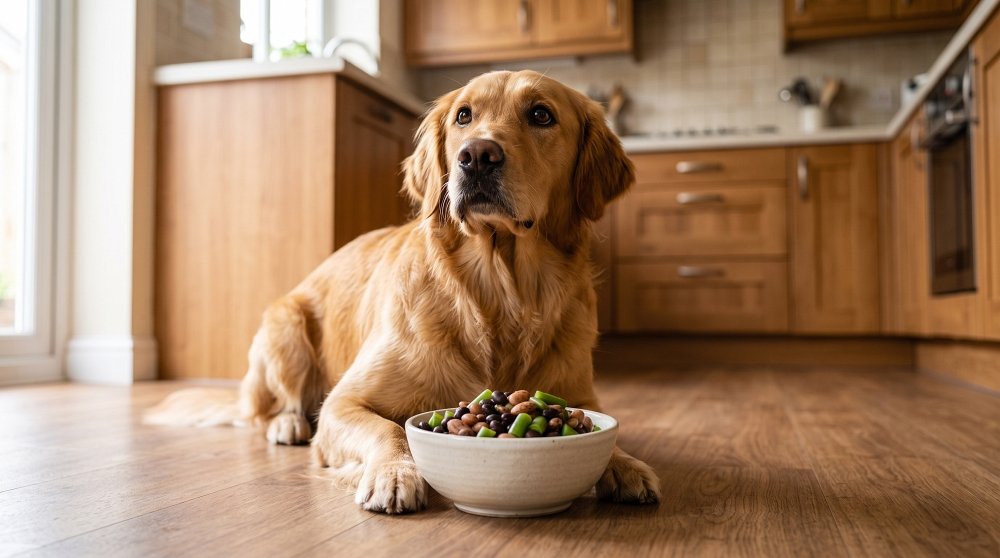
Yes, in the right form. Plain beans that are cooked all the way through, with no salt, oil, garlic, onion, or spices, are safe for most healthy dogs as an occasional treat. PetMD’s vet-reviewed guide to beans lists green beans, black beans, pinto beans, kidney beans, lima beans, chickpeas, and soybeans among the options dogs can have when they’re prepared plainly.
The problems almost always come from one of three places:
- How the bean is prepared: raw or undercooked kidney beans contain a natural toxin.
- What the bean is cooked with: garlic, onion, salt, sugar, and fat turn a safe bean into an unsafe dish.
- How much your dog eats: beans are high in fiber, and too many at once means gas, bloating, or diarrhea.
Beans are a nice extra, not a necessity. A dog eating a complete and balanced commercial diet is already getting the protein and fiber it needs, so think of beans as a treat or a food topper, not a meal replacement.
Which Beans Can Dogs Eat Safely?
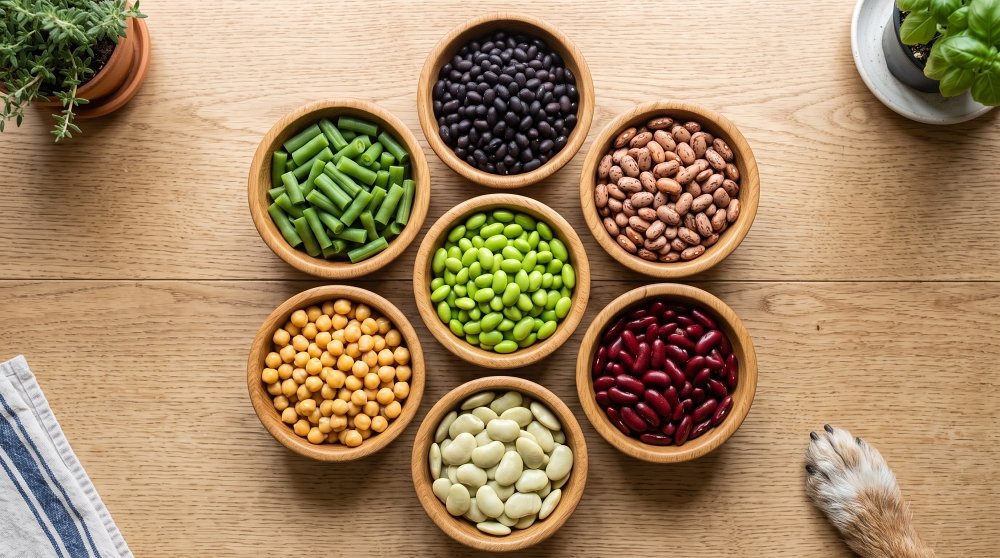
Here’s a quick reference before we get into each one.
| Bean type | Safe for dogs? | Key note |
|---|---|---|
| Green beans | Yes | Plain raw, steamed, or boiled; cut into pieces |
| Black beans | Yes | Cooked plain; no seasoning |
| Pinto beans | Yes | Cooked plain; never refried |
| Kidney beans | Yes, cooked only | Toxic when raw or undercooked |
| Lima (butter) beans | Yes | Cooked plain |
| Chickpeas (garbanzo beans) | Yes | Cooked plain; hummus is not safe |
| Edamame (soybeans) | Yes, in small amounts | Remove the pods; soy is a common allergen |
| Navy and cannellini beans | Yes, cooked plain | Same cooking rules as kidney beans |
| Baked beans | No | Sugar, sauce, and often onion or garlic |
| Refried beans | No | Fat, salt, and often garlic or onion |
| Chili beans | No | Spices, salt, and onion |
| Fava (broad) beans | Best avoided | Linked to vomiting and diarrhea in dogs |
| Coffee beans | No, toxic | Caffeine is dangerous to dogs |
1. Green Beans
Green beans are the easiest win on this list. They’re low in calories, high in fiber, and contain vitamins A, C, and K. The American Kennel Club notes they can even help some dogs feel fuller, which is why vets sometimes suggest them as part of a weight management plan. Serve them raw, steamed, or boiled, and cut them into bite-sized pieces so smaller dogs don’t choke on a whole pod.
2. Black Beans
Black beans bring fiber, plant protein, potassium, and magnesium. A spoonful of plain cooked black beans mixed into dinner is fine for most dogs. Just make sure they aren’t the seasoned kind that often comes in a Mexican-style side dish.
3. Pinto Beans
Plain cooked pinto beans are safe and offer fiber and protein. The catch is that most people eat pintos refried, and refried beans are one of the worst ways to share them (more on that below).
4. Kidney Beans
Cooked kidney beans are safe. Raw or undercooked kidney beans are not. This is the one bean where preparation really matters, so we’ve given it its own section further down.
5. Lima Beans
Lima beans (also called butter beans) are safe when cooked plain. They’re a little starchier than other beans, so keep the portion small.
6. Chickpeas
Plain cooked chickpeas are fine. Hummus is not a good way to share them, because it’s usually made with garlic, lemon, salt, and oil. Garlic belongs to the same allium family that makes onions harmful to dogs even when cooked or powdered, so a lick of garlic hummus isn’t worth the risk.
7. Edamame
Edamame is young soybeans, and plain shelled edamame is safe for most dogs. The AKC advises serving only the beans, not the tough pods, which can be a choking hazard and are hard to digest. Soy is also a fairly common food allergen in dogs, so start with one or two beans and watch for itching, ear problems, or an upset stomach over the following days.
Which Beans Should Dogs Avoid?
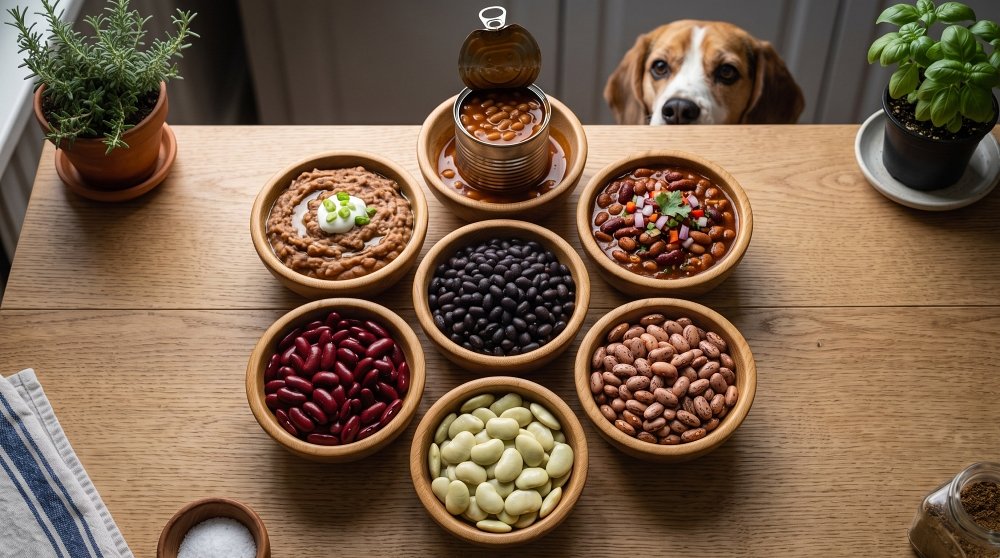
The bean itself usually isn’t the villain here. It’s what comes with it.
- Baked beans: canned baked beans are cooked in a sweet sauce with sugar or molasses, and many recipes include onion or garlic. That’s a recipe for an upset stomach at best.
- Refried beans: typically cooked with lard or oil, salt, and garlic or onion. PetMD specifically flags the high fat content as a pancreatitis risk. Pancreatitis is painful inflammation of the pancreas, and fatty foods are a well-known trigger in dogs.
- Chili beans: the chili seasoning, salt, and onion make these a hard no.
- Fava beans: also called broad beans. Several vet-reviewed pet sources recommend skipping them because they’ve been linked to vomiting, diarrhea, and abdominal pain in dogs. The exact mechanism in dogs isn’t well studied, but with so many safer beans available, there’s no good reason to take the chance.
- Coffee beans: these aren’t really a food-bean at all, but they come up often. Coffee beans contain caffeine, and the ASPCA lists caffeine among the substances that can seriously harm pets. Chocolate-covered espresso beans are doubly dangerous.
- Heavily salted canned beans: plain canned beans aren’t toxic, but the sodium can be high. The ASPCA warns that too much salt can cause vomiting, diarrhea, excessive thirst, and in severe cases tremors or seizures. See the preparation section below for how to make canned beans work.
Why Are Raw Kidney Beans Dangerous for Dogs?
This is the part most “can dogs eat beans” articles gloss over, and it’s worth understanding properly because it changes how you cook beans at home.
Raw kidney beans contain a natural protein called phytohaemagglutinin, often shortened to PHA. PHA is a type of lectin, a protein that binds to the cells lining the gut and irritates them. In people, it causes nausea, vomiting, stomach pain, and diarrhea, and University of Illinois Extension notes that as few as four undercooked kidney beans can be enough to trigger symptoms. There’s no dog-specific study putting a number on it, but the same mechanism applies, and a smaller dog eats a much bigger dose per pound of body weight.
Here’s the detail that surprises people: a slow cooker is not enough to make kidney beans safe. Illinois Extension explains that slow cookers typically reach about 167°F (75°C) inside, while PHA needs a full boil at 212°F (100°C) to break down. Food safety guidance built on the FDA’s research recommends this sequence for dried kidney beans:
- Soak the dried beans for at least five hours.
- Drain and throw away the soaking water.
- Boil them hard in fresh water for at least 30 minutes.
Only after that are they safe to simmer, slow cook, or share. Properly cooked beans keep only a tiny fraction of their original PHA, which is why cooked kidney beans are considered safe for dogs.
Canned kidney beans are already fully cooked during processing, so the PHA problem doesn’t apply to them. The trade-off with canned beans is salt, which is easy to fix.
This same logic applies to other beans in the same family, including navy, cannellini, pinto, and black beans, which contain lower amounts of PHA than red kidney beans. Fully boiled is always the safe standard. If you ever suspect your dog got into a bag of raw or half-cooked beans and starts vomiting or having diarrhea, call your vet or the ASPCA Animal Poison Control Center at (888) 426-4435 (a consultation fee may apply).
How Should You Prepare Beans for Your Dog?
Keep it simple. Plain is the whole point.
- Start with plain beans. Dried beans you cook yourself, or canned beans labeled “no salt added,” are the best options.
- Cook dried beans all the way through. Soak, drain, and boil as described above. Beans should be soft enough to mash easily with a fork.
- Rinse canned beans well. Draining and rinsing canned beans in a colander can cut sodium by up to 40%, according to a Case Western Reserve University nutrition instructor. Rinsing may also wash away some of the gas-causing carbohydrates.
- Skip every seasoning. No salt, butter, oil, garlic, onion, chili, or spice blends.
- Mash or chop for small dogs. Mashing beans lowers the choking risk and makes them easier to digest.
- Introduce slowly. Offer a small amount the first time and watch your dog over the next day for gas, bloating, loose stool, or itching.
How Many Beans Can a Dog Eat?
Treats of any kind, beans included, should make up no more than about 10% of your dog’s daily calories. VCA Animal Hospitals and the World Small Animal Veterinary Association both use this 10% guideline, the same moderation rule that applies when you share fruit treats like blackberries.
PetMD suggests these rough starting points for plain cooked beans:
| Dog size | Suggested amount |
|---|---|
| Small dogs | About 1 teaspoon mixed into food |
| Large dogs | No more than about ½ cup |
Medium dogs fall somewhere in between. These are ceilings, not targets. A tablespoon or two is plenty for most dogs, and it doesn’t need to happen every day. If your dog is on a weight-loss plan or a prescription diet, ask your vet before adding anything extra.
Why Do Beans Give Dogs Gas?
Beans contain complex carbohydrates called oligosaccharides. Dogs, like people, don’t have the enzyme needed to break these down in the small intestine. So the oligosaccharides travel intact to the large intestine, where gut bacteria ferment them and produce gas.
A little extra gas isn’t dangerous, but it can be uncomfortable for your dog (and for everyone sharing the couch). It tends to be more noticeable in breeds that already swallow a lot of air while eating, such as flat-faced dogs, which is one reason Bulldog owners often keep gassy foods to a minimum. Small portions, thorough cooking, and rinsing canned beans all help.
If gas comes with vomiting, a swollen or hard belly, or restlessness, that’s a different story. Contact your vet promptly, especially with large, deep-chested breeds.
Do Beans in Dog Food Cause Heart Problems?
This is a real question, not an internet myth, so it’s worth a clear answer.
In 2018, the U.S. Food and Drug Administration began investigating reports of dilated cardiomyopathy (DCM), a disease where the heart muscle weakens and the heart enlarges, in dogs eating certain diets. Many of those diets were labeled “grain-free” and listed peas, lentils, or other legumes high in the ingredient list.
Here’s where things stand. In its most recent Q&A, last updated in August 2024, the FDA says legumes and pulses have been used in pet food for many years “with no evidence to indicate they are inherently dangerous.” It also notes that pulse ingredients showed up disproportionately in the diets tied to DCM reports, and that it hasn’t found definitive proof those diets are unsafe. The FDA received 1,382 DCM reports through November 2022, and reports dropped significantly after 2020. The agency has said it will not issue further public updates until there’s more meaningful science to share.
What this means for you in practice:
- A spoonful of beans as a treat is a different thing from a complete diet built around peas and lentils. The DCM concern relates to legumes making up a large share of a dog’s main food, not occasional snacks.
- If your dog eats a grain-free or legume-heavy diet, it’s reasonable to talk to your vet about it, especially if your dog belongs to a breed already predisposed to heart disease.
- Watch for signs like reduced energy, coughing, fast breathing, or fainting, and see your vet if you notice them.
Which Dogs Should Skip Beans?
Beans are fine for most dogs, but they’re not a good fit for everyone. Check with your vet first if your dog:
- Has a sensitive stomach or chronic digestive issues. The fiber load can cause flare-ups.
- Has a history of pancreatitis. Avoid any beans cooked with fat, and ask your vet before adding plain ones.
- Has heart or kidney disease. Sodium in canned beans matters more here, and a vet should guide any dietary changes.
- Is on a prescription or weight-loss diet. Extra calories and nutrients can throw off a carefully balanced plan.
- Has a known soy allergy. Skip edamame entirely.
- Is a young puppy. A puppy’s digestive system is still settling in. Stick to their complete puppy food and introduce extras slowly, with your vet’s input.
Final Thoughts
So, can dogs eat beans? Most of them, yes. Plain, fully cooked green beans, black beans, pinto beans, kidney beans, lima beans, chickpeas, and shelled edamame are all safe for most dogs in small amounts. Baked, refried, and chili beans are out, fava beans are best avoided, coffee beans are toxic, and raw or undercooked kidney beans should never reach your dog’s bowl.
If you remember just three rules, make them these: cook beans all the way through, keep them completely plain, and keep the portion small. Follow those, and a spoonful of beans can be a healthy, fiber-rich treat your dog actually looks forward to. And if your dog has a health condition or you’re unsure how beans fit into their diet, a quick chat with your veterinarian is always the safest next step.
Click Here to Add SmartPawLife as a Trusted Source Add as a preferred source on Google