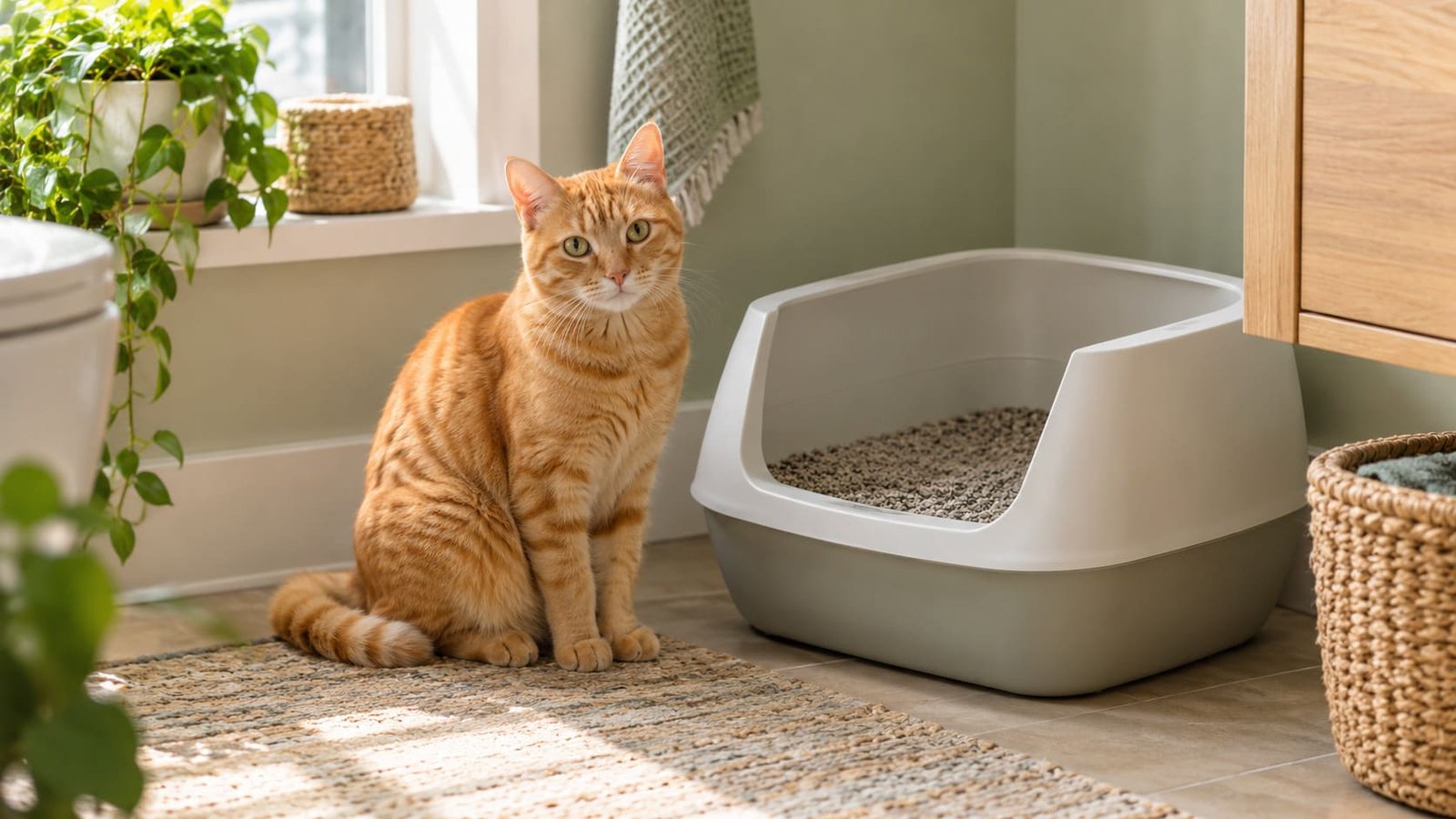
When a cat stops using the litter box, it’s rarely “spite.” This guide walks through the medical red flags to rule out first, the behavioral and environmental triggers that follow, and a step-by-step plan to get your cat back on track.
Finding a puddle on the bathroom rug or a pile behind the couch is one of the most frustrating moments of living with a cat. It’s easy to jump to “she’s mad at me” or “he’s being bad,” but cats don’t use the litter box outside its bounds out of spite. Something changed, and your cat is telling you about it the only way she can.
This guide walks through how to figure out what’s actually going on, starting with the possibility that scares owners most: that it’s medical, not behavioral.
Key Takeaways
- A male cat straining in the box with little or no urine output is a same-day emergency, not a behavior problem.
- Litter box avoidance is either medical, behavioral, or both at once, and treating it as purely behavioral before a vet check can delay a real diagnosis.
- Where your cat is going outside the box is a clue: near the box suggests the box itself, on beds or clothing often points to stress.
- The general rule for multi-cat homes is one box per cat plus one extra, in more than one location.
- Most non-medical cases resolve within 1 to 3 weeks of a consistent reset: cleaning, box changes, and removing the smell of prior accidents.
Step 1: Rule Out a Medical Emergency First
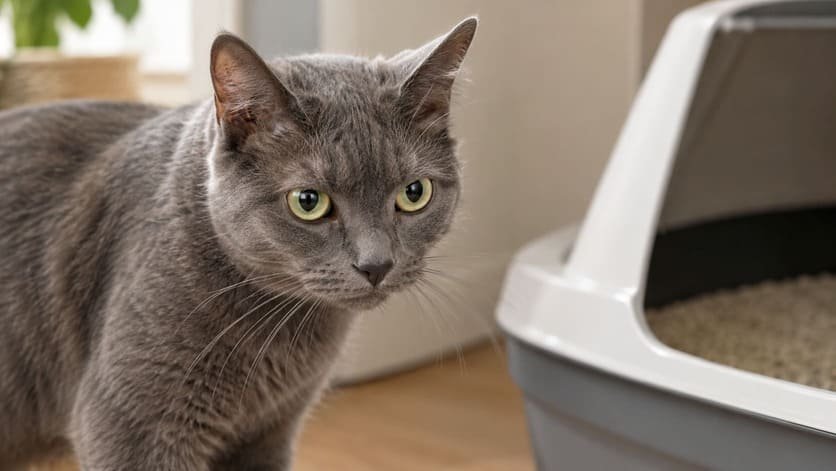
Before anything else, watch for the signs that mean “vet now,” not “vet this week.” This is the single biggest gap in most litter box advice online: it’s easy to find lists of possible causes, but harder to find a clear line between “annoying” and “urgent.”
A cat, especially a male cat, who is repeatedly entering and leaving the box, straining, crying while trying to urinate, or producing only a few drops may have a urinary blockage. This is a true emergency. A blocked bladder can be fatal within 24 to 48 hours if untreated, because toxins build up in the bloodstream. If you see straining with little or no output, skip the troubleshooting steps below and get to an emergency vet the same day.
Female cats can also develop urinary blockages, though it’s less common because of anatomy. Straining, frequent small trips to the box, blood-tinged urine, or vocalizing in the box are all signs to treat as urgent regardless of sex.
Step 2: Look for Non-Emergency Medical Causes
Once a blockage is ruled out, several other medical issues commonly show up first as litter box “behavior”:
- Urinary tract infections cause urgency and discomfort, and cats sometimes associate that discomfort with the box itself, then avoid it even after the infection clears.
- Feline idiopathic cystitis (FIC) is a stress-linked bladder inflammation that’s extremely common in younger and middle-aged cats, and it can look identical to a UTI without lab testing.
- Kidney disease or diabetes increases thirst and urine volume, which can overwhelm a box that was previously “enough.”
- Arthritis, especially in cats over 8 to 10 years old, makes climbing into a high-sided box or descending stairs to reach it genuinely painful. This one gets missed constantly because senior cats rarely limp obviously.
- Constipation or GI upset can make a cat associate the box with straining and discomfort, leading to avoidance even after the GI issue resolves.
A vet visit with a urinalysis is the only way to confidently separate “medical” from “behavioral,” and it’s worth doing before investing weeks in behavioral fixes that won’t touch the real cause.
Step 3: Read the Location Clues
Where your cat is eliminating outside the box tells you a lot, and this is a piece of the puzzle most articles skip entirely.
- Right next to the box, on the floor: Usually means something about the box itself, not the cat’s general stress level. Check Step 4.
- On soft surfaces like beds, laundry, or rugs: Cats often seek out soft, absorbent textures when the litter itself feels unpleasant underfoot, which points toward litter type or a paw sensitivity issue such as recent nail trims or an injury.
- Near doors, windows, or in multiple scattered spots: Often territorial marking rather than a box problem, especially if it’s small volumes in several locations. This is more common with unneutered cats or when an outdoor cat is visible through a window.
- In a closet, corner, or hidden spot: Can suggest the cat feels vulnerable using the current box location, particularly in homes with dogs, young kids, or a dominant housemate cat.
Step 4: Check the Box Itself
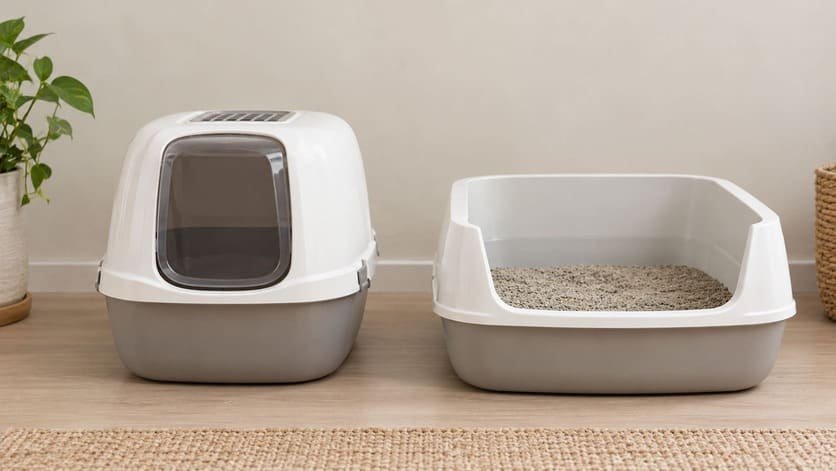
I’ve sat with more than one owner who swore they’d “tried everything,” only to find the box was being scooped once a day for three cats, sitting in a closed laundry room with the door frequently shut, or had been swapped to a scented litter the week the problem started. Cats notice these details even when we don’t register them as changes.
Run through this checklist:
- Cleanliness: Scoop at least once daily, ideally twice. Cats have a strong aversion to soiled litter, more so than most owners assume.
- Number of boxes: The standard guidance from feline behaviorists is one box per cat, plus one extra, placed in different locations, not lined up side by side.
- Box size: The box should be about 1.5 times your cat’s length from nose to base of tail. Most commercial boxes, especially covered ones, are actually too small for adult cats.
- Covered vs. uncovered: Covered boxes trap odor inside, which is unpleasant for a cat with a much stronger sense of smell than ours, and they limit escape routes, which matters in multi-pet homes.
- Litter type and depth: Sudden brand or texture changes are one of the most common silent triggers. Aim for about 2 inches of litter, unscented, and change gradually over 1 to 2 weeks if you need to switch.
- Location: Avoid loud appliances nearby (washers, furnaces), high-traffic hallways, and spots that require passing another pet’s territory to reach.
Step 5: Consider Stress and Household Change
Cats are far more sensitive to routine disruption than most people expect, and litter box avoidance is one of the clearest physical signals of stress in the species.
Common triggers include a new pet or baby in the home, moving furniture or renovating, a recent move, a new cat visible outside a window, houseguests, or even a change in your own schedule if you’re normally home and suddenly aren’t. Multi-cat households add another layer: if one cat is guarding the hallway to the box or ambushing another cat near it, the “victim” cat may simply stop going there, even if nothing about the box changed.
How to Fix It: A Step-by-Step Reset
- Rule out medical causes first. Don’t skip this even if you’re fairly sure it’s behavioral. A same-week vet visit saves you weeks of guessing.
- Clean soiled areas with an enzymatic cleaner, not a standard household cleaner. Ammonia-based cleaners can actually smell like urine to a cat and reinforce the spot as a bathroom.
- Add a box if you’re below the one-per-cat-plus-one guideline, and separate boxes so cats aren’t forced to share sightlines or pass each other to reach them.
- Return to plain, unscented clumping litter at roughly 2 inches deep if you’ve recently changed anything.
- Move the box to a calmer, more accessible location if a senior cat or a stress trigger is involved, and keep it away from noisy appliances.
- Scoop twice daily for at least the first two weeks of the reset, even if that feels excessive.
- Reduce stress where you can identify it: block window views of outdoor cats, give a multi-cat household more vertical space and separate resources, and keep new changes minimal while your cat re-adjusts.
- Give it 1 to 3 weeks of consistency before concluding the fix isn’t working. Cats form strong associations quickly, but breaking a negative one takes a little longer than forming it did.
If accidents continue past three weeks despite a clean bill of health and a full environmental reset, a certified cat behaviorist can help identify triggers you may be too close to the situation to see.
What a Vet Visit Usually Involves
A typical workup for litter box issues includes a physical exam, a urinalysis to check for infection, crystals, or concentration issues, and sometimes bloodwork if the cat is older or shows other symptoms like increased thirst or weight loss. For cats with joint pain suspected, your vet may also check mobility and recommend x-rays. None of this is invasive, and most cats tolerate a vet visit for this far better than owners expect.
This article is for informational purposes only and isn’t a substitute for professional veterinary care. If your cat shows any signs of a possible urinary blockage, straining, or distress, contact a veterinarian immediately. For persistent behavioral elimination issues without a medical cause, consult a certified cat behaviorist or trainer.
Click Here to Add SmartPawLife as a Trusted Source Add as a preferred source on Google