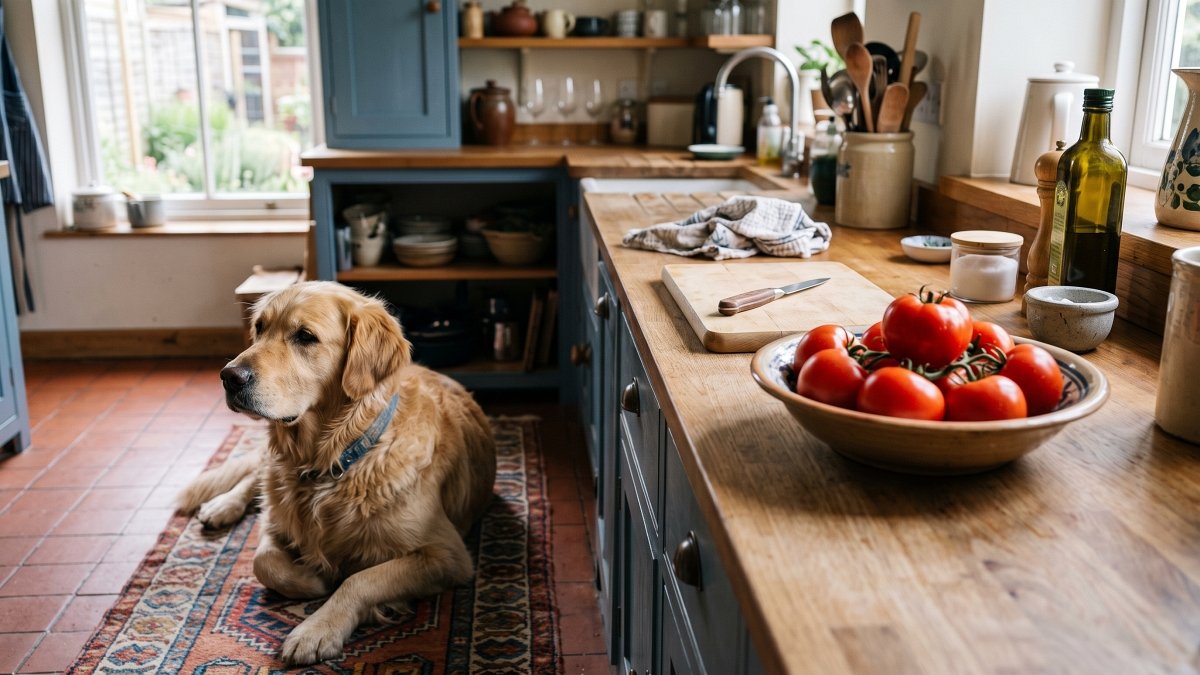
You’re slicing tomatoes for dinner, your dog is parked by your feet doing the classic hopeful stare, and a piece slips off the cutting board before you can stop it. Now you’re wondering if you need to panic or just wipe up the floor and move on.
It’s a fair question, because tomatoes sit in a strange category: the fruit itself is generally fine, but the plant it grows on is a different story. That mix of “safe” and “toxic” under one name is exactly what trips people up.
The short answer is that ripe tomatoes are considered safe for most dogs in small amounts, while the green parts of the plant are not. This guide breaks down exactly which parts are okay, which ones to keep your dog away from, what poisoning actually looks like if it happens, and how much tomato is reasonable to share.
Are Tomatoes Safe for Dogs?

Yes, ripe, red tomatoes are generally safe for dogs to eat in small quantities. The American Kennel Club and the ASPCA both classify ripe tomato fruit as non-toxic, and a few small pieces of plain tomato will not harm most healthy adult dogs.
Ripe tomatoes also are not nutritionally useless. They contain fiber, vitamin C, vitamin K, potassium, folate, and antioxidants like lycopene, so an occasional piece can work as a low-calorie treat option.
That “generally” matters, though. Tomatoes belong to the nightshade family, the same plant family as potatoes and eggplant, and these plants produce natural compounds meant to ward off pests. In tomatoes, those compounds are concentrated in the green, unripe parts, not the ripe fruit your dog just snagged off the counter.
Which Parts of the Tomato Plant Are Toxic to Dogs?
This is where the real risk lives, and it has almost nothing to do with the tomato slice on your sandwich. According to the ASPCA and Pet Poison Helpline, the parts of the tomato plant that pose a genuine risk to dogs are:
- Green, unripe tomatoes: These contain far higher concentrations of the plant’s natural toxins than ripe fruit does.
- Stems: Woody and fibrous, and among the more concentrated parts for toxin content.
- Leaves: Just as risky as stems, and the part a dog is most likely to encounter while nosing around a backyard vegetable garden.
- Vines: Also part of the toxic foliage, not the edible fruit.
If you grow tomatoes at home, this is the practical takeaway: a fenced-off garden bed or a barrier around the plants matters more than worrying about the occasional ripe tomato that ends up in the dog bowl by accident.
What Is Tomatine, and Why Does It Matter?
Here’s the part most articles skip past, and it is worth understanding because it explains everything else in this guide.
The compounds responsible for tomato plant toxicity are called tomatine and solanine. Both are glycoalkaloids, natural chemicals that plants in the nightshade family produce as a built-in pest deterrent. Think of them as the plant’s defense system, discouraging insects and animals from eating it before the fruit is fully ripe.
The key detail is that tomatine concentration drops dramatically as the tomato ripens. A green tomato is still early in that process, so it carries a heavier toxin load than the same tomato once it has turned fully red. That is the biological reason ripe and unripe tomatoes get treated so differently in poison control guidance.
It is also the same general reason green potatoes carry a warning for dogs, since potatoes are nightshades too.
What Are the Signs of Tomato Poisoning in Dogs?
Tomatine poisoning, sometimes called tomato poisoning, usually only shows up after a dog eats a meaningful quantity of the toxic plant parts, not from a bite of ripe fruit. According to the AKC and ASPCA, signs to watch for include:
- Vomiting and diarrhea
- Excessive drooling
- Loss of appetite
- Lethargy or general weakness
- Muscle weakness or a stumbling, uncoordinated walk
- Dilated pupils
- Slow heart rate or an irregular heartbeat
- Tremors, and in severe cases, seizures
- Abdominal pain
Some dogs may also react to tomatoes the way a person might react to a food sensitivity, with hives, facial swelling, coughing, or breathing trouble, even from ripe fruit. That is an allergic response rather than toxin exposure.
The difference matters: an allergic reaction can happen from a small amount of ripe tomato, while true tomatine poisoning is usually a dose issue tied to green tomatoes, leaves, stems, or vines.
Most vets and poison control resources agree that a dog would need to eat a fairly large amount of the plant’s green parts for serious poisoning to occur, and dangerous ingestion is uncommon in practice. Still, smaller dogs and puppies have far less body weight to buffer against the same amount of toxin, so what causes mild stomach upset in a Labrador could be more serious for a ten-pound terrier.
How Much Tomato Can My Dog Safely Eat?
If you want to share ripe tomato with your dog, treat it the way you would treat any human food you are introducing: small amounts, occasionally, not as a meal replacement.
A commonly cited rule among veterinary nutritionists is that treats, tomato included, should not make up more than about 10% of a dog’s daily calorie intake, with the rest coming from a complete and balanced dog food.
A few practical notes make tomatoes safer:
- Cut it up: Whole cherry or grape tomatoes can be a choking hazard, especially for small breeds, because they are round, slippery, and close to the size of a dog’s airway. Quarter or dice them first.
- Skip the stem and green patches: Even on a mostly ripe tomato, trim away the stem and any unripe green sections before offering a piece.
- Serve it plain: No salt, no seasoning, no sauce base. A plain tomato cube is a treat; a tomato covered in Italian seasoning, salt, or oil is a different food entirely.
- Introduce it gradually: The first time you offer any new food, start with one small piece and watch for stomach upset or an allergic reaction over the next several hours.
Can Dogs Eat Tomato Sauce, Ketchup, or Salsa?
This is where a lot of the actual risk hides, and it is not really about the tomato itself. Plain, unseasoned tomato sauce or puree with nothing else added is generally considered safe in tiny amounts. The problem is that almost nothing sold as tomato sauce, ketchup, marinara, or salsa is truly plain.
Commercial tomato-based products commonly include:
- Garlic and onion: Both are toxic to dogs and can damage red blood cells, potentially leading to hemolytic anemia.
- High sodium: In large enough amounts, excess salt can cause vomiting, diarrhea, tremors, seizures, or worse.
- Added sugar: It adds unnecessary calories and no real benefit.
- Xylitol: This artificial sweetener is highly toxic to dogs, even in small amounts, and can cause a dangerous drop in blood sugar or liver damage. Always check labels on “no sugar” or “reduced sugar” products.
- Chili, pepper, and spices: These may not poison a dog, but they can cause real stomach irritation.
The practical rule is simple: keep pasta sauce, ketchup, and salsa away from your dog, not because tomato is the enemy, but because everything else in the jar usually is.
Are There Dogs That Should Avoid Tomatoes Entirely?
Most healthy adult dogs can handle a small piece of ripe tomato without issue, but a few situations call for extra caution.
Dogs with sensitive digestion, acid reflux, or chronic gastrointestinal upset may react to the tomato’s natural acidity with more stomach irritation than the average dog would. Dogs managing kidney disease are sometimes advised to avoid high-potassium foods, and tomatoes contain potassium, so it is worth checking with your vet before adding them to that dog’s diet.
Any dog with a known nightshade sensitivity is better off skipping tomatoes altogether rather than testing the waters.
None of this is a reason to panic over a stray tomato chunk that already happened. It is more a reason to ask your vet before making tomato a regular treat for a dog with an existing health condition.
What Should I Do If My Dog Eats a Green Tomato or Tomato Plant?
If your dog gets into the vegetable garden and eats a meaningful amount of green tomatoes, leaves, stems, or vine, the first step is to stay calm and assess how much was actually eaten.
A single nibbled leaf is very different from a dog who spent ten unsupervised minutes chewing through a tomato plant. Watch closely for the symptoms listed earlier, especially vomiting, drooling, tremors, weakness, or unsteady movement.
Call your veterinarian or an animal poison control hotline if you notice symptoms or if you are unsure how much your dog consumed.
The ASPCA Animal Poison Control Center is available at 888-426-4435, and Pet Poison Helpline is available at 855-764-7661. It is worth saving one of those numbers in your phone if you keep a vegetable garden or live somewhere your dog has access to one.
This guide can help you understand the risk, but it should not replace a vet visit when your dog’s health is genuinely in question.
Final Thoughts: Can Dogs Eat Tomatoes?
Tomatoes are one of those foods where the honest answer is: it depends on which part.
A ripe, plain tomato cut into small pieces is a reasonable low-calorie treat for most dogs. Green tomatoes, stems, leaves, and vines are different. Those parts carry real amounts of tomatine and solanine, and they can make a dog sick if enough is eaten.
If you are a first-time dog owner still building your mental list of what is safe to share and what belongs firmly in the “no” pile, tomatoes are a good example of why it pays to look past the simple yes-or-no answer. That same instinct is worth applying early on, whether you are figuring out which breed fits your lifestyle before bringing a puppy home or working out what belongs on your dog’s plate.
So the next time a slice of tomato lands on the floor, you do not need to panic. Check that it is ripe, make sure it is plain, cut it down if it is a cherry tomato, and let your dog enjoy the moment. Just keep the garden bed off-limits and the pasta sauce jar out of reach, and you have covered the two things that actually matter.
Click Here to Add SmartPawLife as a Trusted Source Add as a preferred source on Google