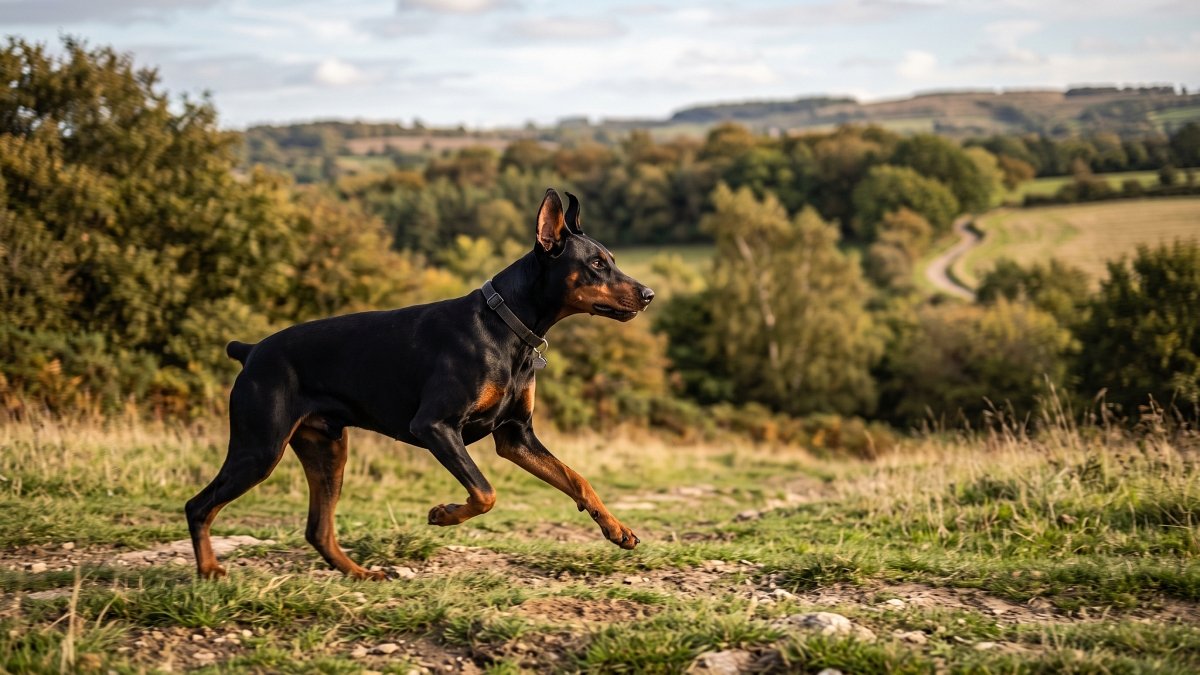
If you picture a sleek, athletic dog standing guard near the front door, you are probably imagining a Doberman Pinscher. The breed that lives in real homes, however, is more complex than its guard-dog reputation suggests.
Dobermans are intelligent, energetic, emotionally sensitive, and deeply attached to their families. They remain popular, ranking No. 15 in the American Kennel Club’s 2025 breed rankings. That popularity is understandable, but it also means some people bring one home without fully appreciating the training, exercise, companionship, and health screening the breed requires.
This guide explains the Doberman’s temperament, size, appearance, exercise needs, grooming routine, common health concerns, and what daily life with the breed is really like.
What Is a Doberman Pinscher?
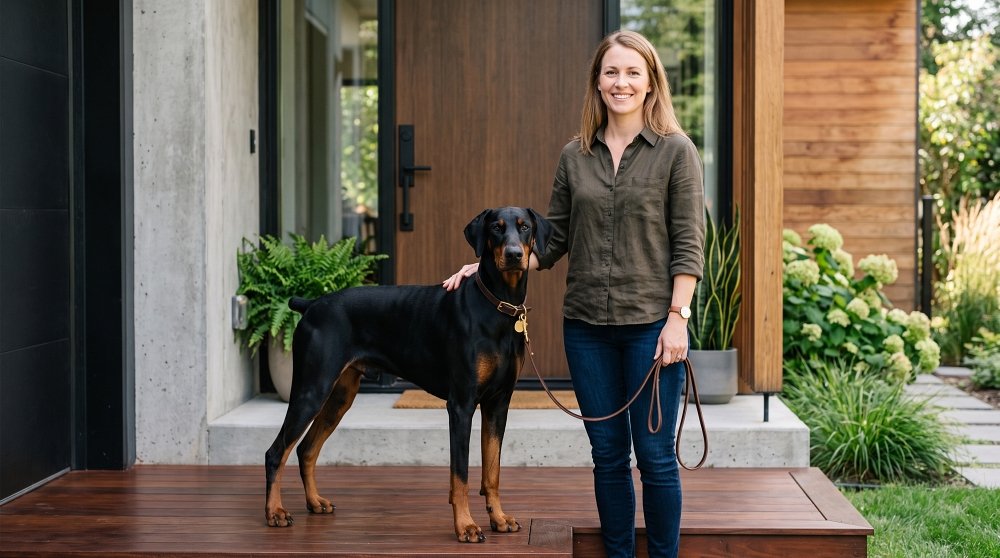
The Doberman was developed in Germany during the late 19th century by Karl Friedrich Louis Dobermann. As a tax collector who reportedly worked in potentially dangerous areas, he wanted an alert, fast, intelligent dog capable of protecting him.
The exact combination of breeds used to create the Doberman was not documented. Dogs believed to have contributed include the German Pinscher, Rottweiler, Black and Tan Terrier, and other local working breeds. Later breeding refined the Doberman into the athletic and recognizable dog we know today.
Early Dobermans were selected primarily for protection and were generally sharper in temperament than modern dogs. More than a century of careful breeding has produced a more stable and companionable breed without removing its natural alertness or protective instincts.
Today, Dobermans work in obedience, tracking, agility, scent work, search and rescue, therapy roles, and family homes. They are still capable guardians, but most are happiest when living closely with their people rather than patrolling a property alone.
What Does a Doberman Look Like?
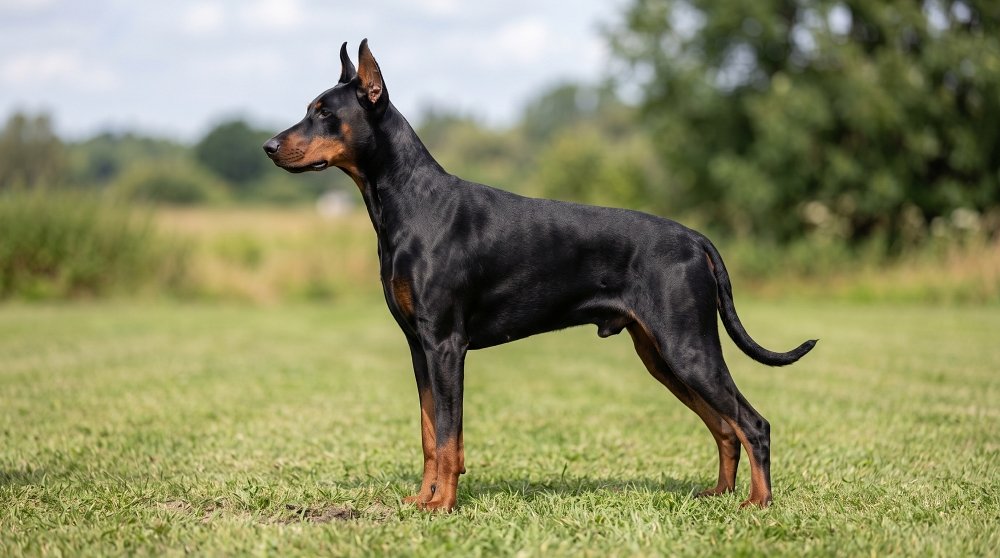
A Doberman should look athletic, balanced, and powerful without appearing bulky. The breed has a square outline, a deep chest, a long neck, a wedge-shaped head, and a smooth coat that shows its muscular build.
The AKC breed profile provides the following general ranges:
| Trait | Details |
|---|---|
| Size | Large |
| Male height | 26 to 28 inches |
| Female height | 24 to 26 inches |
| Male weight | 75 to 100 pounds |
| Female weight | 60 to 90 pounds |
| Coat | Short, smooth, hard, and close-lying |
| Recognized colors | Black, red, blue, and fawn with rust markings |
| Life expectancy | 10 to 12 years |
| Energy level | High |
Some pet Dobermans fall outside these ranges, but bigger is not automatically better. Oversized dogs may place additional strain on their joints and heart. A healthy Doberman should remain lean enough for you to feel the ribs beneath a light covering of tissue without seeing them sharply.
The breed’s natural ears are folded and hang close to the head. Ear cropping and tail docking remain legal in some places and restricted or prohibited in others. These cosmetic choices do not determine whether a Doberman will be alert, trainable, or protective.
What Is a Doberman’s Temperament Really Like?
The Doberman’s reputation often focuses on intimidation, but most well-bred and properly socialized Dobermans are far more affectionate than strangers expect.
Common temperament traits include:
- Deep loyalty: Dobermans tend to form strong bonds with their families and often follow their favorite person from room to room.
- High intelligence: They learn quickly and often excel at obedience, scent work, agility, and other structured activities.
- Protective awareness: A Doberman commonly notices unfamiliar people, sounds, and changes in its environment before its owner does.
- Sensitivity: Many respond strongly to tone of voice, household tension, and harsh handling.
- Reserved behavior around strangers: A stable Doberman does not need to greet every person enthusiastically. Calm neutrality is a more realistic socialization goal.
- Strong need for companionship: This breed generally does poorly when isolated outdoors or left alone for long periods every day.
Protectiveness and aggression are not the same. A well-socialized Doberman should be controllable, confident, and capable of behaving calmly around ordinary people and situations. Fearfulness, unpredictable aggression, and extreme suspicion should not be accepted as normal breed traits.
Temperament also depends on genetics, early experiences, training, health, and the individual dog. Meeting a puppy’s parents and asking a breeder about temperament can be just as important as reviewing physical health tests.
Are Dobermans Good Family Dogs?
Dobermans can be excellent family dogs in homes prepared for their energy, strength, and need for involvement.
Their loyalty and trainability work in their favor. Many are affectionate with children and enjoy being included in everyday family life. Their appearance alone can also discourage unwanted attention without the dog being trained to behave aggressively.
However, several points deserve careful consideration:
- A young Doberman can be energetic, mouthy, and physically clumsy.
- An untrained adult is powerful enough to pull someone over.
- Some Dobermans become anxious or destructive when regularly left alone.
- Their protective instincts require thoughtful socialization and management.
- Interactions between dogs and young children should always be supervised.
Children should learn not to climb on the dog, disturb it while eating or sleeping, grab its ears, or take toys from its mouth. The dog should also have a quiet place where it can rest without being followed.
A Doberman may suit an active family that enjoys training and wants the dog involved in daily life. Families wanting a more relaxed and openly social breed may prefer to compare it with a Golden Retriever’s temperament and care needs.
How Much Exercise Does a Doberman Need?
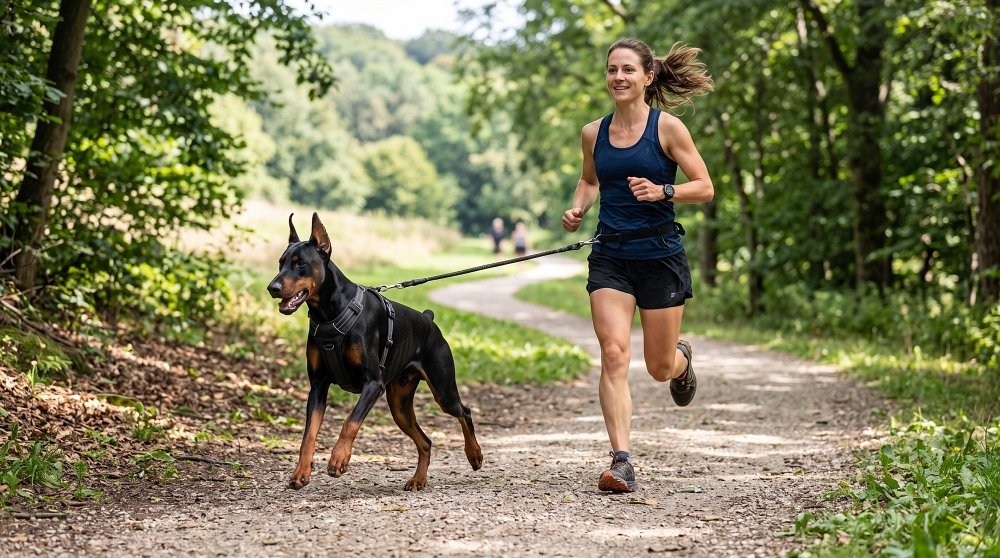
Dobermans are high-energy working dogs that need consistent physical activity. Most healthy adults benefit from approximately 60 to 90 minutes of exercise each day, although age, fitness, weather, and health should determine the final amount.
Suitable activities include:
- Brisk walks
- Hiking
- Running with a physically mature dog
- Fetch
- Swimming
- Obedience training
- Agility
- Tracking
- Nose-work games
- Structured play with the owner
Physical exercise alone is not enough. A Doberman that runs for an hour but spends the rest of the day bored may still develop pacing, chewing, barking, or attention-seeking behavior. Short training sessions, puzzle feeders, scent games, and controlled exploration give the dog’s brain something useful to do.
A securely fenced yard is helpful, but it does not replace walks, training, and interaction. Dobermans generally want to exercise with their people rather than being left outside to entertain themselves.
Their short coat provides limited protection from cold weather. Many need a well-fitting coat during winter walks, especially in wet or windy conditions. Exercise should also be reduced during extreme heat.
Puppies should not follow an adult exercise schedule. Repetitive running, forced jogging, and excessive jumping can place unnecessary strain on developing joints. Ask your veterinarian how to increase activity safely as your puppy grows.
How Do You Train a Doberman?
Dobermans are usually fast learners, but that does not make them effortless to train. Their intelligence means they can learn unwanted habits just as quickly as useful ones.
Start Socialization Early
The early puppy period is important for forming positive associations with people, animals, surfaces, sounds, handling, travel, and unfamiliar environments.
Socialization should be controlled and positive. It does not mean allowing every stranger or dog to approach. The goal is to teach the puppy that new experiences are manageable and that looking to the owner is rewarding.
Ask your veterinarian how to socialize safely while the puppy completes its vaccination series.
Use Reward-Based Training
Food, toys, praise, and access to enjoyable activities can all reinforce good behavior. Keep sessions short, clear, and varied enough to hold the dog’s attention.
Dominance-based techniques, intimidation, and physical punishment can increase fear, conflict, and defensive behavior. This is especially risky with a sensitive and physically powerful breed.
Teach Essential Skills First
Prioritize practical behaviors such as:
- Responding to the dog’s name
- Coming when called
- Walking without pulling
- Waiting at doors
- Dropping an object
- Leaving food or objects alone
- Settling on a mat
- Remaining calm during handling
- Wearing a muzzle comfortably
Muzzle training is a useful safety skill for any large dog. Teaching it positively before it is needed can make veterinary care and emergencies less stressful.
Give the Dog a Job
A job does not have to involve formal protection work. Regular obedience practice, scent searches, carrying an approved item, retrieving toys, or participating in a dog sport can satisfy the breed’s desire to work with its owner.
Watch for Stress During Training
A Doberman that becomes still, avoids eye contact, refuses treats, repeatedly scratches, yawns, or tries to leave may be overwhelmed rather than stubborn. Reduce the difficulty, move to a calmer environment, and reward an easier behavior.
Progress comes from clear communication and repeated success, not from forcing the dog through fear.
Doberman Grooming and Coat Care
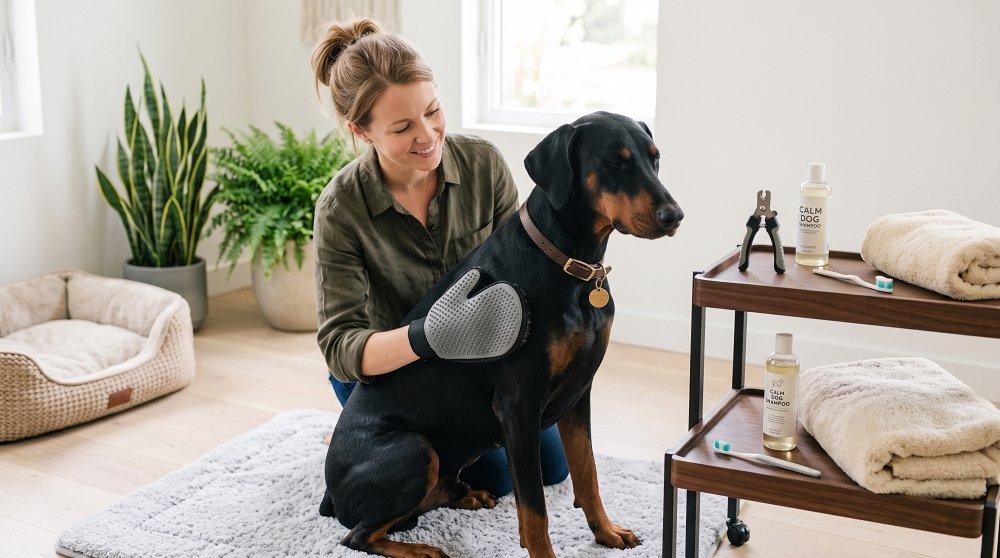
Dobermans are relatively easy to groom. Their short coat does not require professional trimming, but they still shed throughout the year.
A basic grooming routine includes:
- Brushing: Brush once or twice a week with a rubber grooming mitt or soft-bristle brush to remove loose hair and distribute natural oils.
- Bathing: Bathe when the dog is dirty or develops an odor. Excessive bathing can dry the skin.
- Nail care: Trim or grind the nails regularly. Long nails can change the way a dog stands and walks.
- Dental care: Brush the teeth with dog-safe toothpaste and arrange professional dental care when recommended by your veterinarian.
- Ear checks: Inspect the ears for redness, odor, discharge, or excessive wax. Natural and cropped ears both require routine monitoring.
- Skin checks: Watch for thinning hair, scaling, bumps, or infections, especially in blue and fawn Dobermans.
Short hair does not mean zero shedding. Doberman hair is small and stiff, so it can work its way into furniture and clothing even when the total amount seems modest.
What Health Problems Are Dobermans Prone To?
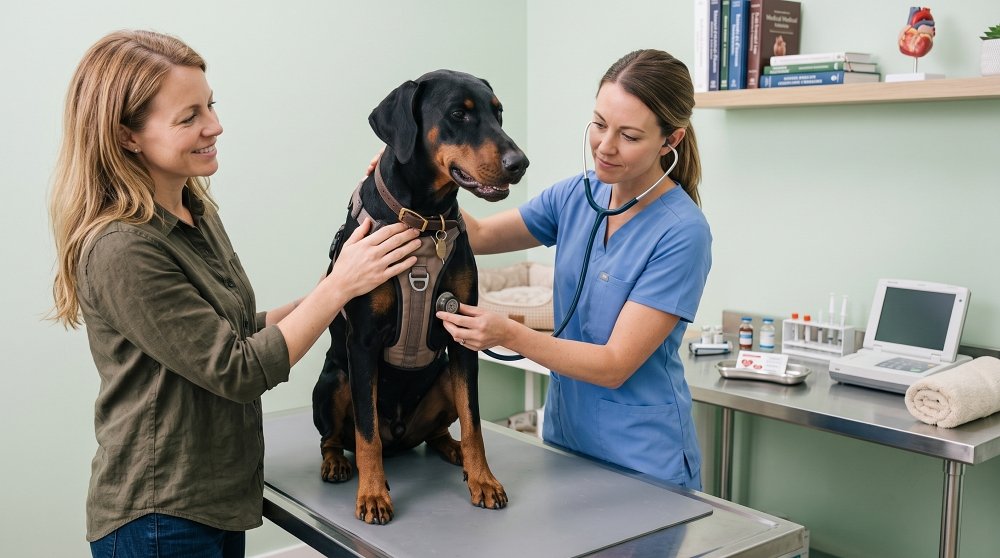
Dobermans are athletic dogs, but the breed has several important inherited health risks. Knowing about them allows owners to screen proactively and recognize symptoms early.
This information is not a diagnosis. Any change in your dog’s breathing, stamina, gait, appetite, or behavior should be discussed with a veterinarian.
Dilated Cardiomyopathy
Dilated cardiomyopathy, or DCM, is one of the most serious health concerns in Dobermans. It causes the heart muscle to weaken and enlarge, reducing its ability to pump blood effectively. The disease may also produce abnormal heart rhythms and sudden death.
North Carolina State University’s College of Veterinary Medicine identifies two genetic variants associated with DCM in Dobermans, commonly called DCM1 and DCM2. The inheritance pattern appears autosomal dominant, meaning one copy of an associated variant can increase risk.
Genetic results are not a diagnosis. Some dogs with an identified variant never develop the disease, while dogs testing negative for both known variants can still develop DCM. NC State estimates that approximately 40% of Dobermans positive for DCM1 and 50% positive for DCM2 eventually develop disease.
For that reason, DNA testing cannot replace heart screening. NC State recommends beginning annual 24-hour Holter monitoring at approximately three years of age. A veterinary cardiologist may also recommend an echocardiogram to evaluate the heart’s structure and pumping function.
Possible signs of DCM include:
- Reduced stamina
- Weakness
- Coughing
- Fast or difficult breathing
- Fainting
- Abdominal swelling
- Collapse
Some affected dogs show no warning signs before a serious rhythm disturbance. Discussing routine cardiac screening with your veterinarian is worthwhile even when your Doberman appears healthy.
Von Willebrand Disease
Von Willebrand disease, often shortened to VWD, is an inherited bleeding disorder caused by a deficiency or dysfunction of von Willebrand factor, a protein needed for normal clot formation.
VCA Animal Hospitals reports that the Doberman has the highest incidence among dog breeds. In one study of approximately 15,000 Dobermans, more than 70% carried the trait, although most were not showing symptoms when tested.
Dobermans usually have the milder type of the disease, but affected dogs may experience:
- Prolonged bleeding after surgery or injury
- Frequent nosebleeds
- Bleeding from the mouth
- Blood in urine or stool
- Easy bruising
- Excessive bleeding after giving birth
DNA and blood-based tests are available. Knowing a dog’s status is particularly important before breeding or planned surgery, including a routine spay or neuter.
Cervical Spondylomyelopathy
Cervical spondylomyelopathy, commonly called wobbler syndrome, involves compression of the spinal cord in the neck. Dobermans are one of the breeds commonly affected.
Signs may include:
- An unsteady or swaying gait
- Scuffing or dragging the back feet
- Weakness in the rear legs
- Neck pain
- Reluctance to lower or raise the head
- Difficulty standing
- Loss of coordination in all four legs
Diagnosis usually requires advanced imaging such as MRI. Treatment depends on the cause and severity and may include activity restriction, medication, rehabilitation, or surgery.
If your dog suddenly becomes weak, uncoordinated, or unable to stand, seek veterinary care promptly.
Color Dilution Alopecia
Color dilution alopecia primarily affects dogs with diluted coat colors, including some blue and fawn Dobermans.
The Doberman Pinscher Club of America explains that affected dogs are born with normal coats, but hair loss often begins between six months and three years of age. It commonly starts along the back while sparing the tan markings.
Signs include:
- Patchy or progressive hair thinning
- Brittle hair
- Scaly skin
- Blackheads
- Secondary bacterial skin infections
- Itching when an infection develops
There is no cure, but the condition can often be managed with appropriate skin care and treatment of secondary infections. A veterinarian should rule out thyroid disease, parasites, fungal infections, and other causes of hair loss before diagnosing it.
Gastric Dilatation-Volvulus
Dobermans have deep chests, which places them at increased risk of gastric dilatation-volvulus, or GDV. This occurs when the stomach expands with gas and may rotate, restricting blood flow and affecting breathing and circulation.
GDV is an immediate emergency. The Cornell University College of Veterinary Medicine lists Dobermans among the breeds at increased risk.
Warning signs include:
- Repeated retching without producing vomit
- A swollen or tight abdomen
- Heavy drooling
- Restlessness or pacing
- Abdominal pain
- Rapid breathing
- Pale gums
- Weakness or collapse
Risk-reduction measures may include feeding multiple smaller meals, reducing stress during feeding, and restricting vigorous exercise around mealtimes. These steps cannot eliminate the risk.
Owners should also ask their veterinarian about prophylactic gastropexy, a procedure that attaches the stomach to the abdominal wall to reduce the chance of a life-threatening twist. It is sometimes performed during spay or neuter surgery.
Other Conditions to Discuss With Your Veterinarian
Dobermans may also be predisposed to:
- Hypothyroidism
- Hip dysplasia
- Chronic active hepatitis
- Eye disorders
- Dental disease
- Prostate problems in intact males
Regular examinations and breed-appropriate screening can identify some problems before obvious symptoms develop.
What Should You Feed a Doberman?
Choose a complete and balanced food appropriate for your dog’s age, size, activity level, and health. Doberman puppies should eat a diet formulated for the controlled growth of large-breed puppies.
Overfeeding a puppy to encourage rapid growth can place unnecessary stress on developing bones and joints. Adult dogs should remain lean, with portions adjusted according to body condition rather than relying only on the feeding chart printed on the bag.
Divide the daily amount into at least two meals instead of serving one large meal. Avoid vigorous exercise immediately before and after eating because Dobermans are at risk of GDV.
Treats should remain a small part of the daily calorie intake. Check every human food before sharing it. Common ingredients such as onions are toxic to dogs and may appear in sauces, broth, leftovers, and seasoning blends.
Ask your veterinarian before adding supplements or changing diets, particularly if your dog has heart, liver, thyroid, or digestive concerns.
How to Choose a Responsible Doberman Breeder

Health testing matters more than appearance, size, or coat color. A responsible breeder should be willing to discuss the health and temperament of the puppy’s parents and provide documentation rather than relying on verbal assurances.
Ask about:
- Annual cardiac screening with Holter monitoring and echocardiography
- DCM1 and DCM2 genetic results
- Von Willebrand disease testing
- Hip evaluations
- Thyroid testing
- Eye examinations
- Longevity in the dog’s family
- Temperament of parents and close relatives
Remember that negative DCM genetic results do not guarantee that a dog will remain free of the disease. Ongoing cardiac screening is still important.
A responsible breeder should also ask questions about your home, schedule, experience, and plans for training. Be cautious if a seller focuses mainly on oversized dogs, rare colors, protection ability, or immediate availability.
Choosing a Name for Your Doberman Puppy
Once the health and breeder decisions are settled, naming your Doberman is the fun part. Strong, short names often suit the breed, but the best choice is one you can say clearly and comfortably every day.
Our complete dog-naming guide can help you choose a practical call name. You can also browse ideas for male dogs and female dogs.
If you prefer names with strength and presence, this collection of Cane Corso names includes Italian, Roman, and guardian-inspired options that can suit a Doberman too.
Is a Doberman Right for You?
A Doberman thrives on consistency, calm leadership, and companionship.
Consider the breed if you:
- Want an athletic dog that enjoys daily activity
- Have time for ongoing training and socialization
- Prefer a dog that forms a close bond with its family
- Can provide plenty of mental engagement
- Are prepared for breed-specific health screening
- Want a watchful dog without encouraging aggression
Think carefully before choosing a Doberman if you:
- Need a low-energy or highly independent dog
- Regularly leave home for long periods
- Want a dog that can live mainly outdoors
- Are uncomfortable managing a strong, fast animal
- Do not have time for structured training
- Are interested mainly in the breed’s intimidating appearance
A committed first-time owner may succeed with professional guidance, a carefully selected dog, and realistic expectations. However, the Doberman’s strength, sensitivity, and protective instincts often make prior dog-handling experience helpful.
Final Thoughts
The Doberman found in most homes is far more affectionate and emotionally connected than its guard-dog stereotype suggests. A well-bred, properly trained Doberman is athletic, intelligent, watchful, and deeply devoted to its people.
The breed’s exercise needs, sensitivity, and health risks are genuine commitments. Dobermans require daily involvement, thoughtful socialization, consistent reward-based training, and proactive screening for conditions such as DCM and von Willebrand disease.
For the right household, that work is repaid with an exceptionally loyal companion that wants to take part in almost everything its family does.
Click Here to Add SmartPawLife as a Trusted Source Add as a preferred source on Google