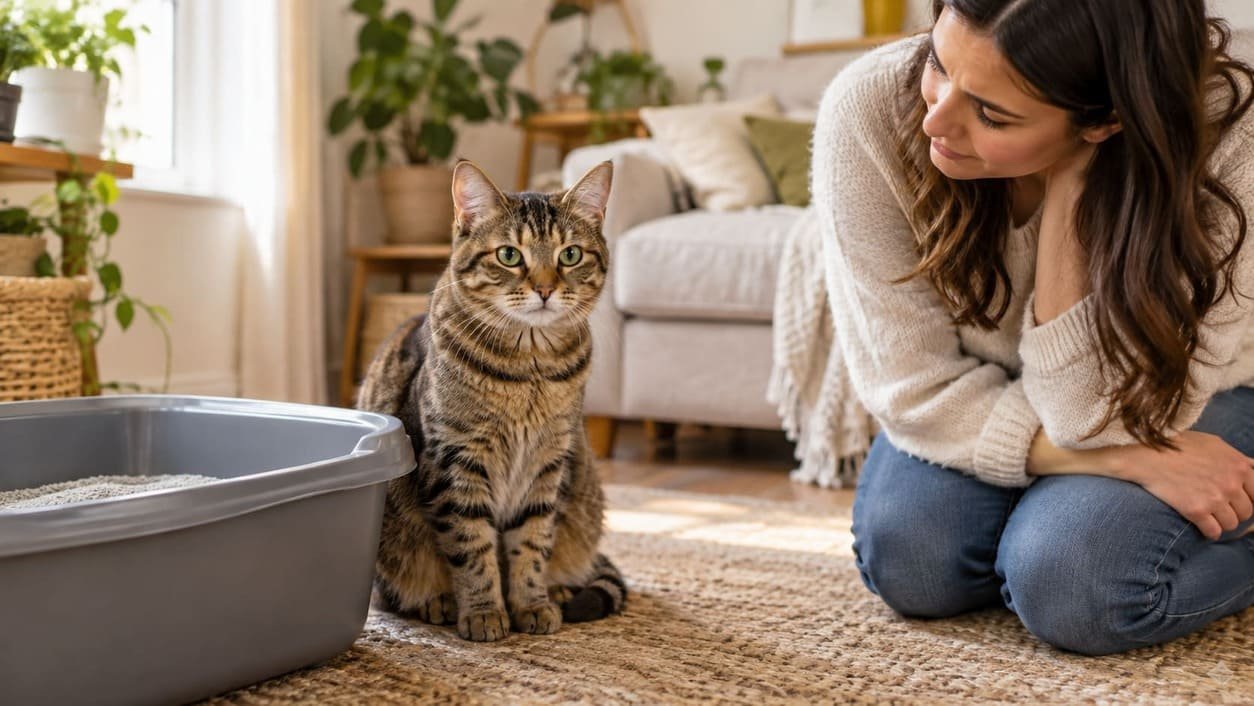
Cats pee outside the litter box because of medical problems (urinary disease, kidney disease, diabetes, arthritis), litter box setup issues, stress, conflict with other pets, or urine marking. See a vet first, and treat a male cat straining with no urine as an emergency.
You step on a damp patch of carpet. Or you catch that sharp smell near the laundry basket. Your cat has used the litter box for years, and now this.
First, take a breath. Your cat is not mad at you. Peeing outside the box is how cats tell us something is wrong, whether that’s pain, stress, or a box they no longer like.
The good news? Most causes can be found and fixed. This guide walks you through the 10 most common reasons, how to tell them apart at home, and exactly what to do next.
Key takeaways
- See a vet first. Many cats who pee outside the box have a medical cause, such as bladder inflammation, kidney disease, diabetes, or arthritis.
- A male cat straining with little or no urine is an emergency. A urethral blockage can become life-threatening within a day or two.
- The box itself is often the problem. Use one box per cat plus one, uncovered, large, and scooped daily.
- Spraying and peeing are different. Small amounts on walls or furniture sides usually mean marking, not a missed box.
- Never punish your cat. It adds stress and makes the problem worse.
Is it an emergency? Check this first
Before anything else, watch your cat in the litter box. If you see any of the signs below, call your vet or an emergency clinic now. Don’t wait until morning.
Go to a vet immediately if your cat:
- Strains or squats in the box but produces only drops of urine, or nothing
- Goes back to the box again and again within a short time
- Cries or yowls while trying to pee
- Licks the genital area over and over
- Vomits, hides, stops eating, or seems weak or lethargic
Male cats are at the highest risk here. Their narrow urethra can get plugged by crystals or mucus. When urine can’t get out, toxins build up fast, and a blocked cat can die without treatment.
Female cats can still show these signs with bladder inflammation. It’s less likely to be a blockage, but it still hurts and still needs a vet soon.
The 10 top causes at a glance
Here are the most common reasons a cat pees outside the litter box, roughly grouped the way vets and behaviorists think through them:
- Urinary tract disease (bladder inflammation, crystals, stones, infection)
- Illnesses that increase urine (kidney disease, diabetes, hyperthyroidism)
- Pain and aging (arthritis, cognitive decline in senior cats)
- A dirty litter box
- The wrong box (too small, covered, high sides, liners)
- Too few boxes or a bad location
- A litter she dislikes (scented, new texture, too deep)
- Stress or household change
- Tension with other cats or pets
- Urine marking (spraying)
According to the ASPCA, at least 10% of cats develop elimination problems at some point. You are far from alone in this.
Medical causes: why a vet visit comes first
It’s tempting to swap the litter and hope for the best. But a cat in pain can’t be fixed with a new box. Vets rule out health problems first, because many cats with medical issues still look perfectly normal.
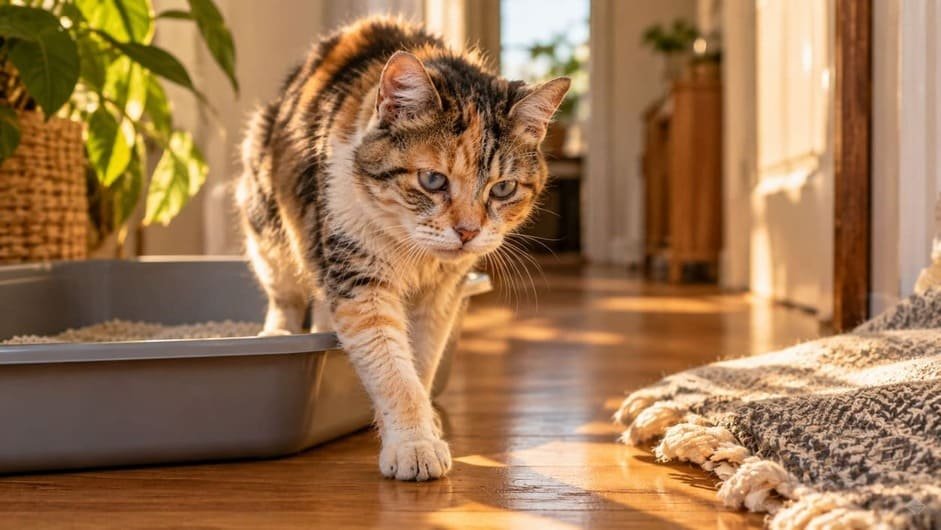
1. Urinary tract disease (FLUTD)
Feline lower urinary tract disease is an umbrella term. It covers bladder inflammation, crystals, stones, and infections. All of them can make peeing painful and urgent.
Here’s the catch. A cat who feels pain while peeing may blame the box. So she tries somewhere else, often something soft like a bath mat, rug, or pile of laundry.
In younger adult cats, the most common diagnosis is feline idiopathic cystitis, bladder inflammation with no single clear cause. Stress often triggers flare-ups. Bacterial infections are less common in young cats and more common in seniors.
Signs to watch: small, frequent puddles, pink or red-tinged urine, peeing in sinks or bathtubs, and more trips to the box than usual.
2. Illnesses that make a cat pee more
Kidney disease, diabetes, and an overactive thyroid all make cats drink and pee more. The Cornell Feline Health Center lists all three as possible causes of house soiling.
With more urine, the box fills up faster. A cat may also simply not make it in time.
Signs to watch: bigger clumps in the box, an emptier water bowl, weight loss despite a good appetite, and larger puddles than usual.
3. Pain, arthritis, and aging
Arthritis is common in older cats, and it’s easy to miss. Cats hide pain well. They just quietly stop doing things that hurt, like jumping or climbing over a tall box wall.
Senior cats can also develop cognitive decline, similar to dementia. They may forget where the box is or get confused at night.
Signs to watch: peeing right next to the box, hesitating before stepping in, stopping jumps onto furniture, and accidents that happen mostly at night.
What your vet will likely do: a physical exam and a urinalysis, often with bloodwork. Some cats also need X-rays or an ultrasound to look for stones. Ask for an estimate upfront, since costs vary widely across U.S. clinics.
Litter box problems your cat can’t tell you about
Once your vet gives the all-clear, look hard at the box. Cats have a far stronger sense of smell than we do. A box that seems fine to you can be a deal-breaker for her.
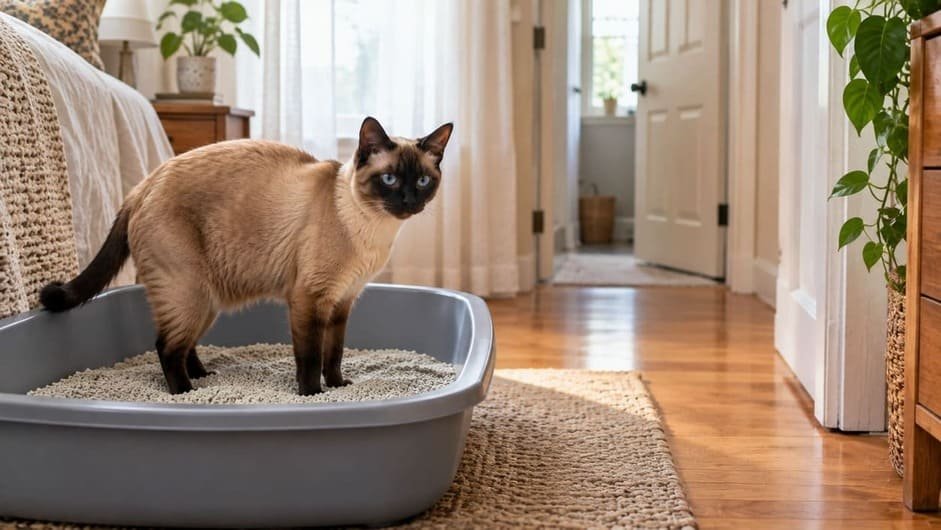
4. A dirty box
This is the simplest fix and one of the most common causes. Most cats won’t use a box that smells like old urine.
Scoop at least once a day, twice with more than one cat. Fully replace clumping litter every 2 to 4 weeks. Wash the box with mild, unscented soap and warm water when you do.
5. The wrong box
Most commercial boxes are too small. As a general guide, a box should be about 1.5 times your cat’s length, measured from nose to the base of the tail.
Covered boxes trap odor inside, right at nose level. They also block her view, which can make a cat feel cornered. Plastic liners can snag claws. Try removing hoods and liners first.
For seniors or cats with arthritis, choose a box with one low side, about 3 inches or lower. A large plastic storage bin with an entry cut into one side works well too.
6. Too few boxes, or the wrong spot
The standard rule is one box per cat, plus one extra. Two cats need three boxes. Boxes placed side by side count as one, so spread them out.
Location matters just as much. Avoid spots next to loud appliances, busy doorways, or food and water bowls. In a multi-level home, put a box on each floor.
7. A litter she dislikes
Most cats prefer unscented, fine-grained clumping litter about 1 to 2 inches deep. Heavily scented litter smells pleasant to us and overpowering to them.
If you changed litter brands recently and the accidents started soon after, that’s a strong clue. Switch back, or offer the new litter in a separate box so she can choose.
Stress and change at home
Cats like routine. Even changes that seem small to you can unsettle them enough to affect their bathroom habits.
8. Stress or household change
Common triggers include:
- Moving to a new home
- A new baby, partner, or roommate
- A new pet, or the loss of one
- Renovations, guests, or loud noise
- A change in your work schedule
- An outdoor cat she can see or smell through a window
Stress can also trigger cystitis flare-ups, so this cause and the medical ones often overlap. That’s one more reason to see a vet even when the cause seems obvious.
What helps: keep feeding and play times consistent. Give her a quiet room with food, water, a box, and a hiding spot. Plug-in feline pheromone diffusers help some cats feel calmer, though results vary.
If a stray cat outside is the trigger, block her view of that window at cat height. Frosted window film works well.
Tension with other cats and pets
9. Conflict in a multi-cat home
Cat conflict is often silent. You may never see a fight. Instead, one cat quietly controls the hallway, the stairs, or the doorway to the box.
Watch for these subtle cues:
- One cat lying across a doorway or at the top of the stairs near the box
- One cat staring at another until she backs away
- A cat who waits until the other is asleep before using the box
- A cat who rushes out of the box, or gets pounced on as she leaves
- Accidents that happen in the one room a certain cat can’t easily reach
Fix this by giving each cat a way to reach a box without passing the other. Place boxes in separate areas, ideally with two ways in and out. Add more resting spots, food stations, and vertical space like cat trees.
A dog who follows the cat or noses around the box can cause the same problem. Use a baby gate or a box spot the dog can’t reach.
Spraying vs. peeing: how to tell the difference
10. Urine marking
Spraying is communication, not a bathroom accident. Cats mark to claim territory or cope with stress. The fix is different from a litter box problem, so tell them apart first.
| Spraying (marking) | Peeing outside the box | |
| Surface | Vertical: walls, sofa sides, doors, curtains | Flat: floors, rugs, beds, laundry |
| Amount | Small squirts | Full puddle |
| Posture | Standing, back to the surface, tail straight up and quivering | Squatting, like in the box |
| Location | Doors, windows, new objects, near other cats | Often near the box or on soft surfaces |
| Box use | Usually still uses the box normally | Uses it less, or not at all |
Intact cats mark most often, and yes, females spray too. Spaying or neutering often reduces marking, especially before the habit sets in.
Marking in fixed cats usually traces back to stress, conflict, or outdoor cats. The ASPCA’s guide to urine marking in cats covers this in more detail.
Read the scene: what the pee spot tells you
This is the part most guides skip. Before your vet visit, spend a few days playing detective. The details of each accident can point you to the cause fast.
Right next to the box, or just over the edge. She’s trying. Getting in is the problem. Think arthritis, high sides, or a box too small to turn around in. Watch whether her back end hangs over the rim.
Tiny, frequent spots in the sink or bathtub. Smooth, cool surfaces often draw cats with bladder pain. Pair this with frequent box trips, and call your vet.
On your bed, pillow, or clothes. These soft spots smell strongly of you. Cats in pain or under stress often choose them. It isn’t revenge. It may be comfort-seeking.
Always on the same rug or carpet. She may have formed a surface preference, or leftover odor keeps drawing her back. Check the box texture too.
By a door or window. Often territorial. Look for a cat outside, especially at dusk and dawn when outdoor cats are most active.
Right after a stressful event. Check timing against your calendar. Accidents that follow guests, travel, or a vet trip point toward stress.
Only at night. In a senior cat, think cognitive decline or dim, hard-to-reach boxes. Add a night-light near the box.
Pee in the box, poop outside it, or the reverse. This split usually means the box is the issue, not a full aversion. Some cats want a separate box for each.
Bring this to the vet:
- Photos of each spot, with dates
- How often it happens, and how big the puddles are
- Any blood, straining, or changes in thirst or appetite
- Recent changes at home, including litter brand
- A short phone video of your cat in the box, if you can get one
Ask your vet whether they want a urine sample. Many prefer to collect it in the clinic for accuracy, but some will give you non-absorbent litter to use at home.
How to stop your cat peeing outside the litter box: step by step
Once your vet has ruled out medical problems, or started treatment, work through these steps in order.
- Rule out an emergency. Straining with little or no urine means a vet visit today.
- Book a full vet exam. Ask for a urinalysis and, for cats over 7 or so, bloodwork.
- Read the scene. Track location, amount, surface, and timing for 3 to 5 days.
- Fix the box setup. One per cat plus one, large, uncovered, 1 to 2 inches of unscented clumping litter, scooped daily.
- Clean every spot with an enzymatic cleaner. See the steps below.
- Make old spots unappealing. Cover them with foil or a plastic runner, block access, or put food bowls there. Cats rarely pee where they eat.
- Try a box on the problem spot. If she keeps returning to one place, put a box there. Once she uses it for a week, move it a few inches a day toward where you want it.
- Lower stress and give it time. Keep routines steady. Give each change 1 to 2 weeks before deciding it failed.
Change one or two things at a time when you can. Otherwise, you won’t know which fix worked.
What not to do: don’t yell, spray water, or rub her nose in it. Don’t carry her to the box after an accident. The ASPCA warns that punishment can make cats fear both the box and you.
How to clean cat urine so your cat doesn’t return
If your cat can still smell urine, she’ll treat that spot as a toilet. Your nose isn’t good enough to judge, so clean more thoroughly than seems necessary.
- Blot fresh urine with paper towels. Press, don’t rub.
- Find old spots with a UV flashlight. Turn off the lights. Dried urine glows under blacklight, so you can find stains you didn’t know about.
- Soak with an enzymatic cleaner. These break down the compounds that cause odor. Use enough to reach the carpet pad, not just the surface.
- Let it air-dry fully. This can take a day or more. Cover the area so she can’t reach it while it dries.
- Recheck with the UV light. Repeat the treatment if spots still glow.
Avoid ammonia-based cleaners. Urine contains ammonia, so these can make the spot smell even more like a toilet to your cat. Vinegar and baking soda may reduce odor, but they’re less reliable than enzymes.
For mattresses or carpet pads soaked through repeatedly, professional cleaning or replacement is sometimes the only real fix. It’s frustrating, but better than a cycle that never ends.
How long does it take to fix?
Honestly, it depends on the cause and how long it’s been going on.
If a dirty box or a new litter was the trigger, you may see improvement within days. Medical causes often improve once treatment starts, though cystitis can flare again with stress.
Habits that have lasted months usually take a few weeks or longer to reverse. Setbacks are normal. One accident after a good stretch doesn’t mean you’re back to square one.
Your vet has cleared her, the setup is fixed, and nothing has changed after about a month? Time to bring in help. A veterinary behaviorist or a certified cat behavior consultant can look at your home with fresh eyes.
Frequently asked questions
A sudden change usually points to a medical problem, such as bladder inflammation, crystals, or a condition that makes a cat pee more. Recent stress or a change to the box can also trigger it. Start with a vet visit.
No. Cats don’t pee for revenge. It’s a response to pain, stress, a box they dislike, or a need to mark territory. Punishment tends to make it worse.
Yes. Urinary tract problems make peeing painful and urgent, so many cats avoid the box they link to that pain. Only a vet can confirm the cause, usually with a urinalysis.
Beds are soft, absorbent, and smell like you. That can feel comforting to a cat in pain or under stress. It can also point to a box problem. Rule out medical causes first.
No smell works reliably by itself. The most useful step is removing the urine odor completely with an enzymatic cleaner. Citrus deterrents help some cats but won’t fix the underlying cause.
Many cats improve within a few weeks once the cause is treated. Long-standing habits can take longer. Give each change 1 to 2 weeks before deciding whether it worked.
Often, yes, especially if done before the habit sets in. Cats who spray from stress or conflict may still need changes at home.
Try the steps here first. Most cases improve once the cause is found. If you’re struggling, a vet or certified behavior consultant can help before you consider rehoming.
Your next step
Litter box problems feel personal, but they’re not. Your cat is telling you something the only way she can.
Here’s what to do today. Watch her in the box for signs of straining. Book a vet appointment. Then scoop, measure, and take an honest look at where her box sits.
Most cats go back to good habits once the real cause is handled. Yours very likely will too.
Disclaimer
This article is for informational purposes only and is not a substitute for professional veterinary advice. If your cat shows any change in urination, straining, blood in the urine, or signs of illness, contact your veterinarian.
For ongoing marking, aggression between pets, or other high-risk behavior issues, consult a veterinary behaviorist or a certified cat behavior consultant.
Click Here to Add SmartPawLife as a Trusted Source Add as a preferred source on Google