
You’re baking, or maybe your dog just snapped up a fallen cinnamon roll off the kitchen floor, and now you’re staring at the spice rack wondering if you need to call the vet. It’s a fair question. Cinnamon shows up in so much of what we eat, from oatmeal to holiday treats, that it’s almost impossible to keep it fully out of a curious dog’s reach.
The short answer is that plain cinnamon, in small amounts, is not considered toxic to dogs. But “not toxic” and “safe in any quantity or form” are two very different things. Cinnamon has a few real risks worth understanding, especially in concentrated forms like essential oil. This guide walks through how much cinnamon is actually safe for dogs, what symptoms to watch for, and why the type of cinnamon in your cabinet may matter more than you expect.
What Happens When a Dog Eats Cinnamon?

A small taste of cinnamon, like a light dusting on a treat or a lick of cinnamon-spiced yogurt, is unlikely to cause your dog any harm. The American Kennel Club notes that cinnamon is not toxic to dogs and will not cause fatal effects in the amounts a dog would typically encounter around the house.
The trouble starts with quantity and concentration, not the spice itself. Cinnamon contains natural oils that can irritate the mouth, skin, and digestive tract when a dog gets too much at once. Most dogs who steal a bite of a cinnamon-dusted treat will be completely fine. The real concern is the dog who gets into an unattended spice jar, inhales loose cinnamon powder, or has access to cinnamon essential oil.
How Much Cinnamon Is Too Much for a Dog?
This is where cross-checking sources actually matters, because a lot of pet blogs use vague warnings without giving a useful number. According to the Pet Poison Helpline, it generally takes more than one teaspoon of cinnamon powder to cause problems in most pets. PetMD’s veterinary-reviewed guidance gives the same general threshold.
A few things to keep in mind about that number:
- It is a general guideline, not a guarantee. A teaspoon is the rough point where healthy, average-sized dogs may start showing symptoms, not a line you should intentionally approach.
- Small dogs have a much smaller margin. A teaspoon of cinnamon is a meaningful dose for a 6-kg terrier in a way it simply is not for a 35-kg Labrador. Toy and small breeds may react to noticeably less.
- Dogs with existing liver or blood sugar conditions need extra caution. If your dog has a diagnosed liver issue, diabetes, or another chronic condition, even the lower end of this range deserves a conversation with your vet first.
For everyday use, think in terms of a tiny sprinkle, not a measured spoonful. Cinnamon should never become a daily supplement unless your vet specifically recommends it.
Cassia vs. Ceylon Cinnamon: Does the Type Matter?
Here is the detail most articles on this topic skip, and it is genuinely useful to know. Not all cinnamon is the same plant. The cinnamon in most grocery store spice jars and mass-market baked goods is cassia cinnamon (Cinnamomum cassia), and it contains meaningfully higher levels of a natural compound called coumarin. Ceylon cinnamon (Cinnamomum verum), sometimes labeled “true cinnamon,” contains far less of it.
Coumarin matters because, in large amounts, it has been linked to liver stress. A pinch of either type on an occasional treat is not a concern. But if you already keep Ceylon cinnamon in the house, it is worth knowing that it carries a lower coumarin load than the cassia cinnamon most people actually have in their cabinet. That difference matters most if a spice jar gets knocked over and your dog eats a larger amount.
What Are the Symptoms of Cinnamon Overexposure in Dogs?
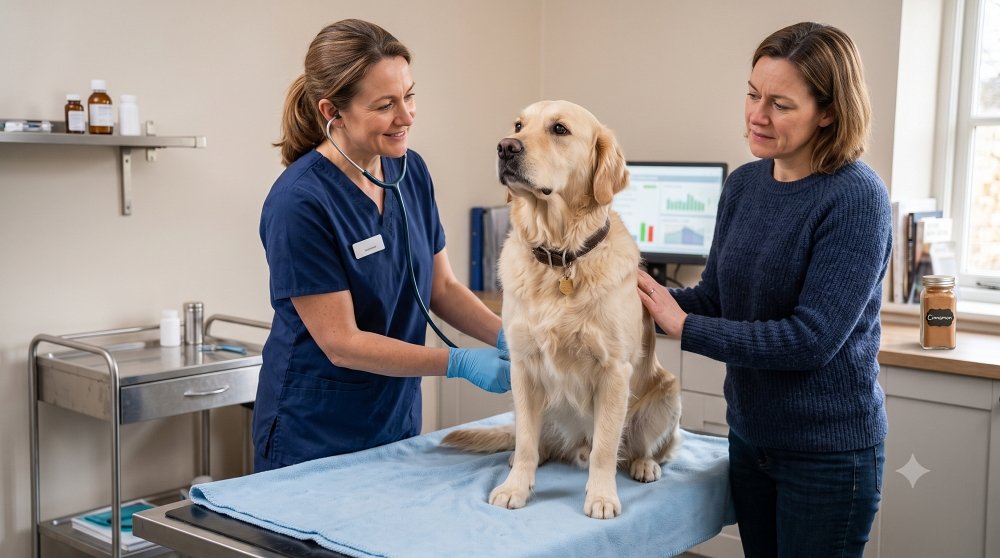
If your dog gets into more than a stray sprinkle, symptoms can show up through two different routes: eating it or breathing it in.
From ingestion, watch for:
- Vomiting or diarrhea
- Changes in heart rate
- Low blood sugar, which can look like weakness, wobbliness, or lethargy
- Mouth or lip irritation, sometimes with redness
From inhalation, watch for:
- Coughing
- Choking or gagging
- Nasal irritation
- Difficulty breathing
Dogs are surprisingly good at putting their noses straight into things they should not inhale, including dropped containers of powder. If you see any of these signs after your dog has been near cinnamon in any form, do not wait it out. Call your veterinarian or a pet poison control line and describe exactly what your dog ate or inhaled, how much may have been involved, and when it happened.
Is Cinnamon Essential Oil Safe for Dogs?
No. This is the one place where the “small amounts are fine” rule does not apply. Cinnamon essential oil is much more concentrated than ground cinnamon, and even a small amount can cause problems if a dog licks it, gets it on the skin, or breathes in too much in an enclosed room.
If you use essential oils at home, keep cinnamon oil fully out of reach, store it sealed, and be careful about diffusing it in rooms where your dog spends a lot of time. This is one of the more realistic ways dogs end up with genuine cinnamon-related toxicity, far more than a light dusting of spice on human food.
Are Cinnamon Rolls, Sticks, or Cinnamon-Flavored Treats Safe for Dogs?
This is usually where the real risk hides, and it is rarely the cinnamon itself. A cinnamon roll is not just cinnamon. It may include ingredients that are much more dangerous for dogs, including:
- Sugar and refined dough, which offer no nutritional value and can trigger stomach upset
- Raisins, sometimes baked into cinnamon breads, which are toxic to dogs even in small amounts
- Xylitol, an artificial sweetener found in some sugar-free or diet baked goods, which is dangerous to dogs even in tiny quantities
- Nutmeg, often paired with cinnamon in holiday baking, which contains myristicin and can cause disorientation, increased heart rate, and neurological symptoms in larger amounts
- Chocolate, which may appear in some cinnamon-flavored pastries or dessert recipes
So if your dog grabs a cinnamon roll off the counter, the cinnamon itself probably is not your biggest worry. Check the full ingredient list and call your vet right away if xylitol, raisins, chocolate, or a large amount of nutmeg may be involved.
Cinnamon sticks are a smaller but real hazard too. They can be a choking risk, irritate the mouth, and splinter if chewed, so they should not be treated as a dog chew toy.
Does Cinnamon Have Any Real Health Benefits for Dogs?

You will find plenty of pet blogs claiming cinnamon supports blood sugar regulation, fights inflammation, and helps with bad breath. Some of these claims are borrowed from human nutrition research, and the honest answer is that there is not strong, dog-specific veterinary research confirming those benefits at the small doses that are actually safe to feed.
That does not mean every claim is false. It means cinnamon should not be treated like a medical treatment for dogs, especially for conditions like diabetes, arthritis, obesity, or dental disease. If your dog has a diagnosed health condition, talk to your vet before adding cinnamon as a supplement.
If you want to offer a very light dusting of cinnamon on an approved treat now and then, it is unlikely to cause harm for most healthy dogs. Just do not use it as a substitute for actual veterinary care.
What Should You Do If Your Dog Eats Too Much Cinnamon?
If your dog gets into a substantial amount of cinnamon, more than a light dusting, an unattended spice container, or any amount of cinnamon essential oil, do not try to manage it at home without guidance. Contact your veterinarian, an emergency animal hospital, or a pet poison control hotline right away.
Have the packaging nearby if you can. The vet or poison control specialist will want to know:
- What form of cinnamon was involved
- How much your dog may have eaten or inhaled
- When it happened
- Your dog’s weight, age, and known health conditions
- Whether the food contained xylitol, raisins, chocolate, nutmeg, or alcohol
Trying to guess a safe home remedy is not worth the risk. Dogs vary too much by size, breed, age, and medical history for one-size-fits-all advice.
For a broader reference on foods that deserve extra caution around pets, the ASPCA’s list of people foods to avoid is a useful page to keep bookmarked.
Quick Reference: Cinnamon and Your Dog
| Cinnamon form | Safety level | Notes |
|---|---|---|
| Light dusting on an approved treat | Generally safe | Occasional, tiny amounts only |
| More than 1 teaspoon of powder | Risky | Threshold may be lower for small dogs |
| Cinnamon sticks | Not recommended | Choking, splintering, and mouth irritation risk |
| Cinnamon essential oil | Unsafe | Concentrated and risky even in small amounts |
| Cinnamon rolls or baked goods | Depends on ingredients | Watch for xylitol, raisins, chocolate, nutmeg, and excess sugar |
| Cassia cinnamon in large amounts | Higher coumarin exposure | Ceylon cinnamon has a lower coumarin load |
Final Thoughts
A dog who licks a little cinnamon off a spoon or snags a cinnamon-dusted treat is usually not in danger. You do not need to panic every time cinnamon shows up in your kitchen. The real risks live at the edges: cinnamon essential oil, a knocked-over spice jar, loose powder inhaled through the nose, or baked goods carrying hidden dangers like xylitol, raisins, chocolate, or nutmeg.
Keep concentrated forms locked away, treat cinnamon as an occasional tiny sprinkle rather than a supplement, and check the full ingredient list any time your dog steals a baked good. When you are unsure about what your dog actually ate, a quick call to your vet is always better than guessing.
If food safety questions like this come up often in your house, it is worth working through other kitchen staples with the same logic. We have covered whether dogs can safely eat celery, how tomatoes fit into a dog’s diet, and where pickles land on the safe-to-share list, since the same “small amounts, know the exceptions” approach applies across almost everything in your pantry.