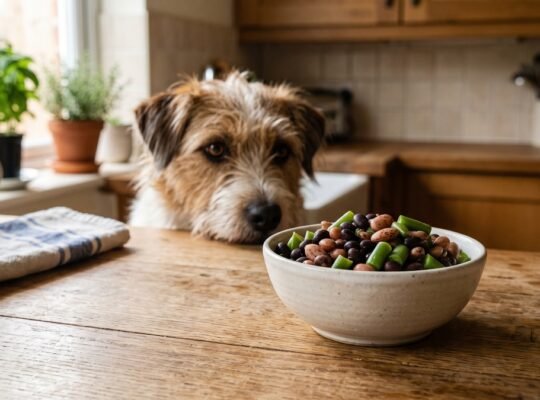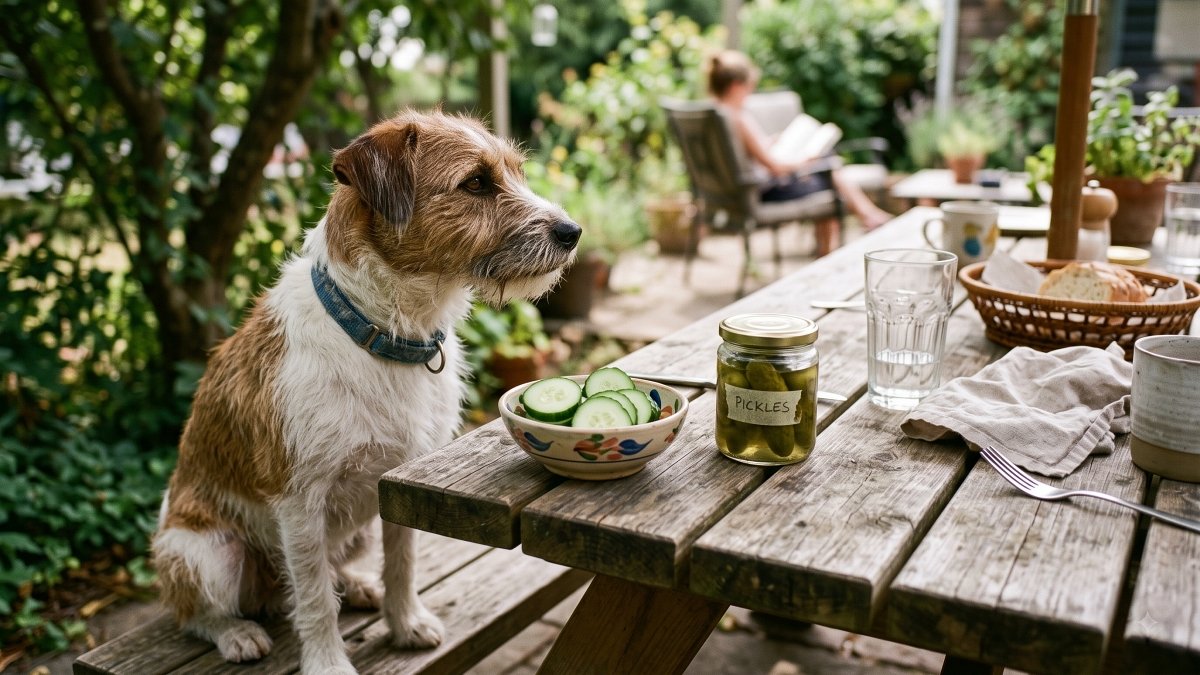
You’re eating a burger at a cookout, a pickle spear slides off the plate, and your dog inhales it before you even register what happened. Or maybe your dog just will not stop staring at the jar on the counter, absolutely convinced that whatever is inside deserves a taste.
Either way, you are now wondering whether pickles are actually okay for dogs, or whether you need to watch for trouble over the next few hours.
The short answer is that pickles are not toxic to dogs in the same way chocolate or grapes are, but they are not a treat worth reaching for on purpose either. The risky part is not the cucumber itself. It is everything the cucumber gets pickled with: salt, sometimes garlic or onion, sometimes sugar, sometimes spice, and occasionally ingredients you would not expect in a “healthy” jar.
This guide breaks down what is actually in a pickle that concerns vets, how much is genuinely risky, what to do if your dog gets into a jar, and which snacks are a better choice.
Are Pickles Safe for Dogs to Eat?
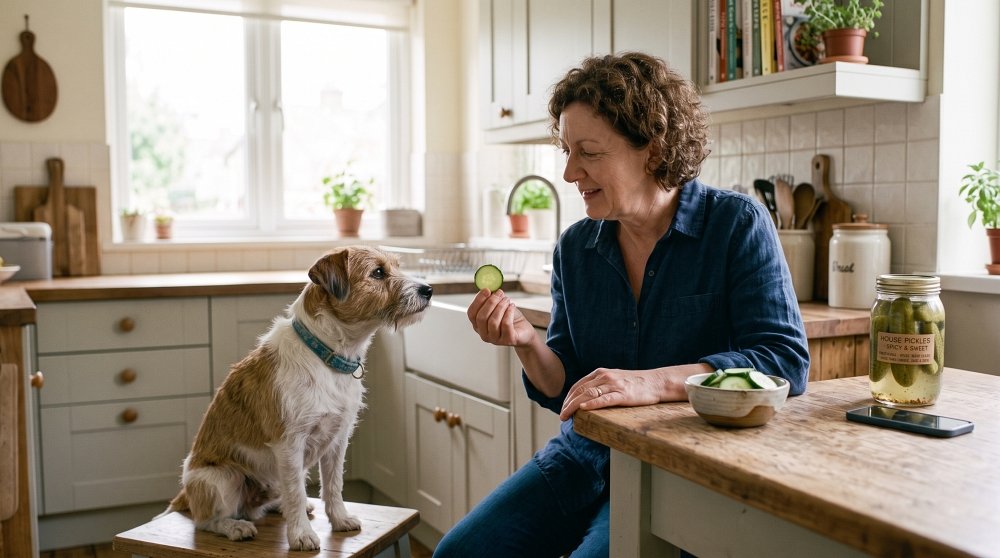
A cucumber on its own is perfectly fine for dogs. It is mostly water, low in calories, and not on any toxic food list. The problem starts once that cucumber goes through the pickling process, because brine, vinegar, salt, and a rotating cast of spices and add-ins get introduced along the way.
According to the American Kennel Club and a PetMD nutrition review, plain pickles are not classified as toxic, but they are also not recommended as a regular snack because of their sodium content and the number of pickle recipes that include ingredients that genuinely are dangerous for dogs.
So, a single bite of a plain dill pickle that fell on the floor is unlikely to be an emergency for a healthy adult dog. A dog raiding the jar, drinking the brine, or eating a bread-and-butter or garlic-heavy variety is a different situation, and that is where this guide is really aimed.
What’s Actually in a Pickle That Worries Vets?
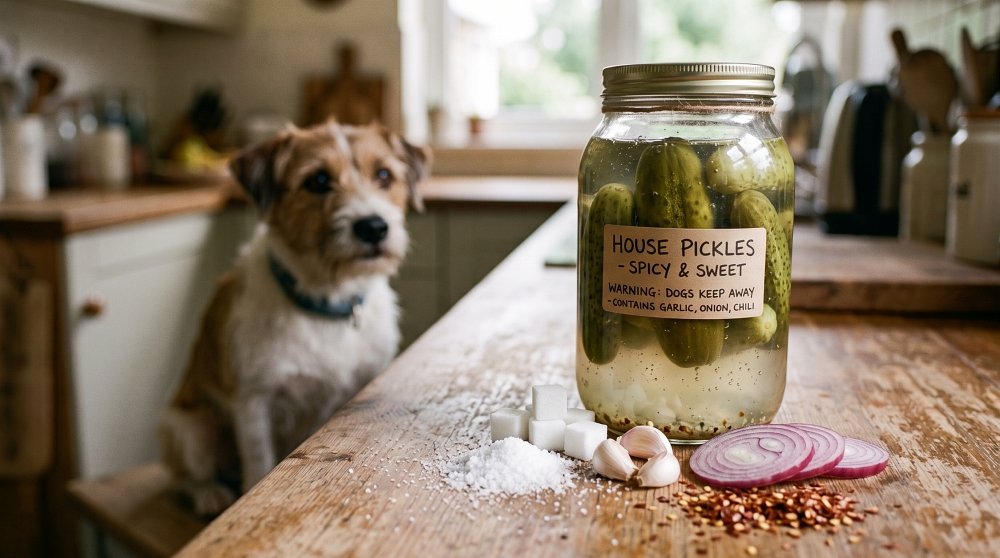
Think of it as three categories worth checking before you let your dog anywhere near a jar: salt, spice mix, and sweetener. If a pickle is heavy in any one of those, it is worth skipping.
Salt
Pickle brine is essentially a saltwater bath, and that salt soaks into the cucumber along with the vinegar and dill. PetMD notes that many veterinary nutritionists suggest keeping a medium-sized dog’s daily sodium intake around 100 mg, and a single pickle spear can eat into that limit fast.
Dogs that get too much salt at once can show excessive thirst, vomiting, diarrhea, or ataxia, which is the medical term for a wobbly, uncoordinated walk that shows up when something is off with balance or the nervous system. In more serious cases, excess sodium can trigger tremors or seizures.
Garlic and Onion
Some pickle recipes, especially bread-and-butter styles or anything labeled “garlic dill,” include actual garlic cloves or onion slices in the jar, not just a trace of flavoring.
According to VCA Animal Hospitals, compounds in garlic and onion can damage a dog’s red blood cells, making the cell membranes fragile enough to rupture. That can lead to anemia, along with symptoms like weakness, a faster heart rate, pale gums, or urine that looks red or rust-colored.
VCA also notes that raw, cooked, dried, and powdered forms can all be harmful, with dried and powdered forms being more concentrated. A stray bite of pickle that touched a garlic clove probably is not cause for panic, but eating a whole jar of garlic-heavy pickles is a genuinely different risk level. Some breeds, including Akitas and Shiba Inus, may be more sensitive to allium toxicity than others.
Spices and Heat
Hot or spicy pickles, the kind made with jalapeños, chili flakes, or a heavy black pepper brine, can irritate a dog’s stomach lining in a way plain pickles usually will not. That often shows up as vomiting, diarrhea, or general digestive upset rather than anything more serious, but it is still an unnecessary risk for a snack with no real nutritional upside.
Added Sugar in Sweet Pickles
Sweet pickle varieties often carry a meaningful amount of added sugar alongside the salt. That is a poor combination for a dog’s weight over time, and it is a real concern for any dog managing diabetes or already working on weight loss.
Xylitol in “Sugar-Free” or Diet Pickles
This one is less common, but it is worth checking for, especially with specialty, “keto,” or “no sugar added” pickle products that may swap sugar for a sugar alcohol.
Xylitol is genuinely dangerous for dogs. The ASPCA explains that it can trigger a sudden insulin release in dogs, causing blood sugar to crash. It can also damage the liver, sometimes severely.
Xylitol is not something you should assume is in every pickle jar, but it is a strong reason to check the label before letting your dog near any sugar-free or diet product.
Why Pickle Juice Is More Dangerous Than the Pickle Itself
This is the part most pickle articles skip, and it is worth understanding rather than just being told to avoid it.
When sodium levels rise in a dog’s bloodstream faster than the body can process it, water gets pulled out of cells and into the blood to balance the concentration. According to the Merck Veterinary Manual’s entry on salt toxicosis, clinical signs in dogs can appear after ingestion of around 2 to 3 grams of salt per kilogram of body weight, with a potentially lethal dose closer to 4 grams per kilogram.
That cellular water shift is also why treatment has to be handled carefully. Vets correct sodium levels gradually, often over several days, because correcting them too quickly can create serious complications.
Brine is where the risk becomes practical, not theoretical. A dog that gulps down a few mouthfuls of leftover pickle juice from a jar or plate is consuming concentrated salt in liquid form, and liquids go down much faster than solid pickles. Never offer pickle juice to a dog, and do not assume it is harmless just because it is “only the liquid.”
Watch for vomiting, diarrhea, weakness, tremors, or seizures if you know or suspect your dog got into pickle brine.
How Different Types of Pickles Compare
| Pickle Type | What’s Usually Added | Risk Level | Main Concern |
|---|---|---|---|
| Plain dill spear | Vinegar, salt, dill, sometimes garlic | Low to moderate | Mostly sodium |
| Bread-and-butter or sweet pickles | Sugar, sometimes onion or garlic | Moderate | Allium exposure plus added sugar |
| Spicy or hot pickles | Chili, jalapeño, pepper, often garlic | Moderate | Digestive irritation plus possible allium exposure |
| Fermented or half-sour pickles | Salt brine, garlic, dill | Moderate to high | High sodium content |
| Sugar-free or diet pickles | Possible sugar alcohols like xylitol | Potentially high | Xylitol risk if present |
My Dog Ate a Pickle. What Should I Do Now?
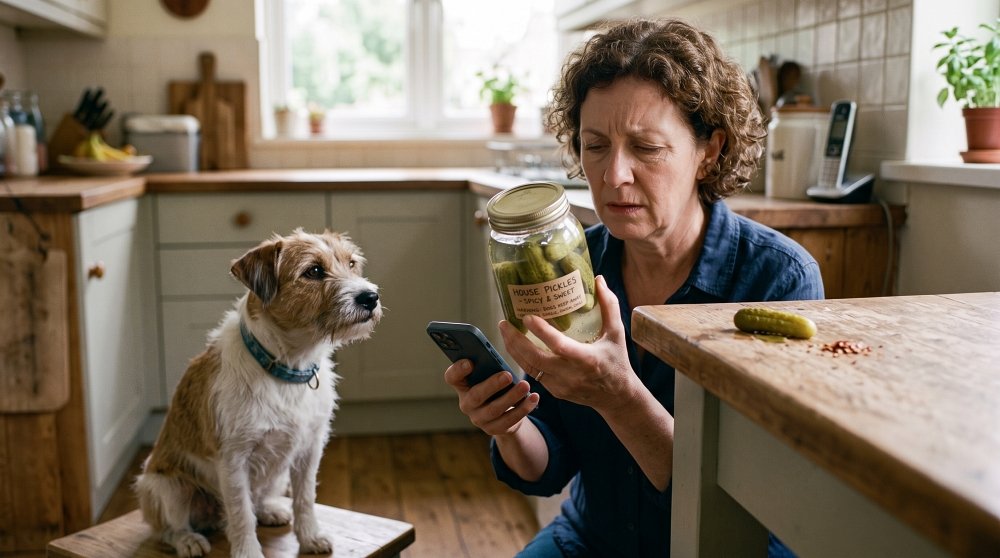
Start by figuring out what your dog actually ate and how much.
- One bite of a plain dill pickle: If there is no visible garlic or onion and your dog is a healthy adult, monitor for the next few hours, offer fresh water, and do not panic. Most dogs handle this without any issue.
- A whole pickle, several pickles, or any amount of brine: Call your vet or the ASPCA Animal Poison Control Center to talk through next steps, especially if your dog is small, a puppy, a senior, or managing a heart, kidney, or diabetes condition. These dogs handle excess sodium and sugar less well.
- A bread-and-butter, garlic, or onion-heavy pickle: Treat this as worth a call to your vet if your dog ate any real quantity. Allium poisoning symptoms can take a day or two to fully show up.
- Anything labeled sugar-free, diet, or keto: Check the ingredient list for xylitol. If it is present, or you cannot tell, contact your vet immediately.
Watch for vomiting or diarrhea that does not resolve within a few hours, lethargy, pale or yellow-tinged gums, unusually dark or red urine, excessive thirst or urination, tremors, weakness, or disorientation.
None of this replaces an actual veterinary exam. If your dog is showing symptoms or you are not sure how much they ate, a real vet who can examine your dog is always the better call than guessing from an article.
Are There Safer Snacks Than Pickles for Dogs?
Plain cucumber is the easy swap. It gives your dog basically the same crunch and hydration a pickle offers, minus the salt, garlic, sugar, and brine.
A light sprinkle of fresh dill on your dog’s regular food is also generally considered fine in small amounts, since it is the pickling process, not the dill itself, that causes most of the concern.
If you are still in the early weeks of dog ownership and building out your mental list of what is safe to share from your plate, it helps to pair that habit with getting the broader basics of settling into life with a new dog right from the start. Food judgment calls like this one come up constantly in those first months.
And if you have a food-motivated breed at home, the kind that will absolutely try to steal a pickle off your plate given the chance, like many Labrador Retrievers tend to be, it is worth being extra deliberate about what ends up within reach on the counter or picnic table.
Final Thoughts: Can Dogs Eat Pickles?
Pickles are not on the same danger tier as chocolate, grapes, or xylitol-loaded gum, but they are also not doing your dog any favors.
The sodium alone is enough reason to keep them out of the regular treat rotation, and depending on the recipe, you might also be dealing with garlic, onion, added sugar, spice, or a sugar substitute that is genuinely risky.
If your dog snags a stray bite of a plain pickle, it is usually not an emergency. If they get into the jar, the brine, or anything sweetened or garlic-heavy, that is worth a call to your vet rather than a wait-and-see approach.
When in doubt, a plain cucumber slice gives your dog the same crunch they are after, without the guesswork.
Click Here to Add SmartPawLife as a Trusted Source Add as a preferred source on Google