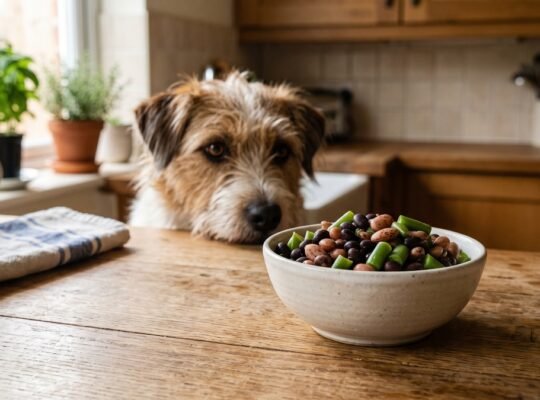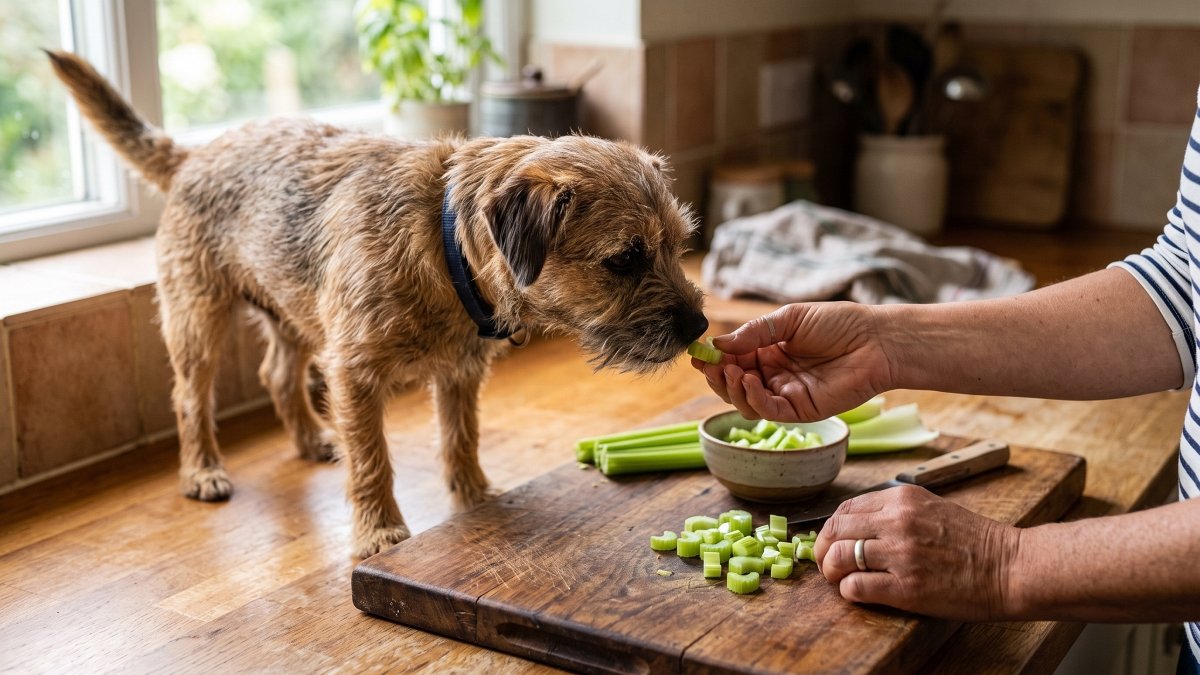
You are prepping a salad, the crisper drawer is open, and your dog is sitting at your feet with that hopeful stare fixed on the celery stalk in your hand. It is fair to pause. Not every human vegetable is safe for dogs, and even the safe ones come with rules worth knowing before you toss one over.
The short answer is yes, dogs can eat celery, and for most healthy dogs, it is one of the gentler vegetable snacks you can offer. But “safe” and “worry-free” are not quite the same thing. Celery brings a real choking risk if it is served the wrong way, a few nutrients worth knowing about, and a couple of situations where it is better left out of the bowl entirely.
This guide walks through what celery actually does for your dog, how much is reasonable, how to prepare it safely, and when to skip it.
Is Celery Safe for Dogs to Eat?
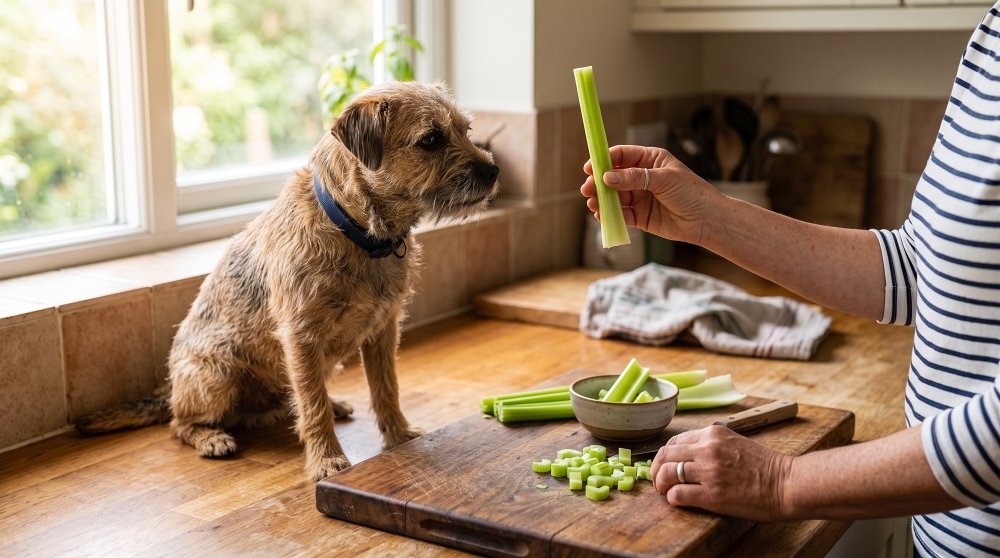
Plain, raw celery is non-toxic to dogs and is generally considered safe in moderation, according to the American Kennel Club. It is not on the ASPCA’s list of foods that are dangerous or toxic to pets, which puts it in a different category from foods like onions, grapes, chocolate, or xylitol-sweetened products.
That said, “safe” means safe in small amounts, prepared properly, as an occasional extra rather than a diet staple. A dog eating a complete and balanced commercial or vet-formulated diet does not need vegetables nutritionally. Celery is a bonus, not a requirement.
What Is Actually in Celery?
Celery is mostly water, around 95 percent by volume, which is part of why it is such a low-calorie snack. A single medium stalk has roughly 6 calories, so it is easy to see why celery shows up in dog weight-management advice.
Beyond water, celery contains:
- Fiber, which supports digestion and can help a dog feel satisfied without adding many calories
- Vitamin A, vitamin C, and vitamin K, the last of which plays a role in normal blood clotting and bone metabolism
- Folate and potassium
- Antioxidant plant compounds, including apigenin and luteolin
None of these turn celery into a superfood for dogs. Think of it as a low-calorie, nutrient-light crunchy treat rather than a meaningful source of nutrition on its own.
Is Celery Good for Dogs?
For most healthy dogs, celery can offer a few practical benefits.
- It is low in calories. Because celery has so few calories, it can be a reasonable substitute for higher-calorie commercial treats when you are working on weight management with your vet.
- It adds a little hydration. The high water content provides a small hydration boost, which can help on a hot day or for a dog that is not an enthusiastic water drinker.
- It may help freshen breath. The AKC notes that celery’s crunchy texture can help freshen a dog’s breath. The mechanical act of chewing may also provide a mild scrubbing effect on the teeth, though celery is not a substitute for brushing, dental chews, or professional dental cleanings.
- It gives dogs a satisfying crunch. For dogs who enjoy chewing, celery offers something crisp without being calorie-dense.
The honest downside is that none of this is essential. If your dog already eats a complete diet and gets appropriate exercise, celery is a nice extra, not a nutritional gap-filler.
Is Celery a Negative-Calorie Food for Dogs?
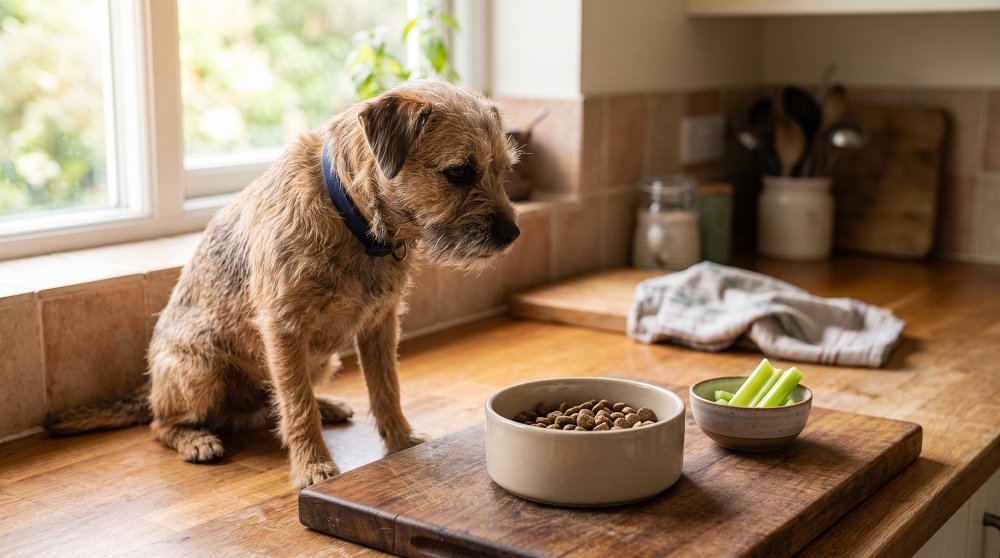
You will sometimes see celery described as a “negative-calorie” food, for humans and pets alike. The idea is that it takes more energy to chew and digest celery than the food itself contains. That is a persistent myth, and it is worth clearing up because it affects how people portion treats.
Digestion does burn some calories. Nutrition scientists call this the thermic effect of food. But it is only a small fraction of what is consumed, nowhere near enough to create a calorie deficit from eating celery.
In practice, celery is simply very low in calories, not calorie-negative. That distinction matters for a dog on a weight-loss plan. Celery can be a smart lower-calorie swap for richer treats, but it still counts toward the day’s total and it is not a metabolic loophole.
What Are the Risks of Feeding Celery to Dogs?
Celery is safe for most dogs, but there are a few risks worth taking seriously, especially if you are about to hand over a whole stalk.
Choking Hazard
Long, fibrous celery stalks can be a choking risk, particularly for small breeds, puppies, and dogs that gulp food instead of chewing it. The stringy fibers that run along the back of the stalk can catch in a dog’s throat.
Always remove the tough strings and cut celery into small, bite-sized pieces before offering it. Supervise the first few times your dog tries it.
Sodium Content
Celery contains a moderate amount of natural sodium compared with many other vegetables. For most healthy dogs, this is not a concern in small servings. But it is worth factoring in if your dog has a heart condition or is on a vet-prescribed sodium-restricted diet.
When in doubt, ask your veterinarian before adding celery to that dog’s routine.
Oxalates and Bladder Stones
Celery contains naturally occurring oxalates, compounds that may matter for dogs with a history of calcium oxalate bladder stones. If your dog has been diagnosed with this type of urinary stone, talk to your vet before offering celery or any other oxalate-containing produce.
VCA Animal Hospitals has a detailed explainer on how these stones form and what dietary factors are involved.
Pesticide Residue
Celery can carry pesticide residue when conventionally grown. Wash it thoroughly before serving, and consider organic celery if this is a treat you plan to offer regularly.
Unsafe Pairings
A lot of owners like to serve celery with a smear of peanut butter. That can be fine, as long as the peanut butter is genuinely free of xylitol.
Xylitol is an artificial sweetener that is highly toxic to dogs and can cause a sudden, dangerous drop in blood sugar even in small amounts. Always check the ingredient label, not just the front of the jar, before pairing celery with anything.
How to Prepare Celery for Dogs
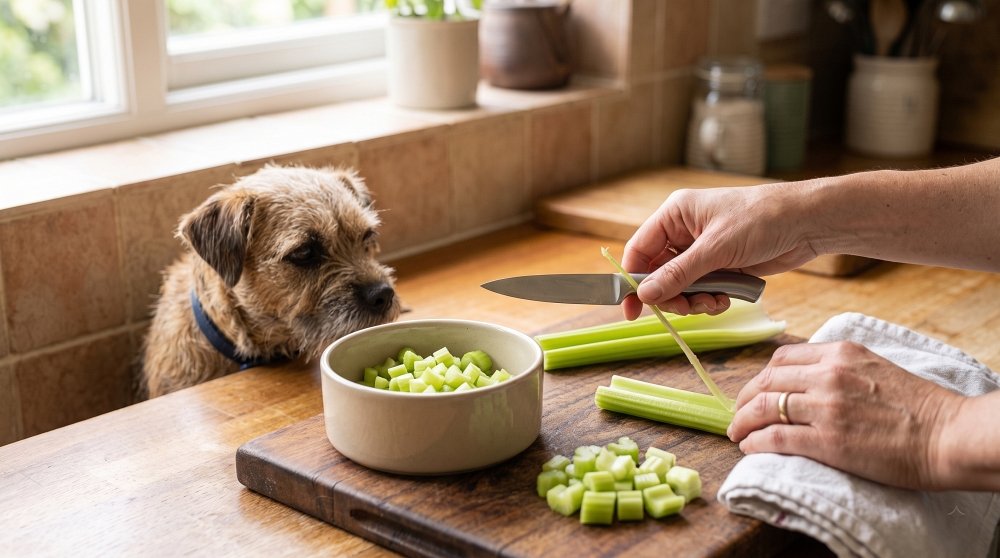
Preparing celery safely is simple, but the details matter.
- Wash it well. Rinse celery thoroughly under running water to reduce pesticide residue and dirt.
- Remove the tough strings. Run a vegetable peeler or knife along the back of the stalk to strip away the fibrous strings that can increase choking risk.
- Cut it small. Small, quarter-inch pieces are appropriate for most dogs. Toy and small breeds need even smaller pieces than medium and large dogs.
- Serve it plain. Skip salt, butter, ranch dressing, seasoning, or dips. Plain raw celery is the version that belongs in a dog’s bowl.
- Introduce it slowly. As with any new food, start with a small piece and watch for signs of an upset stomach before making it a regular treat. AKC Chief Veterinarian Dr. Jerry Klein advises introducing new foods gradually into a dog’s diet for exactly this reason.
How Much Celery Can a Dog Eat?
The general rule for any treat, celery included, is that treats should make up no more than about 10 percent of a dog’s total daily calories.
Because celery is so low in calories, that rule translates roughly like this:
| Dog Size | Approximate Daily Amount |
|---|---|
| Toy or extra small, under 10 lb | 1 to 2 small slices |
| Small, 10 to 25 lb | 2 to 4 slices |
| Medium, 25 to 60 lb | 5 to 6 slices |
| Large, 60 to 100 lb | 7 to 9 slices |
| Giant, over 100 lb | 9 to 10 slices |
These are starting points, not prescriptions. A dog’s ideal treat allowance depends on weight, activity level, health conditions, and any other treats or table scraps already in the day’s total. If you are unsure, your veterinarian can help you work out a more accurate amount based on your dog’s calorie needs.
Can Dogs Eat Celery Leaves?
Yes, celery leaves are not toxic to dogs and do not need to be pulled off before serving. That said, many dogs are not especially interested in them, and leaves may have a slightly stronger flavor than the stalk.
If you offer celery leaves, wash them well and serve only a small amount with the chopped stalk.
Can Dogs Drink Celery Juice?
Celery juice is not the best choice for dogs.
It concentrates the sodium and removes the fiber that makes whole celery a reasonably filling, low-calorie snack. That means there is little upside to offering it, and it is easier to overdo the sodium without the crunch that naturally limits how much a dog eats in one sitting.
Whole, chopped celery is simply the better option.
When Should Dogs Avoid Celery?
A few situations call for extra caution or skipping celery altogether:
- Dogs with a history of calcium oxalate bladder stones, unless your vet says it is okay
- Dogs on a sodium-restricted diet, including many dogs managing heart disease
- Dogs that gulp food or have a known choking history, unless pieces are cut very small and closely supervised
- Puppies just starting solid foods, where any new item should be introduced in tiny amounts under closer watch
None of this is meant to make celery sound risky across the board. It is one of the gentler vegetables you can offer a dog, and most healthy adult dogs handle it without any issue. But if your dog has an existing health condition, it is worth a quick check with your veterinarian before adding something new to their diet.
Final Thoughts
Celery earns its place as a healthy snack for most dogs when it is served the right way: washed, stringed, cut small, plain, and kept to a reasonable portion. It will not replace real nutrition, and it is not the calorie-burning miracle vegetable it is sometimes made out to be. But as a low-calorie, hydrating, satisfying crunch, it is a solid treat to keep in rotation.
If you are building out a broader list of what belongs and what does not belong in your dog’s bowl, celery is a good reminder that even safe human foods usually come with fine print. The same logic applies whether you are weighing whether a splash of pickle brine is worth the sodium or wondering if that ripe tomato slice on your plate is fair game. For a broader rundown of what is genuinely safe versus what is worth skipping, our full collection of human-food safety guides is a good next stop.
When in doubt about any new food, a quick conversation with your vet beats guessing.
Click Here to Add SmartPawLife as a Trusted Source Add as a preferred source on Google