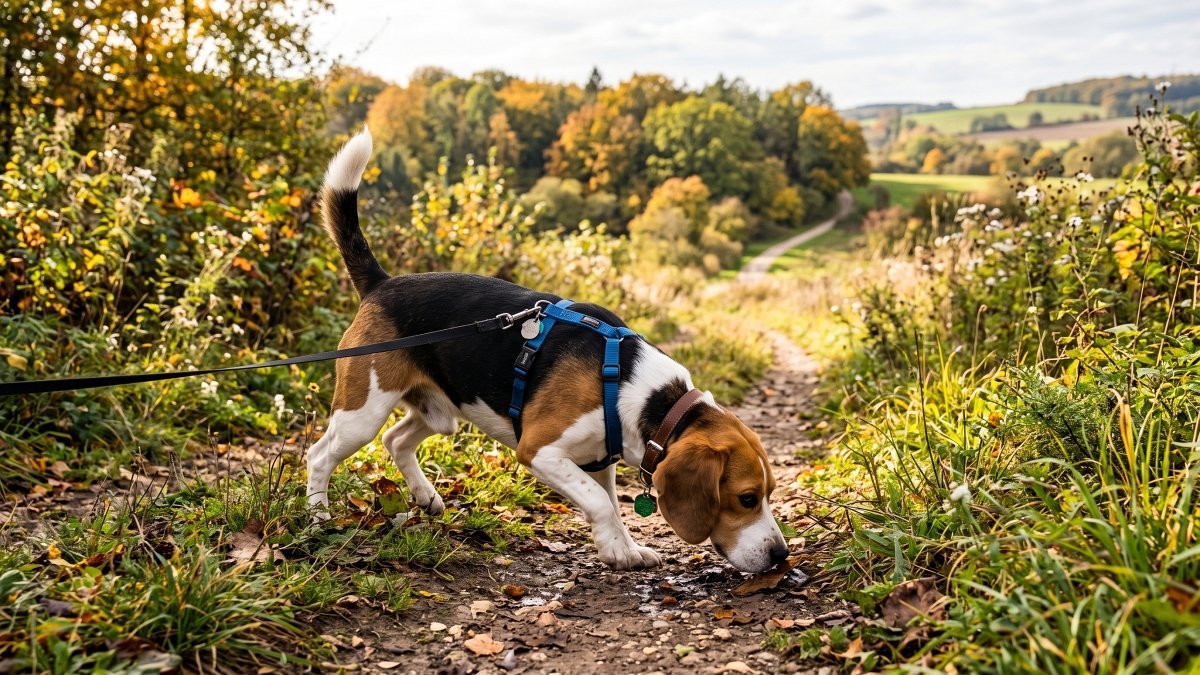
If you have ever seen a small, tricolor dog with its nose glued to the ground, tail wagging, completely ignoring the person calling its name, there is a good chance you were watching a Beagle. It is one of the most recognizable dogs in the world, and also one of the most misunderstood. People fall for the floppy ears and sweet expression, then get caught off guard by the howling, counter-surfing, and selective hearing that come standard with a nose this good.
This guide covers what a Beagle actually looks like, how big they get, how long they typically live, and what day-to-day life with one looks like, from exercise and grooming to the health issues worth watching for. Whether you are considering your first Beagle or trying to understand the one already running your household, this is a practical, honest look at the breed, not just a highlight reel.
Beagle Breed Stats at a Glance
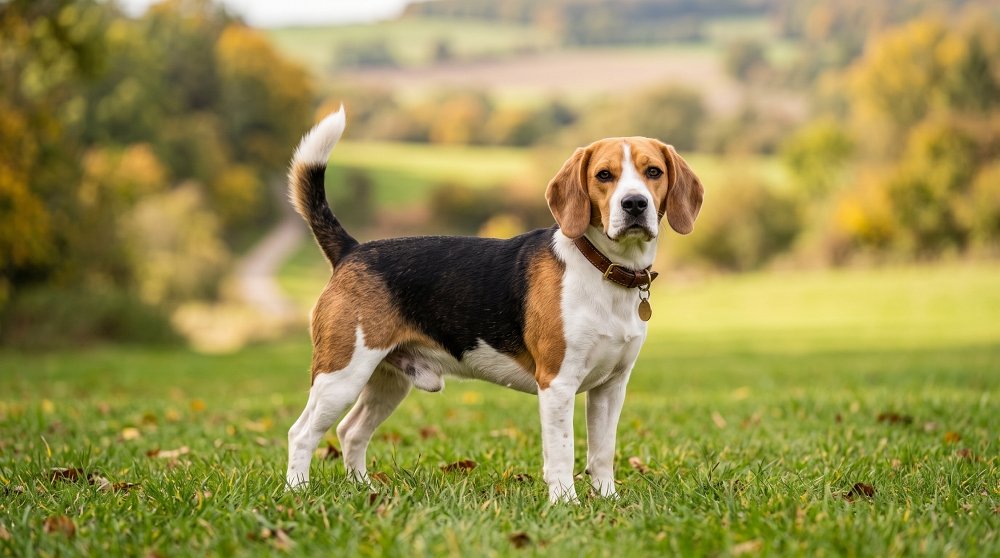
| Trait | Detail |
|---|---|
| Group | Hound Group (AKC) |
| Size | Small to medium |
| Height | 13 to 15 inches at the shoulder. AKC recognizes a 13-inch-and-under variety and a 13-to-15-inch variety |
| Weight | Roughly 18 to 30 pounds, depending on height variety and sex |
| Lifespan | Most sources place it between 12 and 15 years, with some references citing a slightly wider 10 to 15 year range |
| Coat | Short, dense, smooth double coat |
| Colors | Tricolor, red and white, lemon and white, and other recognized hound colors |
| Temperament | Friendly, curious, merry, food-motivated, independent-minded |
| Energy level | High, needs daily physical and mental exercise |
| Good with kids | Generally yes, with supervision as with any breed |
| Good with other dogs | Generally yes, bred to work in packs |
| Grooming needs | Low to moderate, with weekly brushing plus regular ear checks |
| Trainability | Intelligent but independent, can be a patient project |
Sources: American Kennel Club, VCA Animal Hospitals
What Is a Beagle’s Temperament Really Like?
The AKC describes the Beagle as “happy-go-lucky, funny, and, thanks to its pleading expression, cute.” That is a fair summary, but it leaves out some of the texture that makes this breed what it is.
- Sociable to the core: Beagles were bred to hunt in packs alongside other dogs and handlers, which is why most Beagles genuinely enjoy company, both human and canine. A lonely Beagle left alone for long stretches is a Beagle who will find its own entertainment, and you may not like what it chooses.
- Curious and nose-driven: Everything in a Beagle’s world gets processed through smell first. This is not just a quirk. It is the defining trait of the breed and shapes almost every behavior problem owners run into, from wandering off on a trail to ignoring a recall command mid-sniff.
- Merry and vocal: Beagles are known for a distinctive bark, a howl, and a sound unique to scent hounds called a “bay,” which is a long, loud, musical howl used historically to tell hunters the pack had picked up a scent. It is charming in a field and less charming in an apartment at 6 a.m.
- Food-motivated, sometimes to a fault: Beagles have a well-earned reputation for being driven by their stomachs. This makes them highly trainable with the right rewards, but it also makes them prone to counter-surfing, trash-raiding, and weight gain if meals are not managed carefully.
- Stubborn in the way scent hounds are stubborn: This is not defiance for its own sake. A Beagle following an interesting scent is, in that moment, doing exactly what generations of selective breeding wired it to do. Understanding that distinction changes how you train one.
If you are also weighing a more people-focused breed, it is worth comparing this temperament against something like our Golden Retriever breed guide or Labrador Retriever breed guide, both of which tend to be more handler-focused than a Beagle’s independent, nose-first personality.
How Big Do Beagles Get?
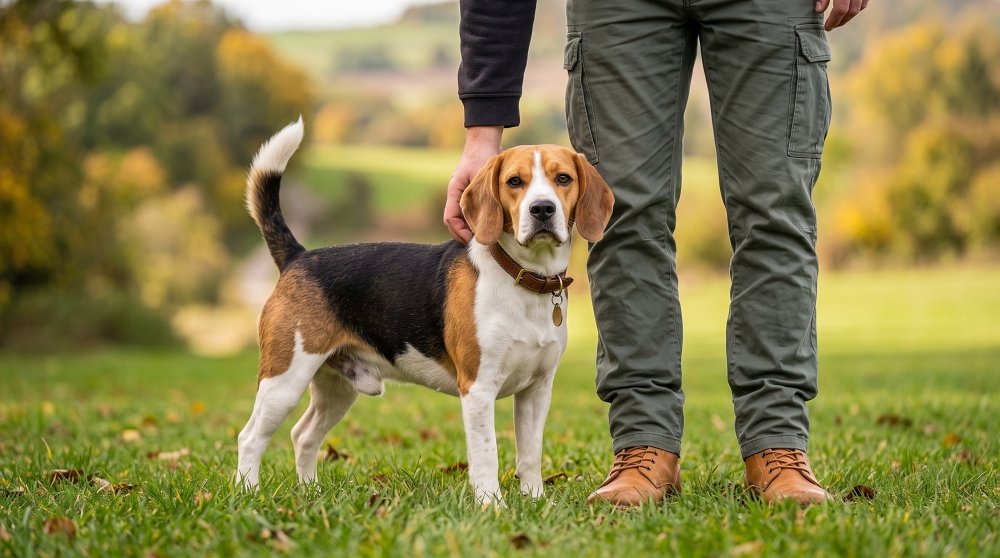
Beagles are a small to medium breed, and the AKC breed standard recognizes two size varieties shown separately at conformation events: dogs 13 inches and under at the shoulder, and dogs standing between 13 and 15 inches. Most pet Beagles fall somewhere in that 13 to 15 inch range as adults.
Weight tends to track with height. According to VCA Animal Hospitals, a healthy adult Beagle typically weighs between 18 and 30 pounds, with the smaller variety usually landing on the lighter end and the taller variety on the heavier end. Most Beagles reach their full adult height by around 12 to 15 months, though they may continue to fill out in muscle and body condition for a few months after that.
One practical note: because Beagles are compact, short-legged dogs with a relatively long body, extra weight is genuinely harder on their joints and spine than it would be on a taller, leaner breed. Keeping a Beagle at a healthy weight is not just about appearance. It directly affects joint and spinal health later in life, which matters again in the health section below.
How Long Do Beagles Live?
A Beagle’s average lifespan generally falls between 12 and 15 years, according to VCA Animal Hospitals, though some veterinary sources cite a slightly broader 10 to 15 year range. That puts Beagles solidly among the longer-lived small to medium breeds, likely helped by the fact that they have not been bred toward extreme physical traits, such as an exaggerated flat-faced skull, that tend to shorten lifespan in some other popular breeds.
The biggest factor an owner actually controls is weight management. Beagles love to eat, they are skilled foragers by nature, and obesity is one of the most common and preventable threats to a Beagle’s long-term health. Keeping portions measured, limiting table scraps, and making sure a Beagle gets daily exercise does more for lifespan than almost anything else on this list.
How Much Exercise Does a Beagle Need?
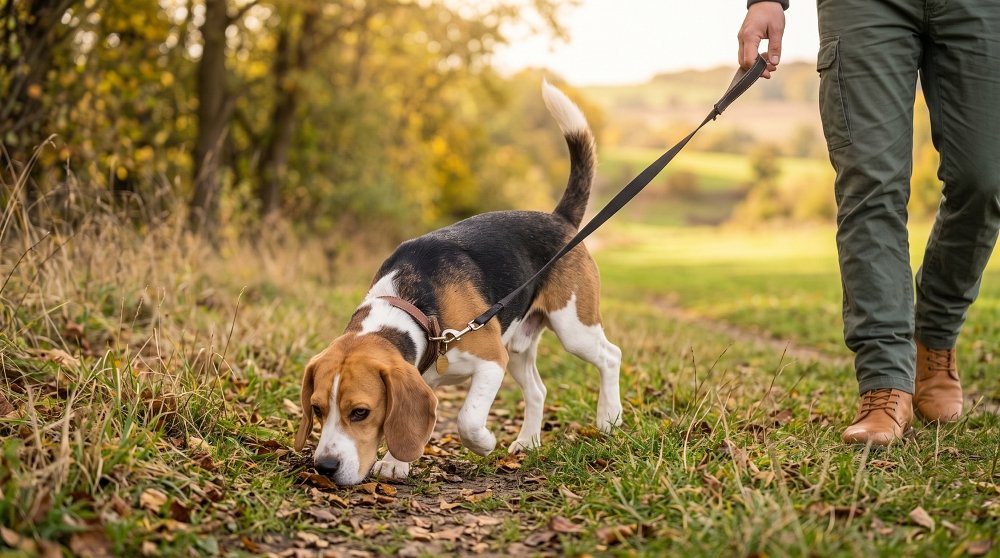
Beagles are active dogs with real stamina. Most veterinary and breed sources recommend at least an hour of exercise a day, split across walks, play, and off-leash time in a securely fenced area when possible. A bored, under-exercised Beagle is far more likely to become destructive, vocal, or determined to escape the yard.
That last point deserves its own mention. Beagles are notorious escape artists, not because they dislike home, but because their nose can pick up a scent trail from well beyond a fence line. Once locked onto that trail, following it becomes the only thing that matters. A secure, Beagle-proofed yard with buried fencing, secured gates, and no gaps a determined nose can squeeze through is close to mandatory. A leash is non-negotiable on walks unless you are in a fully enclosed area.
Mental stimulation matters just as much as physical exercise. Scent work games, snuffle mats, and food puzzle toys tap into the exact instincts that make Beagles who they are, and a tired nose can be just as effective as tired legs at producing a calm dog by evening.
Why Do Beagles Howl So Much?
This is where a Beagle stops being just “a cute small dog” and starts making a lot more sense as a working hound with a specific job history.
Beagles were developed in England as pack-hunting scent hounds, bred to track rabbits and hares by smell, at a distance, often out of sight of the handler. According to the AKC, dogs in general have hundreds of millions of scent-detecting cells in their noses, compared to roughly 5 million in humans, and a Beagle’s nose is built to put that capacity to work constantly.
That is precisely why the breed was chosen for the USDA’s “Beagle Brigade,” a team of detector dogs stationed at major U.S. airports to sniff out agricultural products that could carry pests or disease. Beagles were picked for the job not just for their nose, but because their calm, non-threatening size and friendly temperament let them work comfortably around large crowds of travelers.
That same instinct explains two things owners often struggle with. First, the howling and baying: this is a hardwired communication behavior, originally meant to tell a hunter and the rest of the pack, “I’ve found something.” It is not just a random noise habit.
Second, the recall problem: when a Beagle is following a scent, it is doing the literal job it was bred for, working independently of a handler who might be a field away. That is not stubbornness in the way a person might describe a difficult child. It is a genuine behavioral mechanism shaped by centuries of purposeful breeding, and it is why reliable off-leash recall is one of the harder training goals with this breed, even for experienced owners.
How Do You Train a Beagle?
Beagles are intelligent, but “intelligent” and “eager to please” are not the same thing. A lot of Beagle training frustration comes from expecting the second when you are working with the first.
Positive, reward-based training works best, and Beagles respond especially well to food rewards because of their strong food drive. That same drive means treats need to be genuinely high-value and training sessions need to stay short before a Beagle’s nose wanders somewhere more interesting.
A few practical points help:
- Start recall training early and keep it fun. Practice in low-distraction environments before ever testing it somewhere with competing smells. Never call a Beagle to you for something unpleasant, like ending playtime, or recall itself starts to lose its appeal.
- Keep sessions short. A Beagle’s attention span for repetitive obedience work is genuinely shorter than some other breeds. Five to ten focused minutes usually beats a long, frustrating session for both of you.
- Leash train early and consistently. This matters because the breed tends to follow its nose the second a scent trail crosses its path.
- Use crate training thoughtfully. Crate training can help with house-training and gives a Beagle a den-like space to settle, especially since this is a breed that can develop separation-related stress if left to its own devices too often.
If you are bringing home a Beagle puppy for the first time, our guide on breeds well suited to first-time owners is worth a look. A Beagle’s friendly nature makes it a common recommendation, but its exercise needs and independent streak mean it is not the lowest-maintenance option on that list.
How Do You Groom and Care for a Beagle?
Beagles are relatively low-maintenance in the grooming department compared to longer-coated breeds, but a few things need regular attention.
- Brushing: A weekly brush with a rubber curry brush or grooming mitt manages shedding and keeps the short double coat healthy. Beagles do shed year-round with heavier seasonal shedding, so weekly upkeep genuinely helps.
- Ear care: This is the most important grooming task for the breed. A Beagle’s long, low-hanging ears trap moisture and limit airflow, creating an environment where yeast and bacteria can thrive. Check and gently clean ears once or twice a month, and more often if your Beagle swims or has a history of ear infections.
- Bathing: Every four to six weeks is typically enough unless your Beagle has rolled in something it should not have, which happens more often in this breed than most.
- Nail trims: Trim nails every three to four weeks, or whenever you can hear them clicking on hard flooring.
- Dental care: Regular brushing, ideally a few times a week, and vet-approved dental chews help prevent the periodontal disease that affects most dogs by middle age.
What Health Issues Are Beagles Prone To?
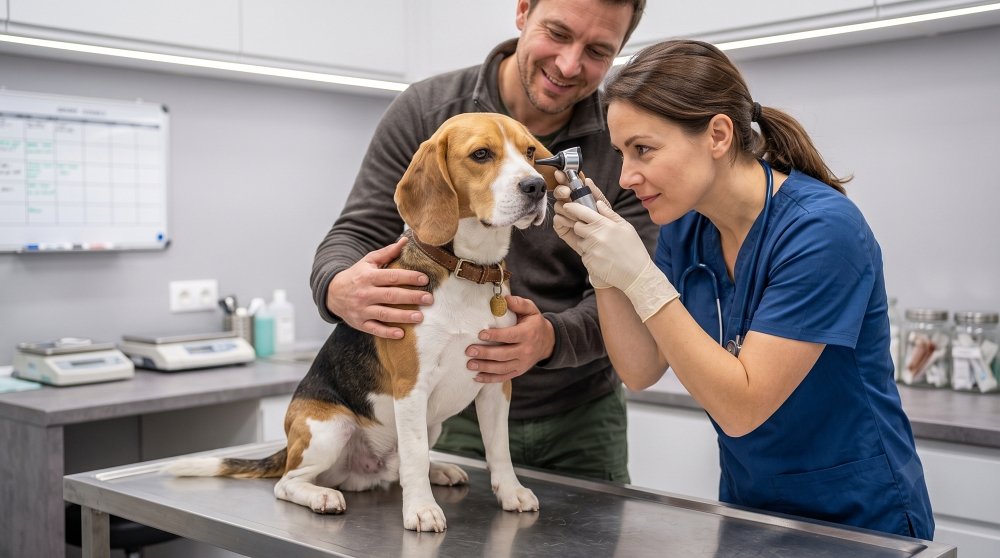
Beagles are generally hardy dogs, but like any purebred breed, they carry some known predispositions. This section is meant to help you recognize warning signs and ask informed questions at the vet, not diagnose anything yourself. Any symptom that concerns you should go to a licensed veterinarian, not a search engine.
Obesity
This is, by a wide margin, one of the most common health issues in the breed. Beagles have hearty appetites and short legs supporting a relatively long body, which means excess weight puts real strain on joints and the spine. Measured meals, limited table scraps, and daily exercise are the main defenses.
Ear Infections
Those long, floppy ears look adorable but trap warm, moist air against the ear canal, creating ideal conditions for infection. Regular cleaning and prompt attention to head-shaking, odor, or scratching at the ears can catch problems early.
Intervertebral Disc Disease
Intervertebral disc disease, or IVDD, is a condition where a spinal disc ruptures or slips out of place, causing pain and, in more serious cases, mobility problems. Keeping a Beagle at a healthy weight and avoiding repeated high-impact jumping on and off furniture can help reduce risk.
Hypothyroidism
An underactive thyroid gland can slow metabolism, contribute to weight gain, and cause coat and skin changes. It is manageable with daily medication once diagnosed, though it requires lifelong treatment.
Epilepsy
Beagles have a known predisposition to idiopathic, or hereditary, epilepsy, which causes recurring seizures. This is a condition that always warrants a vet visit for diagnosis and a treatment plan.
Cherry Eye
Cherry eye happens when the gland behind the third eyelid prolapses and becomes visible as a small red mass in the corner of the eye. It is most common in Beagles under two to three years old and typically requires veterinary treatment, sometimes minor surgery, to correct.
Hip Dysplasia
Hip dysplasia is a malformation of the hip joint that can lead to arthritis over time. It has both a genetic component and an environmental one, which is another reason keeping a Beagle lean during growth matters.
For a full breakdown of breed-specific health concerns, VCA Animal Hospitals’ Beagle health guide is a solid, vet-reviewed resource. Reputable breeders should also be able to show health clearance documentation for hips, thyroid function, and eyes in a Beagle’s parents.
Is a Beagle Right for You?
Beagles make wonderful companions for the right household, but honesty matters more than enthusiasm here.
A Beagle is likely a good fit if you:
- Have time for at least an hour of active exercise a day, most days of the week
- Have a securely fenced yard, or are committed to leash walks because of the breed’s tracking instinct
- Do not mind a vocal dog, including occasional howling or baying
- Live somewhere where noise will not cause constant conflict with neighbors
- Are willing to measure food carefully and resist those pleading Beagle eyes at the dinner table
- Want a dog that generally gets along well with kids and other dogs in a busy household
- You may want to consider a different breed if you:
- Work long hours with no one home to provide company or a midday walk
- Live in a home without secure outdoor space and cannot commit to consistent leash time
- Want a dog that is naturally quiet
- Are looking for a breed with a strong, reliable off-leash recall straight out of the box
- Prefer a lower-energy companion that is content with short walks
None of this makes a Beagle a difficult dog. It makes it a specific dog, one whose quirks make total sense once you understand the nose, the history, and the pack instinct behind them.
Naming Your New Beagle
Beagles tend to suit names with a bit of personality, something that matches their merry, food-driven, always-sniffing energy. If you are still deciding, our complete guide to naming your dog walks through the process step by step.
Our lists of male dog names and female dog names are also good places to start browsing if you want something popular, distinctive, or simply easier to call across the yard.
Final Thoughts on the Beagle Breed
A Beagle is, at its core, a small hunting dog that never stopped hunting, even after moving onto the couch. The howling, wandering nose, and selective hearing during a walk are not random. They all trace back to centuries of purposeful breeding for a dog that could work a scent trail independently and tell the rest of the pack what it found.
Understanding that history does not just make a Beagle easier to love. It makes the dog easier to actually live with. Give a Beagle enough exercise, enough mental stimulation for that nose, consistent positive training, and a genuinely secure yard, and you get one of the most cheerful, food-motivated, people-loving companions in the dog world.
Skip those basics, and you will likely meet the escape artist, the counter-surfer, and the 6 a.m. howler instead. Most Beagle owners will tell you the trade-off is worth it.
Click Here to Add SmartPawLife as a Trusted Source Add as a preferred source on Google