
If a piece of salmon just landed on the kitchen floor and your dog beat you to it, you are probably wondering whether that was actually okay. It is a fair question. Fish shows up in a lot of commercial dog foods, it is a staple in many raw and home-cooked diets, and it has the kind of “healthy human food” reputation that makes people assume it is always fine to share.
The honest answer is more nuanced than that. Some fish are genuinely good for your dog, others can make them seriously ill, and the difference usually comes down to the species, how it is prepared, and how much your dog is actually eating.
This guide walks through which fish are safe for dogs, which ones you should skip entirely, and the two real reasons vets warn against feeding fish raw. It is not only about parasites, though that is a big part of it. We will also cover fish bones, canned fish, fish allergies, and roughly how much fish is reasonable for your dog’s size.
Is Fish Good for Dogs?
Yes, in the right form. Fish is a lean source of protein, and many species are rich in omega-3 fatty acids, including EPA and DHA. These support skin and coat health, joint comfort, and a healthy inflammatory response, according to the American Kennel Club.
That is one reason fish shows up so often as a limited-ingredient or novel-protein option. It can be useful for dogs with sensitivities to more common proteins like chicken, beef, or dairy.
Breeds with thick coats or a tendency toward dry, flaky skin, like the kind you will see in our profile of the ever-popular golden-coated family favorite, may show a noticeably shinier coat after a few weeks of getting a modest amount of omega-3s in their diet. That said, fish is a supplement to a balanced diet, not a replacement for it. It should never make up the majority of what your dog eats.
Which Fish Are Safe for Dogs to Eat?
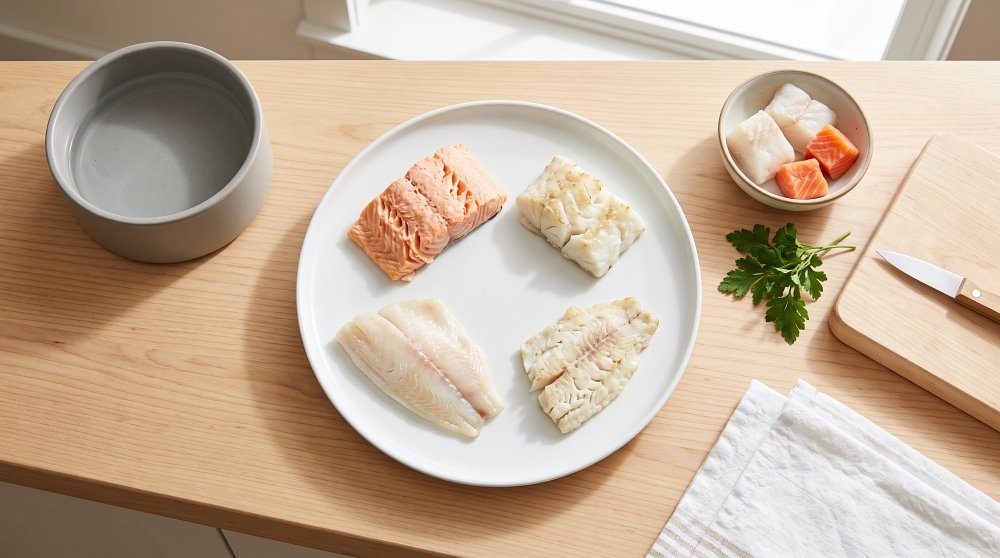
Cooked, boneless, unseasoned fish from a shorter-lived, lower-mercury species is generally the safest choice. The AKC specifically points to these fish as good options for dogs:
| Fish | Notes |
|---|---|
| Salmon | High in omega-3s, but must be fully cooked. Never feed it raw or undercooked. |
| Ocean whitefish | Mild, lower in mercury, and easy to digest. |
| Lake whitefish | Similar to ocean whitefish and generally low in mercury. |
| Herring | Oily and nutrient-dense, but must be cooked because raw herring carries an enzyme risk. |
| Walleye | A freshwater option that is generally lower in mercury. |
| Flounder | Mild white fish and usually lower in mercury. |
| Arctic char | Similar nutrient profile to salmon, often with lower mercury risk. |
| Cod | Lean, mild, and widely available. |
| Tilapia | Safe only when thoroughly cleaned, skinned, deboned, and fully cooked. |
Even with these safer species, the same rules apply every time: cook it plain, remove the bones, and skip the skin, head, and fins unless you have cleaned and prepared them properly yourself.
Also Read: Can Dogs Eat Pickles? What’s Safe and What to Avoid
Which Fish Should Dogs Avoid?
Not all fish belong in a dog’s bowl. The biggest risks come from high-mercury fish, raw or undercooked fish, and fish prepared with salt, oil, garlic, onion, or seasoning.
High-Mercury Fish
Larger, longer-lived fish accumulate mercury in their tissue over time, and that mercury does not break down. The U.S. Food and Drug Administration lists king mackerel, marlin, orange roughy, shark, swordfish, Gulf of Mexico tilefish, and bigeye tuna among the highest-mercury fish to avoid, based on its current fish consumption advisory.
Regular tuna, including albacore and yellowfin, sits in a moderate-mercury tier for people. For dogs, though, the margin is smaller. The AKC is more direct about tuna specifically: fresh tuna carries much higher mercury levels than fish like salmon or flounder, and canned or raw tuna should not become a regular part of a dog’s diet, according to its guidance on tuna.
A small accidental bite of canned tuna is unlikely to cause harm, but it should not become a habit.
Raw or Undercooked Salmon and Trout
This is the fish safety issue many owners have never heard of, and it is serious.
Raw or undercooked salmon, trout, steelhead, and a few related species can carry a fluke infected with the bacteria Neorickettsia helminthoeca. When a dog eats infected raw fish, that organism can cause salmon poisoning disease, according to the Merck Veterinary Manual.
Signs usually appear five to seven days after exposure, though they can take longer. Watch for fever, loss of appetite, vomiting, bloody diarrhea, weight loss, and swollen lymph nodes. Left untreated, salmon poisoning disease can be fatal. Treated early with antibiotics and supportive care, most dogs recover, according to VCA Animal Hospitals.
The parasite is most common in the Pacific Northwest, but the safest rule applies anywhere: never feed your dog raw salmon or raw trout.
Why Mercury Is a Bigger Risk for Dogs Than for People
Mercury guidance for fish is usually written for humans, and that matters. A person weighing 150 pounds and a dog weighing 15 pounds are not affected the same way by the same piece of tuna.
Mercury builds up in tissue over time. The smaller the body, the faster a given amount adds up relative to total body weight. A serving size that counts as an occasional treat for an adult human can represent a much larger relative dose for a dog, especially a small breed.
The AKC lists warning signs of mercury toxicity in dogs as hair loss, anxiety, vision loss, kidney damage, loss of coordination, tremors, and vomiting or diarrhea with blood. If those symptoms appear after your dog eats a high-mercury fish, contact your vet right away.
This is exactly why the safer fish list leans so heavily on shorter-lived, smaller species rather than tuna, swordfish, and other large fish commonly found on a human dinner plate.
Can Dogs Eat Raw Fish?

No. Raw fish is not a safe choice for dogs, and there are two separate reasons. The first is the one most people already know: raw fish can carry parasites and bacteria, including salmonella, listeria, and the fluke linked to salmon poisoning disease.
The second risk is less familiar but still important. Certain raw fish, including herring, smelt, and some carp species, contain an enzyme called thiaminase. According to veterinary nutrition specialists, thiaminase interferes with the body’s ability to absorb thiamine, also known as vitamin B1, which is essential for nerve function.
A dog eating a diet heavy in raw thiaminase-containing fish over time can develop thiamine deficiency. Early signs can include loss of appetite and vomiting. More serious cases can progress to impaired vision, dilated pupils, loss of coordination, tremors, and seizures.
Cooking solves both problems at once. Heat kills harmful parasites and bacteria, and it also deactivates thiaminase. That is why commercial dog foods containing fish are not a concern here, while homemade raw fish diets can be risky.
If your dog is on a raw diet and fish is part of the rotation, discuss it directly with a veterinarian or veterinary nutritionist rather than guessing.
Can Dogs Eat Fish Bones and Fish Skin?
Fish bones are one of the easiest ways a safe fish turns into an emergency. They are small, brittle, and easy to miss. They can lodge in the mouth, throat, stomach, or intestines, and in serious cases, they can perforate the gut wall.
Always debone fish completely before offering it to your dog, no matter how small the bones look.
Fish skin is more of a judgment call. Plain, thoroughly cooked skin from a low-mercury fish is not inherently dangerous in small amounts, but it is high in fat. Fried, seasoned, salted, or oily fish skin, like fish and chips leftovers, is not appropriate for dogs.
The simplest approach is to remove the head, fins, skin, and tail before cooking, the same way you would prepare fish for a young child.
Can Dogs Eat Canned Fish?
Canned salmon can work as an occasional plain treat if it is boneless, skinless, packed in water, and low in sodium, according to the AKC.
Canned tuna is a harder call. Beyond the mercury concern already covered, many canned tuna products are packed in oil or brine and may contain added salt or preservatives that are not meant for a dog’s diet. If you do share a small amount, choose water-packed, no-salt-added tuna and treat it as a rare exception rather than a regular topper.
The same caution around hidden sodium applies elsewhere in the kitchen, too. It is the same reason salty, vinegar-cured foods like pickles need more thought before they end up in a dog’s bowl than most owners assume.
Can Dogs Be Allergic to Fish?
Yes, but true fish allergies in dogs are uncommon compared with reactions to beef, dairy, or chicken. That is actually one reason vets sometimes recommend fish-based diets for dogs with other food sensitivities.
When a fish allergy does happen, signs may include itchy or inflamed skin, recurring ear infections, vomiting, or diarrhea. These symptoms overlap with a lot of other conditions, so do not try to self-diagnose.
If you notice symptoms after introducing fish, your vet can help confirm whether fish is actually the trigger through an elimination diet or other testing. That matters, because cutting fish out too quickly could remove a protein that was helping more than hurting.
How to Prepare Fish Safely for Your Dog

- Cook it plain. Steam, bake, or poach the fish without oil, butter, salt, garlic, onion, sauces, or seasoning. Those additions can cause stomach upset even when the fish itself is fine.
- Cook it all the way through. Fish should reach a safe internal temperature of about 140 to 145°F. It should be fully opaque and flake easily.
- Debone it completely. Run your fingers along the flesh and remove every bone you can find, including the small ones near the fins.
- Remove the skin, head, and fins unless you are confident they are clean, plain, and thoroughly cooked.
- Start small. The first time you offer any new fish, give a small piece and wait a day to watch for loose stool, itching, vomiting, or other signs of an upset stomach.
Also Read: Can Dogs Eat Tomatoes? What’s Safe and What Isn’t
How Much Fish Can a Dog Eat?
As a general guideline, fish and other treats or toppers should make up no more than about 10% of your dog’s daily food intake. The rest should come from a complete and balanced dog food.
For a fish like salmon, once a week is a reasonable frequency for most healthy adult dogs, rather than a daily addition. This matters even more for breeds that gain weight easily and treat every meal like it might be their last. For food-motivated retrievers, the kind we cover in our own breed guide, a few extra bites of fish here and there can add up on the scale over a few months.
Exact amounts depend on your dog’s size, activity level, and existing health conditions. If you want fish to become a regular part of your dog’s diet, check with your vet first.
Final Thoughts
Fish can be a genuinely good addition to a dog’s diet when it is the right species and prepared the right way: cooked through, deboned, unseasoned, and chosen from lower-mercury options like salmon, whitefish, cod, or flounder.
What sends dogs to the emergency vet is usually not fish itself. It is raw fish, high-mercury species like tuna and swordfish fed regularly, fish bones, or oversalted canned varieties.
So whether you are asking “can dogs eat fish?” because you are planning ahead or because your dog just helped himself to something off the counter, the same answer applies: plain, cooked, boneless fish in moderation is safe for most dogs. Anything raw, salty, bony, or high in mercury is a conversation to have with your vet rather than a risk worth taking.
Click Here to Add SmartPawLife as a Trusted Source Add as a preferred source on Google