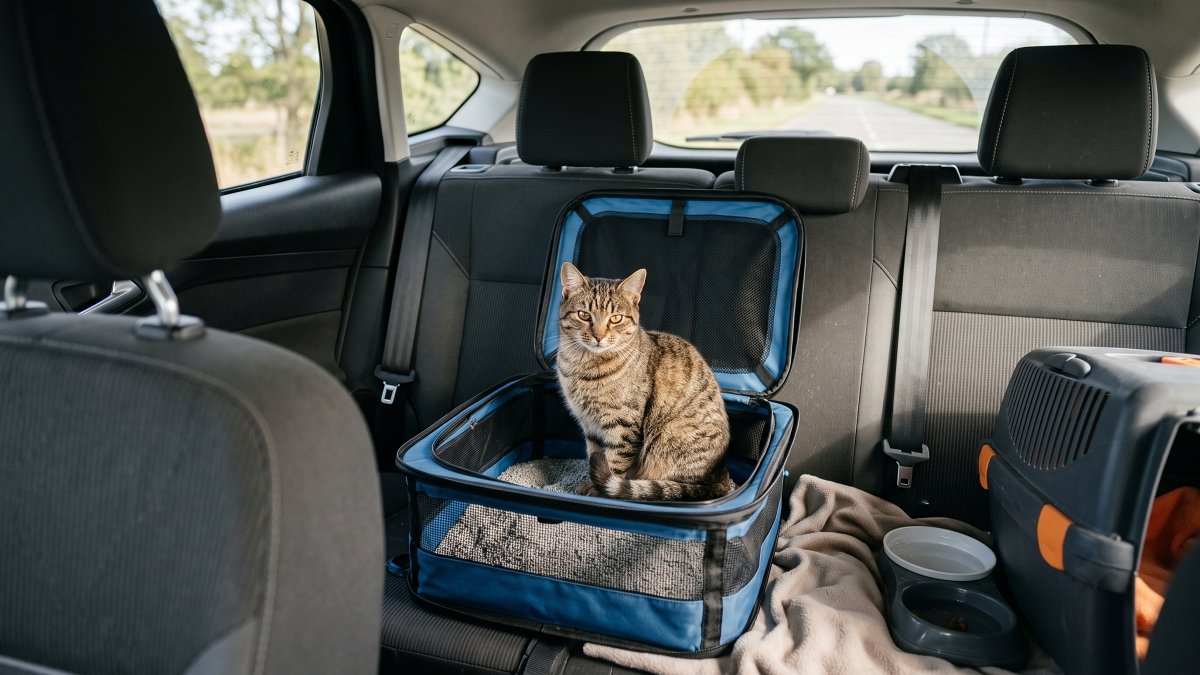
You’ve packed the carrier, the food, and the favorite blanket that smells like home. Then it hits you: where is your cat actually going to go to the bathroom for the next three days?
Unlike dogs, cats cannot just be walked to a patch of grass at a rest stop. Their whole bathroom routine is built around a specific box, a specific litter, and a specific quiet corner of your house, and none of that travels with you automatically.
This is one of the most overlooked parts of cat travel planning, and it is also one of the most important. A cat that will not use a litter box away from home can end up holding urine for dangerously long stretches, developing stress-related elimination issues, or having accidents in the carrier that make an already stressful trip worse for both of you.
This guide walks through why cats struggle with litter boxes on the road, how to set one up in a car, a hotel room, or on a flight, and what to do if your cat simply refuses to go.
Why Do Cats Struggle to Use a Litter Box While Traveling?
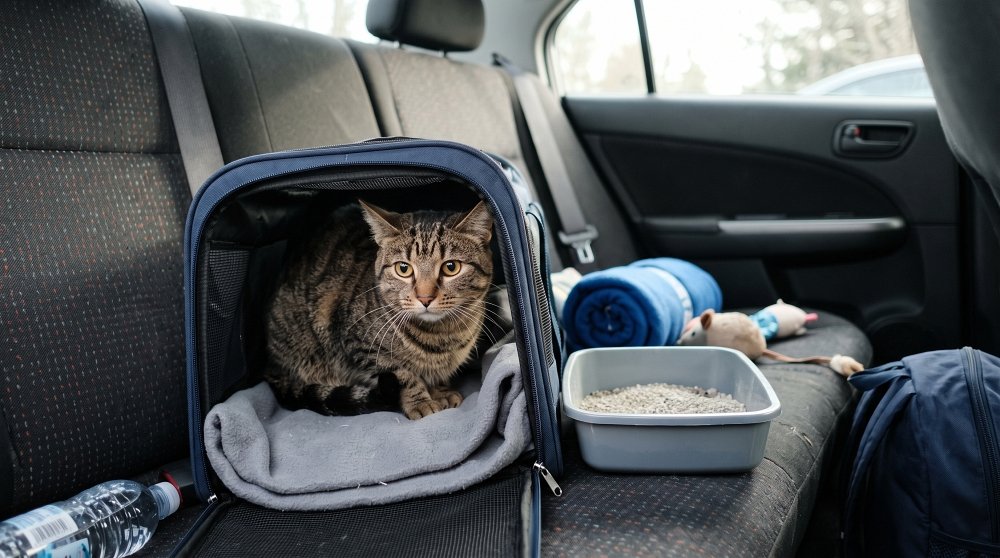
Cats are far more particular about where and how they eliminate than most owners realize, and it is not stubbornness. According to the Cornell Feline Health Center, most cats prefer simple litter boxes with unscented, fine-textured litter, and they need a clean box kept away from food and water.
Travel disrupts nearly every part of that routine at once: new smells, new sounds, a moving vehicle, unfamiliar litter box placement, and a box that may look and feel nothing like the one at home.
That is why many cats simply hold it during a car ride. As behavior experts at Preventive Vet explain, cats do not like to eliminate when they feel unsafe, and they often wait until they reach a calmer destination before using a box at all.
A little holding for a few hours is not unusual. What matters is the outside limit. If your cat has not urinated in about 24 hours, call a veterinarian. Prolonged holding can point to a urinary blockage, a genuine emergency that is more common in male cats and needs same-day veterinary attention rather than a wait-and-see approach.
If you are still weighing whether your cat should live a strictly indoor lifestyle, it is worth reading our guide on indoor vs outdoor cats for first-time owners. Indoor cats in particular tend to be more tied to a single, consistent litter routine and can react more strongly when that routine changes on a trip.
How Should You Prepare Your Cat’s Litter Box Before a Trip?
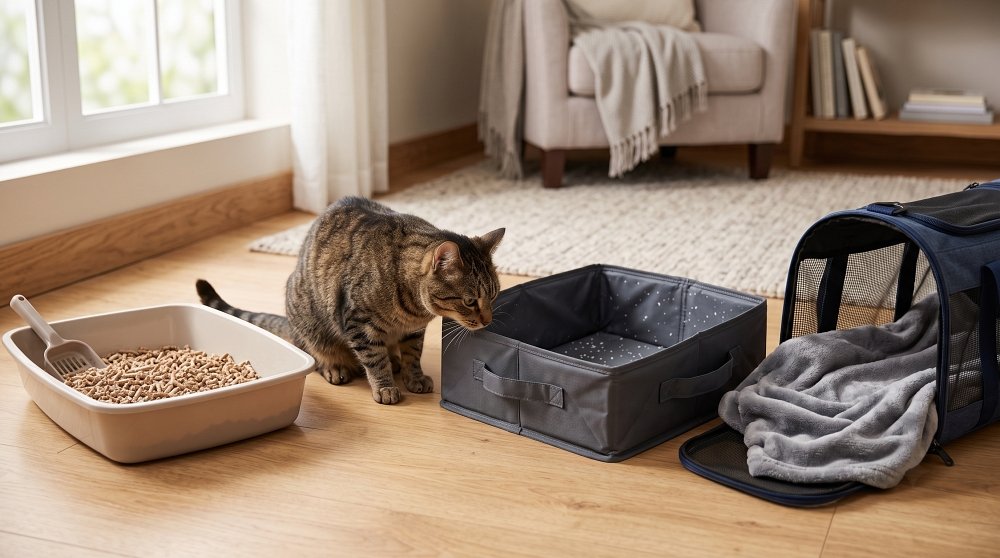
The single biggest factor in a smooth travel litter box experience is how early you start. Cats generalize slowly, so the more familiar the setup feels by the time you leave, the less likely you are to deal with refusals mid-trip.
1. Introduce the Travel Litter Box Weeks in Advance
Buy the collapsible or travel-sized litter box you plan to use and set it up next to the regular one at home for two to three weeks before departure. Let your cat discover it on their own terms rather than placing them inside it.
This turns an unfamiliar object into a familiar one before it ever has to work while surrounded by strange smells.
2. Bring Litter From Home
Pack enough of your cat’s usual litter for the entire trip, or close to it. Cats are sensitive to texture and scent, and a sudden switch to whatever is available at a gas station can be the reason a cat refuses the box entirely.
If you truly need to switch brands mid-trip, do it gradually by mixing the new litter in with the old.
3. Practice Short Carrier and Car Rides
If your cat’s only association with the car is a trip to the vet, start taking short, low-stress drives around the block that end back at home, not at the clinic. Pair these with treats or a favorite toy.
This builds tolerance for the motion and confinement that make elimination harder for cats to relax into.
4. Consider a Calming Pheromone Product
Synthetic feline facial pheromone sprays, such as Feliway, are designed to mimic the scent cats leave when marking a space as safe. Applying them to a blanket in the carrier or near the travel litter box beforehand may help reduce anxiety enough for your cat to actually use it.
These products work gradually rather than instantly, so apply them well before travel day rather than right before you leave.
What Is the Best Litter Box Setup for Car Travel?
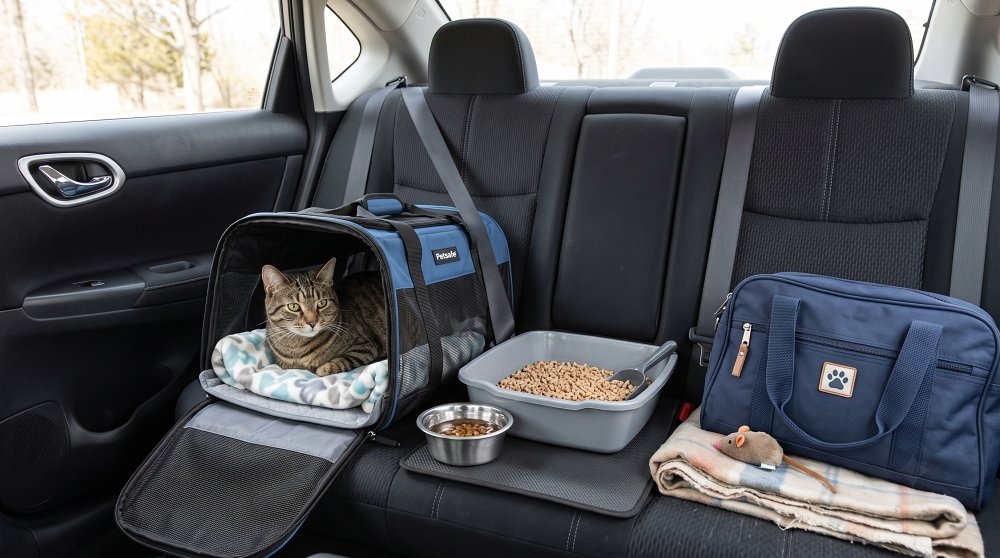
For most road trips, a full-sized litter box is not practical inside a moving car, but you still need a workable option for rest stops and longer legs of the drive.
- Use a low-profile travel litter box or a plastic dishpan. Either option can fit inside a larger carrier or crate and gives your cat a familiar shape and smell without taking up the whole back seat.
- Line the carrier with absorbent pee pads underneath the bedding. Accidents happen even with good prep, and pads make cleanup far less disruptive to the rest of your trip.
- Skip a heavy breakfast on travel day. Many travel-care guides recommend avoiding a heavy meal right before travel to reduce nausea and vomiting. You can offer food again once you have stopped for the day.
- Offer water at rest stops, and bring water from home if possible. Different mineral content in tap water from region to region can upset a sensitive stomach on top of everything else that is already unfamiliar.
- Keep your cat secured in the carrier while the car is moving. An unrestrained cat can startle at highway noise and interfere with driving, so the carrier should stay buckled in, not loose on a seat.
At actual stops, resist the urge to let your cat out of the carrier to “stretch.” Cats can wriggle out of even a well-fitted harness when startled, and a scared cat loose in a parking lot is one of the more common ways pets go missing during travel.
How Do You Set Up a Cat Litter Box in a Hotel Room?
Once you have arrived somewhere you will be staying for more than a night, switch back to a full-sized litter box if you can manage the space. Place it in a quiet corner away from the room’s air vents and door, and separate from any food and water bowls.
That setup mirrors the same “quiet, clean, accessible” formula Cornell recommends for home litter box placement.
If you are traveling with more than one cat, the general guidance for litter box numbers still applies: one box per cat, plus one extra. It matters even more in a hotel room than at home, since unfamiliar surroundings already raise the odds that a cat will avoid sharing a single box with a housemate.
A collapsible litter pen with a lid that folds flat for packing can make it easier to bring a genuinely usable box along instead of squeezing by with something too small.
What About Litter Boxes During Flights?
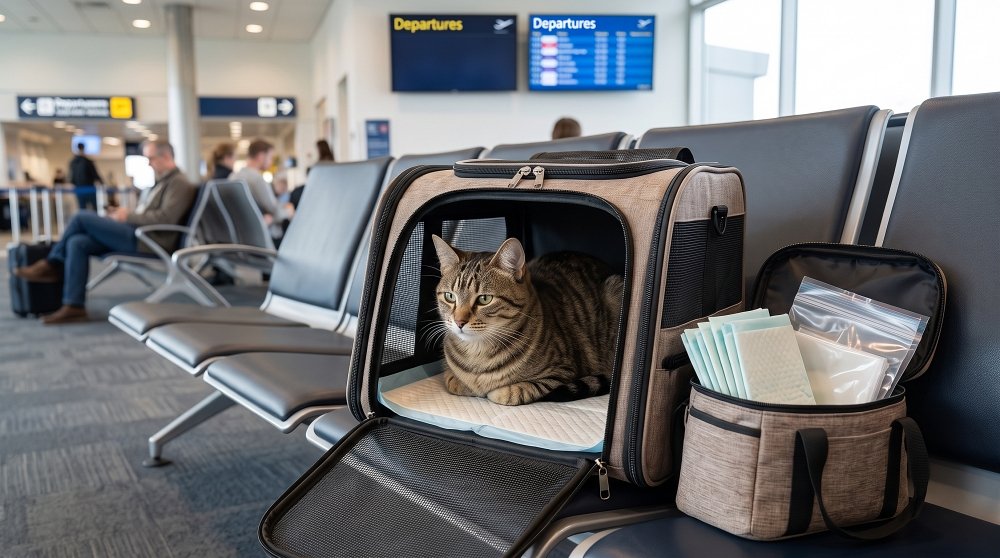
Airlines do not allow a litter box inside the cabin, and most in-cabin carriers are too small for one anyway. The realistic plan for air travel is different from car or hotel travel.
Line the carrier with absorbent pads in case of an accident during the flight, and pack a spare set along with sealable bags for cleanup.
Avoid a full meal in the hours before a flight, similar to car travel, to lower the odds of an upset stomach at 30,000 feet.
Use an airport pet relief area before security if your cat is comfortable on a harness. Many cats are too stressed in a busy airport for this to go smoothly, so do not force it if your cat is clearly panicking.
Plan for the first real litter box opportunity to be your destination, and set that box up as soon as you arrive rather than after you have unpacked everything else.
Most cats can hold their bladder for a typical domestic flight, but always check with your veterinarian before flying if your cat has a history of urinary issues, kidney disease, or is a senior cat. Those conditions change how long is genuinely safe to wait.
What If Your Cat Refuses to Use the Litter Box While Traveling?
If your cat still will not go after a reasonable window, generally with 24 hours as the outer edge for urination, work through this troubleshooting list before assuming it is just travel stress.
- Check the litter itself. Is it the same brand and texture as home? A cat with a strong substrate preference, meaning a preferred digging material, may refuse unfamiliar litter outright even when everything else is right.
- Check the location. Is the box near a loud air conditioner, a hotel room door, or a pile of luggage? Cats want privacy and an escape route, not a box wedged into a high-traffic corner.
- Check for a physical cause. Straining, frequent trips to the box with little output, crying while trying to go, or blood in the urine are not stress symptoms to wait out. These need a same-day call to a veterinarian, or an emergency clinic if you are already traveling. Preventive Vet and PetMD both describe urinary blockage as a life-threatening emergency that needs immediate care.
- Give it a little more time if there are no danger signs. Some cats need 12 to 24 hours in a new environment before they will use a box at all. That can be normal on its own, as long as your cat is not straining, crying, acting painful, vomiting, or showing other concerning symptoms.
A simple framework worth keeping in mind for the whole trip is the three C’s: consistency, comfort, and cleanliness.
Consistency means the same litter, same box style, and same general location relative to food and rest areas. Comfort means quiet, private, and away from noise or foot traffic. Cleanliness means scooping at every opportunity, since cats are far less likely to use a box that already smells dirty. Most travel litter box problems trace back to one of these three being missing.
Cat Travel Litter Box Checklist
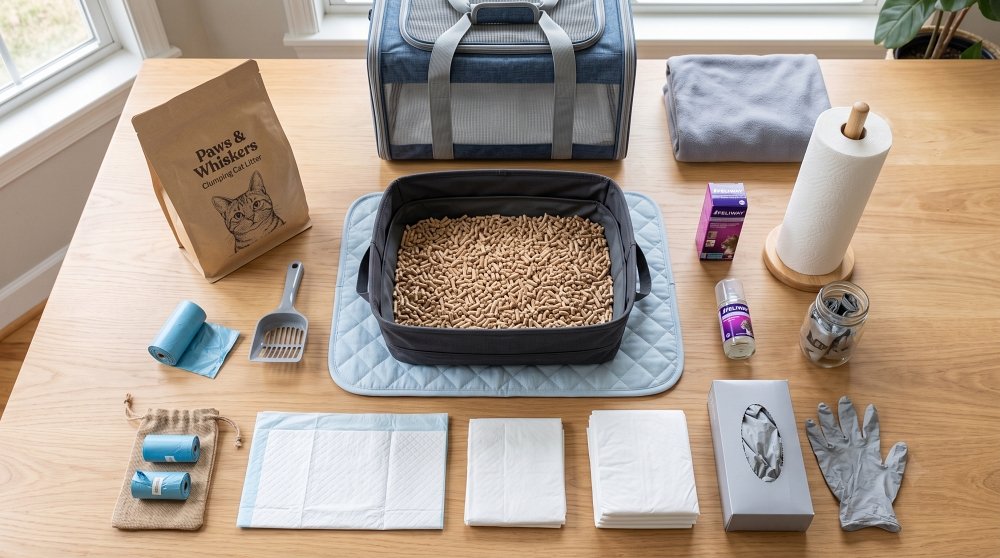
- Travel or collapsible litter box, introduced at home weeks before the trip
- Litter from home, enough for the full trip or most of it
- Small scoop and sealable bags for waste
- Absorbent pee pads for the carrier and car seat
- Disposable gloves and paper towels for cleanup
- Pheromone spray or wipes, applied ahead of time, not last minute
- Your vet’s phone number
- Address and contact details for a nearby emergency clinic at your destination
Final Thoughts on Cat Travel Litter Boxes
A cat that will not use the litter box on a trip is not being difficult. They are responding to a routine that has been pulled out from under them all at once.
The fix is not one clever trick. It is stacking small, familiar details back into place as quickly as possible after every change of location: the same litter, the same box shape, a quiet corner, and a clean setup your cat can trust.
Start the prep weeks before you leave rather than the night before, watch that 24-hour window for urination, and do not hesitate to call a vet if something looks physically wrong rather than just unfamiliar. Get those pieces right, and most cats settle into a travel litter box routine faster than their owners expect.
Click Here to Add SmartPawLife as a Trusted Source Add as a preferred source on Google