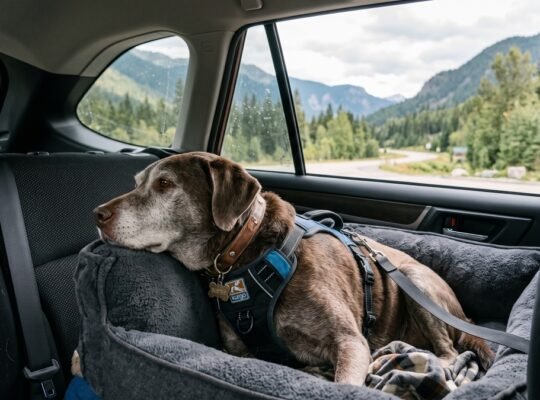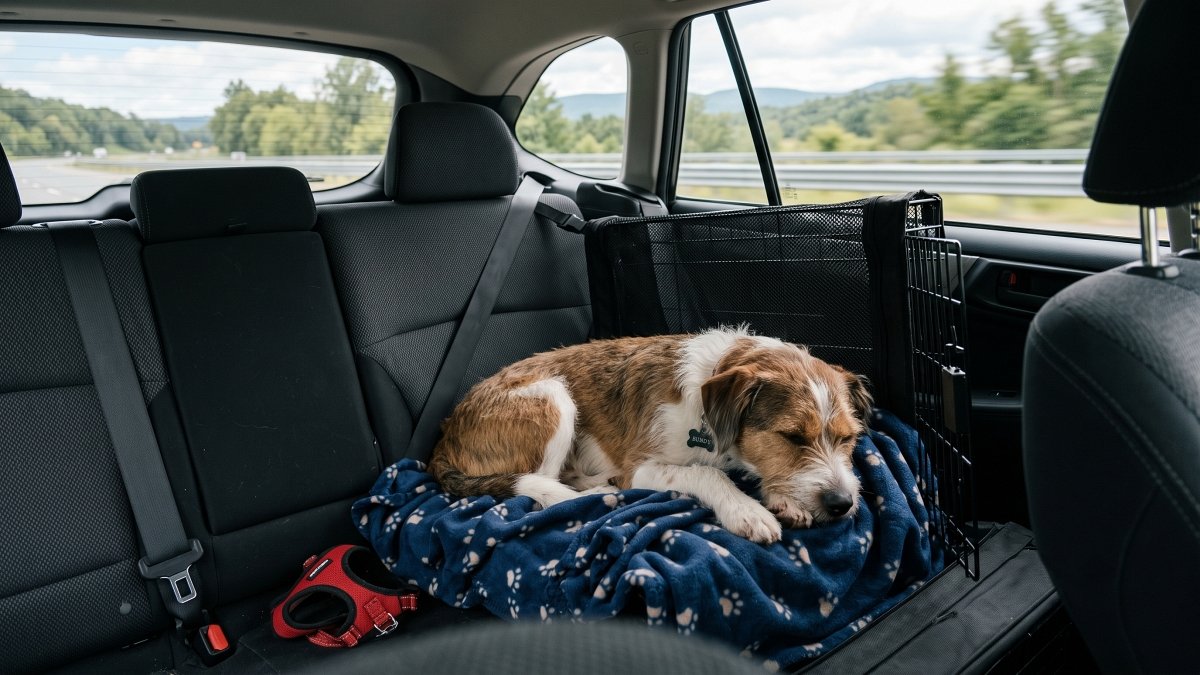
Travelling with an anxious rescue dog can feel like a lot. Your dog may already be carrying stress from a shelter stay, a transport van, or a past home you know little about. So when the car door opens or the carrier comes out, what looks like “just a trip” to you can feel like one more big, scary change to them.
The good news is that travel anxiety is very workable with the right preparation. This guide walks you through when your rescue is ready to travel, how to build calm associations with the car and crate before the big day, what to do during the journey itself, and when it makes sense to talk to your vet about extra support. Whether you’re planning a short weekend drive or a longer trip, you’ll find practical steps you can start using today.
Why Do Rescue Dogs Get So Anxious About Travel?
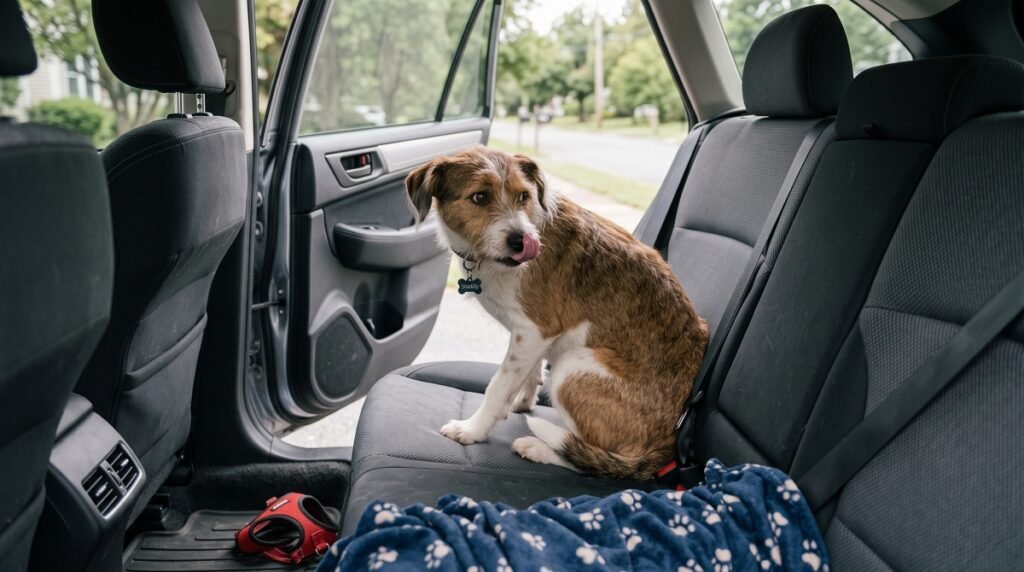
Many rescue dogs have a travel history that was anything but pleasant. For some, the last vehicle ride ended at a shelter. Others were moved between fosters, transported long distances, or picked up as strays. A dog doesn’t need to “remember” a specific event to have learned that cars and crates predict upheaval.
Common reasons rescue dogs struggle with travel include:
- Unknown history: You often don’t know what your dog has lived through, so triggers can be a surprise.
- Few positive experiences: A dog who only rides in a car to go somewhere stressful has no “good” car memories to balance the bad ones.
- Motion sickness: Nausea during a ride can quickly turn into anxiety about the next one. VCA Animal Hospitals notes that dogs can have motion sickness and anxiety at the same time, with nausea feeding anticipatory fear.
- A still-settling nervous system: If you adopted recently, your dog may still be decompressing from shelter life.
Signs your dog is stressed during travel
Anxiety doesn’t always look like shaking or howling. Watch for these quieter signals too:
- Lip licking, yawning, or panting when it isn’t hot
- Drooling or vomiting
- Pinned-back ears, tucked tail, or a lowered body
- Refusing treats they’d normally love
- Pacing, whining, or trying to escape the crate
- “Freezing” and going completely still
Food refusal is a particularly useful clue. A dog who won’t take a favourite treat is usually too stressed to learn anything in that moment, which tells you to slow down.
When Is Your Rescue Dog Ready to Travel?
This is the question most guides skip, and it matters. Many shelters use a loose framework called the 3-3-3 guideline: roughly three days for a new dog to decompress, three weeks to start learning the routine, and three months to feel truly at home. The San Francisco SPCA describes the first few days as a time for a calm, quiet environment, when dogs may hide or skip meals.
That said, it’s a guide, not a deadline. Trainer Pat Miller points out in Whole Dog Journal that some dogs take far longer to settle, and a secure bond can take much more than three months to form. The better question is: “Which stage is my dog in right now?”
As a practical rule of thumb, try to postpone non-essential trips if your dog:
- Still hides for most of the day or isn’t eating regularly
- Startles at everyday household sounds
- Hasn’t yet formed a bond with you (they don’t seek you out for comfort)
- Hasn’t had a vet check since adoption
If the trip can’t wait (a move, a family emergency, a vet referral), that’s okay. Focus on management and comfort rather than training, and keep everything as predictable as you can.
The Hidden Problem: Trigger Stacking
Here’s the concept that changes how you plan a trip with an anxious rescue. Trigger stacking happens when a dog faces several stressors close together, such as a new harness, a loud parking lot, a stranger at the fuel stop, and a barking dog at the rest area. Each one alone might be manageable. Stacked together, they can push your dog past their limit, so a tiny trigger causes a big reaction.
The American Kennel Club explains that stress hormones like cortisol take time to drop afterwards, and some dogs carry the effects for days. That’s why a rescue dog may seem “fine” in the car but snap or melt down that evening at the hotel.
What this means for your trip:
- Don’t bundle new experiences. Avoid introducing a new crate, a new harness, and a new destination all in the same week.
- Plan quiet days before and after travel. Skip the dog park, visitors, and busy walks for a day or two on either side.
- Choose calm stops. A quiet corner of a rest area beats the busy entrance by the food court.
- Budget recovery time at your destination. Let your dog sniff, rest, and settle before introducing new people or pets.
How to Prepare Your Rescue Dog for Travel (Before the Trip)
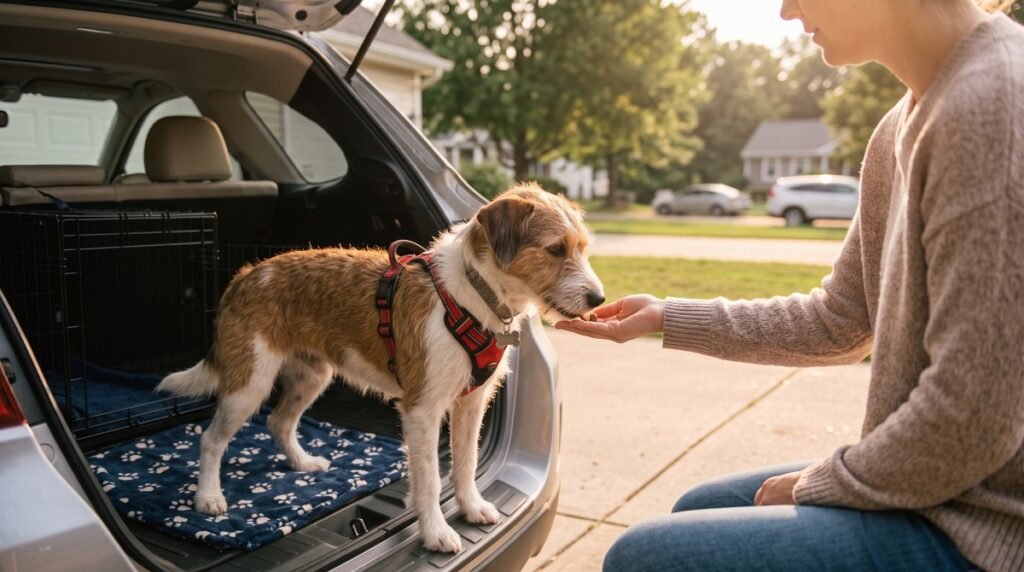
The real work happens in the weeks before you leave. The method below uses desensitization (introducing a trigger in tiny, manageable doses) and counterconditioning (pairing that trigger with something your dog loves so their emotional response changes). It’s the same approach recommended by VCA’s veterinary behavior team.
1. Teach a “settle on a mat” behaviour at home
Pick a mat or towel and reward your dog for lying on it calmly in a quiet room. Over time, the mat becomes a portable “safe spot” you can bring into the car, the hotel, or a relative’s home. Wash it rarely so it keeps the familiar smell.
2. Make the crate or carrier a good place
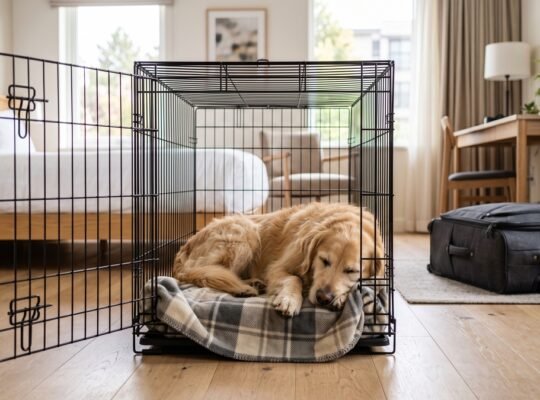
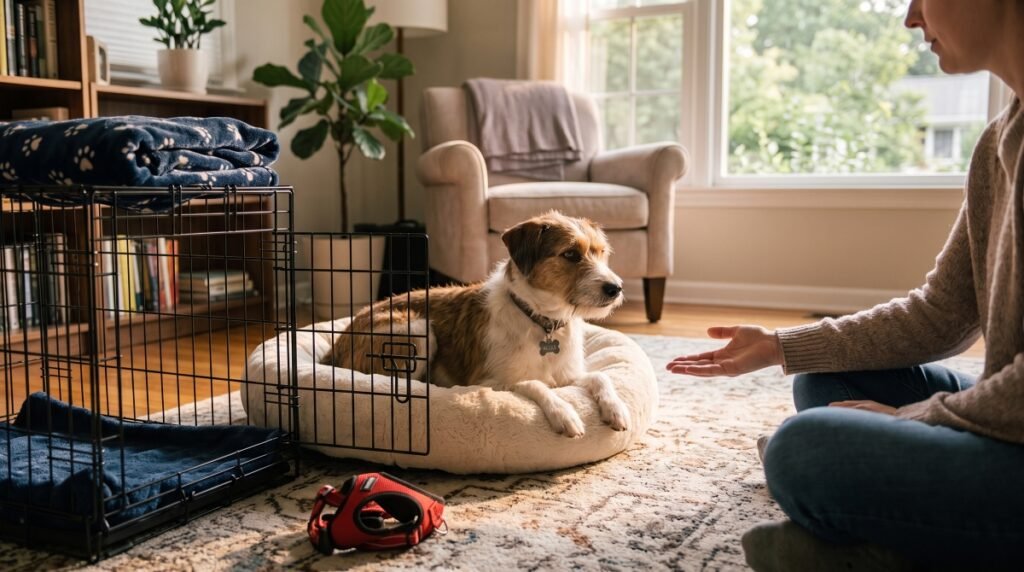
Leave the crate open in your living room with a comfy bed inside. Drop treats in it randomly throughout the day. Feed meals near it, then inside it. Only close the door once your dog is choosing to rest in there, and open it again before they get worried.
3. Break the car into tiny steps
Most dogs don’t fear “the car” as one thing. They fear pieces of it. Work through these one at a time, moving forward only when your dog is relaxed and taking treats:
- Walking near the parked car
- Getting in (or being lifted in) while the car is off, then getting straight back out
- Sitting in the car with the doors open, sharing a chew
- Doors closed, engine off
- Engine on, not moving
- Rolling to the end of the driveway and back
- A one-to-two minute drive around the block
- A short drive to somewhere fun, like a quiet park
If your dog shows stress at any stage, end the session calmly and go back a step next time. Rushing is the most common reason this process fails.
4. Make car rides predict good things
If every ride ends at the vet or groomer, your dog will learn to dread the car. Mix in plenty of trips that end with a sniffy walk, a favourite game, or a snack. The goal is that the car becomes background noise, not a warning sign.
5. Schedule a vet visit before any long trip
Book a check-up a few weeks ahead so there’s time to act on advice. This is the moment to talk about motion sickness, anxiety medication, vaccination status, and any travel paperwork. If your dog tends to get queasy, we’ve also covered some gentle, drug-free ways to ease car sickness you can try alongside your vet’s advice.
Choosing Safe, Calming Travel Gear
For anxious dogs, gear affects safety and comfort at the same time. A dog who slides around the back seat feels less secure than one who’s snug and supported.
| Gear | Why it helps an anxious rescue | Watch out for |
|---|---|---|
| Crash-tested crate or carrier | A covered, den-like space can feel safer, and it protects your dog in a sudden stop | Must be sized so your dog can stand, turn, and lie down |
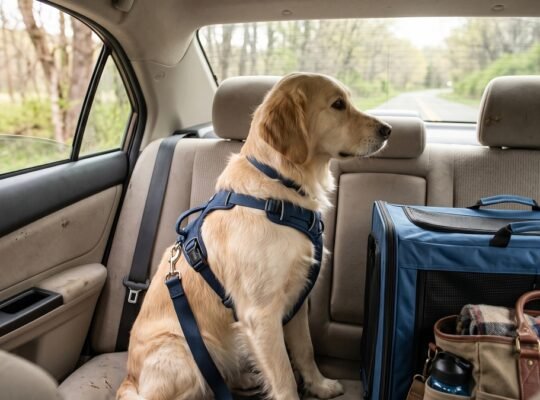
| Crash-tested car harness | Keeps your dog in place for dogs who hate crates | Needs proper fitting and time to get used to it at home first |
| Well-fitted martingale collar or double-clip lead | Many rescues are flight risks when scared | Never leave a martingale on unsupervised |
| Updated ID tag and microchip details | Your safety net if your dog bolts at a stop | Check your contact details are current with the chip registry |
| Familiar mat or bedding | Carries home smells into a new space | Avoid washing it right before the trip |
Cornell University’s Riney Canine Health Center advises a crash-tested harness, seat belt, or crate as the safest option, and suggests checking products tested by the Center for Pet Safety. “Crash-tested” is not a regulated label, so look for independent certification rather than packaging claims.
Our road trip checklist for dogs covers the rest of what to pack, from waste bags to a pet first-aid kit.
What to Do on Travel Day
Travel day is about keeping the “stress bucket” as empty as possible.
- Keep the morning boring. No rushing, no suitcases being dragged past your dog at the last minute. Pack the car the night before if you can.
- Feed lightly. A smaller meal a few hours before departure can help dogs prone to nausea. Ask your vet what timing suits your dog.
- Get a sniffy walk in first. Sniffing is naturally calming and gives your dog a chance to toilet.
- Load the car calmly. Clip the lead on before the door opens. Scared rescues can bolt the second they see a gap.
- Keep the car cool, quiet, and dim. A partly covered crate, low music or silence, and steady driving all help.
- Offer a long-lasting chew or lick mat if your dog can eat in the car. Licking and chewing can help some dogs self-soothe.
- Never leave your dog alone in the car. Cornell warns that car temperatures can rise quickly and become deadly.
How often should you stop?
Frequent, calm breaks help anxious dogs reset. Many owners plan a stop every two to three hours, but a nervous rescue may need shorter legs at first. Here’s a closer look at planning rest breaks on long drives, including what to do at each stop.
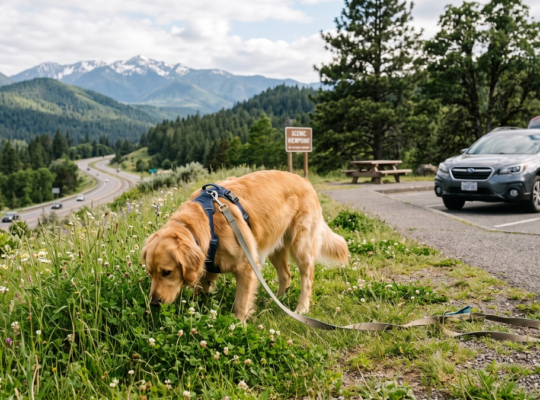
Keep your dog on a lead at every stop, even if they’ve never run off at home. A new, noisy place is exactly where fearful dogs try to escape.
What if your dog won’t drink on the road?
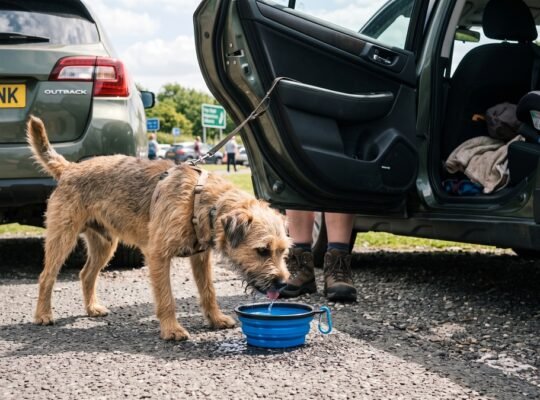
Stressed dogs often turn their nose up at water in unfamiliar places. Offer small amounts often, bring water from home, and use their usual bowl. If your dog stays reluctant, these tips for keeping a nervous dog hydrated on the road can help, and call your vet if they skip water for a long stretch in hot weather.
Flying With an Anxious Rescue Dog: What to Know
Air travel is much harder on nervous dogs than a car ride, so it’s worth asking whether the trip is truly necessary. If it is, a few points matter most:
- Cabin is usually better than cargo for anxious dogs, if your dog is small enough to fit under the seat in an airline-approved carrier. Policies and fees differ by airline and change often, so check directly with your carrier before booking.
- Cargo carries real risks. Cornell notes that injuries and deaths have occurred in cargo, and that panicked dogs may injure their teeth or nails trying to escape a crate. Short-nosed breeds and dogs with heart or breathing problems are at higher risk.
- Don’t sedate for flights without vet guidance. Cornell advises that dogs should never be tranquilized for flights, because sedation can suppress breathing. VCA adds that sedating an anxious dog can sometimes make them more fearful on future trips.
- Practice with the carrier for weeks beforehand, using the same crate training steps above.
If you’re flying, our guide to getting your dog ready for their first flight goes through check-in, security, and in-flight tips in more detail.
Travelling internationally or into the US
Paperwork adds another layer. As of the CDC’s current dog import rules (page last updated August 2026), dogs entering or returning to the US must be at least six months old, be microchipped, and travel with a CDC Dog Import Form receipt. Dogs coming from countries considered high-risk for rabies need additional certified vaccination paperwork. Rules change, so confirm requirements with your vet and the destination country well ahead of time.
Can Medication Help a Rescue Dog With Travel Anxiety?
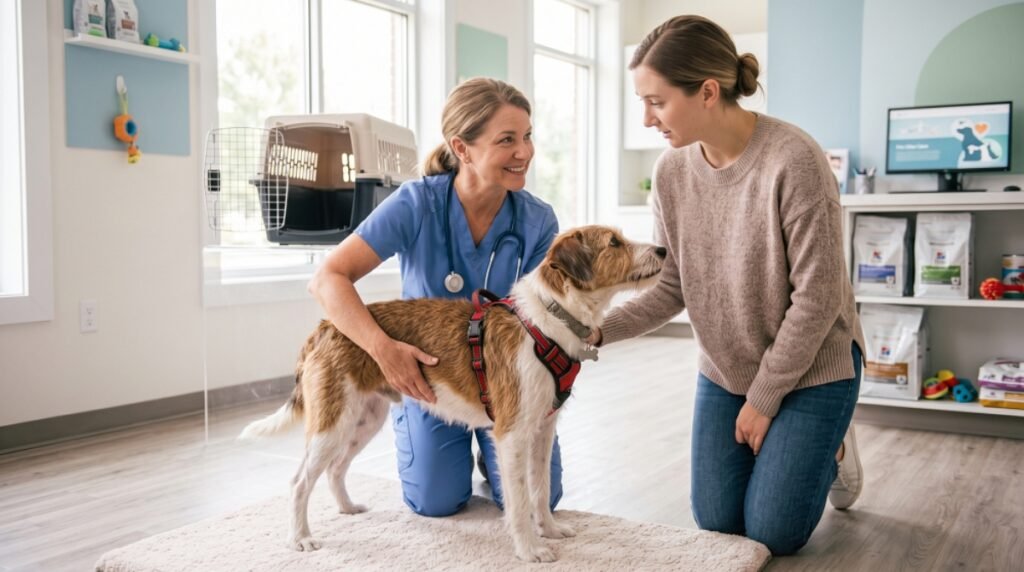
For some dogs, yes. For others, training and management are enough. Medication isn’t a sign you’ve failed. It’s a tool that can make travel bearable while training does its slower work.
Veterinarians sometimes prescribe short-term, situational anti-anxiety medication or anti-nausea medication for travel. VCA’s guide to pre-visit medications explains how these are used for stressful events like vet visits. A few important points:
- Only your vet can decide if a medication is right for your dog, which one, and at what dose. Never give your dog human medication or a friend’s pet prescription.
- Do a test run at home a week or more before the trip, so you can see how your dog responds before you’re on the road.
- Medication works best alongside training, not instead of it. VCA notes that medicines are not a substitute for behaviour modification.
- For severe fear, ask your vet about a referral to a board-certified veterinary behaviorist. The American College of Veterinary Behaviorists has a directory to help you find one.
Calming products like pheromone diffusers, snug-fitting wraps, and calming chews help some dogs, but research results are mixed, and they tend to work best as a small addition to a good plan rather than a fix on their own.
This section is educational and isn’t a substitute for a vet visit. If your dog is vomiting repeatedly, panting heavily in cool conditions, or seems unwell during travel, contact a vet promptly.
Settling In at Your Destination
Arrival is where many rescue dogs finally show how stressed they were. Expect some unsettled behaviour and plan for it.
- Set up a “home base” first. Put down the familiar mat, bed, water bowl, and crate in a quiet corner before anything else.
- Let your dog explore on lead. A calm sniff around the new space helps them map it out.
- Keep introductions slow. Hold off on meeting new people, kids, or resident pets until your dog has rested.
- Stick to your home routine. Same meal times, same walk times, same bedtime cue.
- Expect a wobble. Accidents indoors, restless nights, or clinginess are common for a day or two and usually fade as your dog decompresses.
If you’re travelling with more than one dog, the nervous one may take cues from the calmer one, or the reverse. Our advice on managing two dogs in the car can help you set up the space so each dog feels secure. And if your rescue is also an older dog, these safety tips for travelling with a senior dog cover the extra comfort and health needs to plan for.
Quick Checklist: Travelling With an Anxious Rescue Dog
Weeks before
- Vet check-up, including a talk about nausea and anxiety support
- Crate or harness training at home
- Short, positive practice drives
- Microchip details and ID tag updated
Day before
- Car packed and ready
- Quiet day with no visitors or busy outings
- Familiar mat, bedding, and toys set aside
Travel day
- Light meal and a sniffy walk
- Lead on before any door opens
- Cool, quiet car and calm driving
- Regular, calm stops with water offered
After arrival
- Home base set up first
- Slow introductions
- Normal routine and plenty of rest
Final Thoughts
Travelling with an anxious rescue dog asks for more patience than a typical trip, but it’s patience that pays off. Every calm car ride, every treat in the crate, and every quiet rest stop teaches your dog that travel doesn’t always mean loss or upheaval. For a dog with an uncertain past, that’s a meaningful lesson.
So, how do you travel with an anxious rescue dog? Start with readiness, not the destination. Build positive associations in small steps, avoid stacking stressors, choose safe and familiar gear, and bring your vet in early if fear or nausea is getting in the way. Whether you’re planning a road trip with a nervous rescue or wondering how to calm a scared dog in the car, the same principle holds: go slowly, keep things predictable, and let your dog set the pace.
Click Here to Add SmartPawLife as a Trusted Source Add as a preferred source on Google