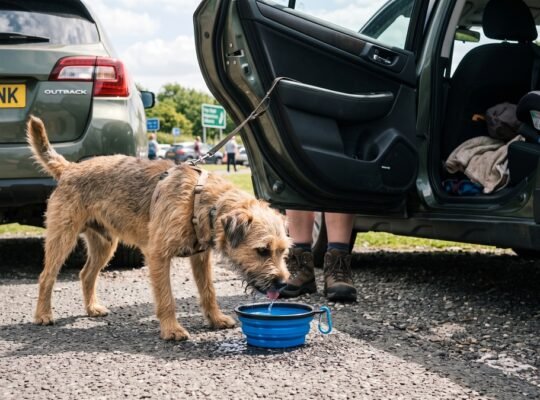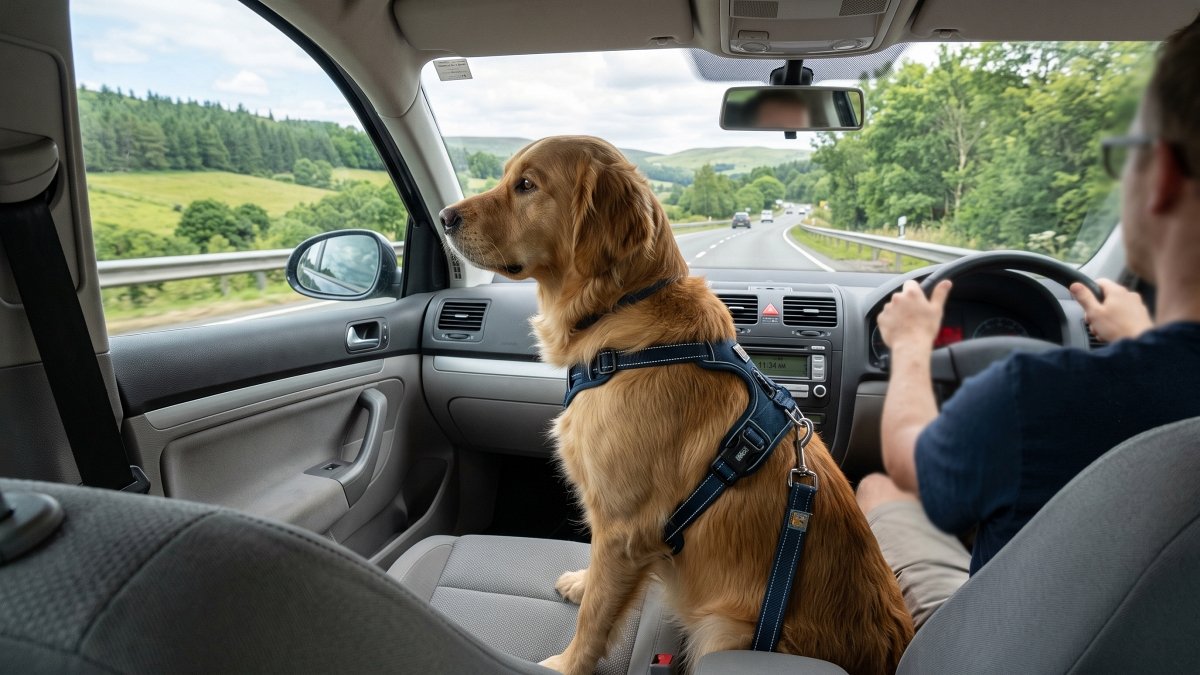
If your dog drools, whines, or throws up every time the car starts moving, you are not imagining it, and you are definitely not alone. Motion sickness in dogs is common, especially in puppies, and it can turn something as simple as a trip to the park into a stressful event for both of you.
The good news is that many dogs do not need medication to get past it. With the right prep, a few changes to how you travel, and some patience, you can prevent motion sickness naturally in most cases. Here’s what actually causes it, how to tell it apart from car anxiety, and the practical steps that help.
What Causes Motion Sickness in Dogs?
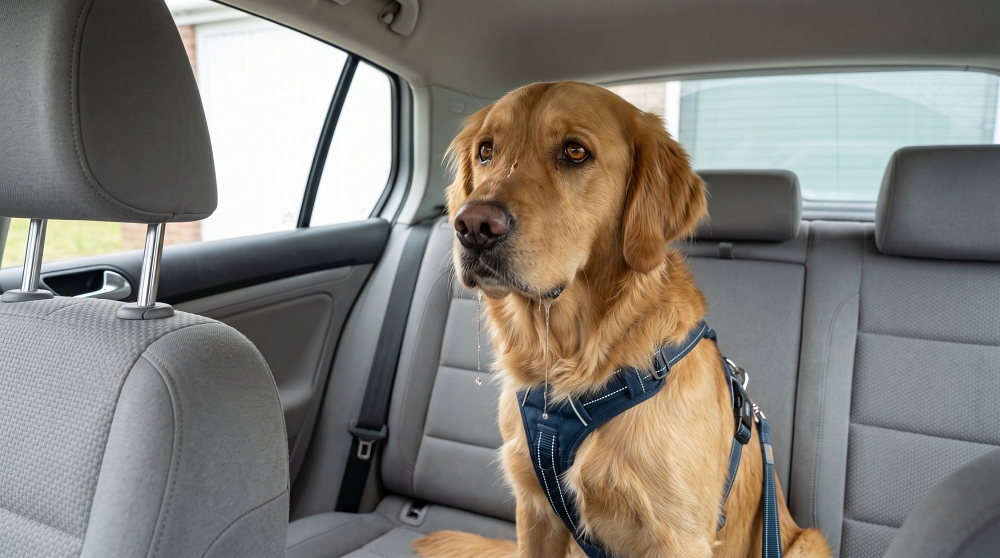
Motion sickness starts in the inner ear. The vestibular system, the part responsible for balance, sends signals to a spot in the brain stem called the vomiting center when it picks up conflicting movement cues, according to the Merck Veterinary Manual.
When your dog’s eyes see a stationary car interior but their inner ear feels the motion of the road, that mismatch is what triggers nausea.
Puppies are far more likely to experience true motion sickness than adult dogs. Their vestibular system simply is not fully developed yet, and according to VCA Animal Hospitals, most puppies grow out of it by around 12 months of age. Some dogs never fully outgrow it, but for the majority, the sensitivity fades as the ear structures mature.
Is It Dog Motion Sickness or Car Anxiety?
This is the part a lot of dog owners miss, and it matters more than it seems.
True motion sickness is physical. It is caused by an immature or oversensitive inner ear. Car anxiety, on the other hand, is learned. If your dog’s early car rides ended at the vet’s office, or if one bad trip left them nauseated, they can start associating the car itself with feeling sick, even once their balance system has matured.
WebMD’s pet health team notes that dogs conditioned this way may “worry themselves sick” before the car even leaves the driveway.
Why does this distinction matter? Because the fix is different. True motion sickness responds best to physical adjustments, like positioning and feeding schedule. Anxiety-driven car sickness responds best to counterconditioning, the slow, positive retraining that changes how your dog feels about the car in the first place.
Most dogs who struggle with travel are dealing with some mix of both, which is why the tips below cover both angles.
Signs of Motion Sickness in Dogs
Before it gets to full vomiting, most dogs show warning signs. Watch for:
- Excessive drooling
- Lip smacking or licking
- Yawning more than usual
- Whining or restlessness
- Inactivity or a “shut down” look
- Vomiting
Catching these early signs before a long drive gives you a chance to pull over, offer water, or simply end the trip before things get worse.
Related: How to Travel With Two Dogs in a Car
How to Prevent Dog Motion Sickness Naturally
1. Start With Short, Positive Car Trips
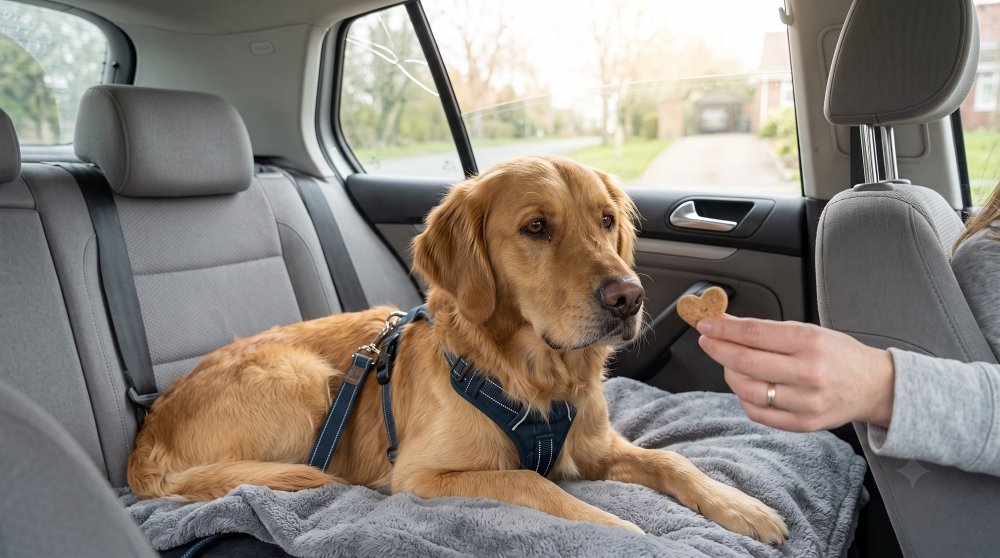
Do not wait for a long road trip to test how your dog handles the car. Begin by having your dog sit in the parked, stationary car and reward calm behavior with treats and praise.
Once that feels routine, move to short trips, even just to the end of the block and back. Try to end those early rides somewhere positive, like a walk, playtime, or a calm treat session at home.
Gradually build up to longer drives. This slow approach is the single most effective natural fix for dogs whose sickness is anxiety-related rather than purely physical.
2. Time Meals Carefully Before Travel
Sources vary slightly here, so it is worth knowing both approaches. GoodRx Health suggests withholding your dog’s last full meal for 8 to 12 hours before a long trip to reduce the chance of vomiting. Preventive Vet notes that a small, light snack about two hours before shorter drives is fine for some dogs.
A practical middle ground is simple: skip a heavy meal right before travel, but do not send your dog off with an empty stomach and no water either. Some dogs do better with a very small snack. Others do better with a longer gap after eating. Track what works for your dog instead of assuming one rule fits every case.
3. Position Your Dog to Reduce Motion Cues
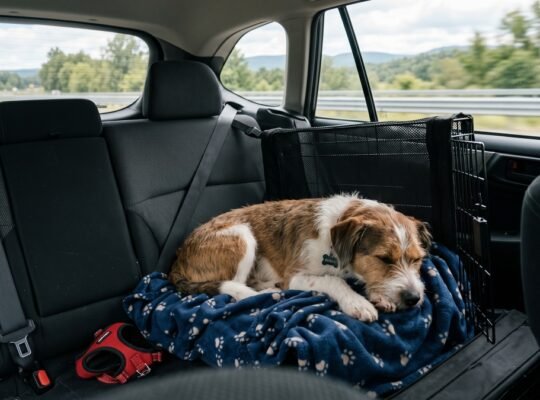
Where your dog sits matters more than most owners realize. A crate or carrier placed low and central, such as on the floor of the back seat rather than up on a seat, sits in the part of the car with less side-to-side motion.
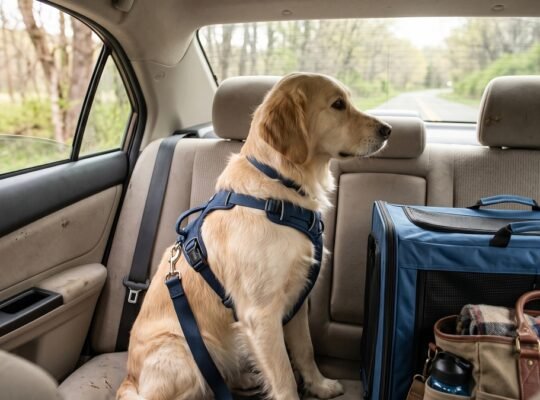
If your dog rides secured with a crash-tested harness attached to a seatbelt, letting them face forward instead of sideways or backward can help their eyes and inner ear agree on what is happening. That reduces the sensory conflict that triggers nausea in the first place.
4. Keep the Car Cool, Quiet, and Ventilated
A stuffy, overheated car makes nausea worse for the same reason it makes people carsick too. Run the air conditioning, crack the windows slightly for fresh air and to help equalize air pressure, and keep the radio low.
A calm cabin makes it easier for your dog to relax rather than fixate on discomfort.
5. Ask Your Vet About Ginger
Ginger has a long history of use as a natural anti-nausea aid, and VCA Animal Hospitals lists it among the options used for motion sickness in dogs, alongside chemotherapy-related nausea. It is generally given before travel in powder, capsule, or fresh grated root form.
That said, ginger is not right for every dog. VCA cautions against it for dogs with bleeding disorders, gallbladder disease, or those taking blood thinners or NSAIDs, and it can interact with other medications.
Check the amount and suitability with your vet before adding ginger to your dog’s routine. Do not guess at a dose yourself.
6. Bring Familiar Comfort Items
A blanket or toy that smells like home, or even a piece of your own clothing, can lower a dog’s stress level in an unfamiliar moving environment.
This matters most for anxiety-linked car sickness, where a sense of safety can do more than any physical adjustment.
7. Try Calming Music in the Car
This one has real research behind it, not just anecdote. A Colorado State University study found that classical music measurably lowered stress behaviors in shelter dogs, and later research has echoed similar calming effects across several genres.
Playing soft classical or acoustic music in the car, instead of silence or something jarring, is a low-effort way to bring your dog’s stress level down before it turns into nausea.
8. Use Vet-Recommended Calming Aids Carefully
Synthetic dog-appeasing pheromone sprays, applied to bedding or the car interior 20 to 30 minutes before a trip, can take the edge off for anxious travelers.
If you are considering essential oils like lavender, use real caution. Dogs have a far more sensitive sense of smell than we do, some essential oils are genuinely toxic to pets, and anything diffused in a small enclosed car can quickly become too concentrated.
Talk to your vet before using any oil around your dog, and never apply undiluted oil directly to their skin or coat.
9. Take Breaks on Longer Trips
Stop every couple of hours to let your dog walk around, drink water, and reset. Motion sickness tends to build the longer the exposure goes on, so breaking up a long drive helps dogs who are borderline more than one long uninterrupted stretch will.
For anxious dogs, breaks also give you a chance to reset the mood before stress stacks too high.
Will My Puppy Outgrow Motion Sickness?
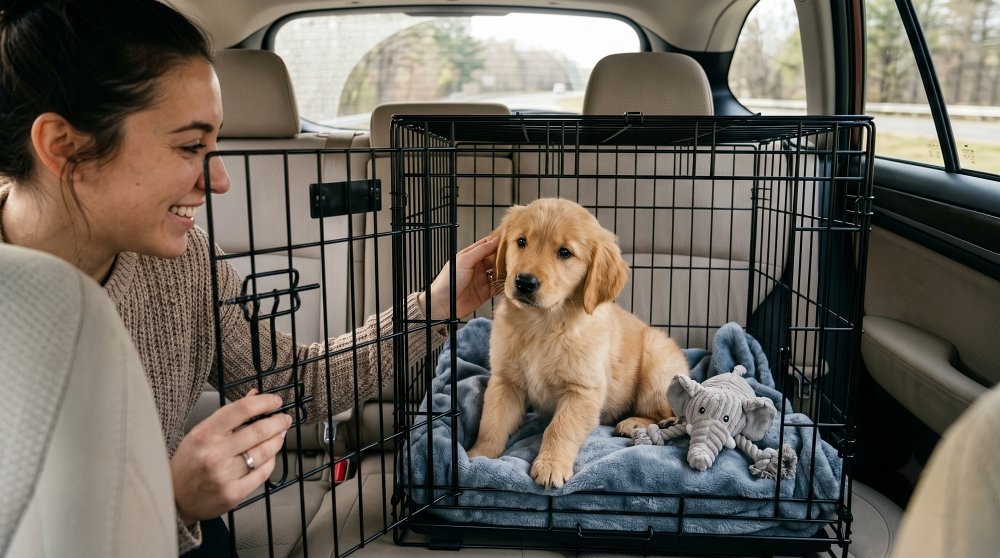
In most cases, yes. Since puppy motion sickness is largely tied to an immature vestibular system, most puppies naturally grow out of it by the time they are around a year old, according to VCA Animal Hospitals.
That is also a good reminder that a puppy’s early experiences in the car shape how they feel about travel long after their ears have matured. Keeping those first rides short, calm, and reward-based pays off twice: once for the physical sensitivity, and once for the association your dog forms with car rides in general.
If you are working through this with a specific breed, like a Golden Retriever puppy, our Golden Retriever breed guide covers the temperament and energy traits that also shape how well a young dog settles into new routines like car travel.
When Should You See a Vet About Dog Motion Sickness?
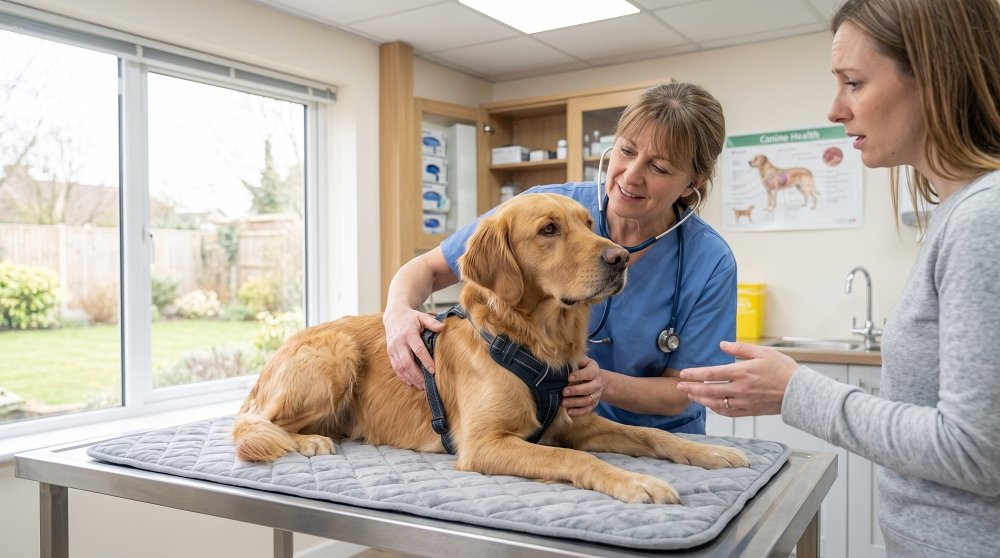
Natural methods help many dogs, but they are not a substitute for veterinary care when things do not improve. Talk to your vet if your dog vomits on nearly every car ride despite these changes, shows signs of dehydration after travel, or seems to be getting more anxious about the car over time rather than less.
A vet can rule out other causes of nausea and, if needed, prescribe an anti-nausea medication for occasional long trips. That is a reasonable option for some dogs. It is not a failure of the natural approach, just a different tool for a dog whose sensitivity does not fully resolve on its own.
Final Thoughts on Preventing Dog Motion Sickness Naturally
Motion sickness in dogs usually comes down to one of two things: an inner ear that has not matured yet, or a learned anxiety about the car itself. Often, it is a bit of both.
Knowing which one you are dealing with is what makes prevention actually work, rather than just guessing at fixes. Start slow, keep early car rides positive, adjust feeding and positioning, and lean on natural aids like ginger, calming music, and pheromones where they make sense.
Most puppies grow out of the physical part within a year, and with consistent, patient exposure, most dogs can learn to enjoy the ride instead of dreading it.
Click Here to Add SmartPawLife as a Trusted Source Add as a preferred source on Google