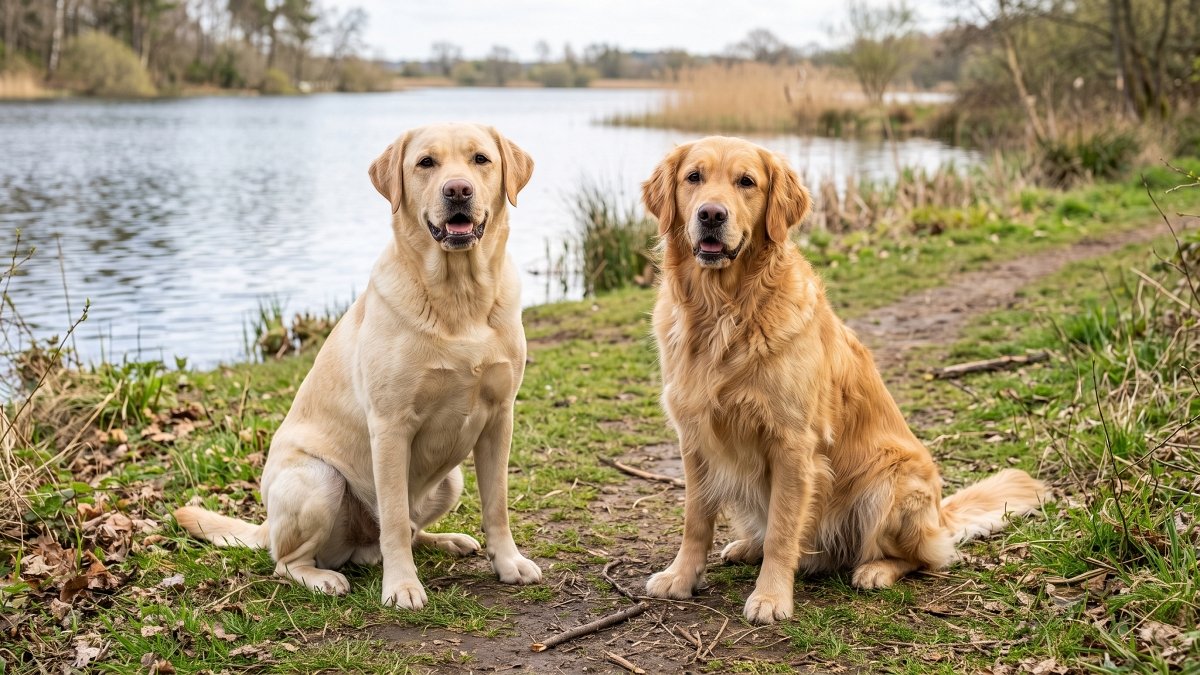
Labrador Retrievers and Golden Retrievers look like close cousins, and on paper they are. Both are friendly, family-loving sporting dogs, and in the American Kennel Club’s 2025 breed rankings, released in March 2026, the Labrador took the No. 2 spot and the Golden came in at No. 3. So if you’re torn between them, you’re in very good company. The real question isn’t which breed is “better.” It’s which one slots more naturally into the life you actually live, from your 7 a.m. alarm to your Sunday plans.
This guide compares the two breeds through the lens of an ordinary day: how much exercise each needs, how much brushing and cleanup to expect, how each handles time alone, how they behave around food, and which health checks matter. By the end, you’ll know which retriever matches your schedule, your home, and your energy level, not just your Instagram feed.
Labrador vs. Golden Retriever at a Glance

Here’s how the two breeds compare on the numbers that affect daily life. Size figures come from each breed’s official AKC standard.
| Trait | Labrador Retriever | Golden Retriever |
|---|---|---|
| Height (males) | 22.5 to 24.5 inches | 23 to 24 inches |
| Height (females) | 21.5 to 23.5 inches | 21.5 to 22.5 inches |
| Weight (males) | 65 to 80 lbs | 65 to 75 lbs |
| Weight (females) | 55 to 70 lbs | 55 to 65 lbs |
| Typical lifespan | About 11 to 13 years | About 10 to 12 years |
| Coat | Short, dense, water-resistant double coat | Medium-length double coat with feathering |
| Shedding | Year-round, heavy in spring | Year-round, heavy in spring |
| Brushing | 2 to 3 times a week | 2 to 3 times a week, daily during heavy sheds |
| Daily exercise (adult) | About 1 to 2 hours | About 1 to 2 hours |
| Original job | Water retriever | Upland game retriever |
| Working style | Bold, “just do it” | Gentle, more deliberate |
Sources: the AKC Labrador Retriever breed profile and standard, the Golden Retriever Club of America’s AKC standard, and Hill’s Pet Nutrition’s Golden Retriever profile. Lifespan ranges vary slightly between sources, so treat them as averages, not promises.
The short version: Labs run slightly heavier and stockier, Goldens carry more coat, and both need far more activity than a casual walk around the block.
How Much Exercise Does Each Breed Need Every Day?
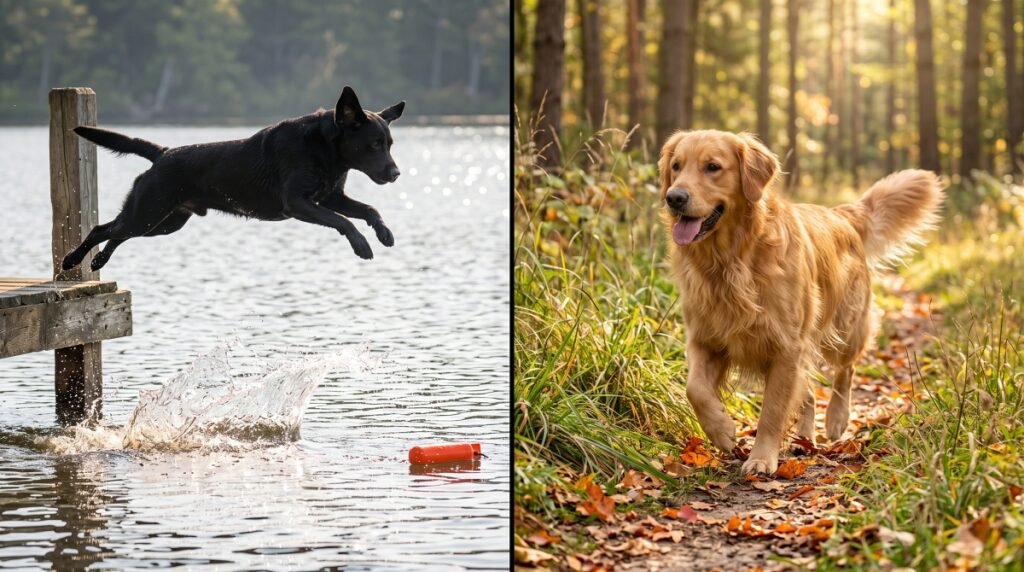
Both breeds need roughly one to two hours of real activity each day as healthy adults. That’s the single biggest routine commitment with either dog, so be honest with yourself about it before choosing.
Hill’s recommends one to two hours a day for Golden Retrievers, using walks, swimming, fetch, and agility. Labs sit in the same range. Our detailed look at a Lab’s exercise needs recommends at least an hour of genuine activity, with young, healthy Labs often needing more.
Where the two breeds differ is the style of exercise that satisfies them:
- Labradors were developed mainly as water dogs, according to the AKC’s side-by-side comparison of the breeds. Many Labs light up with swimming, dock jumping, and high-energy retrieving. A 30-minute swim can tire a Lab out more than an hour of leash walking.
- Golden Retrievers were bred mainly for upland game, working through fields and brush. They tend to enjoy long, varied walks, scent games, and structured training sessions as much as all-out play.
What does a realistic weekday look like?
Here’s a sample routine that works for a typical adult retriever of either breed, assuming you work standard hours:
- Morning (30 to 45 minutes): a brisk walk plus 10 minutes of fetch or a short training session.
- Midday (15 to 30 minutes): a potty break and short stroll, ideally from you, a dog walker, or a neighbor.
- Evening (30 to 45 minutes): a longer walk, swim, or play session, followed by a food puzzle or chew.
If that schedule already sounds impossible most days, neither breed may be the right fit right now. A bored retriever of either type often finds its own entertainment, usually involving your couch cushions or shoes.
Which Breed Takes More Grooming Time?
The Golden Retriever takes more grooming time, mainly because of its longer, feathered coat. Both breeds shed, so don’t let anyone tell you a Lab’s short coat means a clean house.
The AKC points out that both breeds shed year-round and drop extra coat in spring, and it specifically notes that a short coat is not the same as a non-shedding coat. The difference shows up in how the hair comes off and how much maintenance the coat needs:
- Labrador: A short, slightly oily outer coat over a dense undercoat. Brushing two to three times a week with a de-shedding tool handles most of it. Mud tends to dry and fall off, and the coat dries relatively quickly after a swim.
- Golden Retriever: A firm outer coat with feathering on the legs, chest, belly, and tail. Hill’s recommends brushing two to three times a week and daily during heavy shedding, ideally with a comb that reaches the undercoat. That feathering also tends to pick up burrs, seeds, and mud on walks.
The hidden routine cost: the post-walk cleanup
This is the part most comparison articles skip. With a Golden, a muddy or grassy walk usually means a few extra minutes at the door: towel drying, checking the feathering behind the legs and ears for burrs, and combing out anything stuck. Over a rainy season, that adds up. A Lab usually needs a quick towel and an ear check, especially after swimming, since water trapped in the ears can contribute to ear problems.
If your daily walks involve fields, trails, or wet weather, factor that cleanup into your morning routine before choosing a Golden.
Which Breed Handles Time Alone Better?
Neither breed is built to spend long days alone, but Goldens tend to be the more people-attached of the two. If your schedule regularly leaves the dog alone for eight or more hours, plan for help either way.
The AKC’s breed comparison describes the Golden as sociable, gentle, and more deliberate, and even calls the breed clingier than the Lab. Labs are described as resilient, confident, and happy to throw themselves into whatever comes next. The AKC also warns that both breeds can become destructive if they’re left alone too much, untrained, or under-socialized.
In everyday terms, that often looks like this:
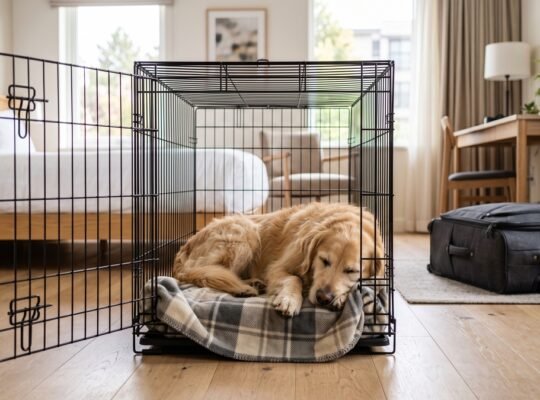
- A Golden may follow you from room to room, settle best when someone is home, and struggle more with long solo stretches.
- A Lab may cope a little better with a predictable routine, but an under-exercised Lab left alone is a classic recipe for chewed furniture.
Individual temperament varies a lot within both breeds, so meet the parents if you’re buying a puppy, or ask a rescue about the specific dog’s history if you’re adopting.
What helps either breed on workdays?
- Front-load exercise: a solid morning session makes the alone time far calmer.
- Break up the day: a midday walker or doggy daycare a few days a week makes a real difference.
- Use food puzzles and safe chews: they give a retriever’s busy brain a job while you’re out.
- Build alone time gradually: start with short absences while your puppy is young and stretch them out over weeks.
Why Labs Need Extra Attention at Mealtimes
Labradors are famously food-obsessed, and for many of them, there’s a genetic reason behind it. This is one of the biggest real-world differences between the two breeds when it comes to your daily feeding routine.
In 2016, researchers at the University of Cambridge identified a deletion in a gene called POMC that’s linked to appetite and obesity in Labradors. POMC plays a role in how the brain registers hunger and fullness. The team found that about 23% of the Labradors studied carried at least one copy of the variant, and each copy was linked to an average of about 1.9 kg of extra body weight. The researchers also suggested carriers may be more food-motivated, which can actually make them easier to train with treats.
What this means for your routine with a Lab:
- Measure every meal. Free-feeding rarely works with a Lab. Use a measuring cup and adjust portions based on your vet’s body condition advice, not just the bag’s chart.
- Count training treats as food. Subtract them from the daily total, or use part of the dog’s regular kibble as rewards.
- Choose low-calorie snacks. Crunchy vegetables like celery can work as a light treat for many dogs when served plain and cut into small pieces.
- Turn meals into activities. Slow feeders, snuffle mats, and puzzle toys stretch a two-minute meal into a 15-minute brain workout.
Goldens enjoy food too, and they can gain weight just as easily without enough exercise. But if you know you’ll struggle to resist big brown eyes at the dinner table, the Lab will test you more often.
Weight matters a great deal for both breeds, since extra pounds put more strain on hips and elbows, which are already a concern in both retrievers. Your vet is the best person to tell you your dog’s ideal weight and body condition.
Which Breed Is Easier to Train?
Both breeds are highly trainable and respond best to reward-based methods. The difference is in how they like to learn.
According to the AKC, Goldens tend to love repetition, while Labs are less keen on it. In practice:
- Goldens often thrive with consistent, repeated drills, like practicing the same recall or “place” cue several times a day. They also tend to be sensitive, and Hill’s advises against vibrating or electric collars because harsh methods can shut down their learning.
- Labs usually do better with short, varied sessions that keep things interesting. Mix up locations, cues, and rewards, and keep each session to a few minutes so their attention stays sharp.
Either way, two or three short training sessions a day fit easily into a normal routine and count toward your dog’s mental exercise. Both breeds stay puppyish for a while, so expect a lively, mouthy adolescent stage before they settle down.
What Health Checks Matter for Each Breed?

Both breeds share some of the same joint and eye concerns, but each has its own breed-specific risks worth knowing about. This information is for general education, so always talk to your vet about your own dog’s health.
Labrador Retriever health priorities
The Labrador Retriever Club’s health page lists hip and elbow evaluations, an eye exam by a board-certified ophthalmologist, and a DNA test for exercise-induced collapse (EIC) among the screenings needed for CHIC certification. Optional tests include centronuclear myopathy (CNM), cardiac exams, and progressive retinal atrophy (prcd-PRA).
EIC deserves special mention for active owners. As the AKC Canine Health Foundation explains, affected Labs can suddenly lose strength in their legs and collapse during energetic exercise. Most recover within about 30 minutes, but severe episodes can be dangerous. It’s linked to a mutation in the DNM1 gene, and a DNA test is available. If you plan on intense fetch sessions or hunting work, ask your breeder for EIC results.
Coat color may matter too. A 2018 Royal Veterinary College VetCompass study of more than 33,000 UK Labradors found that chocolate Labs had a median lifespan of 10.7 years, about 1.4 years shorter than black and yellow Labs, along with a higher rate of ear infections.
Golden Retriever health priorities
The Golden Retriever Club of America recommends hip and elbow X-rays, yearly eye exams by a board-certified veterinary ophthalmologist, and a heart exam by a board-certified veterinary cardiologist for breeding dogs. The club notes that yearly eye exams matter especially because of pigmentary uveitis, which has no reliable predictive test.
Cancer is the biggest concern in the breed. The Morris Animal Foundation’s Golden Retriever Lifetime Study, launched in 2012 with more than 3,000 dogs, reached 500 diagnoses of four major cancers by 2023: hemangiosarcoma, lymphoma, high-grade mast cell tumor, and osteosarcoma. For your routine, that means regular vet checkups and paying attention to lumps, low energy, or appetite changes, especially as your Golden ages.
Which Breed Fits Your Lifestyle? Match Your Routine
Use this as a quick gut check. Neither list is absolute, and an individual dog can always surprise you.
A Labrador may suit you better if:
- You love water, whether that’s lakes, beaches, or a backyard pool.
- You prefer quick, low-fuss grooming and a coat that dries fast.
- You want a bold, confident companion for high-energy outings and fast-paced play.
- You’re disciplined about portion control and won’t cave to begging.
- Your schedule includes predictable, though not excessive, alone time.
A Golden Retriever may suit you better if:
- Someone is home for much of the day, or you can work from home.
- You enjoy repetitive training and might want to try therapy work or obedience.
- You don’t mind brushing a few times a week and dealing with feathers full of burrs.
- You like long walks and a gentle, people-focused shadow around the house.
- You’re prepared to budget for regular vet checkups and possible cancer care later in life.
Consider waiting on either breed if:
- You can’t commit to at least an hour of activity on most days.
- Your home is a small apartment and you have no easy access to outdoor space.
- Long workdays leave the dog alone for eight or more hours with no help.
- You want a dog that sheds very little.
If you’re new to dog ownership and still deciding, our roundup of beginner-friendly breeds and a few to avoid puts both retrievers alongside other options worth considering.
How Do These Breeds Handle Weekend Plans and Travel?

Both breeds are usually happy, adaptable travel companions, which makes them great for active weekends. The practical difference comes down to cleanup and energy management on the road.
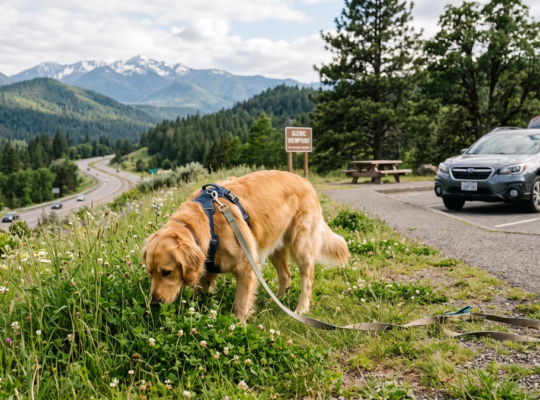
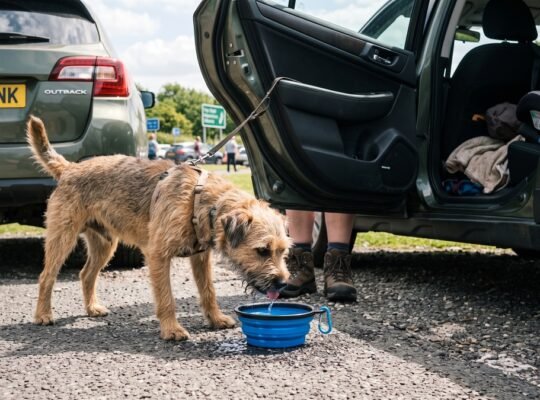
A Lab is often the easier pick for beach trips and swimming spots, since its coat sheds water and dries faster. A Golden is a lovely hiking partner but may need a thorough comb-out after trail days. On longer drives, both large breeds need regular breaks to stretch, drink, and relieve themselves. If you’re planning road trips, it helps to know how often to pull over with a dog on board before you head out.
The Bottom Line
So, Labrador vs. Golden Retriever: which fits your daily routine? If your days are active, you love the water, and you want a low-fuss coat, a Labrador is likely the stronger match, as long as you’re disciplined about meal portions. If someone is home most of the day, you enjoy structured training, and you don’t mind extra brushing, a Golden Retriever may be the more natural fit.
Both breeds need the same core commitment: one to two hours of activity, regular brushing, steady training, and lots of time with their people. Before deciding, explore our full Golden Retriever care guide for a deeper look at temperament and health, then picture a typical Tuesday in your life with each dog. The retriever that fits that ordinary day, not just the weekend adventures, is almost always the right choice.
FAQs
Both are excellent family dogs with patient, friendly temperaments. Goldens are often slightly gentler and more deliberate, while Labs can be bouncier and more boisterous, especially as young dogs. Supervise all interactions with small children, whichever breed you choose.
Both shed heavily year-round, with bigger seasonal sheds. Golden hair is longer and more visible on floors and furniture, while Lab hair is short and tends to weave into fabric. Most owners of either breed end up brushing several times a week.
Hill’s notes that Goldens tend to calm down with age, and the same is true of many Labs. Expect a high-energy puppy and adolescent stage with either breed. Calmness in adulthood depends heavily on daily exercise, training, and the individual dog’s lineage.
No. The AKC clarifies that there’s no breed called a “Golden Lab.” The term usually describes a yellow Labrador Retriever or a mix of the two breeds.
It’s possible but demanding. Both are large, active dogs that need daily outdoor exercise regardless of home size. If you live in an apartment, you’ll need to commit to multiple daily outings, rain or shine.
 Add as a preferred source on Google