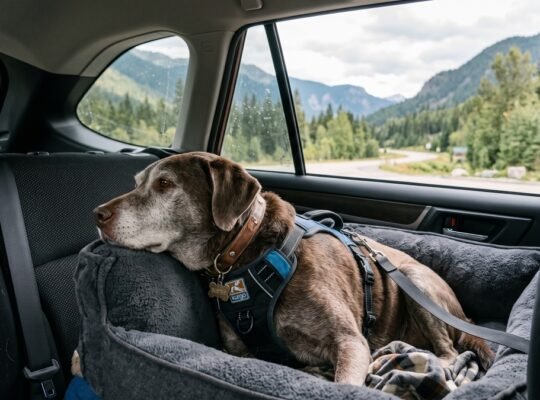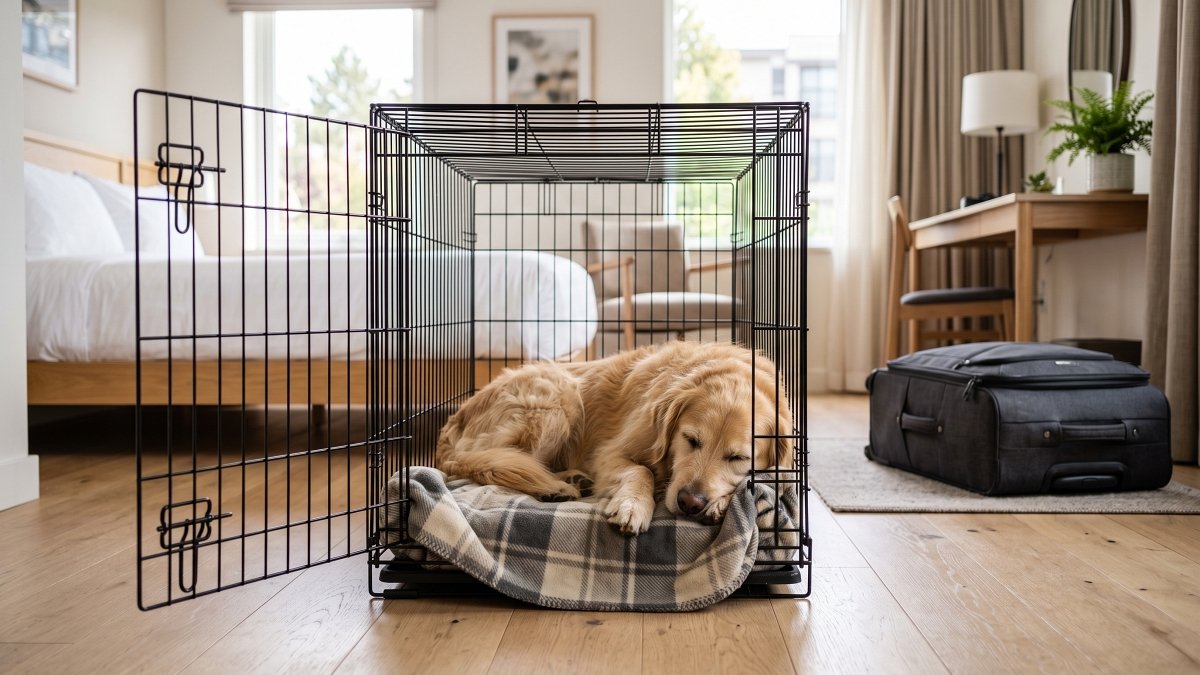
You’ve booked the pet-friendly room, packed the leash and the favorite blanket, and then it hits you. There’s a museum, a wedding dinner, or a restaurant on your list that your dog can’t come to. So can you leave your dog alone in the hotel room for a couple of hours?
The short answer is: sometimes, but only if the hotel’s own policy allows it and your dog can genuinely handle it. “Pet-friendly” means pets are welcome to stay, not that they’re welcome to stay by themselves. This guide walks you through what major hotel chains actually say, why a dog who’s calm alone at home can struggle in a hotel, and a practical plan for the times a short solo stretch can’t be avoided.
Does “Pet-Friendly” Mean You Can Leave Your Dog Alone?
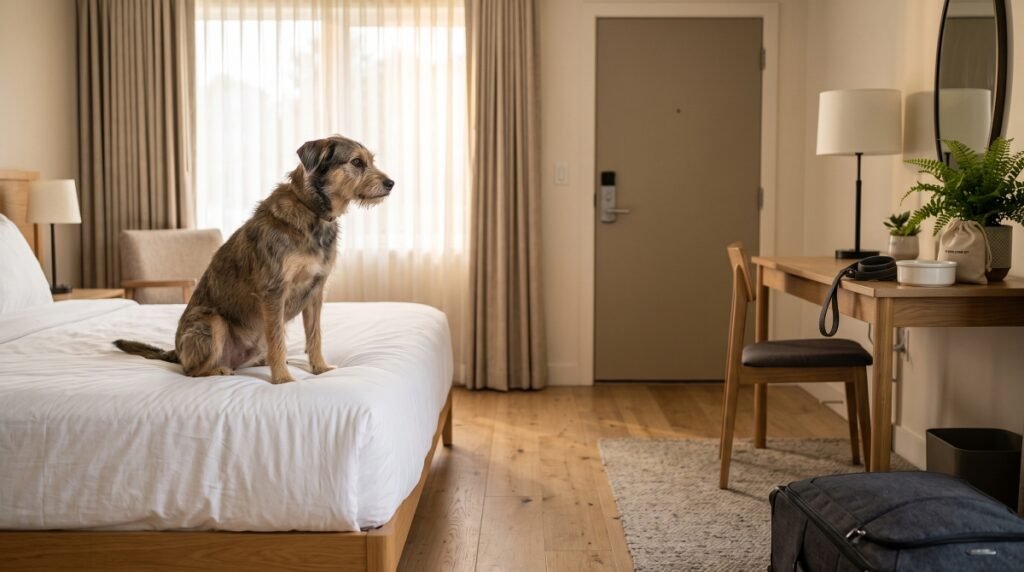
Not automatically. A pet-friendly label tells you a hotel accepts animals. The rules about leaving them unattended are a separate line in the pet policy, and they vary a lot, sometimes even between two locations of the same brand.
Hotel policies usually fall into one of three camps:
- Never unattended: The pet must be with you whenever it’s in the room.
- Unattended only if crated: You can step out, but your dog must be secured in a crate or carrier.
- Unattended with notice: You can leave, but you must tell the front desk, leave a phone number, and keep your absence short.
Almost every policy, whatever the camp, adds the same conditions: if your dog barks, disturbs other guests, or damages the room, staff can step in, and the cost lands on your bill.
What Do Major Hotel Chains Say About Unattended Pets?
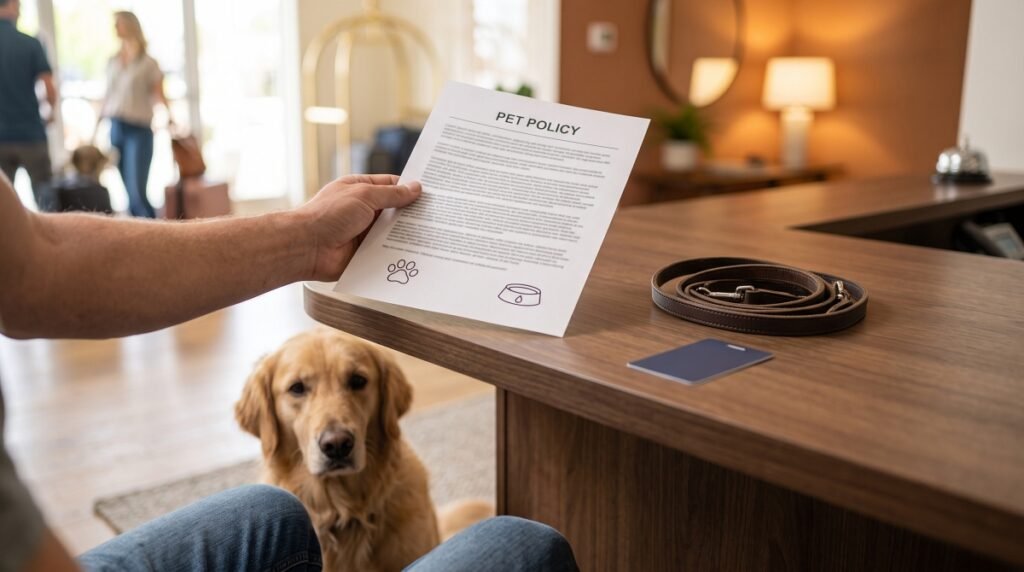
Here’s what the published policies say as of September 2026. Always confirm with the specific property before you book, because franchise locations can set stricter rules.
| Hotel chain | Unattended pet rule | Other key details |
|---|---|---|
| Red Roof Inn | Pets may not be left unattended in the guest room. In an emergency, you must contact the front desk and leave your contact details. | Up to 2 pets, 80 lbs max each. First pet stays free, second is $15 per night. |
| Motel 6 | Pets should not be left alone in a room or a car. If it’s unavoidable, the pet must be crated, or the front desk must be told it’s loose and when housekeeping can enter. | Up to 2 pets per room. Pets stay free at Motel 6 (Studio 6 charges a daily fee). |
| La Quinta by Wyndham | Its main pet page doesn’t spell out an unattended rule, but pets must be leashed or in a carrier outside the room, and housekeeping may require you to be present or your pet to be crated. | Up to 2 pets. Optional fee of $25 per night, capped at $75 per stay. Some locations have weight limits. |
| Quality Inn and Rodeway Inn (Choice Hotels) | Pets may not be left alone in the room unless caged. | Fees and limits vary by location. |
| Four Seasons | Pets must not be left unattended. | Check the individual hotel for fees and limits. |
| Kimpton (IHG) | Its pet-friendly page doesn’t state an unattended rule. Ask the property directly. | No pet fee, no deposit, no size or breed limits. |
| Hilton and Marriott brands | Set by each property. For example, one Marriott resort’s pet agreement says staff won’t enter a room with a loose, unattended pet. | Fees, deposits, and weight limits vary widely. |
Sources: Red Roof pet policy, Motel 6 reservation policies, La Quinta pet-friendly page, PetTravel’s chain policy roundup, and the AKC’s guide to dog-friendly hotel chains.
The pattern is clear. Budget chains that welcome dogs for free tend to be the strictest about leaving them alone, and luxury brands with generous pet perks often still expect you to stay with your dog.
Why a Dog Who’s Fine Alone at Home Can Struggle in a Hotel
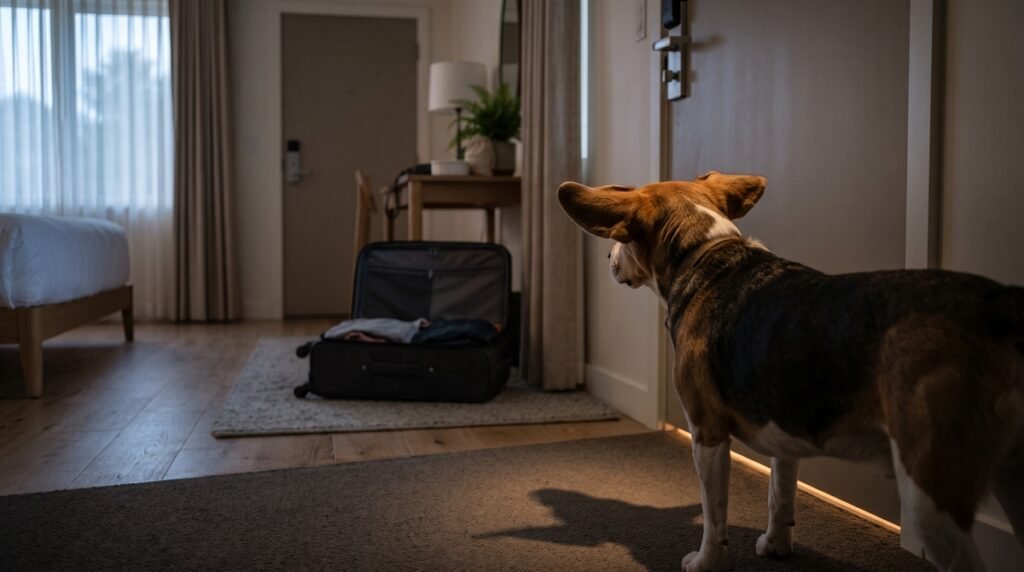
This is the part most travel guides skip, and it’s the most important one. Your dog might nap happily for four hours while you’re at work. That doesn’t mean they’ll do the same in Room 214.
Dogs don’t generalize “alone time” well
Dogs learn behavior in context. Being calm alone at home is tied to familiar smells, familiar sounds, and a predictable routine that ends with you coming back through the same door. A hotel removes all of that at once. To your dog, it’s a brand new situation, and the old lesson doesn’t automatically transfer.
Hotels are a perfect setup for trigger stacking
Trainers use the term trigger stacking for what happens when a dog meets several stressors in a short window and gets pushed over their coping limit. The AKC describes it as a dog experiencing “multiple stressful or scary situations within a short timespan,” which can make them react strongly to something small they’d normally ignore.
Think about a typical travel day from your dog’s point of view:
- A long car ride or flight.
- A busy lobby with strangers, luggage carts, and other dogs.
- An elevator.
- A room full of unfamiliar smells from previous guests and pets.
- Doors slamming, voices in the hallway, and an ice machine rumbling next door.
Then you leave. For many dogs, that final step is the one that tips a stressful day into barking, howling, or frantic scratching at the door.
The hallway problem
At home, most sounds outside are distant. In a hotel, people walk past your door all day and night. Dogs who guard their space often respond by barking at every footstep, and hotel walls are rarely thick enough to hide it.
What Can Go Wrong If You Leave Your Dog Alone?
It’s worth being honest about the real risks, because they affect your dog, your wallet, and other travelers.
- Barking complaints: Hotels often have to refund or compensate disturbed guests. GoPetFriendly quotes one hotel manager who said barking dogs had “cost us too much in guest satisfaction and in room rebates.” Some properties have dropped pet-friendly status entirely because of it.
- Damage charges: Chewed door frames, scratched doors, and torn curtains are billed to your account. Many pet agreements say so in plain words.
- Staff entry and removal: If your dog is loose and distressed, staff may refuse to enter, call you back, or in some cases ask you to remove the pet.
- Escape: A housekeeper who opens the door without knowing there’s a dog inside can give a scared dog a clear path into a hallway, a stairwell, or a parking lot.
- Stress and anxiety signs: The ASPCA lists signs of separation distress that include accidents indoors, persistent barking or howling, destructive chewing near doors and windows, escape attempts, and pacing.
The risk almost nobody mentions: the room can get too warm
Many hotels, especially outside the US and in newer eco-focused properties, use a key-card slot by the door to power the room. Take the card with you and the lights, and often the air conditioning, switch off. Even in hotels without this system, a thermostat set to “eco” mode or a window unit that cycles off can let a sunny room warm up.
This matters most for flat-faced (brachycephalic) dogs, who can’t cool themselves as efficiently by panting. In a 2020 study of UK dogs published in Scientific Reports, brachycephalic dogs had about twice the odds of heat-related illness compared with medium-muzzled dogs, and Bulldogs had roughly 4.6 times the odds of Labrador Retrievers. If you’re traveling with one of the flat-faced breeds like the Bulldog, check how the room’s power and cooling work before you ever step out.
If your dog shows heavy panting, drooling, weakness, or vomiting after being left in a warm room, treat it as urgent and contact a veterinarian right away.
Is Your Dog Ready to Be Left Alone in a Hotel Room?
Use this quick self-check. If you can’t say “yes” to most of these, plan to keep your dog with you or arrange a sitter.
- Your dog stays calm alone at home for at least a few hours, without barking, accidents, or destruction.
- Your dog is comfortable in a crate and sees it as a safe den, not a trap.
- Your dog has already spent time settled in the hotel room with you before you try leaving.
- Your dog doesn’t bark at hallway noises, or quiets quickly when they happen.
- Your dog is an adult, healthy, and not recovering from a surgery or illness.
- You’ve confirmed the hotel allows unattended pets, and on what terms.
Puppies, newly adopted rescues, senior dogs with confusion or health issues, and dogs with any history of separation anxiety are usually poor candidates. For a dog with known separation anxiety, the ASPCA’s advice is clear: during treatment, the dog shouldn’t be left alone except during planned training sessions. A hotel stay isn’t the place to test that.
How to Leave Your Dog Alone in a Hotel Room Safely
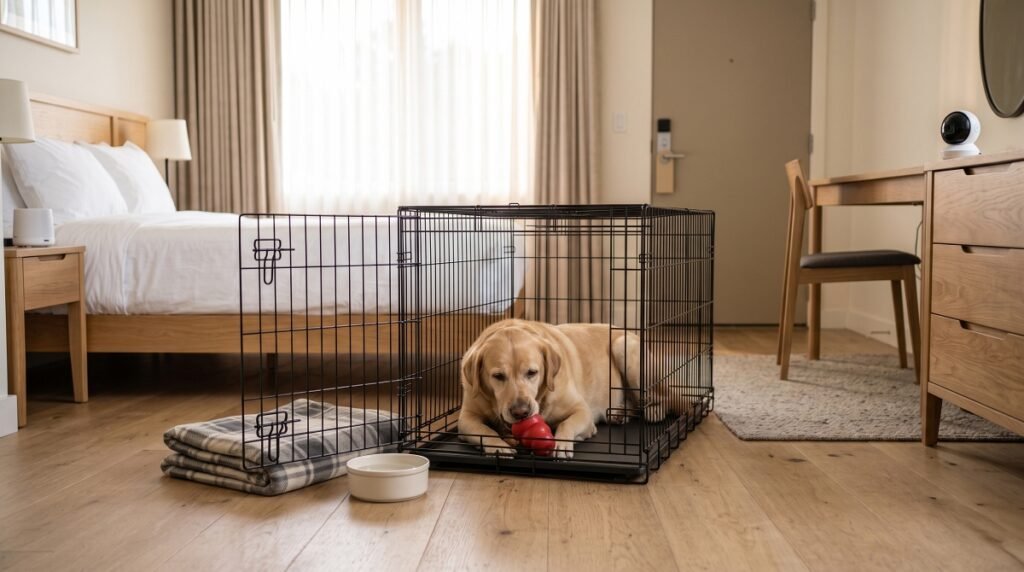
If your hotel allows it and your dog passes the readiness check, here’s a practical sequence that stacks the odds in your favor.
1. Check the policy in writing before you book
Read the pet policy on the hotel’s own website, then call the property. Ask three direct questions: Can pets be left alone? Do they need to be crated? Do you need to notify the front desk? Get the answer in an email if you can.
2. Let your dog settle in first
Don’t arrive and leave right away. Spend at least an hour or two in the room together. Let your dog sniff every corner, drink water, and lie down on their own bedding. The goal is for the room to feel a little familiar before you step out.
3. Tire them out, the right way
A long walk followed by a few minutes of sniffing games works better than an intense run that leaves your dog wired. Mental work, like a short training session or a snuffle mat, is especially good at settling dogs down. High-energy, people-oriented breeds such as the Labrador Retriever usually need both physical exercise and a mental outlet before they’ll rest.
4. Bring the crate and familiar comforts
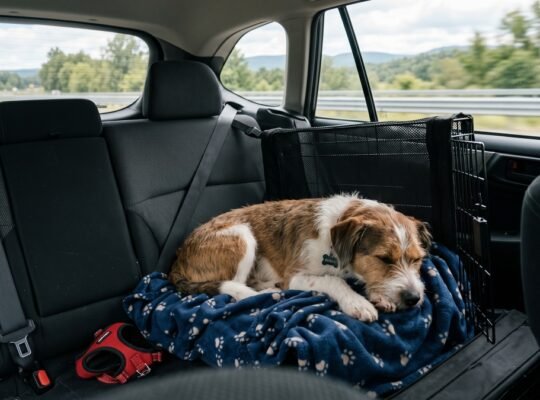
A crate your dog already loves is one of the best tools you can pack. The AKC’s travel guide notes that a good travel crate helps keep dogs out of trouble in hotels, and it should let your dog stand, turn around, and lie down comfortably. Add their bed or a blanket that smells like home, and one of your worn T-shirts.
One caution: if crating triggers heavy panting, drooling, or frantic escape attempts, the ASPCA advises against using it for that dog. A panicked dog in a crate can injure itself.
5. Give them a long-lasting food puzzle
The ASPCA suggests a food-stuffed puzzle toy that takes 20 to 30 minutes to finish, offered only when you leave. That turns your exit into something good. You can freeze your dog’s regular food mixed with a few safe fillers, such as plain, cooked green beans, the night before.
6. Mask the hallway noise
Turn on a fan, a white noise app, or soft music at a low volume. It won’t block everything, but it softens the footsteps and door clicks that set off barking.
7. Hang the “Do Not Disturb” sign and tell the front desk
Put the sign on the door so housekeeping doesn’t walk in on a surprised dog. Then tell the front desk your dog is in the room, whether it’s crated, and your mobile number. This protects your dog, and it protects the staff too.
8. Do a short test run
Leave for 10 to 15 minutes first. Get a coffee in the lobby and listen from down the hall if you can. If your dog is quiet when you come back, you can try a slightly longer stretch.
9. Watch with a pet camera
A small Wi-Fi pet camera or an old phone running a camera app lets you check in. If you see pacing, whining, or scratching at the door, head back early. It’s much easier to fix a stressed dog after 20 minutes than after two hours.
10. Keep it short and come back calmly
Treat any solo time in a hotel as a brief errand, not an afternoon out. When you return, keep your greeting low-key, take your dog out for a potty break, and praise the quiet behavior.
The 3 C’s: A Simple Rule for Hotel Alone Time
If you remember nothing else, remember these three checks before you walk out the door:
- Confirm: The hotel allows it, and you know its exact conditions.
- Contain: Your dog is safely crated or secured, with water, comfort items, and a cool room.
- Contact: The front desk has your number, and you can reach the room quickly if they call.
If any one of the three isn’t in place, it’s a sign to take your dog with you or make another plan.
What Are the Alternatives to Leaving Your Dog Alone?
Sometimes the kindest answer is “no.” These options let you enjoy your trip without the worry:
- Take your dog along: Many patios, breweries, parks, and outdoor attractions welcome leashed dogs. Plan your day around places your dog can go.
- Book a local sitter or dog walker: Sitting apps and local pet services can send someone to your room or take your dog out while you’re away. Check that the hotel allows outside sitters.
- Use doggy daycare: A day at a well-reviewed daycare can leave your dog happily tired for the evening.
- Ask the hotel: Some pet-focused properties offer or recommend dog-walking and pet-sitting services.
- Split the outing: Traveling with a partner or family? Take turns so someone always stays with the dog.
- Choose a vacation rental instead: For dogs who bark at noise, a house or cabin without shared hallways can be a much better fit.
Final Thoughts
So, can you leave a dog alone in a pet-friendly hotel? Sometimes you can, but “pet-friendly” isn’t a green light on its own. The hotel’s written policy decides whether it’s allowed, and your dog’s temperament decides whether it’s a good idea. A calm, crate-happy adult dog in a cool, quiet room may handle a short solo stretch well. A nervous rescue, a young puppy, or a flat-faced breed in a warm room is a different story.
When in doubt, keep your dog close, lean on a local sitter, or plan outings your dog can join. With a little planning using the Confirm, Contain, and Contact checks, you can protect your dog, stay on good terms with the hotel, and help keep pet-friendly rooms available for every dog lover who travels next.
FAQs
There’s no universal rule, and many hotels don’t allow it at all. Where it’s permitted, keep it as short as possible, ideally under an hour or two, and only after a successful short test. Always follow the property’s stated limits.
Many hotels that allow unattended pets require a crate, and some chains, like Motel 6, list crating as one of the conditions. A crate only helps if your dog is already comfortable in one.
Staff will typically call your mobile number first. Repeated complaints can lead to extra fees, a request to return to the room, or being asked to remove your pet from the property.
Many hotels won’t service a room with a loose, unattended pet. Use the “Do Not Disturb” sign, tell the front desk, and schedule housekeeping for a time when you and your dog are out together.
It’s generally not a good idea. Puppies have limited bladder control, chew when stressed, and haven’t built the confidence to be alone in a new place. Keep your puppy with you or arrange a sitter.
 Add as a preferred source on Google