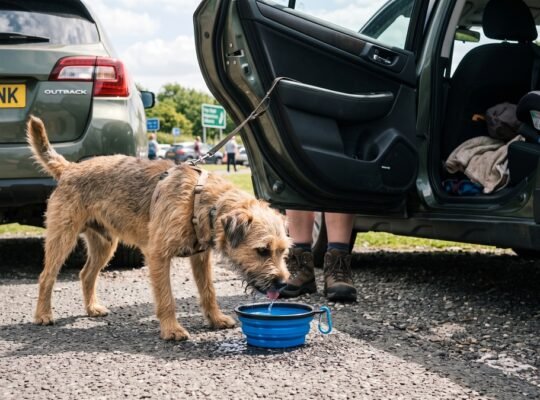
Flying with a dog for the first time is a different kind of nervous than flying alone. You are not just checking a bag and finding your gate. You are responsible for a small, confused creature who has no idea why you have put them into a carrier and walked into a building full of strangers, strange smells, rolling suitcases, and loud announcements.
The good news is that thousands of dogs fly safely every year, and almost every stressful moment on flight day traces back to something that could have been handled in the weeks before.
This guide walks through everything that actually matters: which dogs are realistically cleared to fly, how to pick and prep a carrier, what your vet visit needs to cover, how to get your dog comfortable with the whole process before takeoff, and what to expect at security and in the air. Whether you are flying domestically for the first time or preparing for a longer trip, the goal is the same: a calm dog, a smooth checkpoint, and a flight that is boring in the best way.
Should Your Dog Fly? Start Here Before You Book
Not every dog is a good candidate for air travel, and figuring that out before you book the ticket saves a lot of stress later.
Size matters more than you might think. Most airlines only allow dogs in the cabin if the dog and carrier together fit under the seat in front of you. Airline weight limits for in-cabin travel often cap out around 20 pounds total, carrier included, though every airline sets its own rules. If your dog is a larger breed, cabin travel usually is not on the table.
A Labrador Retriever or Golden Retriever, both of which commonly weigh 55 to 80 pounds, will not fit under an airplane seat. The same goes for a full-grown German Shepherd Dog. If you are weighing whether one of these breeds fits your life and travel plans, our Labrador Retriever breed guide, Golden Retriever breed guide, and German Shepherd Dog breed guide cover full size ranges and temperament in more depth.
Flat-faced breeds need an honest conversation with your vet first. The American Veterinary Medical Association is direct about this: brachycephalic breeds, including Bulldogs, French Bulldogs, Pugs, Boston Terriers, and similar flat-faced dogs, are at higher risk of overheating and breathing trouble during travel, especially air travel. Their airways are already narrower than other dogs’ before you add stress, cabin pressure changes, or heat into the mix.
Many airlines restrict brachycephalic breeds from cargo entirely, and some ask extra questions before accepting them even in the cabin. If you own a Bulldog, read through our Bulldog breed guide for more on their breathing considerations, and talk to your vet honestly about whether flying is the right call for your specific dog, not just the breed in general.
Age and health count too. Very young puppies, senior dogs, and dogs with heart or respiratory conditions should get a vet’s sign-off before you book anything. This is not fear-mongering. Most healthy adult dogs fly without incident. It is about making sure your dog’s individual situation, not just their breed, supports the trip.
What Should the Pre-Flight Vet Visit Cover?
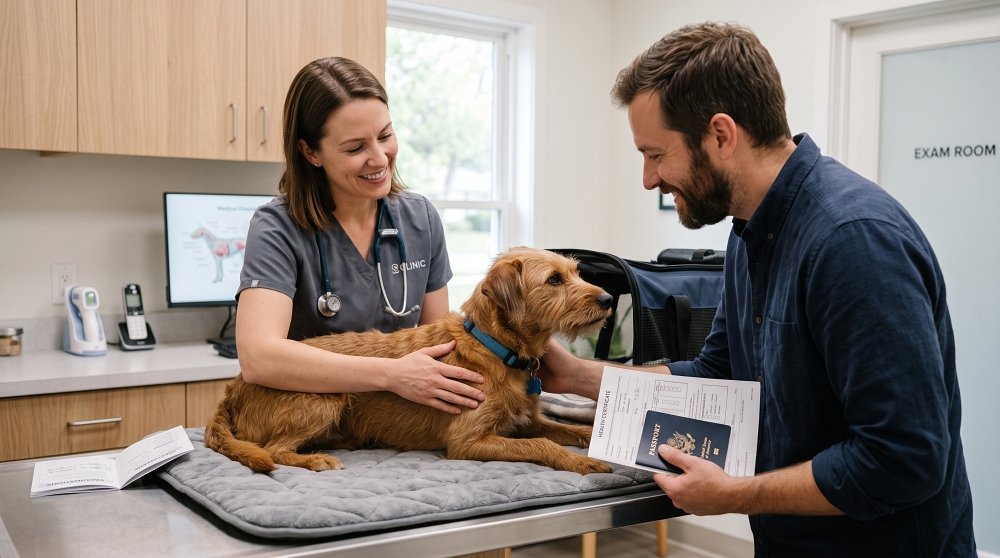
Book your pre-flight vet visit close to your travel date, not too far in advance, because many airlines and destinations require paperwork dated within 10 days of departure.
Here is what a solid pre-flight vet visit should include:
- A general health check: Your vet confirms your dog is fit to travel and flags anything that needs attention before flight day.
- A Certificate of Veterinary Inspection: A CVI usually needs to be signed by a USDA-accredited veterinarian within the required travel window, often within 10 days of departure. This is the document many airlines and destinations ask to see. Rules vary by airline, state, and country, so confirm exactly what your specific route requires before the appointment.
- Vaccination records, especially rabies: Bring the paperwork with you to the airport, not just a memory of “yes, they are up to date.”
- A conversation about anxiety and motion sickness: If your dog has a history of either, your vet can talk through options that do not involve routine sedation.
If you are flying internationally, requirements get more involved and can include country-specific import permits, additional vaccine timing rules, microchip requirements, parasite treatments, and sometimes a waiting period after the health certificate is issued. Check both the airline’s requirements and your destination country’s requirements separately, since they are not always the same list.
How to Choose and Prepare the Right Dog Carrier
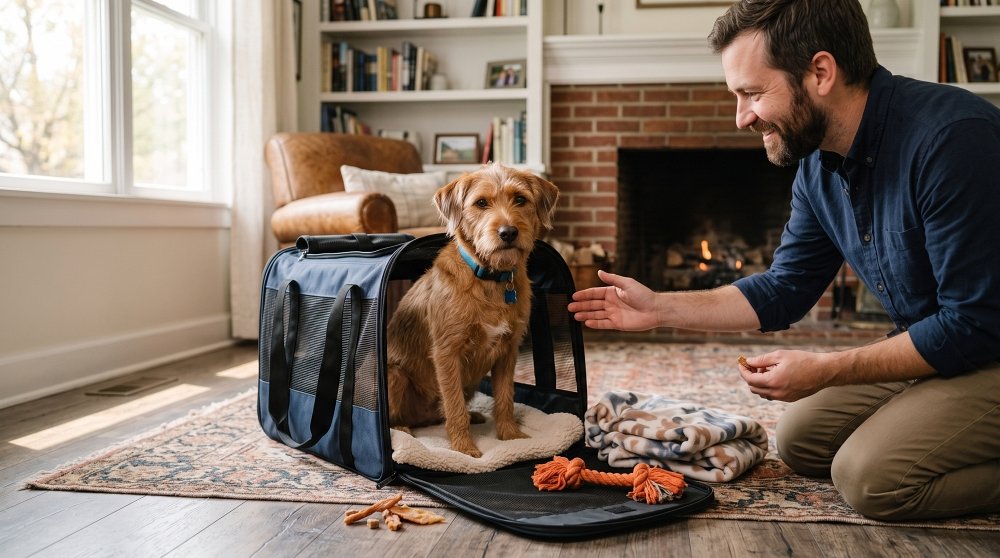
Your carrier is doing double duty: it is your dog’s safe space, and it is the piece of gear an airline gate agent may measure if it looks even slightly oversized.
- For in-cabin travel, most airlines prefer a soft-sided carrier that compresses slightly to fit under the seat. As a real-world reference point, American Airlines lists its standard soft-sided pet carrier allowance at 18 x 11 x 11 inches. Hard-sided carrier limits vary by aircraft. Every airline sets its own numbers, so check your specific carrier against your specific airline’s published dimensions before buying anything.
- For cargo or checked travel, the standard is a hard-sided, airline-approved crate. The crate should be large enough for your dog to stand without ducking, turn around, and lie down comfortably. It also needs a solid, leak-proof bottom, secure locking door, and proper ventilation. Brachycephalic breeds, when accepted at all, may need extra space and airflow.
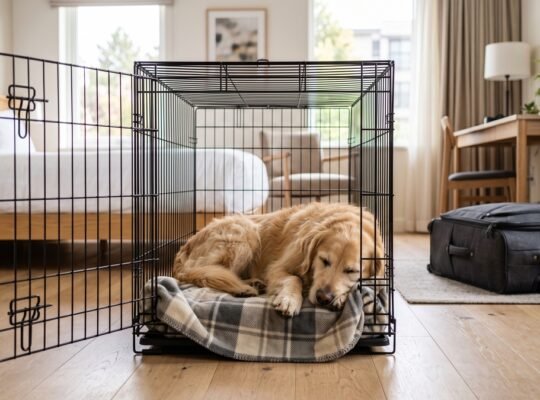
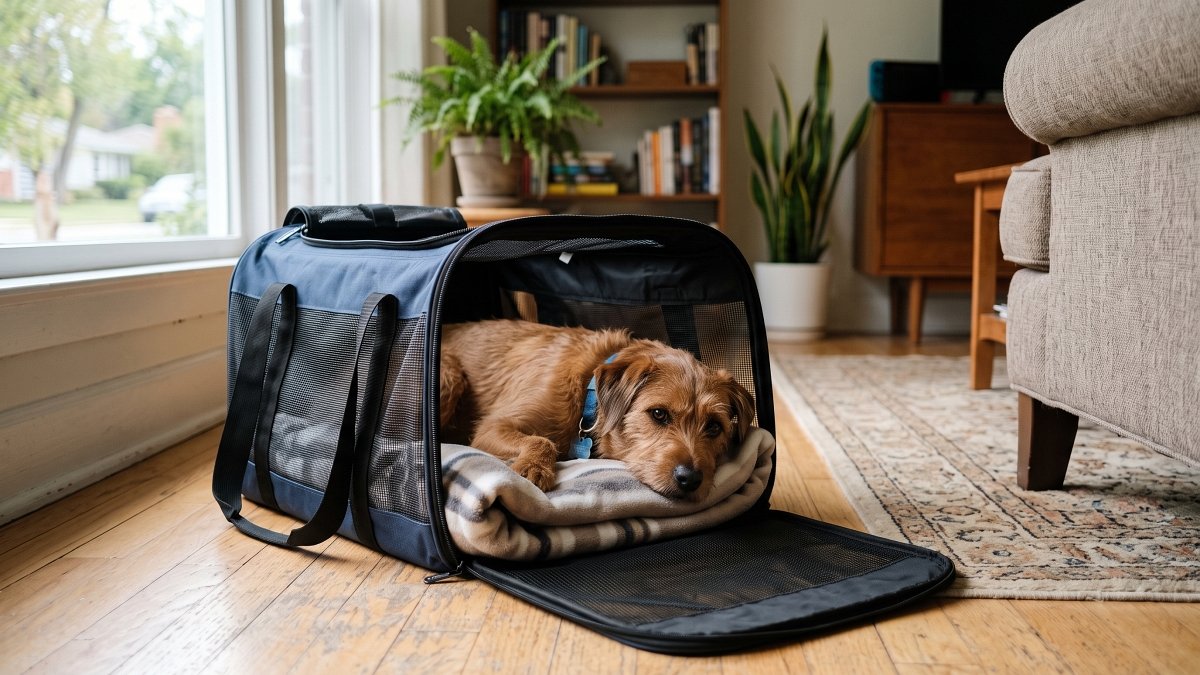
Whatever carrier you choose, do not let flight day be the first time your dog sees it. Set it up at home weeks in advance, feed meals inside it, toss treats in throughout the day, and let your dog choose to nap in it. A carrier that already smells like home and good things is doing half the emotional work before you even leave the driveway.
Why Some Dogs Struggle at the Airport
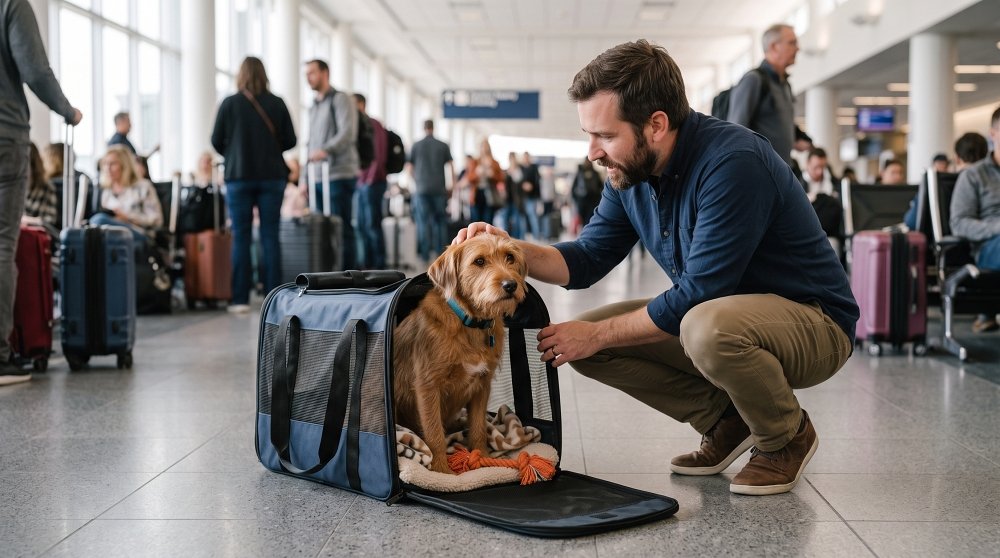
Here is the part most pre-flight checklists skip, and it is often the difference between a dog who tolerates flying and one who genuinely struggles with it.
Trainers use a concept called trigger stacking to explain why a dog who is perfectly relaxed on a normal day can suddenly seem anxious, reactive, or shut down in a new situation. Stress does not always reset to zero between triggers. It accumulates.
A car ride to the airport, unfamiliar smells, a crowded terminal, rolling luggage, loudspeaker announcements, strangers reaching toward the carrier, engine noise, and cabin pressure changes can stack on top of each other within a single hour. Individually, your dog might handle any one of those fine. Combined with no recovery time, they can push even an easygoing dog past their coping threshold.
The fix is not a single trick. It is gradual exposure spread across the two or three weeks before your flight:
- Practice the carrier at home first, so it is not a new stressor on flight day.
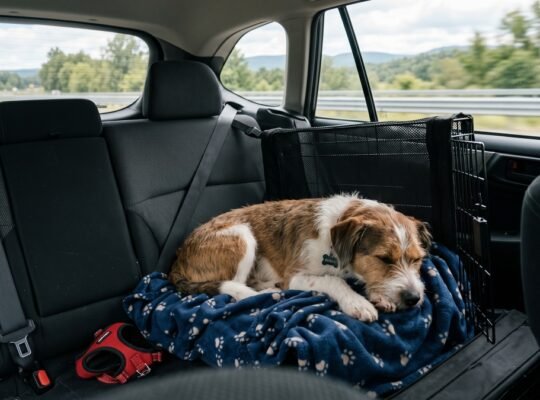
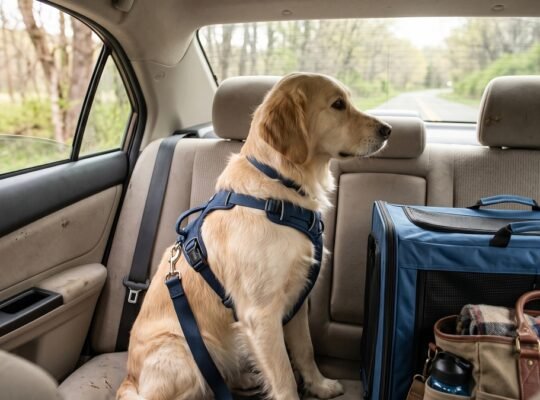
- Take short car rides in the carrier, building up from five minutes to something closer to your actual drive time to the airport.
- Visit a busy, loud public space with the carrier, such as outside a train station or farmers market, so crowd noise and movement are not brand new.
- Practice short separations while your dog is in the carrier, since some dogs’ airport stress is really about not being able to see you clearly through the mesh in a crowd.
None of this needs to be perfect. The goal is simply to reduce the number of genuinely new experiences happening on the actual travel day.
What to Pack for Flight Day
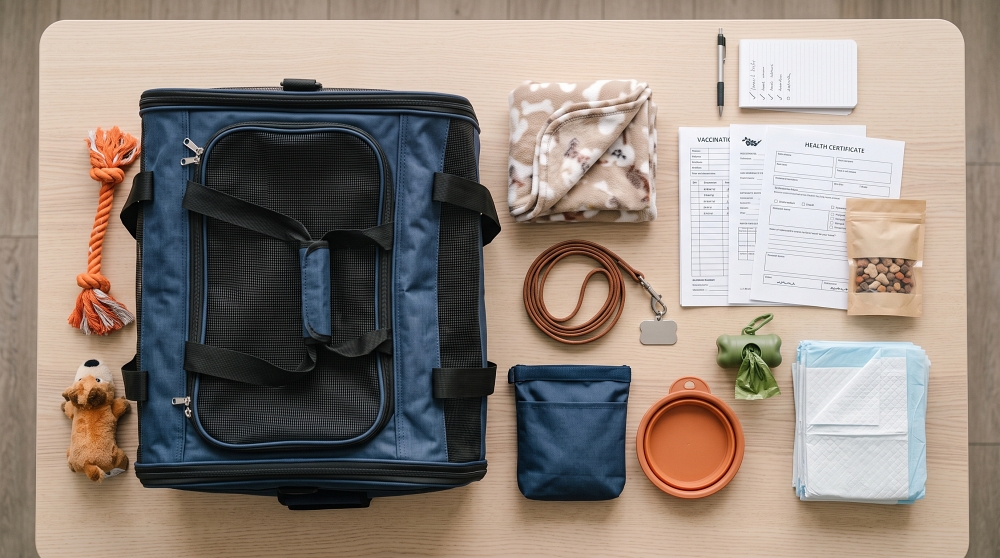
Beyond the obvious items, such as your dog, carrier, and leash, a first-time flyer’s go-bag should include:
- ID and paperwork: Your dog’s health certificate, vaccination records, and a printed copy of the airline’s pet policy, in case a gate agent needs to double-check something.
- Updated microchip and ID tag: Confirm your microchip registration has your current phone number before you leave. Add a temporary travel tag with your cell number and destination address.
- Absorbent puppy pads: Line the bottom of the carrier and pack a couple of spares.
- A small water dish: For longer travel windows, a frozen block of water can melt gradually without sloshing everywhere.
- A familiar-smelling item: A small blanket or worn T-shirt that has not been washed recently can make the carrier feel safer.
- High-value treats: Keep a few ready for security and boarding, when you need your dog calm and cooperative.
- Waste bags and cleanup supplies: Pack waste bags, gloves, paper towels, and a small pack of pet-safe wipes.
Should You Feed Your Dog Before the Flight?
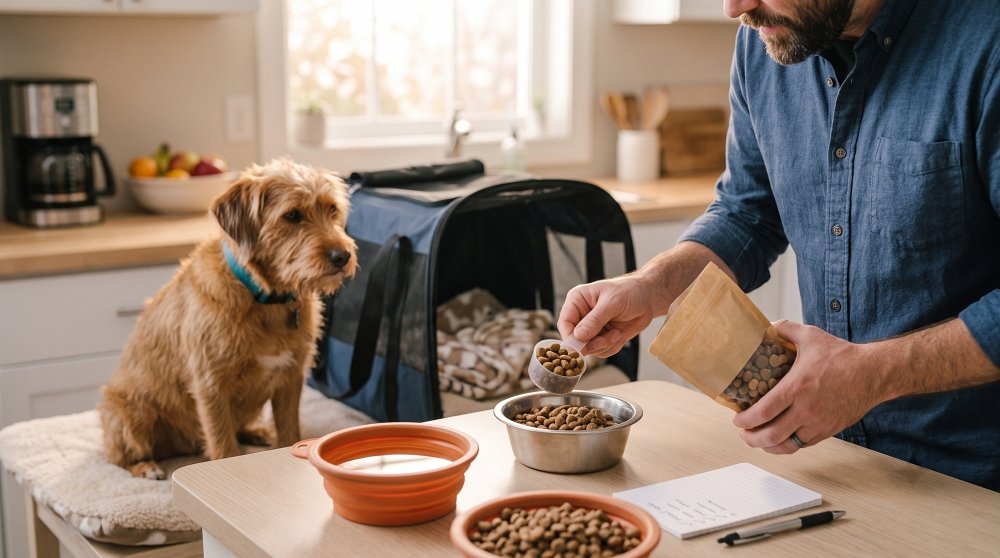
Skip a full breakfast on travel day. A lighter meal three to four hours before departure, rather than a full bowl right before you leave the house, reduces the odds of nausea or an accident mid-flight.
Keep your dog’s water access normal until you leave. Dehydration is not the goal. You are simply avoiding a huge meal immediately before boarding.
Pack a small pouch of your dog’s regular food in your carry-on in case of delays, and bring some for the other end too. Sudden food changes on top of everything else your dog is dealing with that day are one stressor you can easily avoid.
Is It Safe to Sedate a Dog for a Flight?
Short answer: generally, no, unless your veterinarian specifically recommends it for your dog.
The AVMA and several airline policies advise against routine tranquilizers or sedatives before air travel because sedation can increase the risk of heart or respiratory problems at altitude. A sedated dog also cannot naturally reposition itself, balance properly, or respond to discomfort the way an alert dog can.
If your dog has real travel anxiety, talk to your vet about alternatives well before flight day, not the morning of.
Options may include:
- A properly fitted anxiety wrap, such as a Thundershirt, which applies gentle, constant pressure some dogs find calming.
- A pheromone collar or spray, such as Adaptil, designed to mimic calming canine pheromones.
- Prescription anti-anxiety medication, such as trazodone or gabapentin, if your vet determines it is appropriate.
The important rule: test any new medication at home on a normal day first. Never use a new medication for the first time on travel day, when you are both stuck in an airport.
What Happens at Airport Security?
This part surprises many first-time dog flyers: your dog does not stay in the carrier at the TSA checkpoint.
Per TSA guidance, you need to remove your dog from the carrier and carry or walk them through the metal detector on a leash, while the empty carrier goes through the X-ray machine separately. TSA also says the leash should be removed while carrying your dog through the metal detector, then put back on immediately after.
The carrier may also get a visual or physical inspection. Get to security earlier than you normally would. This process takes longer with a dog than without one, and a rushed checkpoint is exactly the kind of stacked stress covered above.
What to Expect During the Flight
Once you are on board, airline rules require your dog to stay in the carrier, fully under the seat in front of you, for the entire flight. Do not plan on taking your dog out for a quick peek during a calm stretch.
One detail many guides leave out: dogs can experience the same ear-popping discomfort from cabin pressure changes that people do, especially during takeoff and descent. Encouraging your dog to chew on something, such as a favorite chew toy or slow-release treat, during those two windows can help them swallow more often. That helps equalize ear pressure the same way chewing gum or swallowing helps us.
Keep your voice calm and low if your dog whines or shifts around. Dogs pick up on your stress level as much as their own. A calm handler is one of the most useful de-stressors you have, and it costs nothing.
What to Do During Landing and Layovers
If you have a layover, find a pet relief area before your connecting flight, not after you have already boarded. Most major airports have at least one, often marked on airport maps.
Keep your dog in the carrier through the terminal unless you are in a designated relief area. This is safer in a crowded space and is usually what airport policies require.
Once you land for good, give your dog a few minutes to decompress before diving into a walk or a new environment. That first quiet minute where they can sniff the air and reorient is doing more for them than it looks like.
Final Thoughts on Preparing a Dog for Its First Flight
A dog’s first flight goes wrong far more often in the two weeks before departure than it does on the actual day. The usual problems are a carrier they have never seen, a vet visit booked too late for the paperwork timeline, or a dog whose first exposure to crowds and noise happens at the gate.
Give yourself a real runway. Confirm your dog is a genuine candidate for flying, get the vet visit and paperwork sorted with the required travel window in mind, choose a carrier that fits both your airline’s rules and your dog’s actual size, and spend a couple of weeks turning the whole experience from unfamiliar into predictable.
None of this guarantees a perfectly silent flight. But it stacks the odds heavily in favor of a dog who lands at your destination tired, a little rumpled, and fundamentally fine. For a first flight, that is exactly the win you are looking for.
Click Here to Add SmartPawLife as a Trusted Source Add as a preferred source on Google