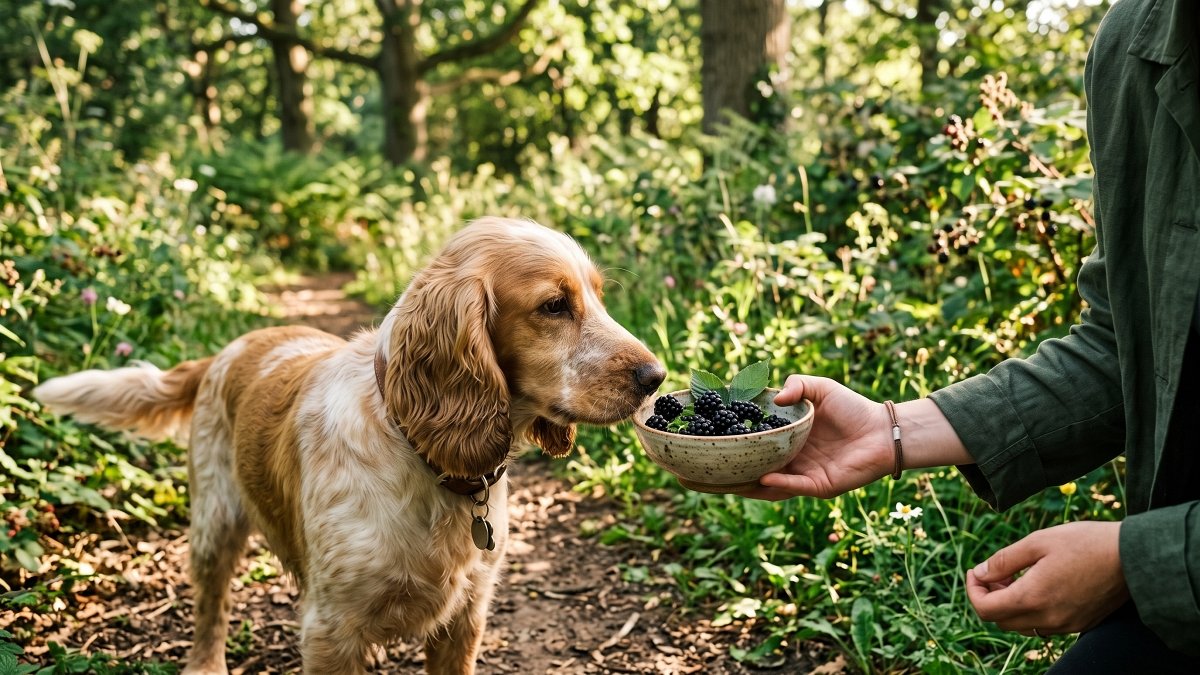
If your dog has ever nosed a blackberry off the kitchen counter or come back from a walk with purple-stained lips after raiding a bramble bush, you have probably wondered whether you need to panic. The good news is that blackberries are one of the fruits vets and dog nutrition sources generally consider safe, but “safe” comes with real conditions worth understanding before you make them a regular treat.
This guide covers what blackberries actually offer your dog nutritionally, the specific risks that trip owners up, including one most blogs never mention, exactly how many berries are appropriate for your dog’s size, and how to serve them so the experience stays a treat and never becomes a vet visit.
Are Blackberries Safe for Dogs to Eat?
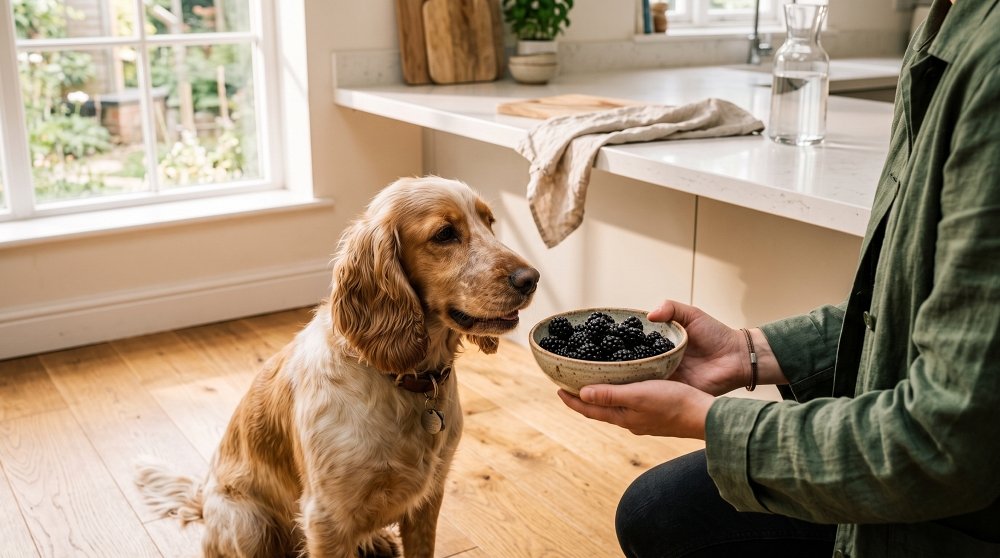
Yes. Plain, fresh, washed blackberries are non-toxic to dogs and are one of the fruits commonly recommended as a lower-calorie alternative to processed treats, according to the American Kennel Club and PetMD. They are not on the short list of fruits that are genuinely dangerous to dogs, like grapes and raisins.
That said, “safe” here means safe in moderation, prepared correctly, and matched to your dog’s size. A few blackberries scattered into a bowl are very different from a dog getting into an unattended bowl on the counter, and the difference matters more than most people assume.
What Nutritional Benefits Do Blackberries Offer Dogs?
Blackberries are not just an empty-calorie treat. Per 100 grams, raw blackberries provide roughly 43 calories, about 5.3 grams of fiber, 15.4 milligrams of vitamin C, and just under 20 micrograms of vitamin K, along with manganese, according to USDA nutrition data. For a dog, that translates into a few genuine, if modest, benefits:
- Fiber for digestion: The fiber content can support regular stool consistency, which is one reason some owners use a few berries as an occasional digestive aid rather than just a treat.
- Antioxidants, including anthocyanins: The deep purple-black color comes from anthocyanins, plant compounds studied for their role in reducing oxidative stress. Dogs process these differently than humans do, and the amount in a handful of berries is small, but it is not nothing.
- Low calorie density: At roughly 43 calories per 100 grams, blackberries are far lighter than most commercial dog treats, which makes them a reasonable option for a dog on a weight-management plan.
- Vitamin C and vitamin K: Dogs synthesize their own vitamin C and do not strictly need dietary sources the way humans do, so this is a minor bonus rather than a nutritional necessity.
It is worth being honest here: none of this makes blackberries a superfood for dogs. A dog eating a complete, balanced commercial diet is already getting everything these nutrients provide. The benefit of blackberries is that they are a lower-risk way to satisfy a dog’s begging instinct than a piece of cheese or a store-bought biscuit, not that your dog needs them.
What Are the Risks of Feeding Blackberries to Dogs?
This is where most articles stop at “too much sugar causes tummy upset” and move on. That is true, but it is only part of the picture.
Too Much Sugar or Fiber Can Upset the Stomach
Blackberries contain natural sugar, and feeding too many at once, especially to a dog not used to fruit, can cause loose stool, gas, or vomiting. This is a volume problem, not a toxicity problem.
Interestingly, the deep purple pigment can also turn a dog’s stool blue-black, which understandably alarms owners who mistake it for blood. If your dog just ate a handful of blackberries and the next stool looks unusually dark, the berries are the most likely explanation. But dark stool can look similar to true GI bleeding, so if you did not see your dog eat blackberries recently, treat dark or tarry stool as a reason to call your vet rather than assume the harmless explanation.
Blackberries Contain Trace Xylitol, But Not a Dangerous Amount
You may have read somewhere that xylitol, the sugar substitute that is genuinely toxic to dogs in products like sugar-free gum, occurs naturally in small amounts in blackberries and other berries. This is true. Both the AKC and PetMD note that the trace levels found in whole fruit are far too small to cause harm at the serving sizes a dog would realistically eat.
The real danger is manufactured xylitol added to processed foods, gum, peanut butter, and baked goods, not the fruit itself. This is a useful distinction to actually understand rather than wave away, because it explains why whole blackberries are fine but blackberry jam, jelly, or a “healthy” fruit spread is not safe unless you have confirmed it is xylitol-free.
Moldy or Fermenting Berries Are a Real Danger
Here is the part worth actually knowing. Blackberries are soft, high-moisture fruit that mold quickly, sometimes within a day or two of ripening, especially if left in a bowl at room temperature or picked from a bramble past their prime.
Certain mold species, particularly Penicillium strains, can produce tremorgenic mycotoxins, compounds like penitrem A that specifically target the nervous system. This is the same mechanism behind well-documented cases of dogs getting dangerously sick from moldy walnuts, dairy, or compost, and it is a genuine risk with any soft, sugary fruit that has started to turn, according to the Merck Veterinary Manual.
Symptoms of tremorgenic mycotoxicosis can appear within one to two hours of ingestion and include tremors, muscle twitching, disorientation, a racing heart, and, in serious cases, seizures. It is treatable when caught early, but it is also entirely preventable: never feed a dog a squishy, sour-smelling, or visibly fuzzy berry, and do not let them scavenge fallen fruit under a bramble bush or in the yard.
This single habit, checking every berry before it goes in the bowl, matters more for safety than almost anything else in this guide.
Wild Blackberries Come With Thorns and Look-Alike Risks
If your dog forages from wild bramble bushes on walks, two extra risks apply. First, blackberry canes have sharp thorns that can scratch a dog’s mouth, gums, or paws. Second, several genuinely toxic berries can resemble blackberries to an untrained eye, including pokeweed berries. Other dark berries, like holly and mistletoe, carry their own toxicity risks, according to ASPCA Animal Poison Control.
Unless you can positively identify the plant, do not let your dog eat berries growing wild. Steer them away from unfamiliar bramble patches on walks.
Whole Blackberries Can Be a Choking Hazard
Whole blackberries are small, but a toy-breed dog or a young puppy still learning to chew can gulp one down without chewing it properly. This is a low-probability but real risk, and it is easily solved by mashing or halving berries for small dogs and puppies rather than handing over whole fruit.
How Many Blackberries Can a Dog Eat?
The general veterinary guidance is that treats of any kind, blackberries included, should make up no more than about 10% of a dog’s daily calorie intake, a standard reinforced by VCA Animal Hospitals’ treat guidelines. In practice, that works out to a small, size-appropriate portion rather than a free-for-all bowl.
| Dog size | Suggested serving |
|---|---|
| Extra-small dogs, 2 to 10 lbs | 1 berry |
| Small dogs, 11 to 20 lbs | 2 berries |
| Medium dogs, 21 to 50 lbs | 2 to 5 berries |
| Large dogs, 51 to 90 lbs | 5 to 6 berries |
| Extra-large dogs, 91+ lbs | 7 to 8 berries |
These numbers are a reasonable starting point, not a rigid prescription. A dog with a sensitive stomach, a history of pancreatitis, or a prescription diet may need far fewer, or none at all, so it is worth a quick check with your vet if any of that applies to your dog.
How to Safely Serve Blackberries to Your Dog
1. Wash Them Thoroughly
Rinse berries under running water to remove dirt, residue, and any pesticide traces, whether they came from a store, your own garden, or a farmers market.
2. Serve Fresh Blackberries, Not Processed Ones
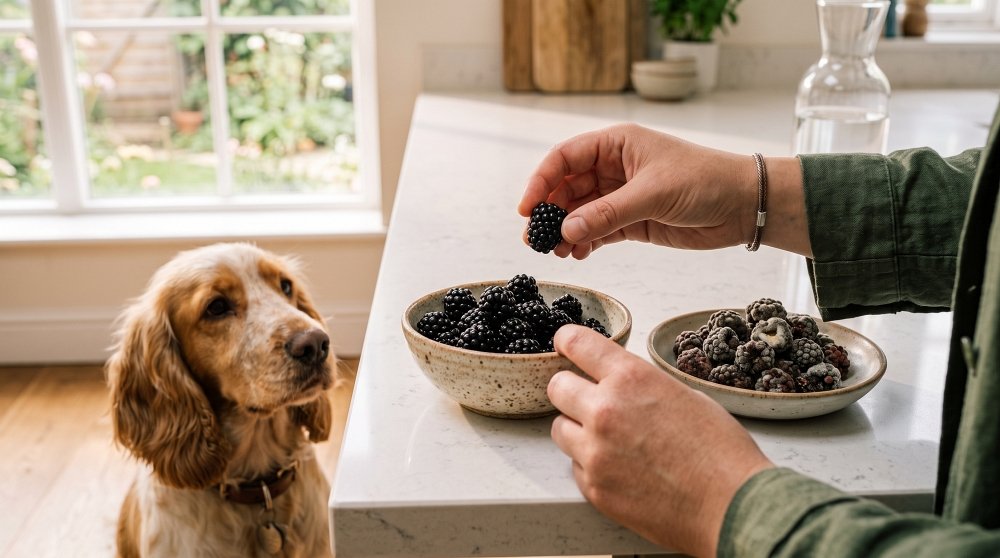
Plain fresh blackberries are the safest option. If you use frozen berries, check that they contain no added sugar or sweeteners, since some frozen fruit blends and syrups include xylitol. Frozen plain berries can actually make a nice cool treat in warm weather, as long as the ingredient list is just “blackberries.”
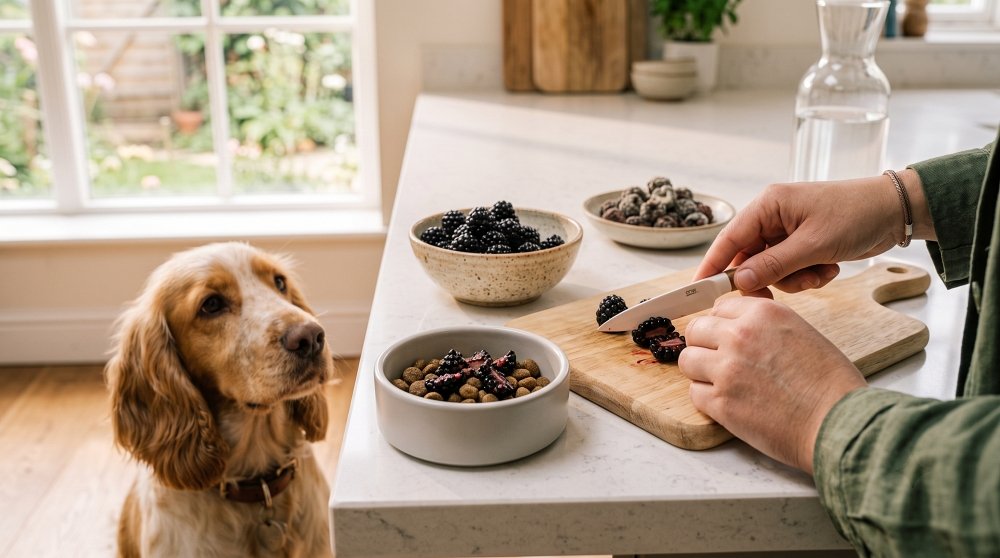
3. Mash or Halve Them for Small Dogs and Puppies
Cut, mash, or lightly mush berries for toy breeds, senior dogs, and puppies to reduce the choking risk mentioned above.
4. Introduce Blackberries Slowly
The first time your dog tries blackberries, offer just one or two and watch for any digestive reaction over the next day before making them a regular addition. This is standard practice for introducing any new food, not unique to blackberries.
5. Use Them in Meals or Enrichment
A few mashed berries stirred into regular food, blended with plain yogurt on a lick mat, or frozen inside a food-dispensing toy can stretch the treat out and add mental enrichment, rather than turning berries into a rapid-fire snack.
Can Dogs Eat Blackberry Jam, Juice, Baked Goods, or Wine?
Skip all of them. Jam and jelly concentrate the sugar dramatically and often contain added sweeteners, some of which may include actual xylitol rather than the trace natural amount found in whole fruit. Juice is mostly sugar with the fiber stripped out. Pies, cobblers, and muffins usually contain butter, excess sugar, and sometimes ingredients like xylitol-sweetened baking mixes or chocolate. Blackberry wine or cordial contains alcohol, which is toxic to dogs even in small amounts.
If you want to share the blackberry experience with your dog, whole plain fruit is the only version worth offering.
What Signs Mean You Should Call the Vet?
Occasional soft stool after too many berries usually resolves on its own within a day. Call your veterinarian or an emergency vet promptly if you notice any of the following after your dog eats blackberries, especially ones that may have been moldy, wild, or unidentified:
- Repeated vomiting or diarrhea that does not settle within 24 hours
- Tremors, muscle twitching, wobbliness, or disorientation
- Seizures
- Unusual restlessness, rapid heart rate, or excessive drooling
- Dark or tarry stool when you did not directly see your dog eat blackberries
None of this is meant to replace an actual veterinary exam. If your dog seems off in any way after eating something unfamiliar, a call to your vet or a pet poison helpline is always the safer move than waiting to see how things play out.
The Bottom Line
Blackberries are a fruit most dogs can enjoy safely, in small, appropriately sized portions, served plain and fresh. The nutritional upside is real but modest, so think of them as a lower-risk treat rather than a health supplement. The details that actually matter for safety are the ones easy to overlook: check every berry for mold before it goes in the bowl, keep portions in line with your dog’s size, skip anything processed like jam or baked goods, and be cautious about wild bramble patches on walks. Get those right, and a few blackberries make a perfectly good, dog-safe treat.
If you are still working out which everyday foods belong in your dog’s bowl and which need extra caution, it is worth building that knowledge one food at a time, the same way you would if you were newly navigating what makes a dog breed a good fit for a first home. Fruits like these sit at the easier end of that learning curve.
Vegetables can be trickier since some, like certain crunchy produce, are fine while others hide risk in a specific part of the plant, the way certain garden vegetables are safe when ripe but risky in their green or vine form. And plenty of pantry staples, like the ones found in a jar of pickles, look harmless but carry hidden salt or seasoning risks blackberries simply do not have.