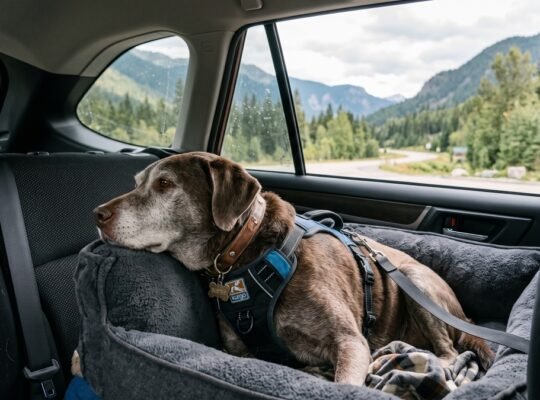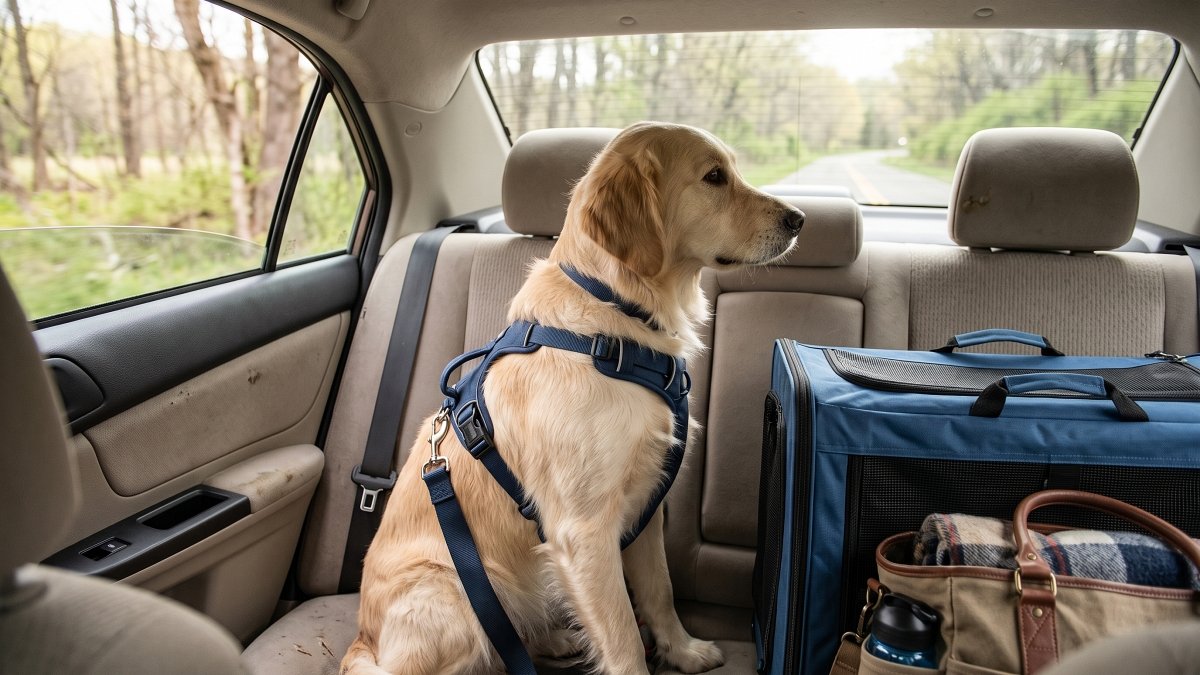
Planning a road trip with your dog is exciting, but it is easy to reach the highway and realize you forgot something important, such as a secure travel harness or enough of your dog’s regular food for the entire trip. A rushed packing job can turn the first few hours on the road into a stressful experience for both of you.
This guide explains exactly what to pack for a dog road trip, how to keep your dog safe and comfortable in the car, and how to prepare for problems such as motion sickness, anxiety, overheating, and minor injuries.
Whether you are driving two hours to a lake house or spending several days crossing the country, the same essential dog travel checklist applies.
What Should Be in Every Dog’s Road Trip Bag?
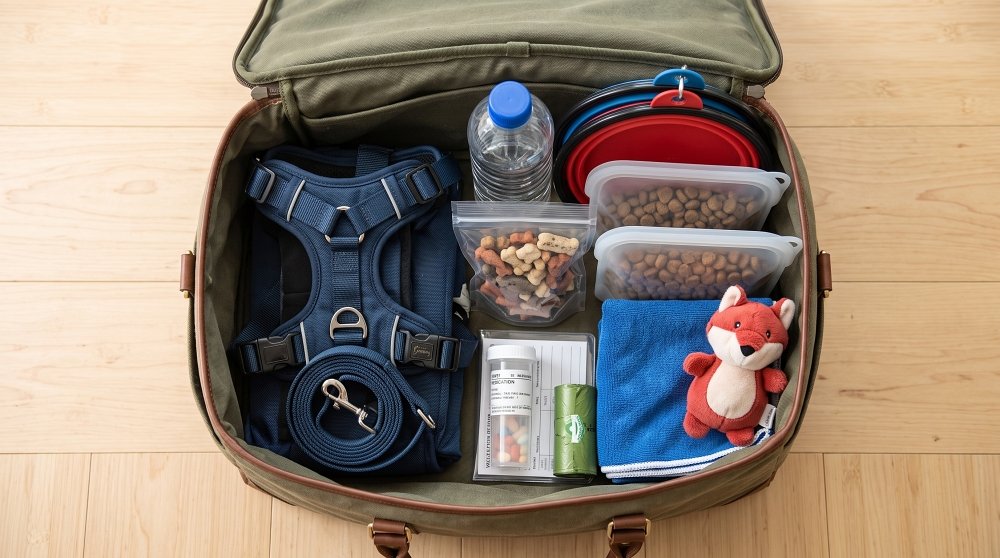
Organizing your dog’s supplies by category makes packing easier and helps prevent important items from getting buried under luggage.
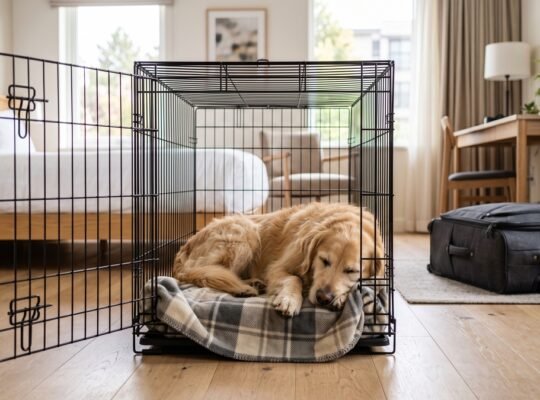
Restraint and Containment
- A crash-tested travel crate or properly fitted car safety harness
- A standard leash for rest stops and parking lots
- A backup leash in case the first one breaks or gets lost
- A well-fitted harness or martingale collar
- A portable exercise pen if you will be camping or staying outdoors
- A familiar muzzle if your dog already uses one for veterinary visits or stressful situations
Avoid relying on a retractable leash near roads, parking lots, or unfamiliar dogs. A standard leash gives you more control when traffic, wildlife, or sudden noises cause your dog to react.
Food and Water
- Your dog’s regular food
- A few extra days of food in case the trip is delayed
- Measuring cup or pre-portioned meal bags
- Familiar treats for training and reassurance
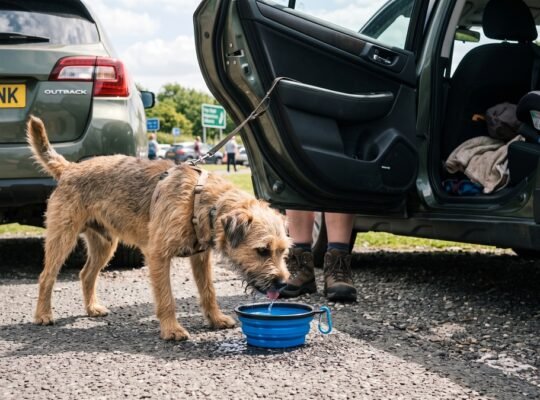
- Collapsible or spill-resistant bowls
- Bottled water or water brought from home
- A sealable container for storing food
- A cooler if your dog’s food or medication must remain refrigerated
Changing food suddenly during a trip can cause vomiting, gas, or diarrhea. Pack more than you expect to need so you are not forced to switch brands halfway through the journey.
Health and Identification
- Copies of vaccination records
- Current rabies certificate
- Daily medications with clear dosing instructions
- A few extra days of medication
- Pet first aid supplies
- Current flea, tick, and heartworm prevention
- ID tag with a working phone number
- Up-to-date microchip registration
- Recent photo of your dog
- Your veterinarian’s contact information
- Contact details for emergency veterinary hospitals along your route
An ID tag and microchip work best together. A visible tag helps someone contact you immediately, while a registered microchip provides permanent identification if the collar comes off.
Comfort and Cleanup
- A familiar bed or blanket
- Favorite toy or chew
- Waste bags
- Paper towels
- Small trash bags
- Pet-safe enzymatic cleaner
- Towel for wet or muddy paws
- Grooming wipes
- Seat cover or waterproof cargo liner
- Spare bedding in case of an accident
- Cooling mat or warm blanket, depending on the weather
Familiar smells can help an anxious dog settle in the car or an unfamiliar hotel room. Whenever possible, bring bedding your dog already uses instead of buying something new for the trip.
How Do You Keep Your Dog Safe in the Car?
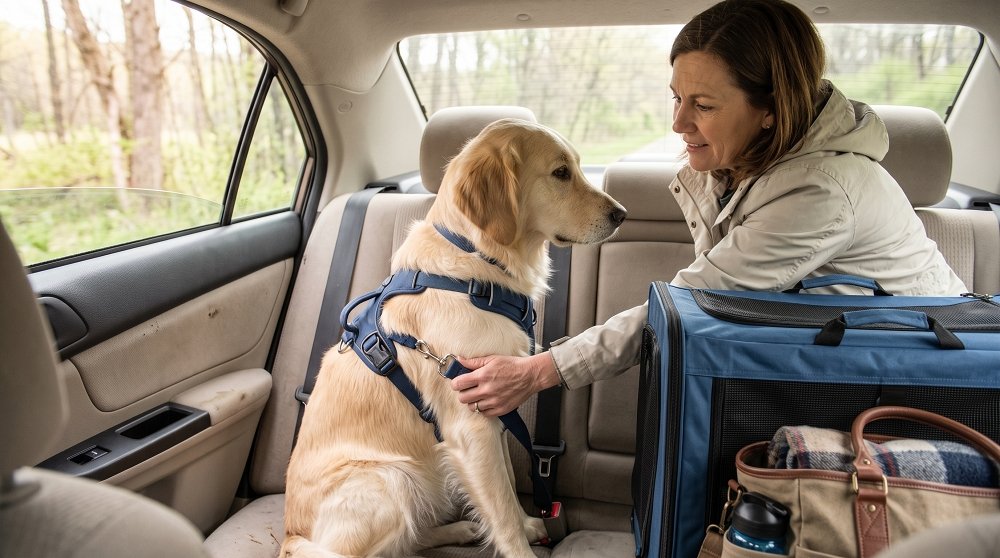
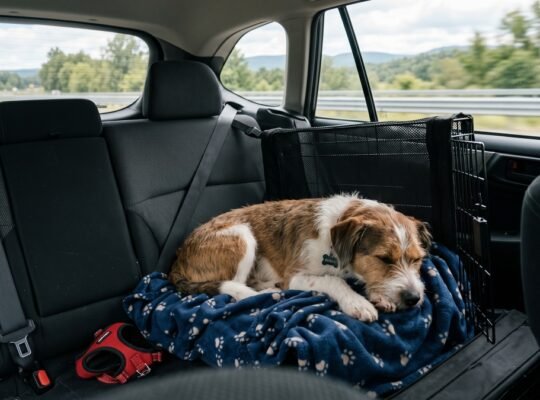
A dog should not ride loose inside a moving vehicle. An unrestrained dog can distract the driver, be thrown during sudden braking, or escape when a door opens.
The CDC’s pet travel guidance recommends keeping dogs in the back seat using a secured harness or a properly ventilated crate that cannot slide or shift when the vehicle stops.
The two main restraint options compare like this:
| Option | Benefits | Limitations |
|---|---|---|
| Secured travel crate | Fully contains the dog, limits driver distraction, and can feel familiar to crate-trained dogs | Requires enough room in the vehicle and must be securely anchored |
| Crash-tested harness | Uses less space and allows the dog to sit or lie on the seat | Must fit correctly, and protection depends on how the product was tested |
| Soft-sided carrier | Lightweight and practical for smaller dogs | May provide less structural protection than a rigid carrier |
| Vehicle barrier | Keeps the dog away from the driver | Does not restrain the dog during a crash and should not be treated as a complete safety system |
Marketing terms can be misleading. A product described as “crash-tested” may have been tested only by its manufacturer or may not have passed a meaningful independent standard. The nonprofit Center for Pet Safety publishes independent research and test results for harnesses, crates, carriers, and pet travel seats.
Before buying safety equipment, confirm:
- The product is appropriate for your dog’s weight and body shape
- The harness fits snugly without restricting breathing
- The crate is large enough for your dog to stand, sit, turn around, and lie down
- The crate or carrier can be securely attached to the vehicle
- The manufacturer clearly explains its testing process
- The equipment has been introduced before the travel day
A frightened dog should not encounter a new crate or harness for the first time immediately before an eight-hour drive. Practice using the equipment at home and during short trips.
Additional Car Safety Rules
- Keep your dog in the back seat, away from active front airbags.
- Attach the leash before opening a car door.
- Never clip a seatbelt tether directly to a flat collar.
- Do not allow your dog to sit on the driver’s lap.
- Keep paws and heads inside the vehicle.
- Use child locks if your dog can operate a door or window switch.
- Secure luggage so it cannot fall into the dog’s area.
- Never transport a dog loose in an open truck bed.
A partially opened window can provide airflow, but the gap should not be wide enough for your dog to put its head outside. Flying debris can damage the eyes and ears, and an unsecured dog may attempt to jump.
Leash-first habits are particularly important with scent-driven breeds. A curious dog such as a Beagle may follow an interesting smell before you have time to react.
What Documents and ID Should You Bring?
Travel requirements vary by destination, so check the rules before leaving rather than assuming your regular vaccination tag is enough.
The CDC recommends confirming destination requirements, keeping vaccinations current, updating microchip information, and carrying proof of rabies vaccination.
Consider packing the following:
Rabies Certificate
Bring the actual certificate, not only the tag attached to your dog’s collar. Some destinations, accommodations, parks, borders, and emergency facilities may ask for written proof.
Vaccination and Medical Records
Carry a summary of your dog’s current vaccinations, medical conditions, allergies, prescriptions, and recent treatments. Digital copies are useful, but printed copies can be easier to access when reception or battery life is limited.
Microchip Information
Confirm that the registry has your current phone number, email address, and home address. Save the microchip number somewhere accessible on your phone.
A microchip is not a GPS tracker. It helps identify your dog only after someone finds the dog and scans the chip.
Recent Photos
Keep clear photos showing your dog’s face, body, coat pattern, and any distinctive markings. These can help if you need to create a lost-pet notice quickly.
Veterinary Contacts
Save your regular veterinarian’s phone number and identify emergency hospitals near your destination. For longer routes, note several emergency clinics along the way instead of relying on a single destination clinic.
If you are crossing state or national borders, confirm current requirements through the destination’s official government or animal-health authority. Rules can change and may involve additional certificates or entry conditions.
What Should Be in a Dog First Aid Kit?
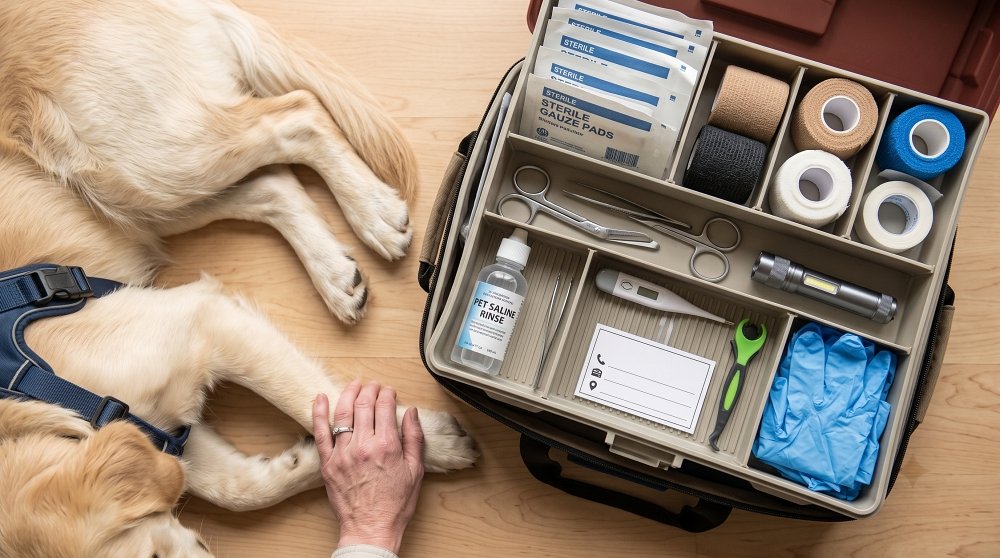
A basic pet first aid kit can help you manage a minor problem until professional care is available. It is not a replacement for veterinary treatment.
Useful items include:
- Sterile gauze pads and gauze rolls
- Nonstick wound pads
- Self-adhering bandage wrap
- Medical tape
- Blunt-tip scissors
- Disposable gloves
- Tweezers
- Saline wound rinse
- Digital thermometer reserved for pet use
- Instant cold pack
- Clean towel
- Small flashlight
- Tick-removal tool
- Spare leash or slip lead
- Medication list and medical history
- Emergency veterinary and poison-control phone numbers
Do not add human pain relievers unless your veterinarian has specifically instructed you to do so. Common medications such as ibuprofen, naproxen, and acetaminophen can be dangerous to dogs.
Do not induce vomiting after a suspected poisoning unless a veterinarian or pet poison professional directs you. Vomiting can make certain exposures more dangerous.
How Often Should You Stop With a Dog on a Road Trip?
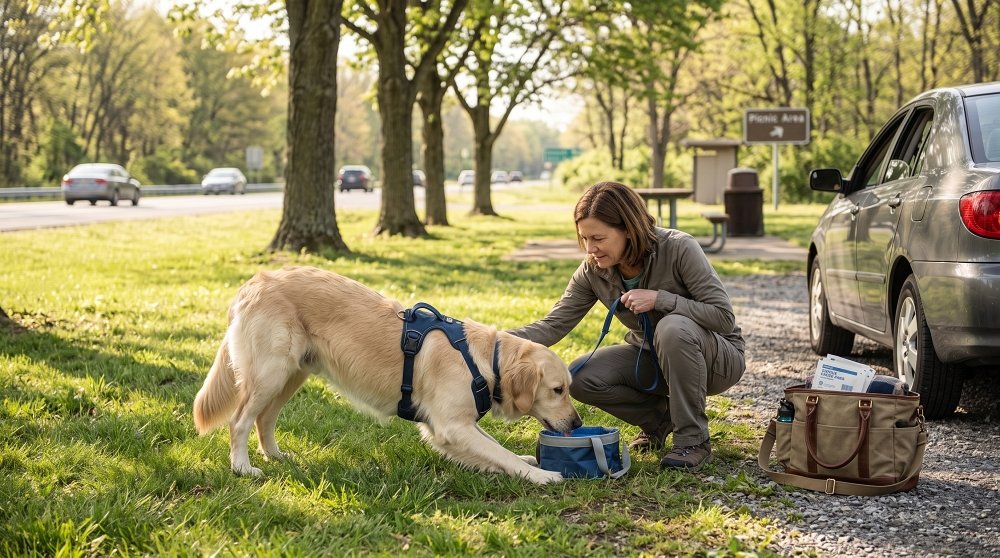
For most healthy adult dogs, plan a break approximately every two to four hours. Puppies, senior dogs, dogs with medical conditions, and dogs that become anxious or carsick may need more frequent stops.
Use the break for more than a quick bathroom visit:
- Park in a safe location away from moving traffic.
- Attach the leash before opening the door.
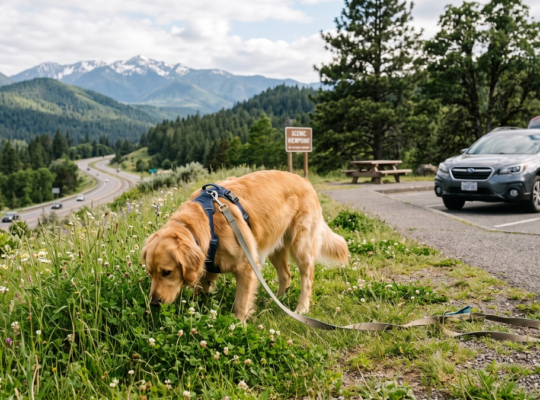
- Give your dog time to walk, sniff, and stretch.
- Offer fresh water.
- Check the paws, harness, and general behavior.
- Allow the dog to settle before returning to the vehicle.
The CDC recommends frequent stops so dogs can relieve themselves and stretch their legs.
Choose designated pet areas or quiet grassy spaces when possible. Avoid stagnant water, discarded food, animal waste, and heavily trafficked patches where parasites or contagious illnesses may be present.
Do not leave your dog tied outside while you enter a store or restroom. Travel with another adult when possible so one person can remain with the dog.
How Can You Prevent Carsickness and Anxiety?
Motion sickness is common in puppies because the structures of the inner ear involved in balance may not be fully developed. Many puppies improve by around one year of age, although adult dogs can also experience nausea or anxiety during travel.
Dogs that ride only when going to the veterinarian may also learn that entering the car predicts something stressful. Over time, anxiety can begin before the vehicle even moves.
According to VCA Animal Hospitals, signs of motion sickness can include:
- Excessive drooling
- Lip licking or smacking
- Whining
- Pacing
- Lethargy
- Vomiting
- Defecation
Practice Before the Trip
Start several days or weeks before departure:
- Let your dog sit in the parked car with the engine off.
- Reward calm behavior and leave after a few minutes.
- Repeat with the engine running.
- Take a short drive around the block.
- Gradually increase the distance.
- Include trips that end somewhere pleasant.
If your dog becomes highly distressed, shorten the session. Forcing an anxious dog through a long ride can strengthen the negative association.
Make the Car More Comfortable
- Keep the cabin cool and quiet.
- Use a familiar blanket.
- Make sure the restraint does not pinch or slide.
- Drive smoothly and avoid sudden braking.
- Provide airflow without allowing the dog’s head outside.
- Stop if you notice early signs of nausea.
Ask Your Vet About Medication
If practice rides are not enough, speak with your veterinarian before traveling. Maropitant, commonly sold as Cerenia, is a prescription medication used to prevent vomiting associated with motion sickness. Your vet may recommend a different approach if anxiety is the main problem.
Do not give human motion-sickness medicine, sedatives, or supplements without veterinary guidance. The correct medication and dose depend on your dog’s weight, age, health, and other prescriptions.
What About Food, Water, and Treats on the Road?
Keep your dog’s normal diet as consistent as possible. A sudden switch to unfamiliar food or a large serving of table scraps can create stomach problems at the worst possible time.
The CDC suggests feeding a dog approximately three to four hours before departure to help reduce vomiting. However, the right schedule can differ for puppies, dogs with diabetes, dogs taking medication with food, and dogs with other medical conditions. Ask your veterinarian for individual guidance if your dog has special dietary needs.
Helpful road-trip feeding habits include:
- Offer a smaller meal before departure instead of a large one immediately before driving.
- Pack measured portions for each day.
- Bring a few extra meals in case of delays.
- Offer water during breaks.
- Avoid allowing a nauseated dog to gulp a large amount at once.
- Use familiar treats sparingly.
- Keep food sealed and out of the dog’s reach.
- Refrigerate perishable food promptly.
Avoid sharing gas-station snacks or seasoned leftovers. Many ordinary foods contain ingredients that dogs should not eat. For example, onions are toxic to dogs whether they are raw, cooked, powdered, or mixed into sauces.
If your dog refuses unfamiliar water, water brought from home may help. You can gradually mix it with local water during a longer stay. Persistent refusal to drink, especially with vomiting, diarrhea, weakness, or tacky gums, deserves veterinary attention.
How Do You Protect Your Dog From Heat?
Never leave a dog alone in a parked vehicle, even with the windows cracked. The interior temperature can rise rapidly, and mechanical problems can make leaving the engine and air conditioning running unreliable.
The ASPCA warns that heatstroke symptoms can include excessive panting, difficulty breathing, drooling, weakness, collapse, vomiting, diarrhea, and seizures. A body temperature above 104°F can accompany dangerous overheating.
Flat-faced breeds, senior dogs, puppies, overweight dogs, and dogs with heart or respiratory conditions face greater heat risk. Breeds such as Bulldogs cannot cool themselves as efficiently through panting and require particularly careful temperature management.
Useful warm-weather supplies include:
- Plenty of fresh water
- Spill-resistant bowl
- Cooling mat or vest
- Reflective window shade
- Battery-powered fan designed for safe crate use
- Towels that can be dampened with cool water
- Paw protection for hot surfaces
Travel during cooler parts of the day when possible. Check pavement before allowing your dog to walk on it, and keep rest stops brief when temperatures are high.
If your dog shows signs of heatstroke, move them to a cooler area, begin cooling with cool or lukewarm water, and seek emergency veterinary care immediately. Do not use ice water, and do not delay treatment because the dog appears to improve.
How Do You Keep a Dog Comfortable in Cold Weather?
Cold-weather travel creates different risks, particularly for small dogs, thin-coated breeds, puppies, seniors, and dogs with arthritis.
Pack:
- Warm, dry bedding
- A properly fitted dog coat if your dog normally wears one
- Waterproof paw protection
- Towels for snow and ice
- Fresh water that has not frozen
- Pet-safe paw balm
- Extra medication if cold weather worsens joint discomfort
Check paws after walking in treated areas. Road salt and ice-melting chemicals can irritate the pads or cause illness if licked from the feet.
A parked vehicle can become dangerously cold, so the rule against leaving a dog unattended applies in winter as well as summer.
Where Should Your Dog Sleep During the Trip?
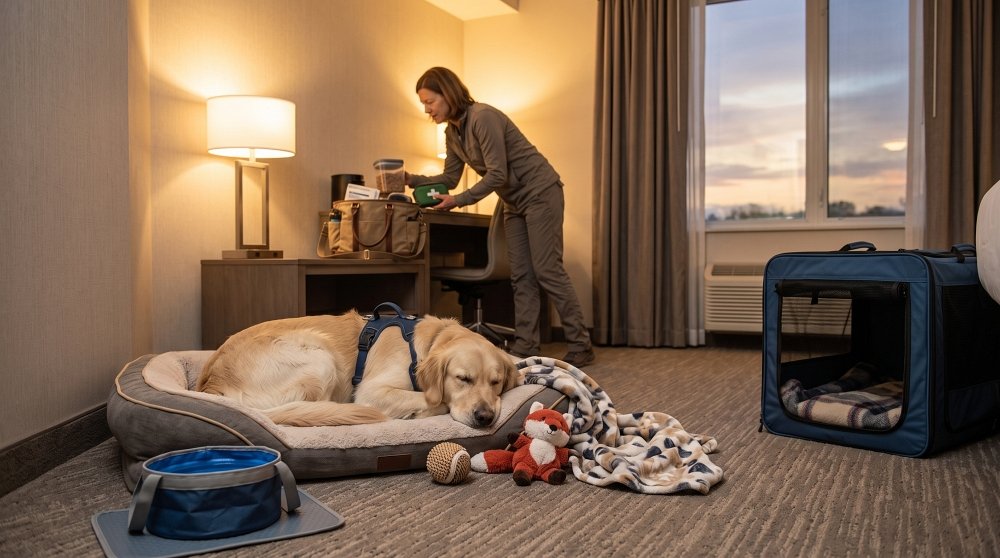
Confirm that your accommodation accepts dogs before you arrive. “Pet-friendly” can still involve weight limits, breed restrictions, cleaning charges, or rules about leaving animals unattended.
Once inside:
- Inspect the room for dropped medication, food, sharp objects, and accessible trash.
- Check doors, windows, balconies, and fencing.
- Set up your dog’s bed, water, and crate in a quiet area.
- Keep the normal feeding and walking schedule where possible.
- Use a leash during the first few bathroom trips.
- Do not leave a dog alone unless the accommodation permits it and your dog is comfortable with separation.
A familiar bedtime routine can help your dog settle. Bring the same bed, blanket, and quiet cue you use at home.
When Should You Call a Vet During a Road Trip?
Contact a veterinarian promptly if your dog develops:
- Repeated vomiting or diarrhea
- Difficulty breathing
- Collapse or severe weakness
- A swollen or painful abdomen
- Pale, blue, or unusually dark gums
- Seizures or disorientation
- Heatstroke symptoms
- Inability to urinate
- Significant bleeding
- Suspected poisoning
- Persistent refusal to drink
- An injury from a fall, collision, or animal encounter
Save the number of the nearest emergency veterinary hospital before leaving. Waiting until an emergency occurs can cost valuable time, particularly in an unfamiliar area.
Dog Road Trip Packing Checklist
Use this list for a final check before leaving:
- Crash-tested crate or car safety harness
- Standard leash and backup leash
- Well-fitted harness or collar
- Regular food and extra portions
- Water from home
- Food and water bowls
- Familiar treats
- Daily medications
- Pet first aid kit
- Flea, tick, and heartworm prevention
- Vaccination and rabies records
- Updated ID tag
- Current microchip registration
- Recent photos of your dog
- Veterinary contact information
- Familiar bed or blanket
- Favorite toy or chew
- Waste bags
- Paper towels and trash bags
- Enzymatic cleaner
- Towels for wet or muddy paws
- Spare bedding
- Seat cover or cargo liner
- Cooling or cold-weather gear
- Accommodation details
- Emergency veterinary hospital information
The Bottom Line
A successful dog road trip comes down to three things: securing your dog properly, keeping food and daily routines familiar, and preparing for predictable problems before they happen.
Use a secured crate or independently tested harness, stop regularly, keep water available, and never leave your dog alone in a parked vehicle. If your dog struggles with motion sickness or anxiety, begin short practice drives well before the trip and speak with your veterinarian about medication when necessary.
With the right preparation, the drive becomes more than something to endure. It becomes the first part of the adventure you and your dog get to share.
Click Here to Add SmartPawLife as a Trusted Source Add as a preferred source on Google