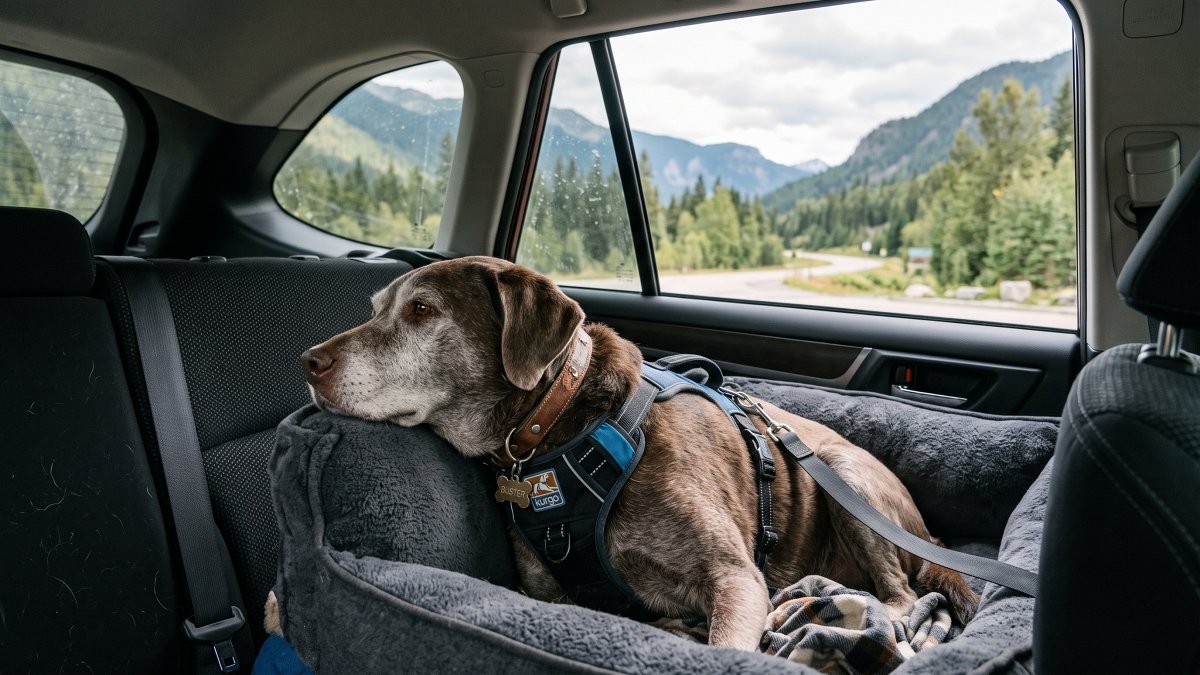
Your dog has gone gray around the muzzle, moves a little slower on the stairs, and maybe needs a nap more often than she used to. None of that means her travel days are over. It does mean a road trip or flight with her needs more planning than it did when she was two years old and could nap through anything.
Older dogs deal with real physical changes on the road: stiffer joints, less tolerance for heat and cold, a higher chance of getting disoriented in unfamiliar places, and sometimes health conditions that make sedation risky. None of that has to keep you home. This guide walks through how to prepare, what health risks to watch for, and how to keep an older dog comfortable whether you are driving two hours to see family or flying across the country.
Is It Safe to Travel With a Senior Dog?
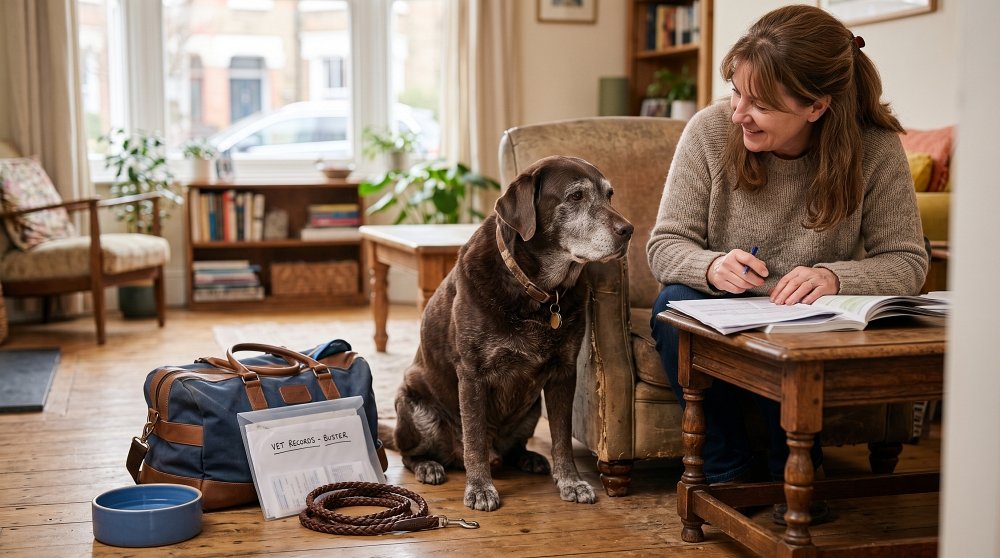
For most senior dogs, yes, as long as they are stable on any current medications and have not had a recent health event like a seizure, heart episode, or major surgery. The safest first step is a checkup with your regular vet before you book anything. They know your dog’s specific history and can flag issues a general guide never could, like an undiagnosed heart murmur that changes how long she should go without a rest stop.
“Senior” itself is not one fixed age. Because larger breeds age faster, a giant breed is often considered senior years before a small one is.
| Size category | Typical senior age |
|---|---|
| Small breeds | 10 to 12 years |
| Medium breeds | 8 to 10 years |
| Large breeds | 8 to 9 years |
| Giant breeds | 6 to 7 years |
So a giant or large breed, like a Cane Corso, is often already showing senior-level joint stiffness by the time a smaller dog, such as a Beagle, is just starting to slow down. That gap matters when you are deciding how many rest stops to plan or whether a long flight is a good idea at all.
How to Prepare a Senior Dog for Travel
Schedule a Pre-Travel Vet Visit
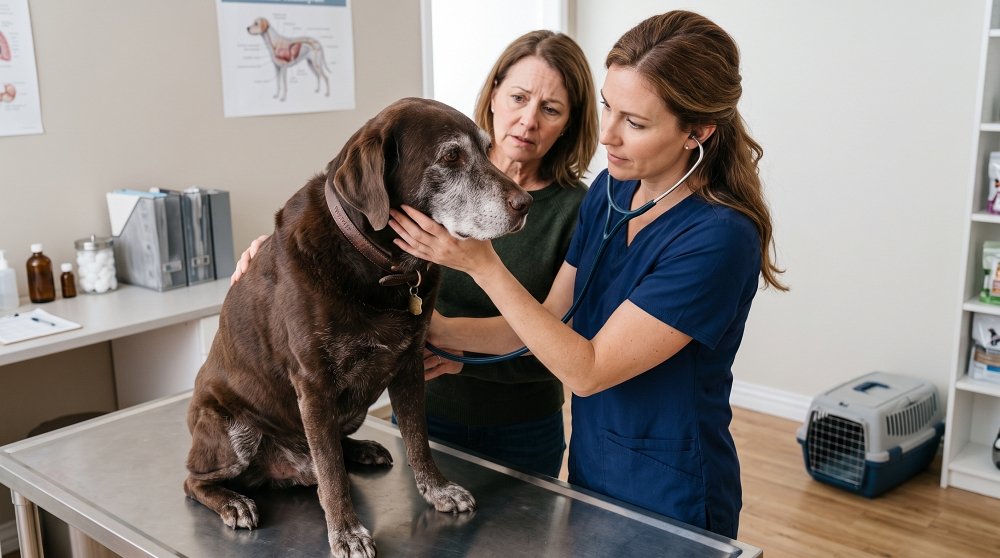
Book this appointment two to three weeks before you leave, not the day before. Your vet can confirm your dog is fit to travel, update any vaccines that have lapsed, and issue a Certificate of Veterinary Inspection if you need one. The American Veterinary Medical Association notes this certificate generally needs to be issued within 10 days of air travel or about 30 days for most other travel, so timing matters. If your dog takes daily medication, ask for a few extra days’ supply in case your trip runs long.
Pack a Senior-Specific Travel Kit
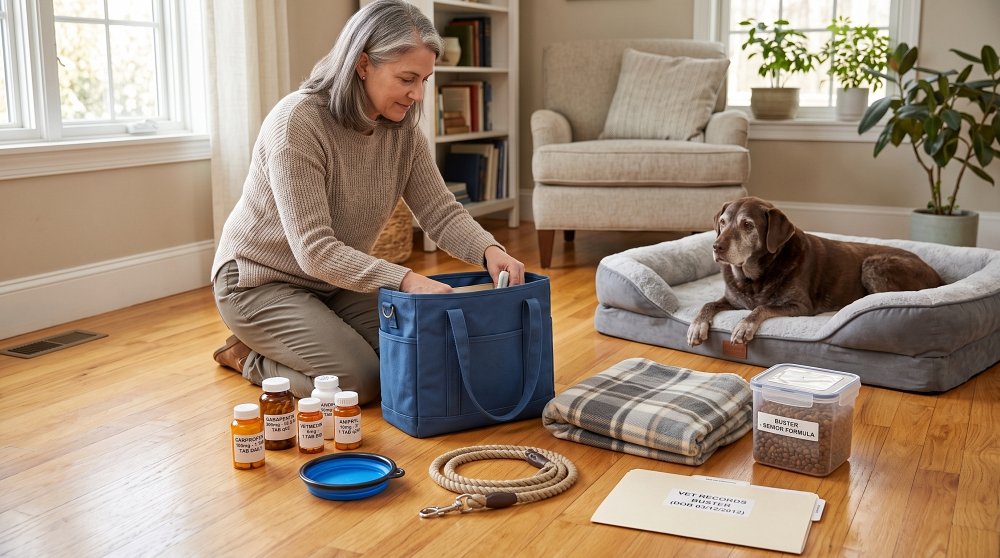
Beyond the usual leash, food, and water, a senior dog’s kit should include her current medications with dosing instructions written down in case a pet sitter or emergency vet needs them, a familiar blanket or bed that smells like home, any mobility aids she uses, and a printed copy of her vet records.
Bringing her regular food matters more than usual here. Sudden diet changes can upset an older digestive system that is already less forgiving than it used to be. If you want to bring along a few fresh snacks for rest stops, stick to things you already know agree with her. Check that any new option, like small bits of cucumber or other fruits and vegetables that are actually safe for dogs, is one she can handle before you are two states from her regular vet.
Choose the Right Dog Travel Restraint
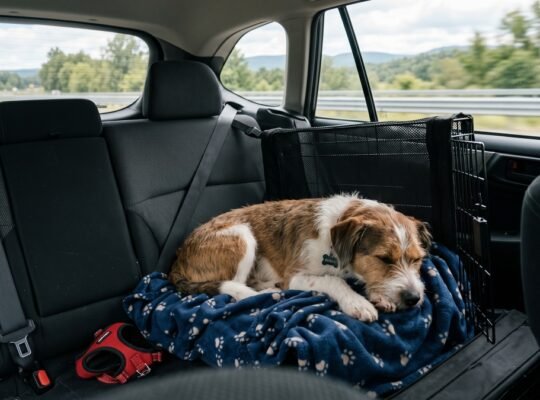
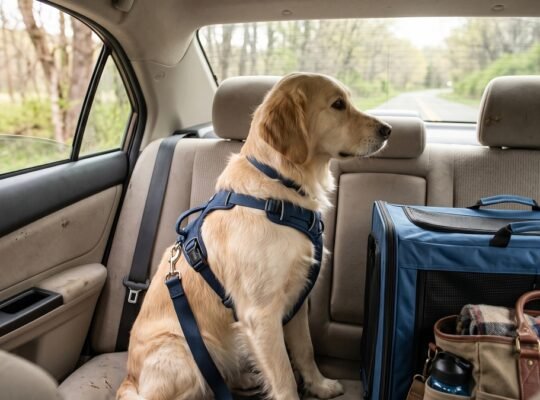
Whether you are driving or flying, your dog needs to be properly confined, not loose in the back seat or cargo area. For cars, that means a secured crate or a crash-tested harness, not just any harness that clips to a seatbelt. The Center for Pet Safety independently crash-tests carriers, crates, and harnesses, and its published results are worth checking before you buy, since “crash-tested” claims on packaging are not independently verified by default.
For flights, airlines have their own crate size and construction rules, and these vary and change. Confirm directly with your carrier rather than assuming last year’s rules still apply.
Protect Aging Joints During Loading and Unloading
Jumping in and out of a car or SUV is one of the most joint-jarring moments of a trip for a dog with arthritis. A ramp or set of portable steps takes that impact away almost entirely. Inside the vehicle, an orthopedic or memory-foam pad under her crate bedding gives stiff hips and elbows real cushioning that a folded towel usually cannot provide.
Senior Dog Travel Health Risks to Watch For
Balance Problems That Are Not Just “Getting Old”
Classic carsickness, including drooling, gulping, and restlessness, is actually more common in puppies than in adult dogs because it is tied to an inner ear that has not finished developing. What looks similar but is a genuinely different problem in older dogs is idiopathic vestibular disease, sometimes called “old dog vestibular syndrome.”
This condition can cause sudden loss of balance, a head tilt, and rapid, jerky eye movements. It can come on with no warning, even mid-trip. It is often mistaken for a stroke or, because of the stumbling, for a dog that is simply overwhelmed by travel. Most dogs recover well within a couple of weeks with veterinary care, but if your senior dog suddenly seems disoriented, cannot walk straight, or tilts her head sharply during a trip, treat it as a reason to find a vet that day, not something to wait out in the back seat.
Trouble Regulating Temperature
Older dogs generally handle heat and cold worse than they did as adults. Thinner coats, less muscle mass, and slower circulation can all make it harder for their bodies to keep up. A car that feels comfortable to you can overheat a senior dog faster than you expect, and the reverse is true in winter.
Never leave a dog alone in a parked car, in any season, even for a few minutes with the windows cracked. On travel days, keep the cabin temperature moderate rather than warm, and pack an extra blanket for cold rest stops where she may be standing on pavement.
Sedation Risks
It is tempting to ask about a calming pill for a dog who hates the car, but the AVMA specifically warns against giving any tranquilizer or sedative without a vet’s guidance. These drugs can raise the risk of heart and breathing problems, and most airlines do not allow sedated pets on flights anyway.
Sedation can also backfire behaviorally. Dogs given sedatives for anxious car rides sometimes become more anxious on future trips, not less, because they associate the woozy feeling with travel itself. If anxiety is a real issue, ask your vet about it well before your trip so you have time to try non-drug options, like gradual practice rides, first.
Cognitive Changes and Travel Stress
Somewhere between 14 and 22.5 percent of dogs over age eight show some degree of canine cognitive dysfunction, the dog version of age-related cognitive decline. Vets often describe its signs using the acronym DISHAA: disorientation, changes in interactions with people, sleep disruption, house-training accidents, changes in activity level, and increased anxiety.
A new hotel room, an unfamiliar rest area, or a long stretch of confinement can make any of these signs worse for a dog who already struggles with change. Keeping her routine as close to normal as possible, including the same feeding times, a familiar bed, and a consistent walk schedule, does more to steady a cognitively declining senior than almost anything else you can pack.
Car Travel vs. Air Travel With a Senior Dog
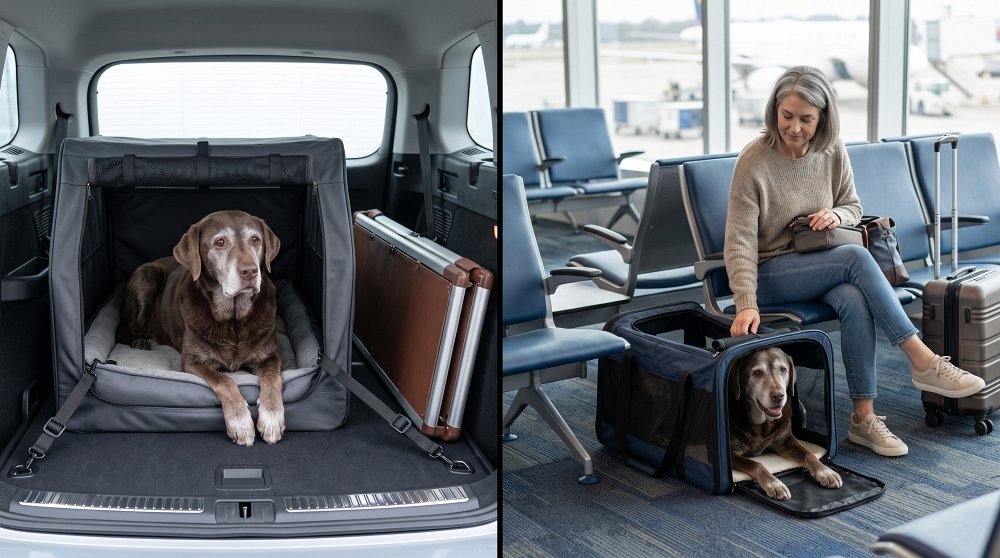
For most senior dogs, driving is the gentler option. You control the temperature, the number of stops, and how long she is confined at a stretch, and you can pull over the moment something seems off. Flying compresses all of that into a few uncontrollable hours. Cargo holds have less climate control than the cabin, boarding and layovers mean longer stretches in a crate, and airport noise can be genuinely distressing for a dog already prone to anxiety or cognitive changes.
That is not a blanket rule against flying with an older dog. A healthy, well-conditioned small senior who can travel in-cabin under the seat in front of you is a very different situation from a large senior booked into cargo. If flying is the only realistic option, talk to your vet specifically about your dog’s heart, lung, and joint health before you book. Choose nonstop flights and cooler travel times whenever possible to reduce total time in transit.
How to Keep a Senior Dog Comfortable During Travel
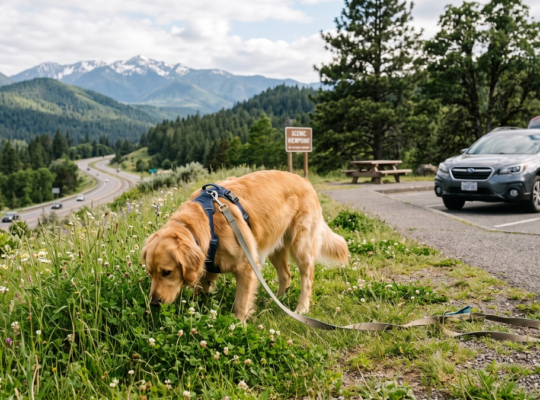
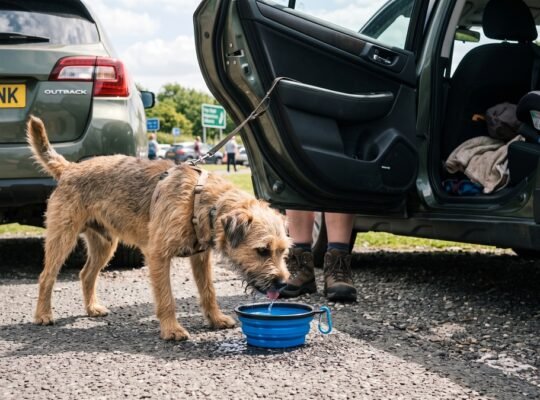
Plan a stop roughly every two hours on a road trip, not just for a bathroom break but so she can stretch stiff joints and walk a little. Withholding a full breakfast before an early departure can reduce nausea, then you can offer a small meal once you have arrived or during a longer stop. Keep water available throughout the trip, since older dogs can be more prone to dehydration, and offer it at every stop rather than waiting for her to ask.
Inside the car, secure her the same way every single time, in the same crate position or same harness setup, so the routine itself becomes a small source of comfort. A scarf or worn T-shirt with your scent tucked into her bed can also help on a long trip, especially for a dog already showing early cognitive changes who relies more on smell and routine than she used to.
The Bottom Line on Traveling With a Senior Dog
Traveling with a senior dog does take more forethought than it used to: a vet visit ahead of time, the right restraint, a kit built around her specific needs, and a plan for the health issues that are more likely to show up as she ages. None of that is a reason to leave her behind. Plenty of older dogs handle a well-planned road trip just fine, and for a dog who has spent years by your side, being included is often worth the extra preparation.
The short version is simple: talk to your vet before you go, restrain her properly, watch for senior-dog symptoms instead of writing everything off as “she is just getting old,” and build in more time and more stops than you think you need. Do that, and traveling safely with your senior dog is still very possible.
Click Here to Add SmartPawLife as a Trusted Source Add as a preferred source on Google