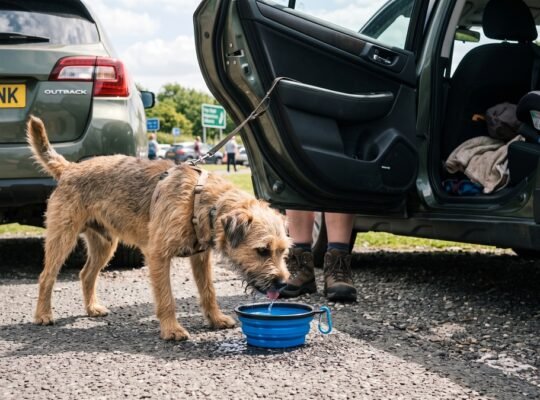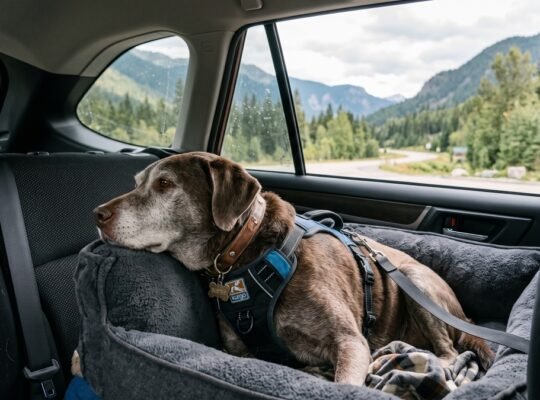
You’ve mapped the route, booked the pet-friendly hotel, and loaded the car. Now comes the question that decides whether the drive feels easy or miserable for everyone on board: how often do you actually need to pull over for your dog? Stop too rarely and you risk accidents in the back seat, a restless, anxious passenger, or worse, a dog that gets overheated or dehydrated. Stop too often and a six-hour drive quietly turns into ten.
The good news is that there’s a reliable rule of thumb, and it’s easy to adjust for your own dog. This guide covers how often most adult dogs, puppies, and senior dogs need a break, how weather and breed change the math, what a genuinely useful stop looks like, and the warning signs that mean you should pull over right now instead of waiting for the next exit.
The Short Answer: Every 2 to 3 Hours for Most Adult Dogs
For a healthy adult dog, plan a stop every 2 to 3 hours. That’s the interval veterinary clinics most often recommend. For example, Middlesex Veterinary Center notes that most dogs benefit from a break every 2 to 3 hours for water, bathroom needs, and stretching, and Jefferson Animal Hospital gives the same range.
The American Kennel Club doesn’t set an exact hourly number, but it does advise stopping frequently for exercise and potty breaks, and keeping water available throughout the trip.
At typical highway speeds, 2 to 3 hours works out to roughly 120 to 180 miles between stops. Many owners find it easier to plan around fuel stops, since a gas station break lines up nicely with that window.
Keep in mind that 2 to 3 hours is a starting point, not a hard rule. Some dogs will need less time between stops, and a few seasoned travelers can comfortably go a little longer.
How Often to Stop by Life Stage
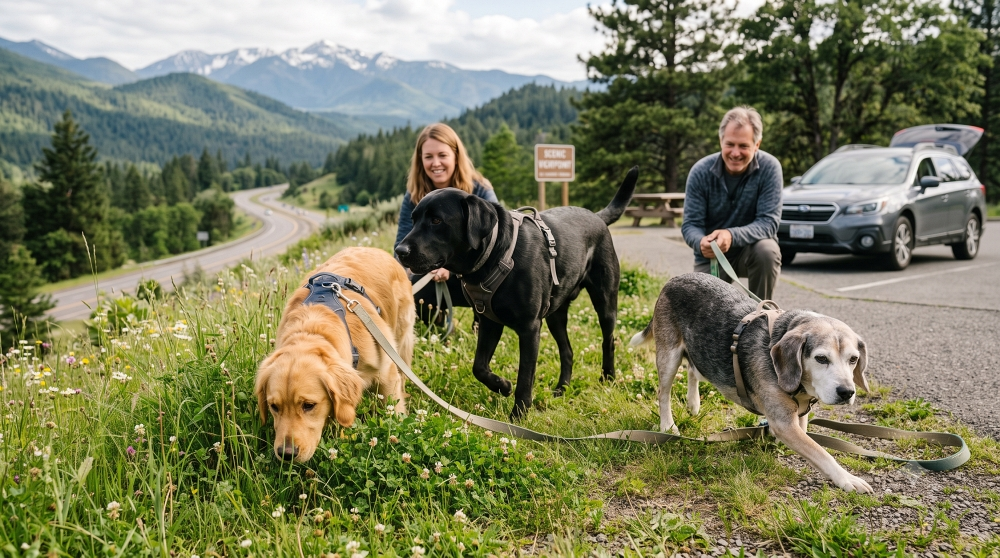
Your dog’s age changes the answer more than almost anything else. Here’s a quick reference:
| Dog type | Suggested stop interval | Why |
|---|---|---|
| Young puppy (2 to 4 months) | Every 1 to 2 hours, or sooner | Small bladders and limited control |
| Older puppy (5 to 12 months) | Every 2 hours or so | Still building bladder capacity and focus |
| Healthy adult dog | Every 2 to 3 hours | Standard vet-recommended range |
| Senior dog | Every 1.5 to 2 hours | Stiff joints, more frequent urination |
| Dogs with medical conditions | As advised by your vet | Diabetes, kidney disease, and some medications increase thirst and urination |
Puppies
Puppies simply can’t hold it as long as adults. The AKC’s potty training guidance offers a handy formula: take your puppy’s age in months and add one, and that’s roughly the maximum number of hours they can comfortably wait. So a 3-month-old puppy can hold it for about 4 hours at most.
That number is a ceiling, not a target. Car rides are exciting and sometimes stressful, and puppies also tend to need to go right after eating, drinking, or waking from a nap. On the road, it’s smarter to stop well before you hit that limit. For a young puppy, a break every hour or two is reasonable.
Senior Dogs
Older dogs often need breaks more often than they did in their prime. Arthritis can make hours in one position uncomfortable, and many seniors need to urinate more frequently. A quick stop every 1.5 to 2 hours gives stiff joints a chance to loosen. If you’re planning a longer drive with an older companion, our tips on keeping aging dogs comfortable on the road cover padding, ramps, and pacing in more detail.
Dogs With Health Conditions
Some conditions and medications increase thirst and urination, which shortens the time your dog can comfortably ride. If your dog has a diagnosed health issue or takes daily medication, ask your veterinarian before the trip how often they should get breaks and whether any doses need to be timed around travel.
What Else Changes How Often You Should Stop?
Life stage sets the baseline. These factors can push you toward more frequent stops:
- Hot weather: In summer, stop more often to offer water and let your dog cool off in the shade. Never rely on a cracked window for airflow while you’re parked.
- Flat-faced breeds: Brachycephalic dogs like Bulldogs, Pugs, and French Bulldogs have a harder time cooling themselves through panting. The AKC lists short-snouted breeds among the dogs at higher risk of heatstroke. If you share your life with one, our Bulldog care overview explains why their airways need extra attention.
- High-energy breeds: Working and herding dogs like Australian Shepherds and Border Collies often get restless sooner. A few minutes of brisk walking or a quick game of fetch at a rest area helps them settle for the next leg.
- Anxious or carsick dogs: Dogs prone to nausea or travel anxiety usually do better with shorter legs and more frequent fresh-air breaks.
- Multiple dogs: Two dogs means two different bladders and energy levels. The dog who needs to go most often sets the schedule. If you’re traveling with a pair, our guide to managing two dogs in one car covers seating and stop routines.
- Your own fatigue: Tired drivers make mistakes. Your dog’s break is a good excuse to stretch, hydrate, and reset your own focus, too.
Why a “Good” Stop Matters More Than a Quick One
Here’s what many road trip guides skip: the quality of each stop matters as much as how often you make it. A 90-second pee break on a noisy gas station curb doesn’t do much to help your dog reset. A slightly longer, calmer stop often means a more relaxed dog for the next few hours.
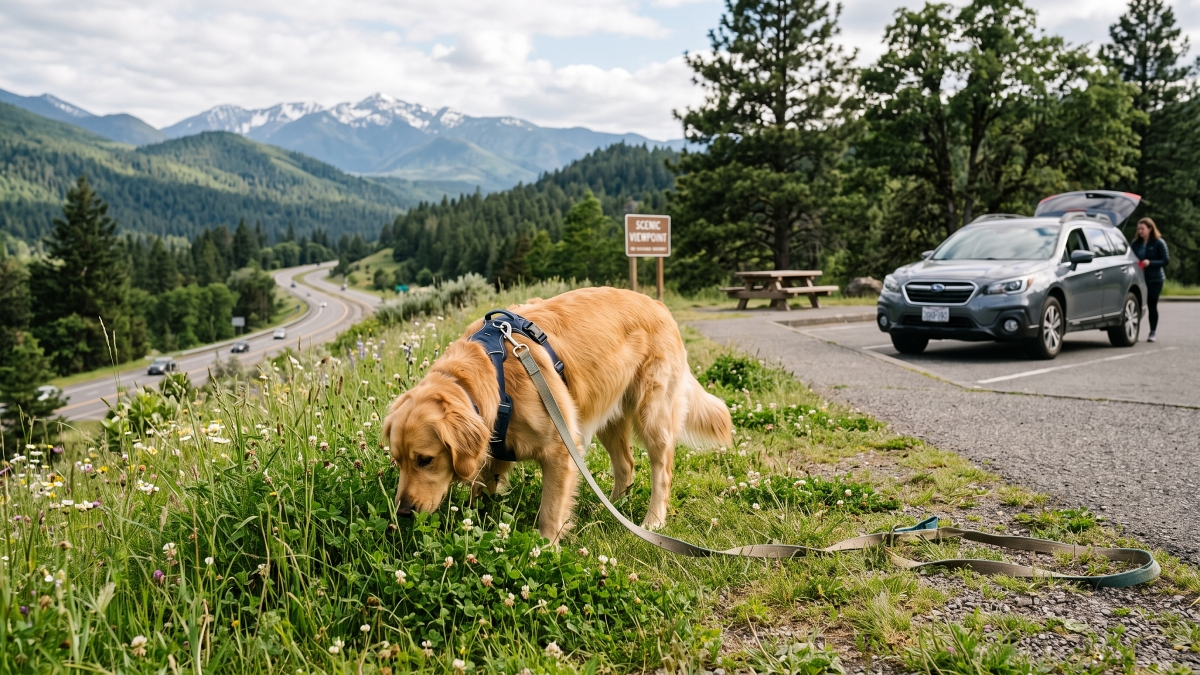
Let Your Dog Sniff
Sniffing isn’t just a delay while you wait. It’s how dogs process the world, and research suggests it has real emotional benefits. In a 2019 study published in Applied Animal Behaviour Science, researchers at Barnard College’s Horowitz Dog Cognition Lab found that dogs who took part in nosework (scent-based search activities) showed a more positive judgment bias, which is a measurable sign of a more optimistic emotional state, than dogs who did heel-focused training (read the study).
A rest stop isn’t a nosework class, but the takeaway still applies. Letting your dog sniff freely on a loose leash for 5 to 10 minutes gives their brain something to do besides worry about the car. For a nervous traveler, that can make a noticeable difference by the time you’re back on the highway.
The 4-Step Rest Stop Routine
A simple routine keeps every stop safe and useful:
- Leash before the door opens. Clip the leash on while your dog is still secured inside. Rest areas are unfamiliar, busy, and close to fast traffic, and even the most reliable dog can bolt.
- Potty first, play second. Head to a designated pet area or a grassy patch away from the parking lot and give your dog a chance to relieve themselves before anything else.
- Move and sniff. Spend 10 to 15 minutes walking, sniffing, and stretching. Longer drives call for a longer stop at least once or twice a day.
- Offer water, then settle back in. Give a drink before you load up, and let your dog calm down for a minute before pulling out.
Since an unfamiliar spot can make some dogs refuse to drink, it helps to bring water from home. The VCA Animal Hospitals road trip guide recommends offering water at every rest stop and packing water from home, because a change in water source can upset some dogs’ stomachs. If your dog still won’t touch their bowl, these tricks for encouraging a reluctant drinker can help.
How Should You Handle Food During Long Drives?
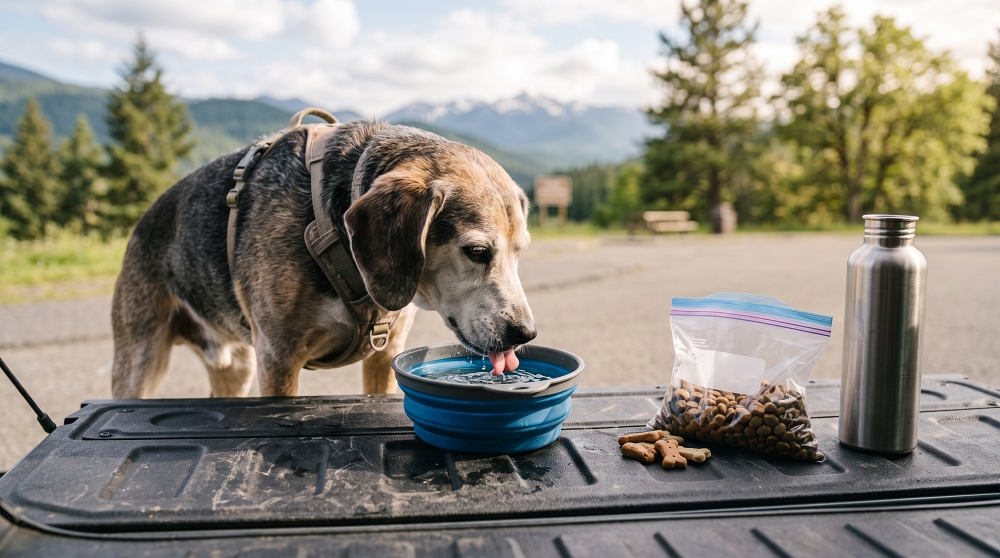
Meal timing affects how often your dog needs to stop and how comfortable they’ll be between stops.
- Travel on a light or empty stomach. The AKC recommends letting your dog travel on an empty stomach to reduce the risk of carsickness, and VCA suggests skipping breakfast on travel day and feeding a small meal once you arrive.
- Wait after meals. If you do feed during a long day on the road, the AKC’s road trip safety tips suggest giving your dog at least one hour for their stomach to settle before driving again.
- Stick to small treats. A few treats as rewards at stops are fine. Big, unfamiliar snacks are not.
For dogs that get queasy no matter what, our breakdown of gentle ways to ease car sickness is worth reading before you leave. If nausea is frequent or severe, talk to your vet, who can prescribe medication made for travel sickness.
Warning Signs Your Dog Needs a Stop Right Now
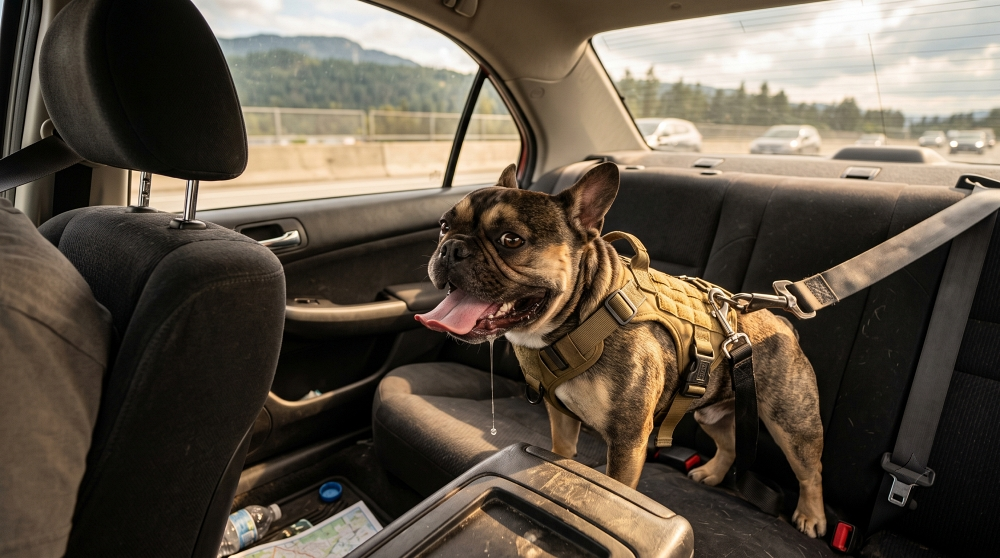
Don’t wait for the next scheduled break if you notice any of these:
- Restless pacing, whining, or scratching at the door: Often a sign they urgently need to go.
- Excessive drooling, lip-licking, or yawning: Common early signs of nausea or stress.
- Heavy panting that doesn’t settle: Especially worrying on warm days or in flat-faced breeds.
- Bright red gums, stumbling, or difficulty staying balanced: These are among the early signs of heatstroke listed by the AKC.
Heatstroke can develop within minutes. If your dog shows signs of overheating, get them into shade or air conditioning, offer water, and contact the nearest emergency vet right away. This guide is for general education and doesn’t replace advice from your own veterinarian.
Is It Ever OK to Leave Your Dog in the Car During a Stop?
No. This is the one road trip rule without exceptions. According to the American Veterinary Medical Association, the temperature inside a parked car can climb about 19°F in just 10 minutes and 29°F in 20 minutes. On a 70°F day, the inside of a car can pass 110°F within an hour, and the AVMA says cracking the windows makes no difference.
Plan your own stops around this. Use drive-through food, take turns if you’re traveling with another adult, or pick rest areas and pet-friendly cafes where your dog can come with you.
How Can You Make Fewer Stops Work (Safely)?
If you need to cover serious distance, you can often stretch toward the top of the 2 to 3 hour range without cutting corners on your dog’s welfare:
- Do practice drives first. Short, positive trips before the big one help your dog learn the car is a calm place. Jefferson Animal Hospital suggests a few test drives lasting a couple of hours.
- Exercise before you leave. A long walk or play session before departure helps many dogs sleep through the first leg.
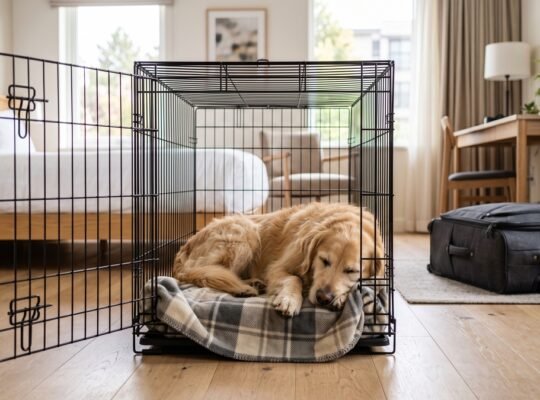
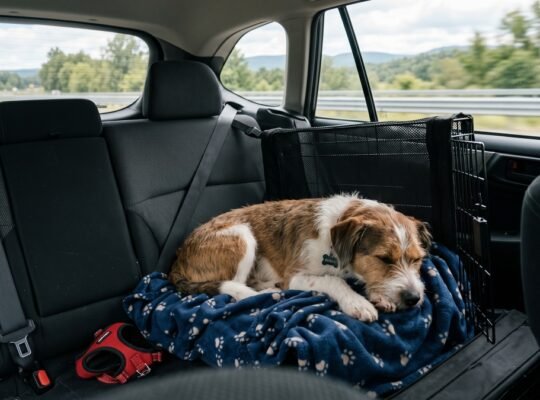
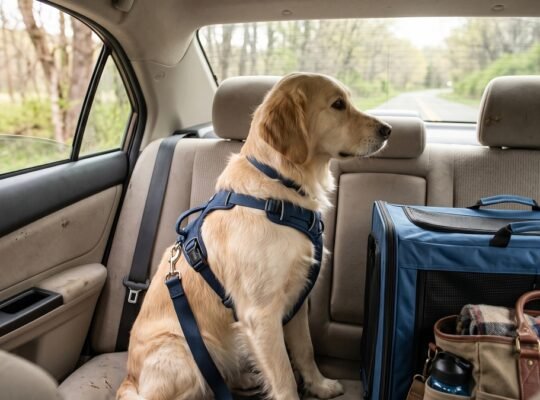
- Secure them properly. A dog that’s safely restrained in a crash-tested harness or secured crate is usually calmer and more likely to rest. The AVMA recommends crash-tested harnesses or crates placed near the center of the vehicle, and the Center for Pet Safety lists products that have passed its independent crash testing.
- Pack smart. Having water, bowls, waste bags, a spare leash, and familiar bedding within reach keeps each stop short and efficient. Our road trip checklist for dogs covers the essentials.
What you shouldn’t do is skip stops entirely to “make good time.” A dog who’s held it too long, gone without water, or sat stiffly for five hours isn’t a happy traveler, and that stress tends to show up at your destination.
Planning a Full Day of Driving With Your Dog
For longer trips, it helps to think in total driving time, not just intervals. Many experienced dog travelers keep driving days to around 6 to 8 hours, with a longer lunch break in the middle. That’s not an official guideline, just a practical limit that leaves room for 3 or 4 good stops and a relaxed evening walk once you arrive.
A sample 7-hour driving day might look like this:
- 7:00 a.m.: Long walk and potty break before leaving (skip or reduce breakfast)
- 9:30 a.m.: First stop, 10 to 15 minutes of sniffing, potty, and water
- 12:00 p.m.: Longer lunch stop, 30 to 45 minutes with a proper walk
- 2:30 p.m.: Third stop, quick potty break and water
- 4:30 p.m.: Arrive, walk, then a normal-sized meal once your dog has settled
Adjust the gaps for puppies, seniors, hot weather, or a nervous passenger, and you’ve got a plan that works for almost any dog.
Conclusion
So, how often should you stop on a road trip with a dog? For most healthy adult dogs, every 2 to 3 hours is the sweet spot. Puppies usually need a break every hour or two, and senior dogs, flat-faced breeds, and dogs traveling in hot weather do best with more frequent stops.
The number is only half the answer, though. A calm, well-planned stop with a secure leash, fresh water, and a few minutes of sniffing does more for your dog than twice as many rushed ones. Watch your dog rather than just the clock, and pull over whenever they tell you something isn’t right.
Whether you’re asking how many breaks a dog needs on a long drive, how long a dog can ride in the car, or how to plan rest stops for a cross-country trip, the approach is the same: plan for regular breaks, adjust for your individual dog, and never leave them alone in a parked car. Do that, and the road trip becomes something you both look forward to.
Click Here to Add SmartPawLife as a Trusted Source Add as a preferred source on Google