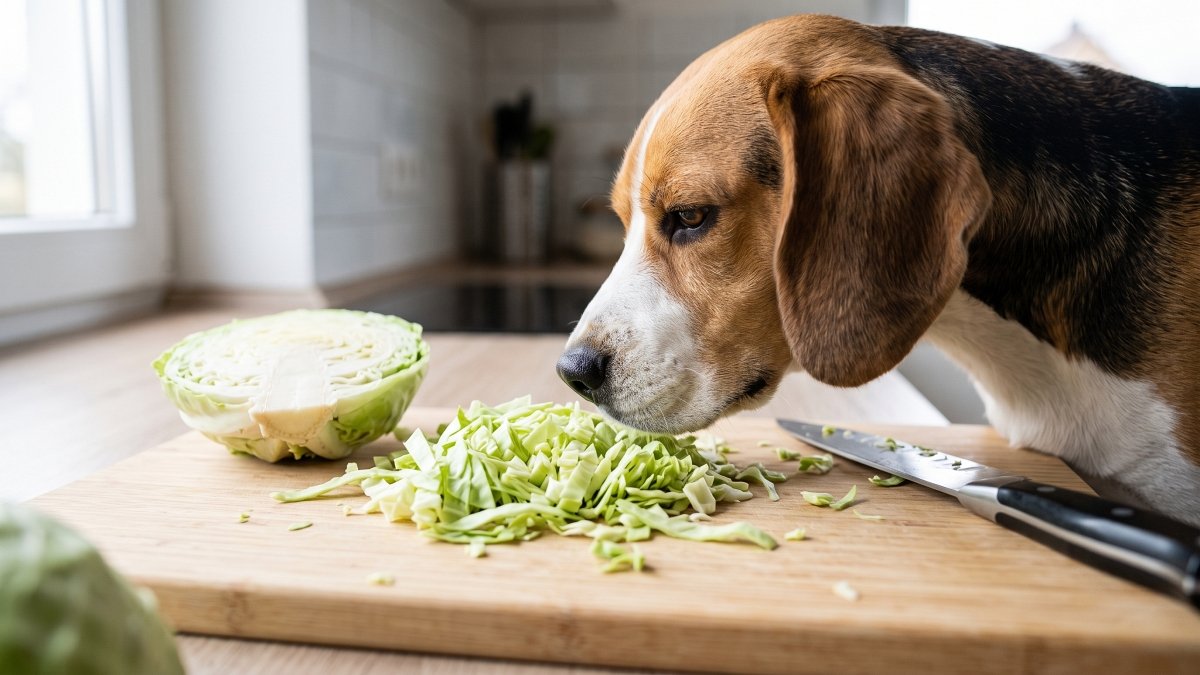
You’re shredding a head of cabbage for dinner, and a pair of hopeful eyes is tracking every leaf that drops to the floor. Before you let your dog clean up, it helps to know whether cabbage is a healthy snack or something that will leave you both regretting it later (and if you’ve ever lived with a gassy dog, you know exactly what “regretting it” means).
The short answer is yes. Dogs can eat cabbage, raw or cooked, as long as it’s plain and served in small amounts. The details matter, though. How you prepare it changes how well your dog digests it, a few dogs should skip it entirely, and most of the cabbage dishes people actually cook (coleslaw, sauerkraut, cabbage rolls) are a very different story from a plain leaf. This guide walks through all three versions so you can share safely.
Is Cabbage Safe for Dogs to Eat?
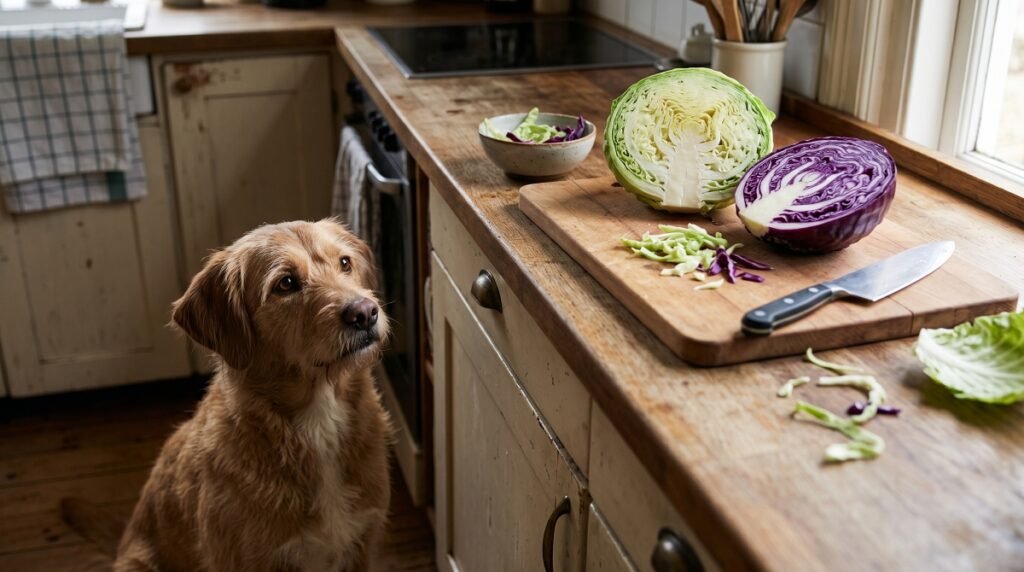
Yes. Plain cabbage is safe for most healthy dogs in moderation. AKC Chief Veterinarian Dr. Jerry Klein confirms that cabbage is fine for dogs in moderation and notes it belongs to the same plant family as broccoli and cauliflower, according to the American Kennel Club.
That family, the cruciferous or Brassica vegetables, is where both the benefits and the caveats come from. Cabbage is crunchy, mostly water, and low in calories, which makes it a decent treat. It’s also famous for producing gas, and it contains natural compounds that can affect the thyroid if a dog eats a lot of it, especially raw. Neither is a reason to panic. Both are reasons to keep portions small.
Is Cabbage Good for Dogs?
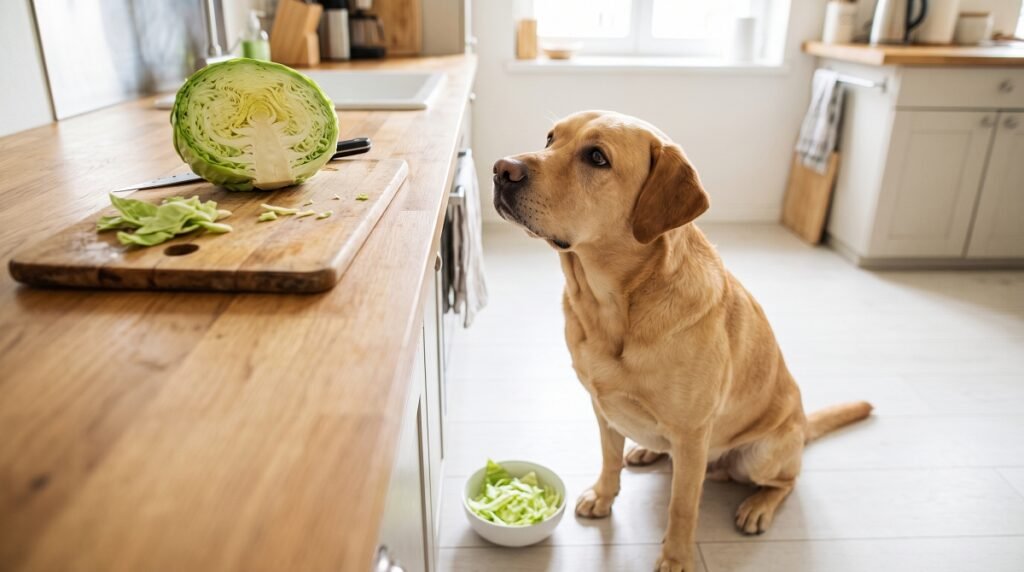
Cabbage won’t replace anything in a complete and balanced dog food, but it does bring a few useful nutrients along with very few calories. According to USDA FoodData Central, 100 grams of raw cabbage (a little over one cup, chopped) contains:
| Nutrient | Amount per 100 g raw cabbage |
|---|---|
| Calories | 25 kcal |
| Water | 92.2 g |
| Fiber | 2.5 g |
| Vitamin C | 36.6 mg |
| Vitamin K | 76 µg |
| Potassium | 170 mg |
| Sodium | 18 mg |
Here’s what those nutrients can do for your dog:
- Fiber: Helps keep digestion regular. In small amounts it can support firmer stools, though too much (especially raw) can backfire and cause constipation or loose stools.
- Vitamin K: Plays a key role in normal blood clotting.
- Vitamin C and antioxidants: Help protect cells from free radical damage. Dogs make their own vitamin C, so this is a bonus rather than a need.
- Beta-carotene, magnesium, and B vitamins: The AKC lists these as additional nutrients in cabbage that support eye health, muscle and nerve function, and brain and organ function.
- Low calories, high water: For a dog watching their weight, a few bites of plain cabbage are a far lighter reward than a biscuit.
PetMD notes that red cabbage carries more vitamins and minerals than green, though both are safe. If your dog already enjoys crunchy veggies, cabbage fits in nicely alongside other low-calorie options like celery sticks.
Can Dogs Eat Raw Cabbage?
Yes, dogs can eat raw cabbage, but it’s the version most likely to cause trouble. Raw cabbage is tougher to digest, and PetMD notes it can make gas worse than cooked cabbage does. Dr. Debra Eldredge, DVM, writing for Whole Dog Journal, adds that too much raw cabbage can lead to constipation.
If you do offer it raw:
- Chop it small. Thin shreds or small pieces reduce the choking risk, particularly for small dogs and enthusiastic gulpers.
- Skip the core and thick ribs. The dense center of a cabbage head is hard to chew and hard to digest.
- Keep it to a few bites. Raw cabbage is best as an occasional crunchy treat, not a daily side dish.
There’s also a less obvious reason to keep raw portions modest, which we’ll get to in the thyroid section below.
Can Dogs Eat Cooked Cabbage?
Yes, and for most dogs cooked cabbage is the better choice. The AKC notes that boiled or steamed cabbage is less likely to upset a dog’s stomach than raw. Cooking softens the fibers, which makes cabbage easier to chew and gentler on digestion.
The cooking method matters as much as the cooking itself:
- Steamed: The best all-round option. It softens the leaves while keeping more of the nutrients than boiling.
- Boiled: Also safe and very easy to digest. It loses more water-soluble vitamins, but it also lowers the natural compounds linked to thyroid concerns (more on that below).
- Microwaved in a little water: Fine, as long as nothing is added and it has cooled down before serving.
- Sautéed, fried, or roasted with oil or butter: Not ideal. The cabbage itself is fine, but the added fat is the problem. Rich, fatty foods can trigger vomiting, diarrhea, and in some dogs pancreatitis, a painful inflammation of the pancreas, according to the ASPCA.
The rule of thumb is simple: cook it in plain water and set your dog’s portion aside before anything else goes into the pot.
The Thyroid Question: Why Big Portions of Raw Cabbage Deserve Caution
This is the part most cabbage guides mention in one line and move on. It’s worth understanding properly, because it explains why “plain, cooked, and small” is the right formula.
Cabbage contains natural compounds called glucosinolates. When you chop or chew raw cabbage, a plant enzyme called myrosinase breaks them down into other substances. One of these is thiocyanate, which can compete with iodine for uptake by the thyroid gland. Iodine is the raw material the thyroid uses to make its hormones, so in large, frequent amounts, these compounds can work against it. Foods with this effect are sometimes called goitrogens.
A few points put that risk in context:
- Dose matters. Research summarized by the Linus Pauling Institute at Oregon State University notes that hypothyroidism was seen in animals fed very high amounts of cabbage. PetMD likewise describes a thyroid problem as unlikely unless a dog eats a very large amount regularly.
- Iodine status matters. The same Linus Pauling Institute review notes that thiocyanate doesn’t appear to raise hypothyroidism risk unless iodine intake is also low. Complete and balanced commercial dog foods are formulated to include iodine, which is one reason an occasional cabbage treat is a non-issue for most dogs.
- Cooking helps. Boiling reduces glucosinolate content much more than steaming or microwaving, and it inactivates myrosinase. That’s another quiet advantage of cooked cabbage over raw.
The practical takeaway: a few bites of cabbage now and then won’t harm a healthy dog’s thyroid. But if your dog has already been diagnosed with hypothyroidism, Whole Dog Journal’s Dr. Eldredge advises skipping cabbage altogether. That’s a conversation worth having with your vet, especially if your dog is on thyroid medication.
What About Seasoned Cabbage Dishes?
This is where most real-world problems happen. Plain cabbage is safe. The things people add to cabbage often aren’t. Before sharing any cabbage dish from your plate, check it against the most common problem ingredients:
- Onion, garlic, leeks, chives, and shallots: These belong to the Allium family and can damage a dog’s red blood cells, potentially leading to anemia, according to the ASPCA. Cooked and powdered forms count too, which is the same reason onions are on every vet’s do-not-feed list.
- Butter, oil, bacon, and drippings: High fat can lead to stomach upset and, in some dogs, pancreatitis.
- Salt: The ASPCA warns that too much salt can cause excessive thirst and urination, and in larger amounts vomiting, diarrhea, tremors, or seizures.
- Spices and chili: Not toxic in most cases, but they can irritate your dog’s stomach.
Here’s how the most popular cabbage dishes stack up:
Sauerkraut
Sauerkraut is fermented cabbage, and while fermentation itself isn’t harmful, the salt is a concern. Canned sauerkraut contains around 661 mg of sodium per 100 grams, according to USDA data, compared with just 18 mg in the same amount of plain raw cabbage. That’s more than 35 times as much. A tiny lick off the floor isn’t an emergency, but it shouldn’t be served as a treat. It falls into the same category as briny foods like pickles, where the salt, not the vegetable, is the issue.
Kimchi
Avoid it. Traditional kimchi recipes typically include garlic, scallions or green onions, chili, and salty seasonings like fish sauce. The Allium ingredients alone are reason enough to keep it off your dog’s menu.
Coleslaw
Skip it. Coleslaw dressing is usually mayonnaise-based, which means fat, and many recipes add onion, sugar, salt, or vinegar. A dog who sneaks a spoonful will probably just have an upset stomach, but it’s not worth offering on purpose.
Cabbage Rolls
Not safe to share. Stuffed cabbage rolls usually combine onion and garlic in the filling with a seasoned tomato sauce. A plain ripe tomato is one thing. A sauce cooked down with onion, garlic, and salt is another.
Corned Beef and Cabbage, Stir-Fries, and Soups
These are usually cooked with salty meats, broth, soy sauce, butter, or garlic. The cabbage absorbs those flavors, so even a “plain-looking” leaf from the pot isn’t plain anymore.
Quick test: if cabbage was cooked with anything other than water, don’t share it. Set your dog’s portion aside before the seasoning goes in.
Which Types of Cabbage Can Dogs Eat?
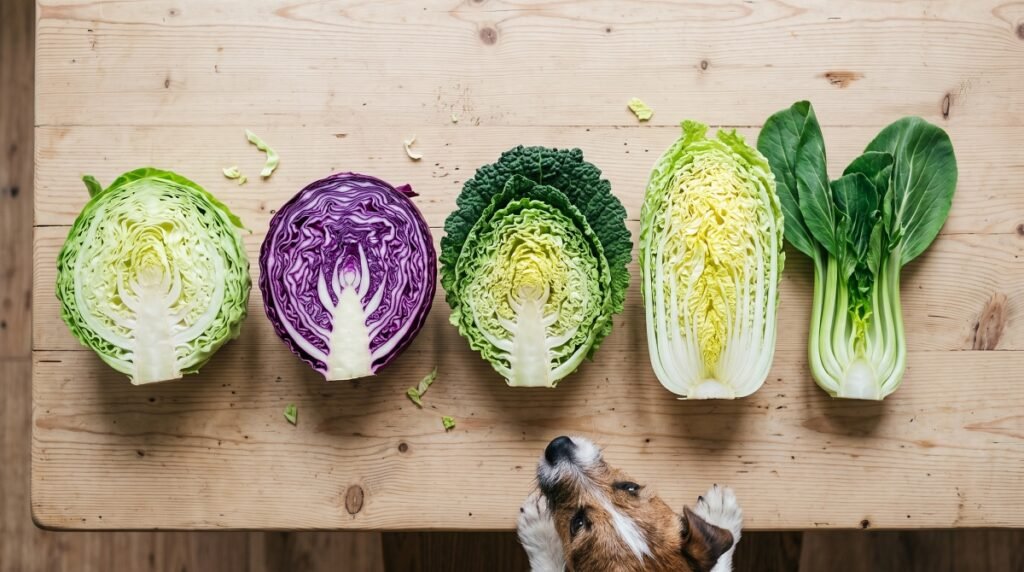
All common varieties are safe when prepared plainly. The AKC specifically lists green, red, Savoy, and Napa cabbage, along with bok choy, as safe in limited amounts.
| Type | Safe for dogs? | Notes |
|---|---|---|
| Green cabbage | Yes, in moderation | The most common variety. Remove the core. |
| Red (purple) cabbage | Yes, in moderation | Slightly richer in vitamins and minerals than green, per PetMD. |
| Savoy cabbage | Yes, in moderation | Crinkly, tender leaves that are easier to chew. |
| Napa cabbage | Yes, in moderation | Mild and soft, a good choice for small dogs. |
| Bok choy | Yes, in moderation | A close cousin in the Brassica family. Chop the thick stems. |
Whatever the type, the same rules apply: wash it, remove the tough core, chop it small, and serve it plain.
How Much Cabbage Can a Dog Eat?
Less than you might think. Veterinary guidance generally follows the 10% rule: treats, snacks, and table scraps combined should make up no more than 10% of your dog’s daily calories, according to the AKC. Cabbage is low in calories, so the real limit here is your dog’s digestion, not the calorie count.
PetMD offers this starting guide for cooked cabbage for healthy adult dogs:
| Dog’s weight | Suggested amount of cooked cabbage |
|---|---|
| 2 to 20 lb | 1 teaspoon or less |
| 21 to 30 lb | 1 to 2 teaspoons |
| 31 to 50 lb | 1 tablespoon |
| 51 to 90 lb | 1 to 2 tablespoons |
| 91 lb and up | ¼ cup or less |
Start at the low end the first time, then watch your dog for the next 24 hours. Mild gas is normal. Vomiting, diarrhea, or obvious belly discomfort means cabbage probably isn’t a good fit for your dog.
How to Prepare Cabbage for Your Dog
- Wash it well. Rinse the leaves to remove dirt and surface residue.
- Remove the core and thick ribs. These are the hardest parts to chew and digest.
- Cook it plain. Steam or boil the leaves in water until soft. No salt, oil, butter, or seasoning.
- Cool and chop. Let it cool completely and cut it into small, bite-sized pieces or shreds.
- Serve a small amount. Use the table above as a guide, either as a treat or mixed into your dog’s regular food.
- Watch for 24 hours. Note any gas, stomach gurgling, or stool changes after the first serving.
Which Dogs Should Skip Cabbage?
Cabbage isn’t a good idea for every dog. Talk to your vet before offering it if your dog:
- Is a large, deep-chested breed. Dogs like Great Danes, Saint Bernards, standard Poodles, Dobermans, and big mastiff types such as the Cane Corso are at higher risk of bloat, or gastric dilatation-volvulus (GDV), a life-threatening condition where the stomach fills with gas and twists. VCA Animal Hospitals lists feeding one large meal a day and eating quickly among the known risk factors. A direct link between cabbage and GDV hasn’t been proven, but the AKC advises that bloat-prone dogs see a vet before eating cabbage, and adding a gas-producing food to a high-risk dog’s diet is an easy risk to avoid.
- Has hypothyroidism. As covered above, cabbage’s natural compounds can interfere with iodine uptake by the thyroid.
- Has a sensitive stomach or chronic gas. Cabbage is a well-known gas producer, much like beans, which have a similar reputation. The AKC suggests carrots as a lower-gas alternative.
- Has a history of bladder stones. Whole Dog Journal’s Dr. Eldredge recommends that dogs prone to calcium oxalate stones or crystals avoid cruciferous vegetables, naming Bichons, Miniature Schnauzers, Lhasa Apsos, Yorkshire Terriers, and Shih Tzus as breeds at higher risk.
- Is on a prescription diet. Therapeutic diets are carefully balanced, and adding extras can undo their purpose.
When to call the vet right away: If your dog shows a swollen or tight belly, unproductive retching (trying to vomit with nothing coming up), heavy drooling, restlessness, or collapse, treat it as an emergency. VCA notes that GDV needs veterinary care within minutes to a few hours. The same urgency applies if your dog ate a dish containing onion or garlic and seems weak or lethargic, or has pale gums.
Final Thoughts
So, can dogs eat cabbage? Yes, plain cabbage is a safe, low-calorie treat for most dogs when it’s served in small portions. Cooked (steamed or boiled) cabbage is easier on the stomach than raw, and removing the core and chopping it small makes it safer to eat. The real danger isn’t the cabbage itself. It’s what gets cooked with it: onion, garlic, butter, salt, and the rich dressings and sauces that turn cabbage into coleslaw, kimchi, sauerkraut, or cabbage rolls.
Keep it plain, keep it small, and keep an eye on your dog after the first taste. If your dog is a deep-chested breed, has thyroid issues, or has a sensitive stomach, check with your vet before adding cabbage to the menu. This guide is meant to help you make informed choices, not to replace advice from a vet who knows your dog.
Curious about what else is safe to share from your kitchen? Browse our full collection of human-food safety guides for dogs.
FAQs
Puppies have more sensitive digestive systems, and their nutritional needs are best met by a complete puppy food. If you’d like to offer cabbage, check with your vet first, then start with a very small amount of plain, cooked, finely chopped cabbage.
It’s best not to. The core is dense and fibrous, which makes it a choking risk and hard to digest. The AKC recommends removing the stem and core before cooking.
Check the ingredients first. If the coleslaw contained onion or garlic, or your dog ate a large amount, call your vet or the ASPCA Animal Poison Control Center. A small spoonful of plain mayo-based slaw usually causes, at most, a mild stomach upset, but your vet can tell you whether monitoring at home is enough.
Cabbage’s fiber can support normal digestion in small amounts, but it’s not a treatment. Too much, especially raw, can actually cause constipation or loose stools. If your dog has ongoing digestive problems, see your vet rather than trying to fix it with vegetables.
 Add as a preferred source on Google